A compressor that moved up the mountain and stopped keeping up presents exactly like a compressor with worn rings, a leaking valve plate or a slipping belt. The symptoms overlap almost completely, and the machine gives you no warning that anything has changed. The difference is that one of them is fixable and the other is physics. This page is the order of checks that tells you which you have, starting with the ones that cost nothing.
Start by predicting what "normal" looks like here
You cannot diagnose a shortfall without a target. Before touching the machine, work out what it should deliver at this site, at today’s conditions, with nothing wrong with it at all.
Write that number down. If the machine is delivering close to it, the machine is fine and the specification was wrong — which is a completely different conversation, and one covered in the high-altitude sizing guide. If it is well below the predicted figure, you have a genuine fault on top of the derate, and the rest of this page applies.
The pump-up test, which is the only measurement that matters
Almost nobody has a flow meter. Almost everybody has a receiver and a watch, and that is enough:
- Close every outlet and drain the receiver completely.
- Start the compressor and time it from zero to cut-out pressure.
- Record the ambient temperature, the humidity if you can, and the station barometric pressure.
That time is proportional to the mass of air the pump moved, so it is directly comparable to the same test run anywhere, any time — as long as you record the conditions. A machine that took four minutes at sea level and takes five minutes and ten seconds at 5,280 ft on a warm day has lost about 22 percent, which is exactly the derate. The same machine taking eight minutes has something wrong with it.
Symptom: tools bog down, but the gauge reads full pressure
This is the classic altitude complaint and the reason so many people conclude the gauge is lying. It is not.
Gauge pressure is a force measurement, and force is unchanged. An impact wrench at 90 psig hits exactly as hard at 9,000 ft as it does at the coast, for as long as the air lasts. What altitude takes away is flow — the mass available per minute. So the tool starts strong and fades, which feels like a pressure problem and is not one.
The distinguishing test is duration. Run a continuous consumer such as a die grinder or a DA sander, and watch the gauge at the tool:
- Pressure holds for a few seconds then sags and stays sagged → supply flow is short. Altitude, undersized compressor, or a genuine capacity fault.
- Pressure sags the instant the trigger is pulled and recovers immediately on release → restriction between receiver and tool. Hose, coupler, filter, regulator. Nothing to do with altitude.
- Pressure never sags but the tool is still gutless → the tool. Vanes, motor wear, or a tool that was always undersized for the job.
Gear that decides whether the numbers hold
Nothing here recovers the lost air — nothing can. What these do is let you specify honestly, drive the pump at elevation, and measure what is really arriving.
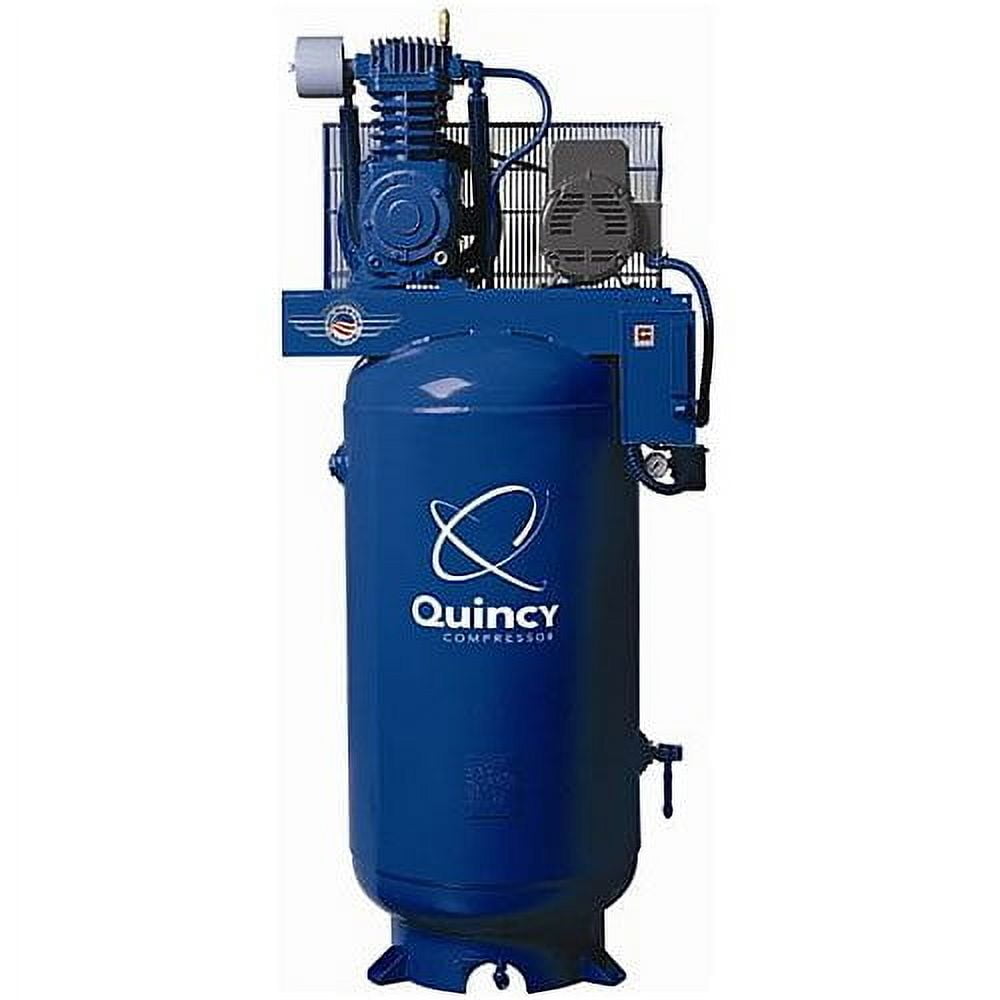
Quincy QT-7.5 7.5 HP 80-Gallon
- At elevation the honest answer is usually a size up
- Two-stage shares the higher compression ratio
- 80 gallons of storage covers what thin air cannot
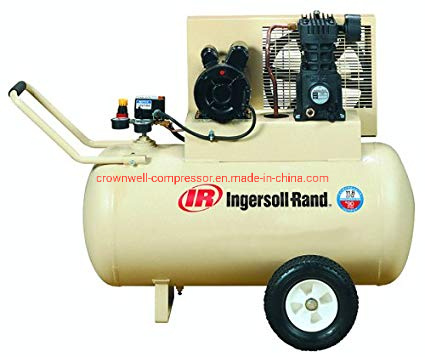
Ingersoll Rand SS3J5.5GK-WB Gas Drive
- High mountain work with no power on site
- Naturally aspirated engines derate steeply too
- Two separate deratings to check, not one
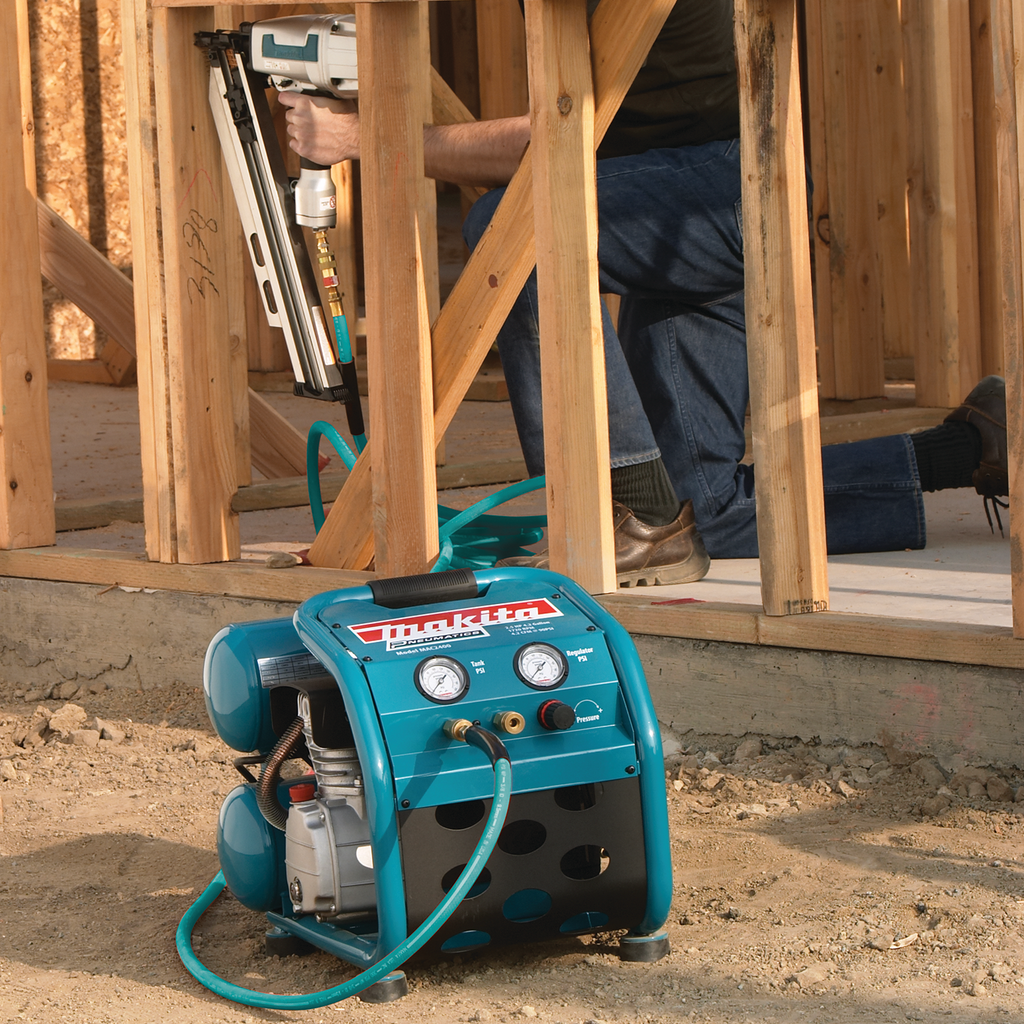
Makita MAC2400 2.5 HP Big Bore
- More displacement per nameplate horsepower
- Displacement is what altitude cannot take away
- Portable enough for mountain trim work
Regulator & Flow Control 0-150 PSI
- Hold the tool pressure the calculation assumed
- Gauge reads against the local atmosphere
- Cheapest way to see the sag as it happens
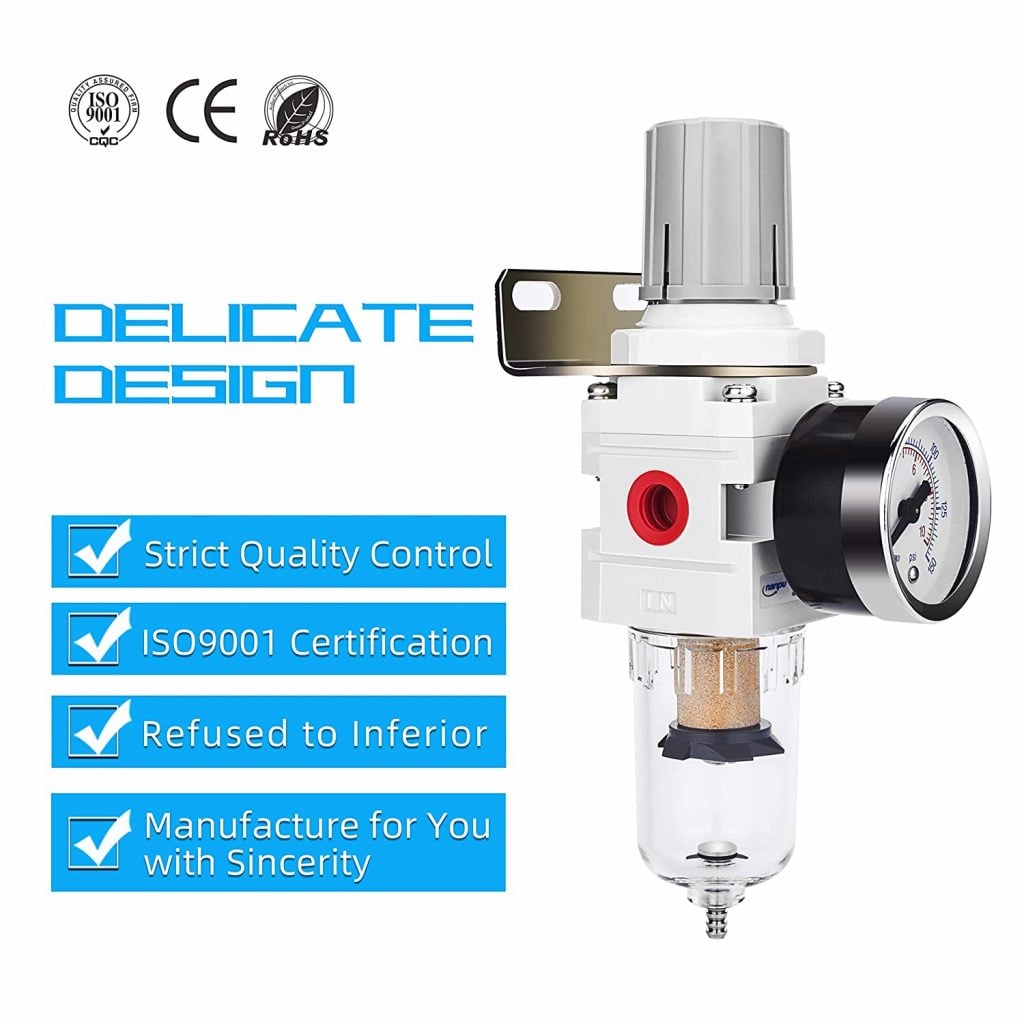
Filter / Regulator Combo
- Hot thin air carries a bigger vapour fraction
- Keeps condensate out of tools already working harder
- Mounts at the tool, where regulation belongs
As an Amazon Associate, TestTalkHQ earns from qualifying purchases. Prices and availability can change.
Symptom: it got worse over the summer
A seasonal swing is one of the strongest signals that you are looking at air density rather than a mechanical fault, because mechanical faults do not usually come and go with the weather.
Two density terms move with the season and they stack:
- Inlet temperature. Air at 95°F is roughly five percent thinner than air at 68°F. A compressor room that also collects the machine’s own rejected heat can easily be another ten degrees above that.
- Humidity. Saturation pressure climbs steeply with temperature — 0.34 psia at 68°F, 0.95 psia at 100°F. At altitude that vapour is a larger share of an already-lower inlet pressure, so it costs proportionally more.
A site that was fine in March and short in July has not developed a fault. It has simply moved from the best density of the year to the worst, and the specification never had margin for the difference.
The cheapest fix in the whole of compressed air
Duct the intake to cool outside air. It costs almost nothing and it is often worth five to eight percent of capacity at a hot site, which at altitude is capacity you cannot get any other way short of buying a bigger machine. Keep the duct short and generously sized — an intake restriction is its own problem — and put the pickup somewhere shaded that is not downwind of the machine’s own cooling discharge.
Symptom: the machine runs hot, or trips on thermal
Expected, and not usually a fault. Two effects arrive together at elevation:
- The compression ratio is higher. Holding 90 psig against 12.1 psia of atmosphere is an 8.44 : 1 squeeze rather than the 7.12 : 1 you had at sea level. More work per pound of air, more heat into the air.
- The cooling air is thinner. The same fan moves the same cubic feet per minute over the fins, but those cubic feet carry less mass and therefore less heat away.
On top of that, delivering less air per minute means longer run times to refill the same receiver, so the machine spends more of the hour generating heat. Check the discharge temperature against the manufacturer’s limit on a hot afternoon at full load. If it is inside the limit, it is running hot because it is supposed to. If it is outside, the fixes are ventilation, intake air temperature, a lower working pressure, or a two-stage machine — in roughly that order of cost.
Symptom: a gas-drive unit will not hold speed under load
Look at the engine before the pump. Naturally aspirated petrol engines lose power with altitude faster than the compressor loses capacity, so a gas-drive jobsite unit is squeezed from both ends at once — the pump demanding more work per pound because of the higher ratio, the engine with less power to give. Carburetted engines in particular run rich at elevation unless rejetted, which costs further power and fouls plugs. Check the manufacturer’s altitude derate curve and high-altitude jetting guidance before concluding the compressor end is at fault.
Symptom: more water than before, or less
Moisture behaviour changes at altitude and it confuses people in both directions.
The amount of water the inlet air carries depends on temperature and relative humidity, not on elevation. What elevation changes is how much that vapour matters relative to the total pressure, and how much air you are compressing to get a given mass. A dry mountain climate genuinely delivers less condensate than a humid coastal one. A hot afternoon at 6,000 ft delivers more than a cool morning at the same site, for exactly the reasons above.
What does change reliably is the dryer’s job. Refrigerated dryer capacity is corrected for inlet temperature and inlet pressure, and a high-altitude installation is frequently outside the conditions the sizing table assumed. If you are seeing water downstream of a dryer that used to cope, get the manufacturer’s correction factors for your actual inlet conditions before assuming the dryer has failed. The pressure drop troubleshooting page covers the downstream symptoms that often accompany this.
Faults that altitude does not explain
If the pump-up test is well past what the derate predicts, stop blaming the mountain and work through the ordinary list:
- Intake filter. Free, first, and frequently the answer. A restricted intake lowers inlet pressure at the cylinder, which is functionally the same as adding several thousand feet of elevation.
- Belt tension and pulley alignment. A slipping belt shows up as low output with normal-sounding running.
- Valve plate or reed valves. A leaking discharge valve recycles air within the pump. Discharge line unusually hot with poor output is the signature.
- Rings and cylinder wear. Usually accompanied by oil carryover and crankcase pressure.
- Unloader stuck open. The machine runs and delivers nothing to the tank.
- System leaks. Always worth quantifying before capacity work: pump the system up, shut the compressor off, and time the decay with all outlets closed.
None of these change with the weather, and none of them get better when the temperature drops overnight. That seasonal test is your cleanest separator between a density problem and a mechanical one.
Frequently asked questions
How do I know if it is altitude or a worn pump?
Predict the derated output, run a pump-up test, and compare. Altitude produces a stable, predictable shortfall that tracks the weather and is the same every morning. A worn pump produces a shortfall that gets slowly worse over months, does not improve on a cold night, and is usually accompanied by heat, oil or noise that was not there before.
Can I turn the pressure up to compensate?
It does not do what people hope. Raising the pressure does not create more mass flow; it makes the compression ratio worse, which increases heat, reduces the efficiency of the machine, and delivers slightly less air rather than more. It also increases leakage from every fitting in the shop. If tools are starved for flow, more pressure is the wrong lever.
Would a bigger tank fix it?
It fixes the symptom for intermittent work and does nothing for continuous work. A larger receiver stores more mass for bursts, so an impact wrench used a few times a minute will feel completely different. A grinder running for two minutes straight will still starve, because you are consuming more per minute than the machine can make, and no amount of storage changes that. Size the storage with the tank size calculator, but be honest about which kind of demand you have.
My weather app says the pressure is 30 inches of mercury. Why does the calculator say 24.6?
Because weather reporting corrects barometric pressure back to sea level so that pressure maps are comparable between stations. That correction is exactly what you need to remove. Station pressure — the real, absolute pressure where the machine sits — is what determines air density, and at Denver’s elevation it is close to 24.6 in Hg on a standard day.
Does altitude affect an air tool’s own CFM rating?
The tool consumes a roughly fixed volume of compressed air per unit of work, which converts to a slightly different free-air figure at altitude because the compression ratio has changed. The effect is small and in your favour compared with the supply-side loss. It is not close to large enough to offset the compressor derate, so do not count on it.