
Two ways of specifying the same pneumatic component. What each one actually is, how to convert between them at the common 90 psig with 5 psi drop headline, when SCFM ratings are a fair comparison and when they are decoration, and why anything with more than one restriction has to be worked in Cv.
Two ways to describe the same hole
Buy a quick coupler and the box will tell you it flows some number of SCFM. Open a manufacturer’s engineering catalogue for the same class of part and you will get a Cv instead. Both are describing the same physical restriction. They are not interchangeable, and only one of them is comparable between brands without further work.
This comes up constantly because the two live in different places. Cv is what engineering data publishes, what valve and fitting manufacturers test to, and what the sizing equations take as an input. An SCFM rating is what marketing puts on packaging, because it is a number a buyer can imagine. Neither is wrong. The difficulty is that an SCFM rating is conditional and a Cv is not.
What each one is
Cv — the flow coefficient
A single measured property of the component: the US gallons per minute of water it passes at one psi of pressure drop, on a standard ISA test. One number, one defined test, no assumed operating conditions. Feed it into the gas equation with your own pressures and temperature and it tells you what the component does in your system.
The SCFM rating — flow at an assumed condition
A derived figure: what the component passes at some supply pressure with some pressure drop. That is three numbers pretending to be one, and the two conditions that get assumed are frequently not printed anywhere. The two most common headlines in the trade are 90 psig with a 5 psi drop and 100 psig with a 10 psi drop, and they are not the same test — the second is considerably more generous.
Converting between them
You can move between the two, which means an SCFM rating is usable — as long as the conditions are stated. Run the subcritical gas equation at the common 90 psig / 5 psi headline, at room temperature:
Q = 22.67 × Cv × √(5 × 99.696 ÷ 530) = 22.0 × Cv
So Cv ≈ SCFM(90 psig, 5 psi) ÷ 22.0
and SCFM(90 psig, 5 psi) ≈ 22.0 × Cv
That gives you one currency. A coupler advertised at 33 SCFM under that headline has a Cv of about 1.5. One advertised at 22 SCFM under the same headline has a Cv of about 1.0. Now they are comparable, and now they can be compared against the requirement the calculator hands you.
HVAC
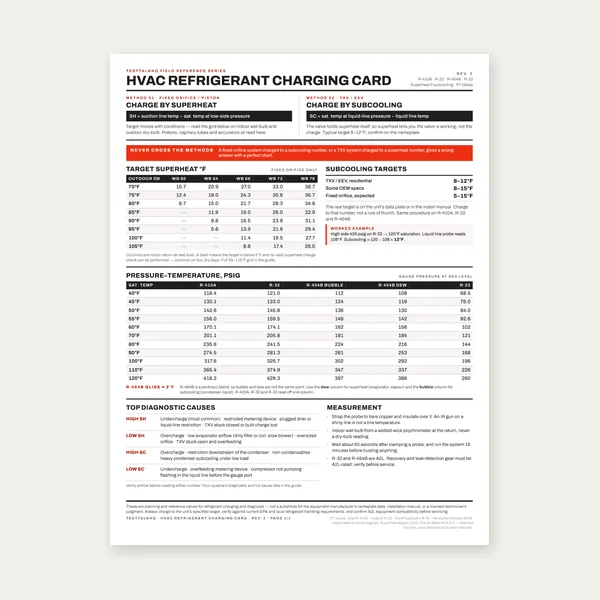
HVAC Refrigerant Charging Card
One page. Superheat, subcooling and PT for four refrigerants.
$3.99
Buy
Complete HVAC Charging Guide
15 pages. Full superheat grid, PT tables, A2L safety and diagnosis.
$12.99
Buy
HVAC Job Estimator
Quote HVAC work and catch a refrigerant mismatch before you order.
Excel or Google Sheets. Best on a computer.
$29.00
Buy
HVAC Complete Bundle
Card, 15-page guide and the estimator workbook. All six files.
Excel or Google Sheets. Best on a computer.
$34.99
$45.98 if bought separately — save $10.99
BuyCheckout opens in a new tab.
The hardware this argument is about
Every number on this page ends up as a decision about four cheap parts: the coupler, the plug that goes into it, the regulator and the filter. They are the restrictions, they are the things you can actually change, and they are almost always bought on thread size rather than on published flow. The hose behind them decides whether any of it survives.
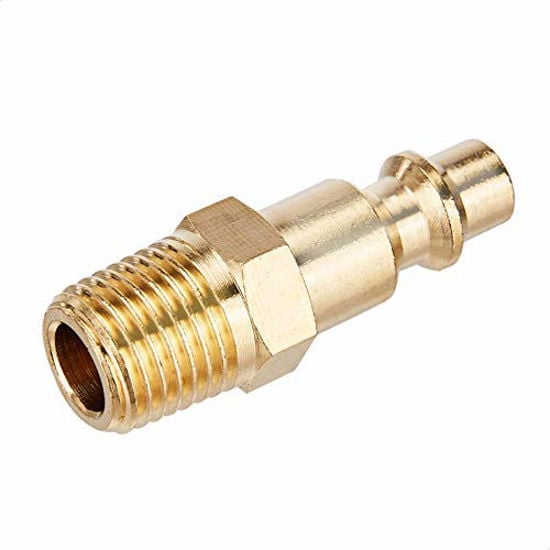
Amazon Basics Quick Connect Coupler & Plug Kit
- A coupler and its plug are two restrictions in series, not one
- Matched sets stop the mixed-profile fits that leak and strangle
- 14 pieces means the whole shop can run one consistent profile

LE LEMATEC Regulator & Flow Control Valve
- A gauge at the tool is how you catch a drop that only exists under flow
- 0–150 psi span covers ordinary shop supply pressures
- Set pressure at the tool, not at the tank, and the argument settles itself
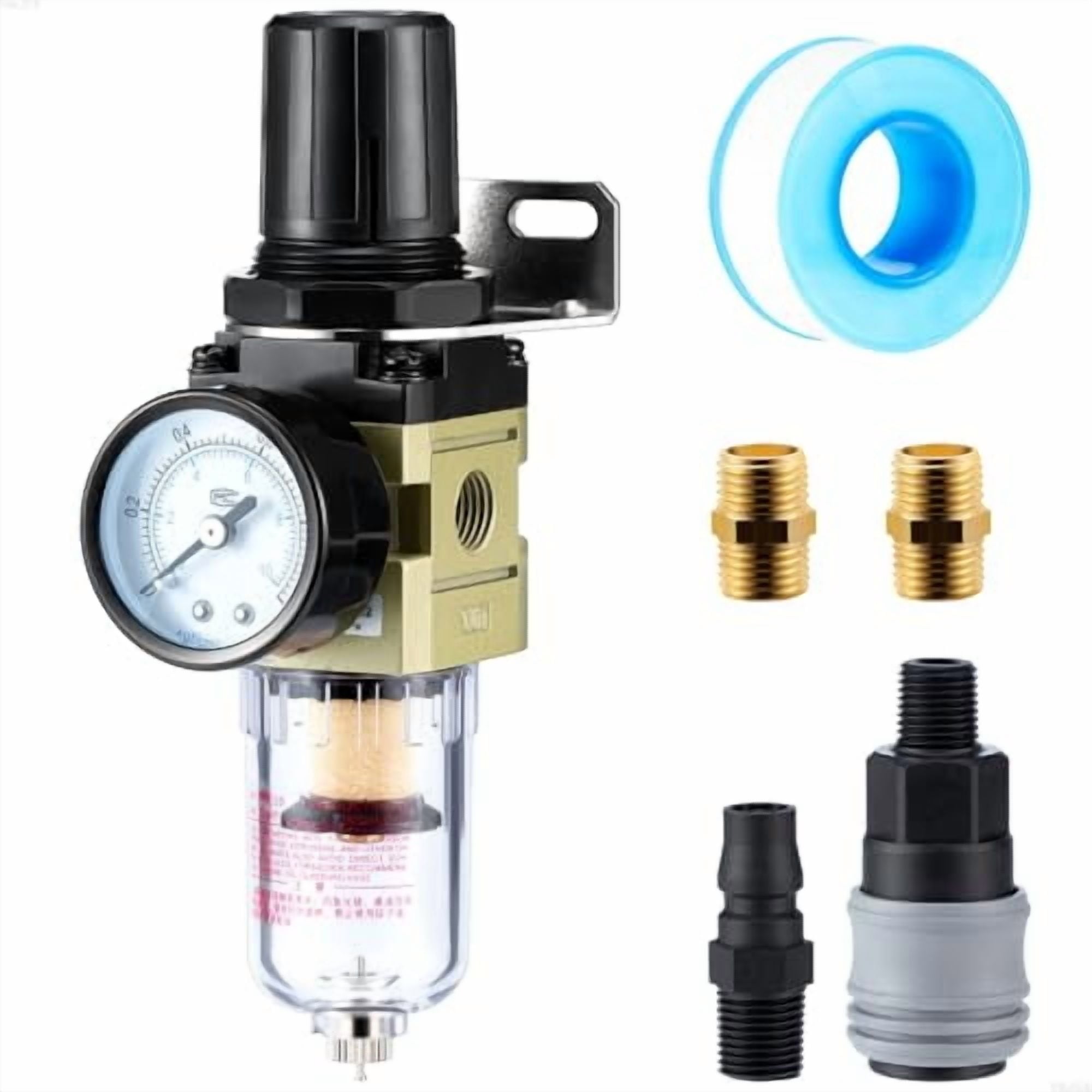
Hromee 1/4 in Filter Regulator AW2000-02
- Combines two of the series restrictions into one body
- A loading element raises the drop over time — the datasheet figure is the clean one
- Bowl drain keeps the element from becoming the restriction
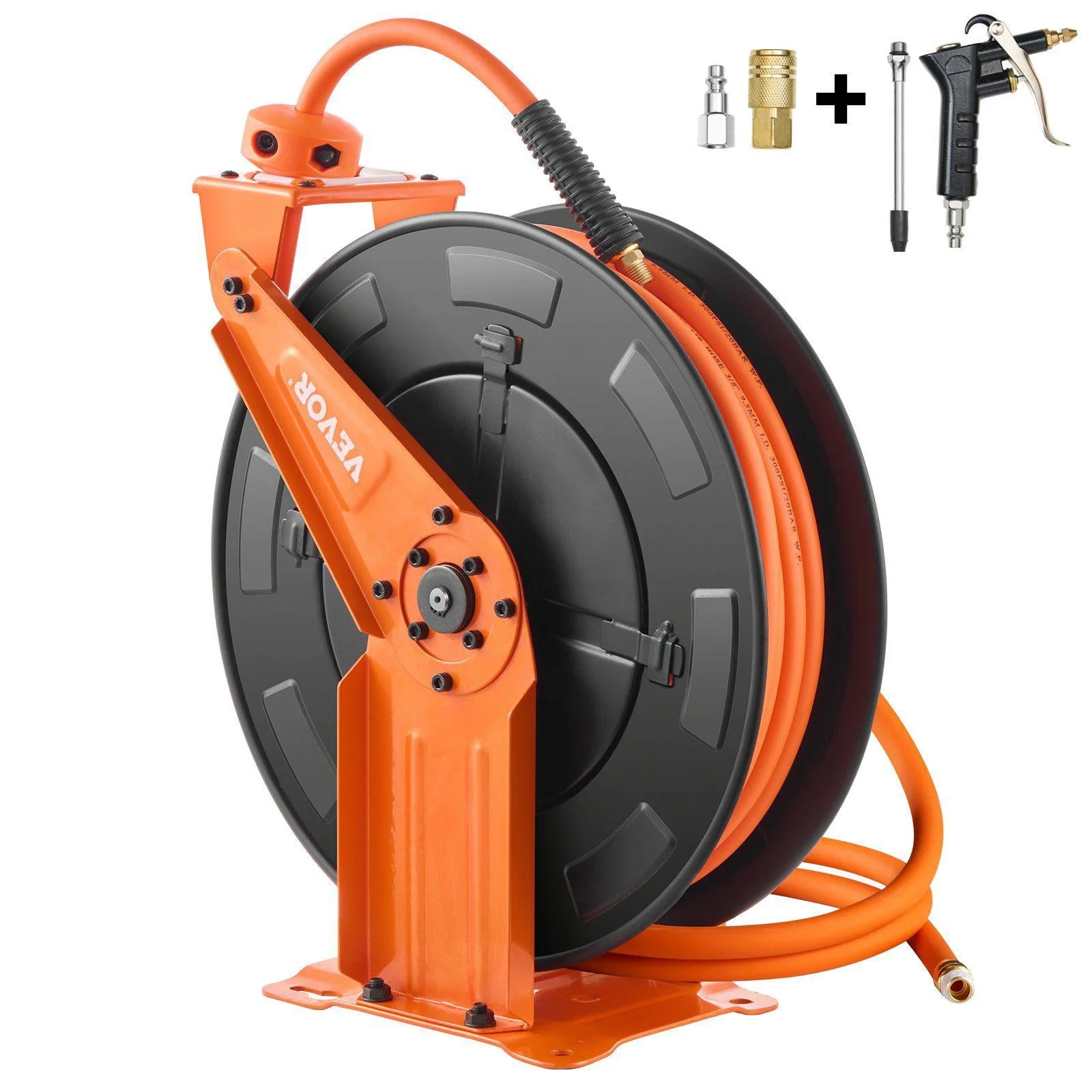
Relhost Retractable Air Hose Reel 3/8 in × 65 ft
- 3/8 in bore instead of 1/4 in is the cheapest flow upgrade on most lines
- Hose loss is friction over a length — a different calculation from Cv
- Right couplers behind an undersized hose just relocate the problem
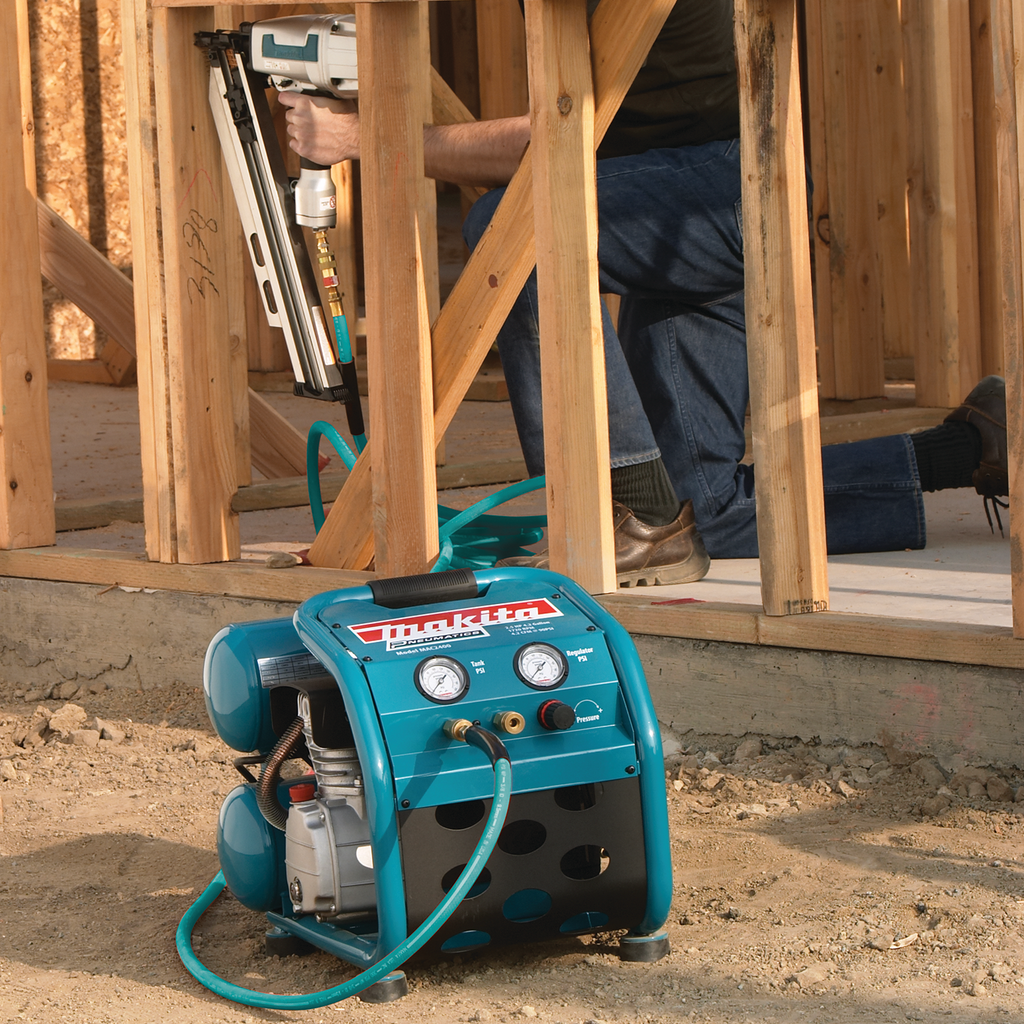
Makita MAC2400 Big Bore Air Compressor
- If supply pressure sags under load, no component choice fixes it
- Published delivered CFM at 90 psi is the comparable number, not horsepower
- Supply first, then components, then hose — in that order
As an Amazon Associate, TestTalkHQ earns from qualifying purchases. Prices and availability can change.
Which to use, by situation
Use Cv when the conditions are not the catalogue’s
Running at 120 psig instead of 90? Working to a 2 psi drop budget instead of 5? Feeding a cylinder circuit where the pressure at the component is not the header pressure? Then the SCFM figure on the box was measured under conditions you are not operating in, and the only honest route is to convert to Cv and re-run the equation with your own numbers.
Use Cv whenever components are in series
SCFM ratings cannot be combined. There is no arithmetic that turns “33 SCFM coupler plus 28 SCFM plug plus 40 SCFM regulator” into an assembly figure. Cv combines properly — as the sum of the reciprocal squares — and that is the whole reason the coefficient exists as a concept. Any air path with more than one restriction has to be worked in Cv.
Use the SCFM rating when you are comparing like with like
Two couplers, same catalogue, same stated conditions, and you just want the bigger one. The SCFM figures are then a valid ranking and converting them buys nothing.
Use neither near the sonic point
Once the outlet pressure approaches half the absolute inlet pressure, the two standard published forms of the gas equation disagree by about 6%, and the component is at its flow ceiling anyway. Blowguns, blow-off nozzles and exhaust ports live here. For those, go to the manufacturer’s own measured consumption figure for the specific part, not to any equation.
A short decision table
| Your situation | Work in | Why |
|---|---|---|
| One component, conditions match the catalogue headline | SCFM rating | Already the answer — no conversion adds anything |
| Two or more restrictions in the same air path | Cv | SCFM ratings cannot be combined; Cv can |
| Supply pressure is not 90 psig | Cv | Flow scales with absolute pressures, not linearly with gauge |
| Drop budget is not the catalogue’s | Cv | The rating assumed a drop you are not allowing |
| Hot air, straight off a discharge | Cv | Temperature correction is small but only Cv lets you apply it |
| Comparing two parts in one catalogue | SCFM rating | Same stated conditions makes it a fair ranking |
| Listing does not state pressure and drop | Neither | The number is unusable — find a datasheet |
| Outlet below half the absolute inlet | Manufacturer data | Choked; published equations diverge by about 6% here |
Two ratings that are not this argument at all
Worth separating out, because they get dragged in:
Port size. Not a flow rating in any sense. It tells you what will screw together. Published Cv for the same nominal thread varies by a factor of two or three between manufacturers and body styles, which is why a like-for-like coupler replacement can quietly halve the flow at a station.
Maximum pressure rating. A safety and containment figure. A component rated to 300 psi is not thereby a high-flow component; the two properties are unrelated.
And one genuinely separate question that this page is often confused with: which flow unit a number is quoted in. SCFM, ACFM and ICFM are different measures of the same air stream, and swapping them silently is its own class of error. That is covered in SCFM vs ACFM vs ICFM — get the unit right first, then worry about whether to work in Cv or SCFM.