
Compressed air is the only trade where the same machine can honestly be advertised as 18 CFM, 23 CFM or 25 CFM depending on which letter goes in front, with nobody lying. The letters are not marketing — each one answers a genuinely different engineering question, and using the wrong one is how a correctly specified system ends up short. This is what each measures, when each is the right number, and how to get two differently quoted machines onto the same footing before you compare them.
The one-line version
| Rating | What it measures | Changes with altitude? | Use it for |
|---|---|---|---|
| SCFM Standard cubic feet per minute |
A mass of air, expressed as the volume it would occupy at fixed reference conditions | Yes — falls with density | Comparing machines, matching supply to tool demand, anything you are buying |
| ACFM Actual cubic feet per minute |
A real volume at the real conditions at that point in the system | Barely — it is a volume | Sizing physical hardware: pipe, dryers, filters, receivers, anything with a bore |
| ICFM Inlet cubic feet per minute |
The actual volume arriving at the compressor inlet, after the intake filter | Barely, for the same reason | What the pump itself must swallow; sizing intake filtration and ducting |
The distinction that matters most is the first column. SCFM is a mass wearing a volume’s clothing. ACFM and ICFM are genuine volumes. Everything else follows from that one fact.
SCFM: the number you buy and sell on
SCFM expresses flow as the volume that air would occupy at an agreed reference state. Because the reference is fixed, SCFM is proportional to mass flow, and mass is what actually does work. Two machines quoted in SCFM against the same standard can be compared directly, which is exactly why the standard exists.
The complication is that there is more than one standard:
| Basis | Pressure | Temperature | Humidity | Dry-air pressure |
|---|---|---|---|---|
| ISO 1217 / CAGI / PNEUROP | 14.504 psia | 68°F | 0% RH | 14.504 psia |
| ASME standard air | 14.696 psia | 68°F | 36% RH | 14.574 psia |
| US gas-industry SCFM | 14.696 psia | 60°F | 0% RH | 14.696 psia |
The first two land within half a percent of each other once the humidity is taken off the ASME figure, which is why nobody argues about them much. The gas-industry basis is referenced at a colder 60°F, which makes the same physical machine read about one and a half percent smaller. That is small — but it is the same order as differences people genuinely weigh when choosing between two brands, so it is worth knowing which sheet you are reading.
When SCFM is the right answer
- Comparing two compressors. Only if both are quoted to the same standard. If they are not, convert first.
- Matching supply to tool demand. Tool ratings are almost always SCFM at a stated pressure, usually 90 psig. Add them in SCFM and compare against the compressor’s SCFM.
- Anything involving altitude. Delivered SCFM is what falls at elevation, which is the whole subject of the altitude derate calculator.
- Energy and cost. You pay to compress mass, not volume.
Gear that decides whether the numbers hold
Nothing here recovers the lost air — nothing can. What these do is let you specify honestly, drive the pump at elevation, and measure what is really arriving.
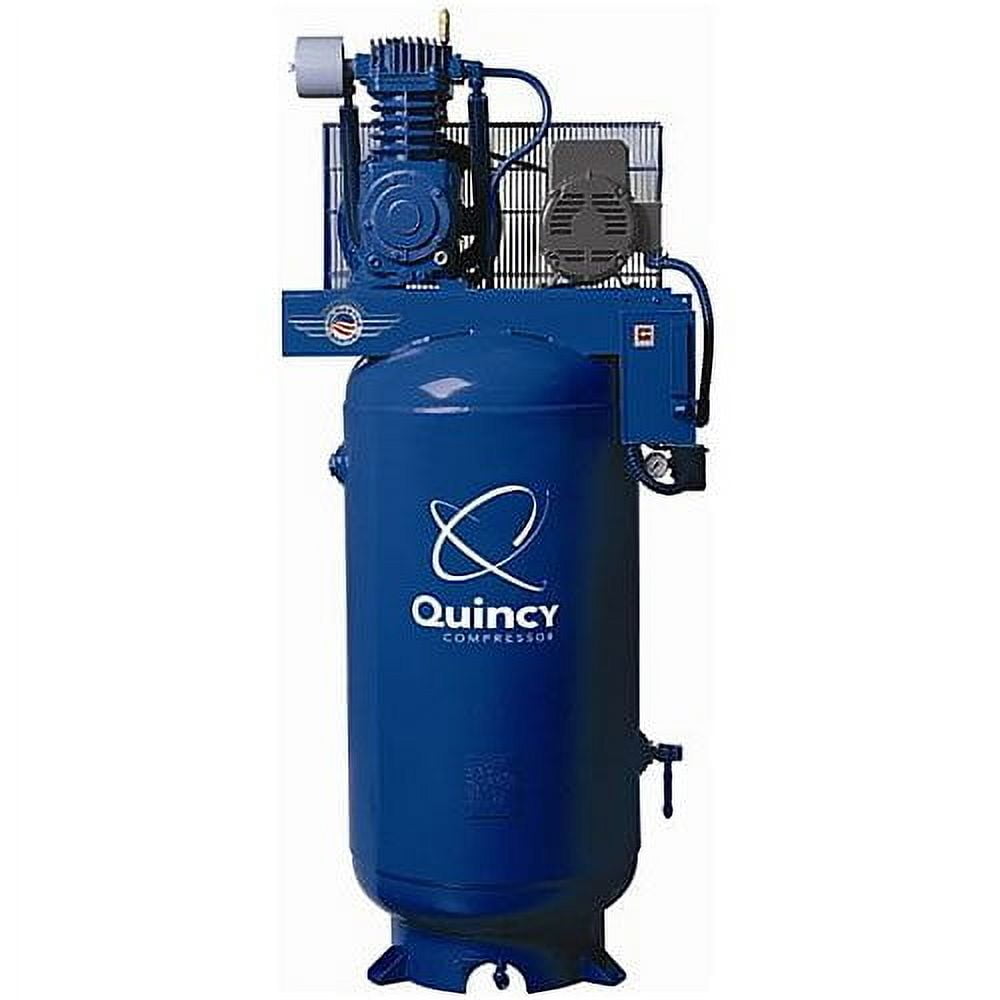
Quincy QT-7.5 7.5 HP 80-Gallon
- At elevation the honest answer is usually a size up
- Two-stage shares the higher compression ratio
- 80 gallons of storage covers what thin air cannot
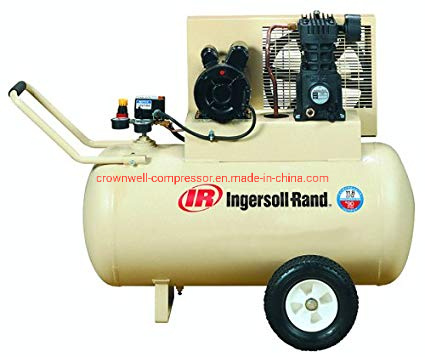
Ingersoll Rand SS3J5.5GK-WB Gas Drive
- High mountain work with no power on site
- Naturally aspirated engines derate steeply too
- Two separate deratings to check, not one
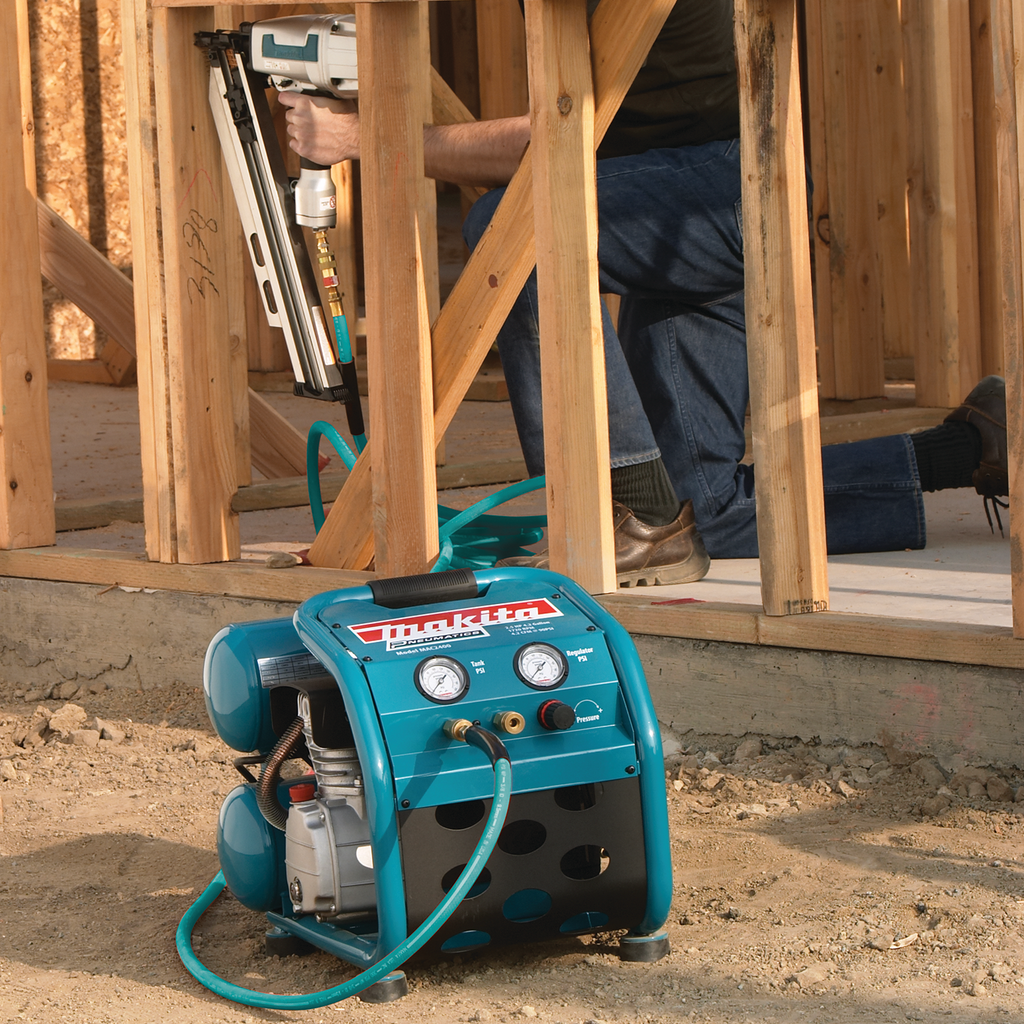
Makita MAC2400 2.5 HP Big Bore
- More displacement per nameplate horsepower
- Displacement is what altitude cannot take away
- Portable enough for mountain trim work

Regulator & Flow Control 0-150 PSI
- Hold the tool pressure the calculation assumed
- Gauge reads against the local atmosphere
- Cheapest way to see the sag as it happens
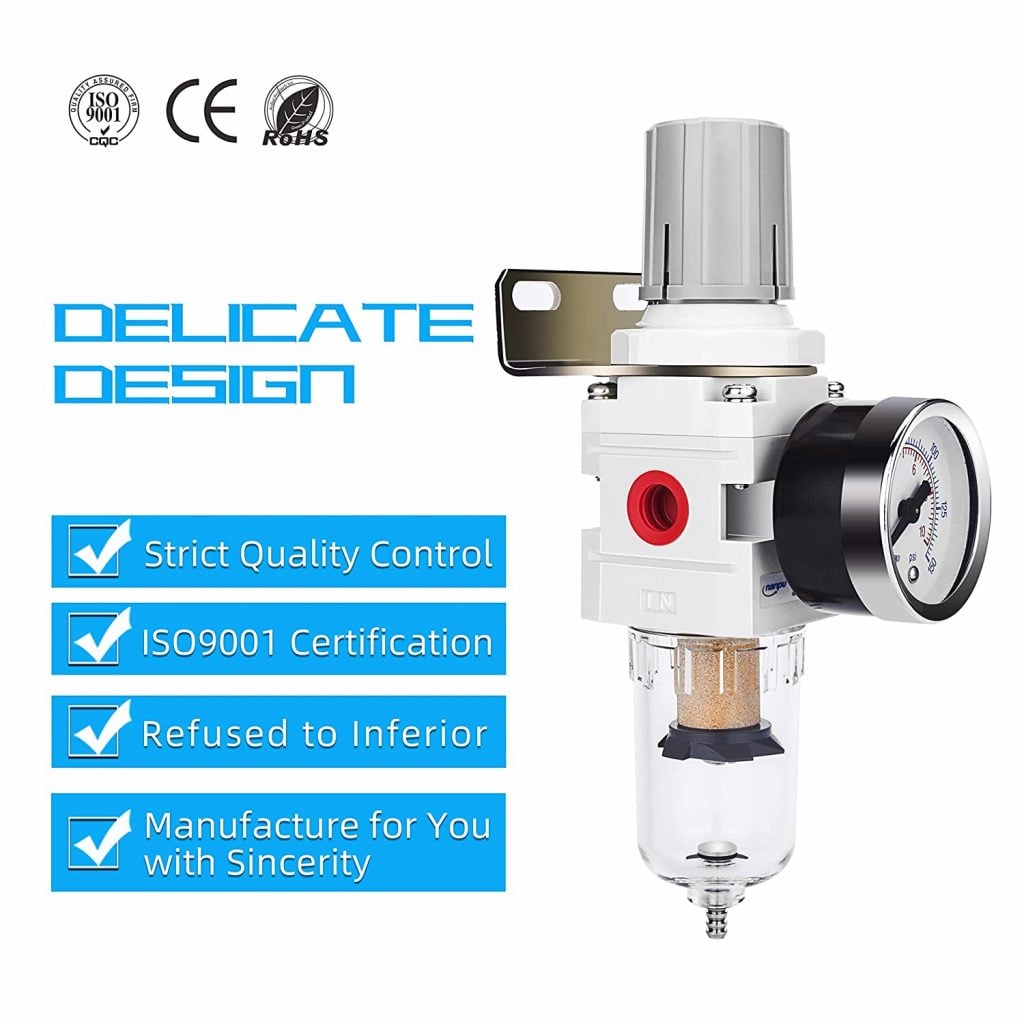
Filter / Regulator Combo
- Hot thin air carries a bigger vapour fraction
- Keeps condensate out of tools already working harder
- Mounts at the tool, where regulation belongs
As an Amazon Associate, TestTalkHQ earns from qualifying purchases. Prices and availability can change.
ACFM: the number your hardware feels
ACFM is the real volume passing a point, at the pressure and temperature at that point. It is not a comparison number — it is a physical one. Pipe does not care about mass; it cares how many cubic feet per minute it must pass, because that sets velocity, and velocity sets pressure drop.
This is why the same air has a different ACFM at every point in the system. Sixty SCFM leaving the compressor might be 60-odd ACFM at the inlet, around 8 ACFM inside a 100 psig header, and 60 ACFM again the moment it vents to atmosphere. Nothing changed but the pressure.
temperatures absolute (°R); Φ = relative humidity as a fraction
When ACFM is the right answer
- Pipe and hose sizing. Velocity and pressure drop are volume-driven. The pipe size calculator converts internally for exactly this reason.
- Dryers, filters and separators. These are almost always rated in ACFM at stated inlet conditions, with correction factors for anything else. Feeding a dryer an SCFM figure and calling it done is a standard way to undersize one.
- Receiver and blow-down sizing. Volumes, not masses.
- Anything where the air is at a pressure other than atmospheric.
ICFM: the number the pump swallows
ICFM is ACFM measured specifically at the compressor inlet, after the intake filter and any ducting. It exists as a separate term because that filter creates a pressure drop, and air that has just passed through a restriction is at a slightly lower pressure than the surrounding atmosphere — so it has expanded, and its volume has grown:
Compressor vendors use ICFM to establish what is happening in front of the machine when there is added equipment — inlet filtration, a blower, a booster. For most shop installations the difference between ACFM and ICFM is a percent or two and not worth chasing.
Where it earns attention is the case where it turns into a real fault: a neglected intake filter. A badly restricted intake drops the pressure at the cylinder, and low inlet pressure is functionally identical to gaining elevation. A choked filter can cost as much capacity as moving the shop several thousand feet up a mountain, which is why it is the first thing to check on the altitude troubleshooting list.
Displacement CFM: the fourth number, and the one to distrust
Displacement CFM is bore × stroke × RPM, a geometric figure that assumes the pump fills completely on every stroke and delivers everything it takes in. It does neither. Real volumetric efficiency on a single-stage reciprocating machine is typically well below that ideal, and it falls further as the compression ratio rises.
Displacement is not a lie, but it is not a delivery figure, and on budget machines it is sometimes the number in the largest type. If a spec sheet quotes CFM with no reference conditions, no test standard, and a figure that looks generous for the horsepower, treat it as displacement until proven otherwise.
Putting two data sheets on the same footing
A practical procedure when you are comparing machines quoted differently:
- Identify what each sheet is actually quoting. Look for a named standard (ISO 1217, CAGI data sheet, ASME), a stated test pressure, and stated reference conditions. If none of those appear, ask.
- Reject displacement figures from the comparison entirely, or get the delivered figure to go with them.
- Put both onto the same SCFM basis. The differences between ISO 1217 and ASME are under half a percent; between either of those and the 60°F gas basis, about one and a half percent.
- Check the test pressure. A machine quoted at 100 psig and one quoted at 175 psig are not comparable, because delivered air falls as working pressure rises on the same machine. Compare at the pressure you will actually run.
- Only then apply your site derate for elevation, inlet temperature and humidity — and apply it to both candidates equally.
Which one goes in which calculator
- Tool demand, compressor sizing, altitude derate → SCFM.
- Pipe, hose, dryer, filter, receiver → ACFM at the conditions at that point.
- Intake ducting and filtration → ICFM.
- Nothing → displacement CFM, unless it is all you have and you are sanity-checking a claim.
The TestTalkHQ calculators follow this convention throughout: demand tools work in SCFM, the pipe size calculator converts to ACFM internally before computing velocity and drop, and the altitude derate calculator shows both side by side so the relationship is visible rather than hidden.
Frequently asked questions
Is CFM the same as SCFM?
Not reliably. "CFM" on its own is ambiguous and is used loosely for all of these. On a reputable industrial data sheet it usually means delivered air to a named standard. On a consumer box it may well mean displacement. The absence of a stated reference condition is the tell.
Which number do air tool manufacturers quote?
Almost always SCFM at a stated pressure, usually 90 psig, and frequently at a duty cycle assumption buried in the fine print. A grinder rated "6 SCFM at 90 psig" commonly means continuous consumption, while an impact wrench rated the same figure is usually averaged over intermittent use. That duty assumption matters more than the standard does.
Why is ACFM higher than SCFM at my site?
Because your air is thinner than the reference air. The same mass occupies more volume when it is lower pressure, warmer, or wetter than the standard state. At a hot, high site all three push the same direction, which is how a 100 SCFM demand becomes 129 ACFM of actual inlet volume.
Do I need to worry about ICFM in a normal shop?
Rarely as a calculation, often as a maintenance item. The numerical difference from ACFM is a percent or two with a clean filter. A neglected one turns that into a serious capacity loss, so the useful takeaway is to change the intake filter rather than to compute ICFM.
If SCFM is mass, why not just quote pounds per minute?
It would be clearer, and some process industries do exactly that. Compressed air inherited volumetric units because the equipment — receivers, pipe, tools — is all volumetric, and because tradespeople reasonably want the supply number and the demand number in matching units. SCFM is the compromise: mass flow dressed as volume so it sits next to a tool’s rating without conversion.