
Klein Tools CL800 Digital Clamp Meter
- True RMS, so a drive-fed motor reads honestly
- Clamp one leg with the machine loaded and you have item 11
- 1000V rating covers 480V three-phase compressor rooms
Isentropic power, specific power and isentropic efficiency — the same three numbers CAGI prints on a compressor data sheet
There is a hard thermodynamic floor under every compressor: the power it would take to squeeze that much air to that much pressure if the machine were perfect. Nothing reaches it, but the gap between the floor and what your meter actually reads is the only honest measure of whether a compressor is any good — and it is the number the industry itself uses. This works out that floor from your capacity and pressure, divides it by the power your package really draws to give you the isentropic efficiency, and puts the answer next to the band from 126 published CAGI data sheets so you can see where you land.

Everything above is arithmetic on numbers you supplied, and the weakest of those numbers is almost always the power. A nameplate is not a measurement, a brochure kW is not a measurement, and a machine that was efficient in 2015 is not necessarily efficient now. These are the tools that put a real figure into the power box — plus the regulator that lets you act on the pressure answer.
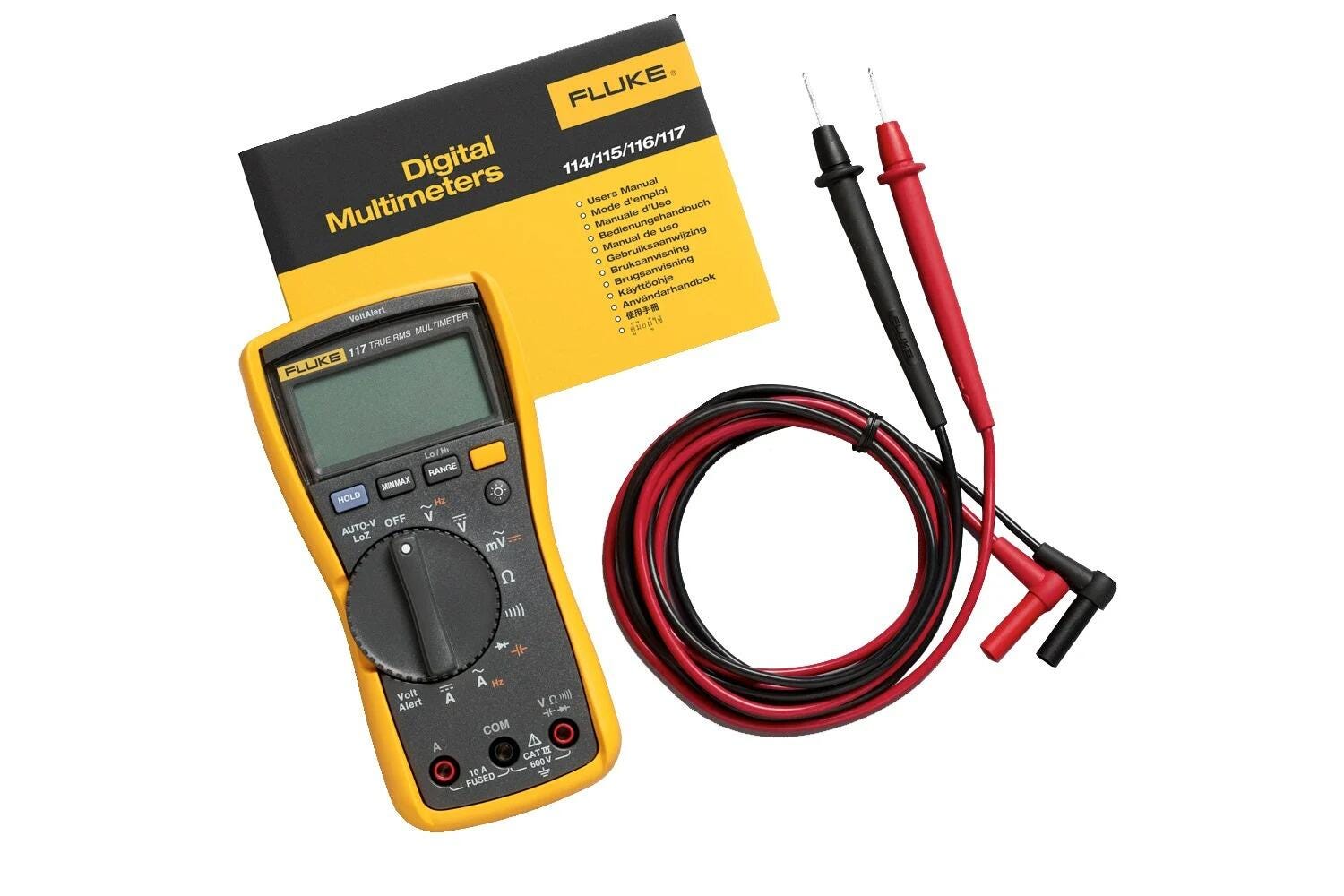
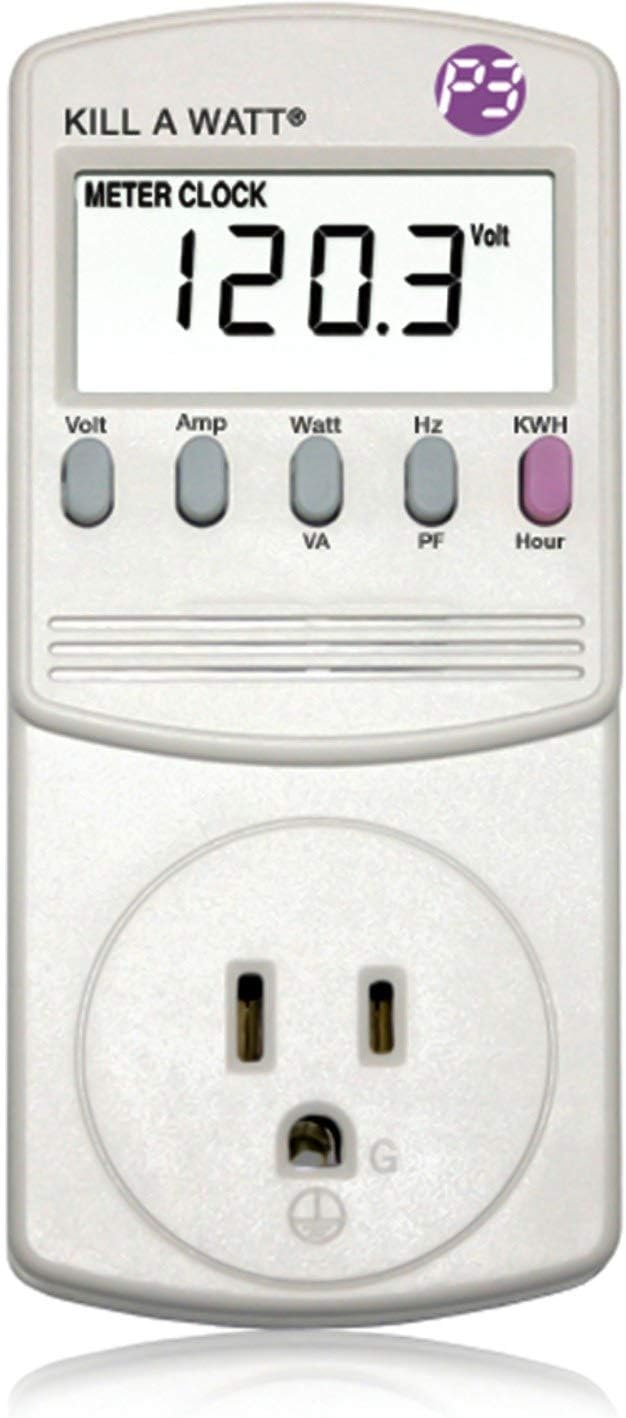

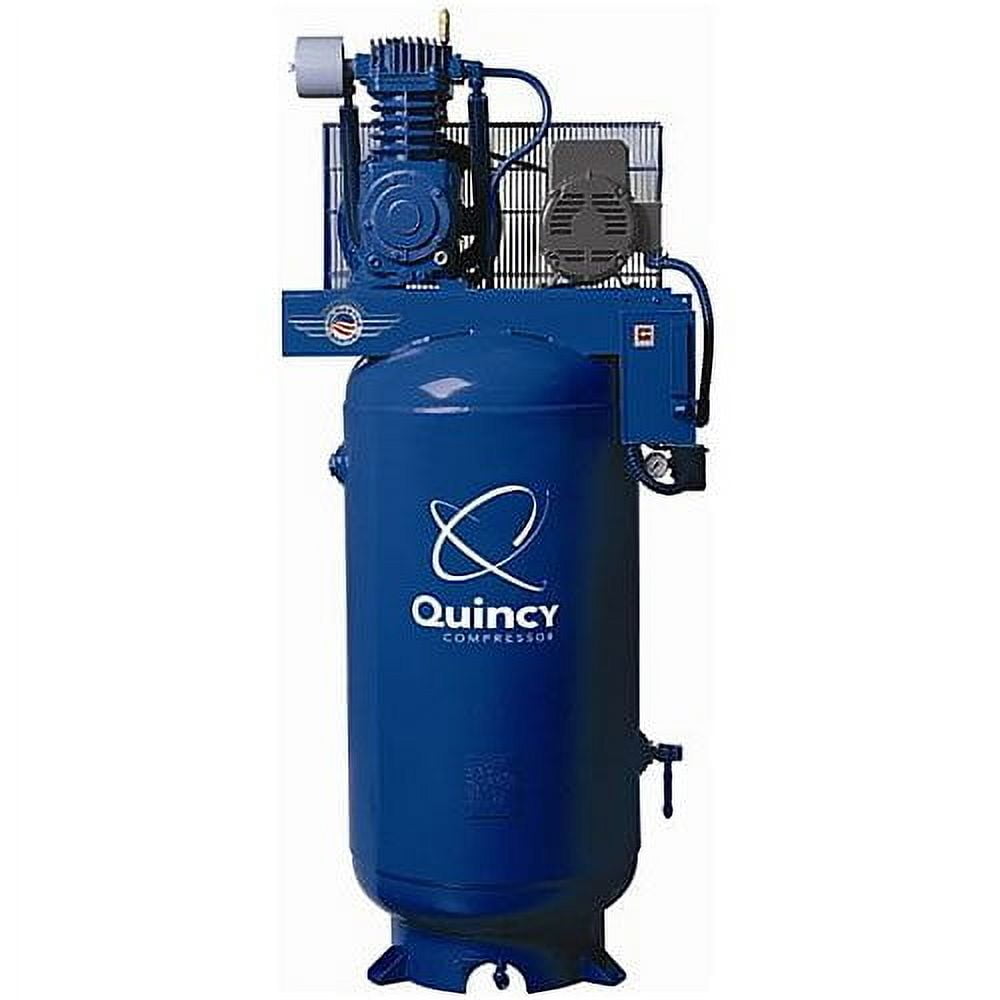
As an Amazon Associate, TestTalkHQ earns from qualifying purchases. Prices and availability can change.
A compressor does one job: it takes air at one pressure and hands it back at a higher one. The minimum energy that job can possibly take is fixed by thermodynamics, not by the manufacturer, and it is worth knowing because it is the only fair yardstick. Everything above that minimum is friction, leakage past the rotors or rings, pressure drop across the inlet filter, oil being dragged around, the cooling fan, and the motor's own losses.
That second line is the whole trick. It is item 13 on the standard CAGI compressor data sheet, and the Compressed Air and Gas Institute added it for a specific reason: so that two similar machines quoted at slightly different pressures could be compared honestly. Specific power in kilowatts per 100 cfm is the number that pays your bill, but it is not comparable between a machine rated at 125 psig and one rated at 130. Isentropic efficiency normalises the pressure out.
The capacity input is actual cubic feet per minute at inlet conditions. That is what ISO 1217 Annex C measures and what item 3 on a CAGI sheet reports. It is not scfm, it is not "displacement", and it is very often not the figure on a spec page, which may be a displacement number, a free-air-delivery number at some other pressure, or a marketing number with no test behind it at all. If your isentropic efficiency comes out above 100%, the capacity is the first thing to doubt.
Pressure has the same trap. A load/unload machine has two settings, usually about 10 psi apart, and the capacity was measured at the load pressure. Using the unload figure inflates the isentropic power and flatters the machine.
We pulled every fixed-speed CAGI data sheet published by one Performance Verification Program participant — 356 PDFs — and kept the 126 that carried a complete, internally consistent set of capacity, pressure, package power, specific power and isentropic efficiency. Here is the shape of it.
Two things fall straight out of that. The first is the spread: from 52% to 84% inside a single manufacturer's current single-stage range. A machine at the bottom of that band burns roughly sixty percent more electricity than one at the top to deliver the same air at the same pressure. Nobody is going to tell you which one you bought unless you work it out.
The second is the gap between one stage and two, and it needs explaining because it looks like cheating.
The isentropic reference is a single uninterrupted squeeze from inlet to discharge, with the air getting hot as it goes and that heat staying in it. Split the job into two stages and cool the air back down in between, and you are moving the process toward isothermal compression, which genuinely requires less work. At a 9.6:1 ratio — 125 psig from a 14.5 psia inlet — a perfect two-stage machine with perfect intercooling would need 16.0% less work than the single-step isentropic reference.
CAGI computes item 13 against the single-step reference regardless of how the machine is actually built. So a two-stage package can, and does, publish a number in the high eighties. It has not beaten thermodynamics; it has been measured against a yardstick that ignores intercooling. The practical consequence is simple and easy to get wrong:
Everybody in a shop knows the rule: about four cubic feet per minute per horsepower. It is a decent rule and it has one large blind spot — it never says at what pressure. Here is what the same 126 sheets give, using the drive motor nameplate rating rather than measured power:
So the rule is roughly right at 100 psig and roughly a third optimistic at 175. If you size a compressor at four cfm per horsepower and then run it at 175 psig because somebody set the pressure switch there years ago, you will be short of air and you will not know why.
We tried. Across those 126 sheets, taking the package input power, converting to horsepower and rounding up to the next standard NEMA rating matched the published nameplate on exactly one sheet out of 126. Screw packages run their motors into the service factor at full load pressure, the cooling fan motor is inside the package power figure, and nominal ratings are nominal. A calculated motor size would be a fabricated number dressed as an answer, so this calculator gives you the acfm-per-nameplate-hp check against real machines instead, and leaves the selection to the data sheet of the machine you are actually buying.
Look at the exponent in the formula. Power depends on the pressure ratio raised to 0.286, so every psi you take off the top is worth real money, and the first psi is worth more than the last. Run the arithmetic at a fixed capacity and you get:
The familiar shop rule — every 2 psi is worth about 1% — turns out to be honest near 100 psig and progressively conservative above it. That is not a flaw in the rule; it is that 2 psi is a smaller slice of a larger ratio as the pressure climbs.
The saving figure on this page holds the isentropic efficiency constant across the pressure change. That is close enough over a modest reduction and optimistic over a large one, because a screw airend is designed around a built-in volume ratio and drifts off its best point when you move a long way from the design pressure. Meter it before and after; that is the only honest confirmation.
The thermodynamic minimum is 20.14 hp, which is 15.02 kW — and no real machine achieves it. At the median isentropic efficiency of the published single-stage rotary screw sheets, 73.3%, the package would draw about 20.5 kW at the plug. Published machines around that pressure deliver 2.41 to 5.12 acfm per nameplate horsepower with a median of 4.29, which puts 100 acfm in the 25 hp class. Nameplate horsepower is not recoverable from the power figure with any precision, so use the data sheet of the specific machine.
It depends entirely on pressure, which is why the number is only useful when you compare like with like. Across 126 published lubricated rotary screw data sheets: 15.6 to 24.1 kW per 100 cfm at 100 psig with a median of 17.8; 17.2 to 26.9 at 125 psig, median 20.1; and 22.8 to 34.2 at 175 psig, median 27.4. If you want to compare two machines quoted at different pressures, compare isentropic efficiency instead.
It is item 13: the power a perfect, reversible, single-step compression of the rated capacity to the rated pressure would take, divided by the total package input power the machine actually draws. CAGI introduced it so that machines quoted at slightly different operating pressures could be compared fairly, because specific power alone cannot do that. Published single-stage rotary screw packages run from about 52% to 85%; two-stage packages run from about 84% to 89%.
Because one of the inputs is wrong. In order of likelihood: the capacity is a displacement or free-air figure rather than acfm at the inlet; the power is the motor nameplate rather than the measured package draw at full load; or the pressure is the unload setting rather than the load setting. A genuinely two-stage intercooled machine can exceed the single-step reference, but only by the intercooling benefit — around 16% at a 9.6:1 ratio, and only if the intercooling were perfect.
Yes, at higher pressure ratios, and the reason is intercooling rather than the second stage itself. Cooling the air between stages moves the process toward isothermal compression, which needs less work than adiabatic compression. At 125 psig from a standard inlet, perfect two-stage intercooling would cut the ideal work by 16.0%. Published two-stage sheets bear this out: they sit at 83.6% to 88.6% isentropic efficiency against 52.3% to 84.5% for single-stage.
At a fixed capacity, taking 2 psi off 100 psig cuts the compression work by 1.13%; off 125 psig by 0.86%; off 175 psig by 0.58%. Going from 175 psig to 125 psig saves 16.1%. The old rule of about 1% per 2 psi is accurate near 100 psig and conservative above it. Before making any of it permanent, find the highest-pressure device on the system, because it sets the floor for everything else.
Per actual cubic foot at the inlet, altitude decreases the power — thinner air means less mass in each cubic foot, so there is less to compress. But you also get less usable air out. Per unit of air actually delivered, altitude costs you more: 100 acfm-equivalent of standard air at a 12.2 psia inlet needs 118.9 acfm and 22.07 hp against 20.14 hp at sea level. Published CAGI figures are all written to a 14.5 psia inlet, so an efficiency computed at a different inlet is not comparable with them.
The isentropic power is valid for any compressor — it is thermodynamics, not machinery. The benchmark bands are not: the CAGI Rotary Compressor Performance Verification Program covers rotary compressors from 5 to 200 hp only, so there is no verified piston band to compare against. Compute the isentropic efficiency of a piston machine from a measured package power by all means; just do not judge it against the screw bands on this page.