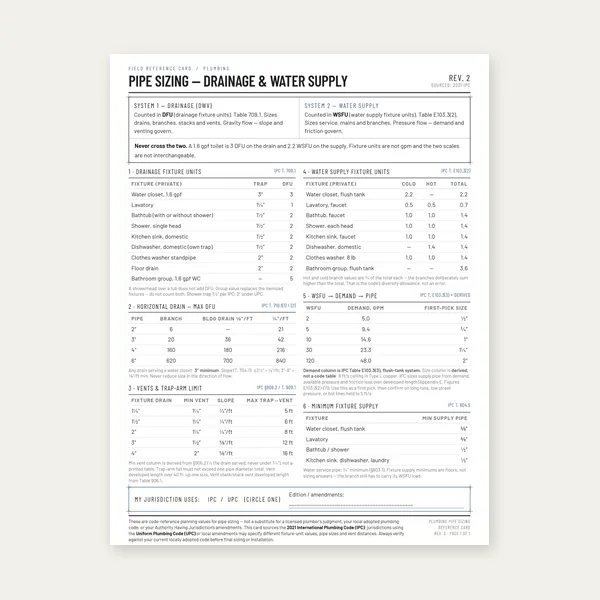
Plumbing Pipe Sizing Card
$3.99
BuyStarving burners, low manifold pressure on long runs, fittings nobody counted, the wrong gas table, and a meter that cannot feed a new tankless
Re-size the segment in the gas pipe sizing calculator. Method walkthrough: sizing guide. Longest vs branch: comparison. Related loads: furnace, water heater. Plumbing index: hub.
Check the capacity table before you blame the appliance. Load, developed length, gas type, and material.
Open Gas Pipe Calculator →What you see: Furnace ignition retries, water heater that takes forever to recover when the dryer runs, cooktop that will not hold a high flame with the oven on, or a manometer that shows operating pressure collapsing at the appliance inlet.
Why it fails: The trunk was sized for one appliance, or longest-length was ignored and a short tape measure was used while the far furnace still pulls on the same undersized line. Natural gas at ~7 in. w.c. standing can look fine until simultaneous load turns pressure drop into a hard fail.
Fix: Sum every input on the shared segment. Measure the path to the farthest appliance. Add fittings. Re-run the calculator. Upsize the trunk or split loads. Confirm with a dual-port manometer at the meter and at the appliance while loads fire. Gear from the mid-page product strip is what you use for that check — not a guess from the flame color.
What you see: A run that “should be” 35 ft of 3/4" on paper but has eight elbows, a drop, and two branch tees in the basement. Capacity table said go; field pressure says no.
Why it fails: Developed length is measured length plus equivalent length. On steel, each 90° elbow is about 2.5 ft and each branch tee about 5 ft on this sheet. Six elbows alone add 15 ft — enough to bump you into the next table row and sometimes the next size.
Fix: Walk the pipe and count. Enter elbows and tees in the calculator, or enter a known equivalent-length total in the override. Do not size from a floor-plan tape that skips the jogs to the water heater niche.
What you see: A propane conversion that kept the natural-gas pipe size, or CSST sized from a Schedule 40 memory of “3/4 is always enough,” or a high-pressure drop table used where the jurisdiction expects the 0.5 in. w.c. residential band.
Why it fails: IFGC Table 402.4(2), 402.4(28), 402.4(15), and 402.4(32) are not interchangeable. Propane energy density and table units differ. CSST EHD rows are not steel diameters.
Fix: Pick gas type and material explicitly in the calculator. Confirm the adopted pressure-drop table with the AHJ. Read the guide table list before you order fittings.
$3.99
Buy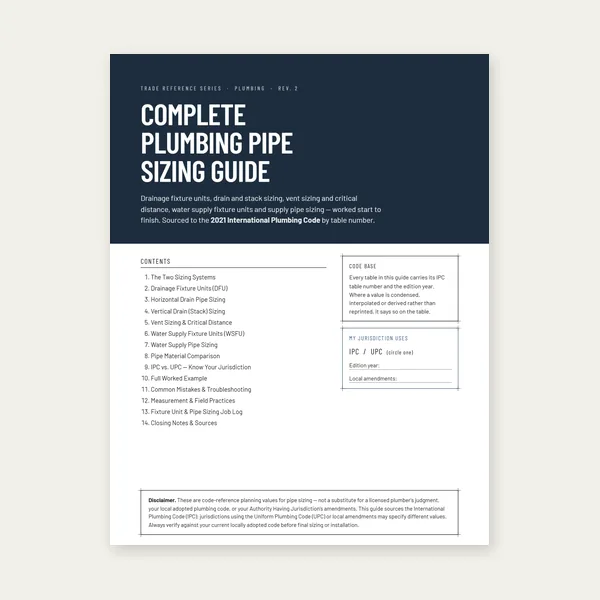
$12.99
Buy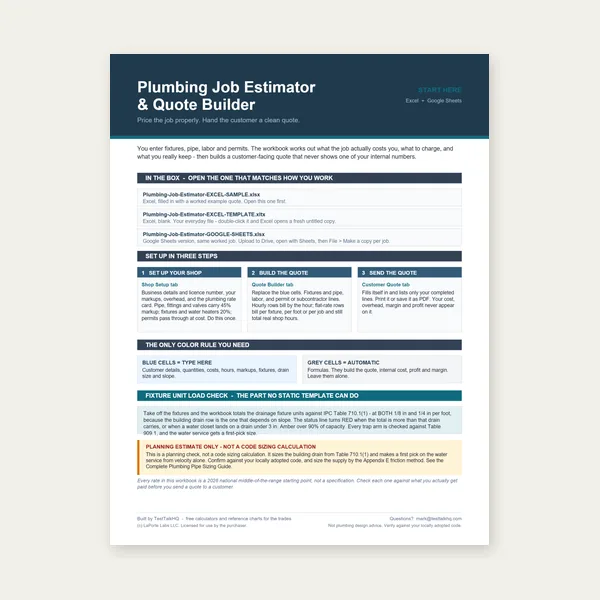
$29.00
Buy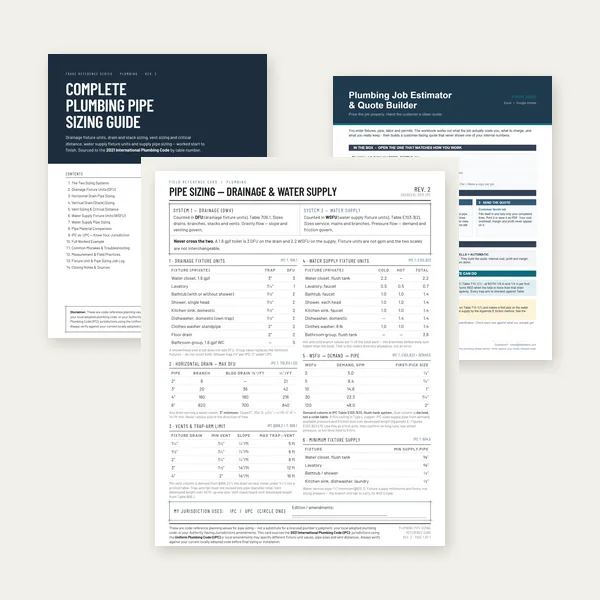
$39.00
BuyCheckout opens here — you stay on this page.
After you size the pipe, prove the joints and the pressure. Leak detectors, bubble solution, thread compound, and manometers from the live TestTalkHQ affiliate CSV only.
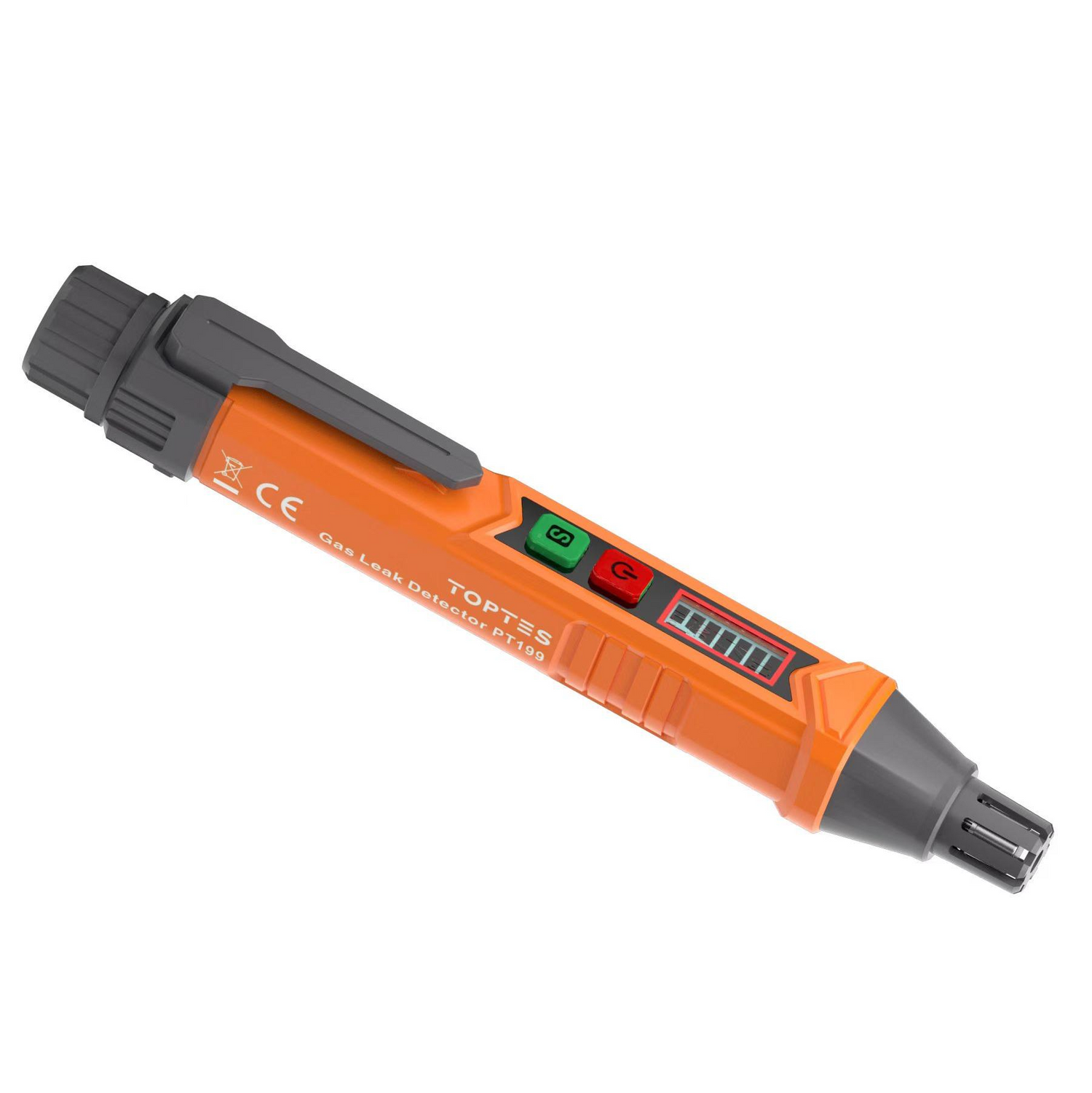
Audible/visual sniff test along joints, CSST fittings, and appliance connectors after a pressure test or a repair.
View on Amazon →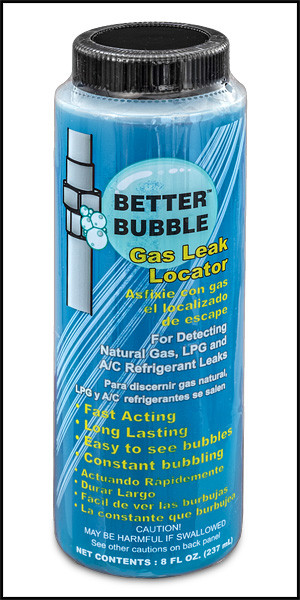
Brush-on bubble solution for threaded joints and flare fittings when the electronic sniffer is quiet but you still want eyes on the joint.
View on Amazon →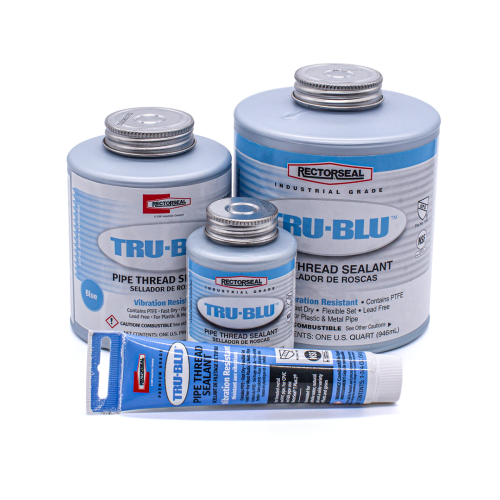
Listed pipe-thread compound for metallic gas pipe. Pair with NPT makeup from the NPT calculator — compound is not a substitute for correct thread engagement.
View on Amazon →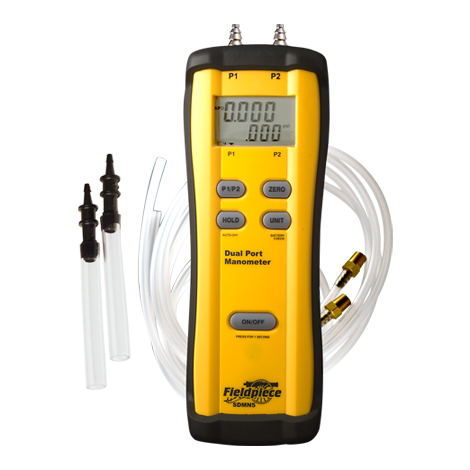
Inches of water column at the meter, manifold, and appliance inlet — the field check after a capacity table says the pipe is big enough.
View on Amazon →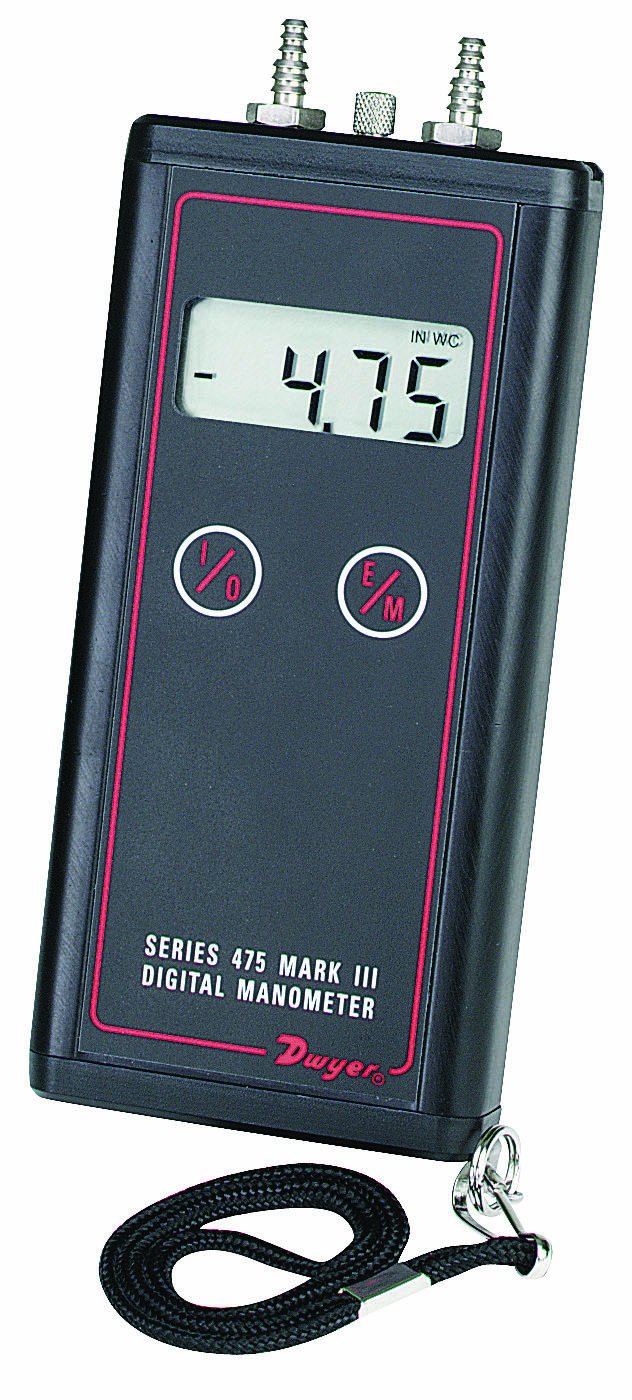
Handheld differential pressure for standing and operating pressure checks on natural gas and propane systems.
View on Amazon →As an Amazon Associate, TestTalkHQ earns from qualifying purchases. Product links are from the live TestTalkHQ affiliate CSV only.
What you see: Capacity tables say 1" steel covers the BTU sum, but every cold morning the house brownouts on gas when the furnace, dryer, and tankless stack. Utility meter badge is a small residential size.
Why it fails: Pipe sizing does not enlarge the meter or the regulator. A tankless water heater added to an older 250 CFH service is a classic mismatch. Pipe upsizing alone wastes money if the utility will not raise capacity.
Fix: Read the meter badge and the appliance total. Call the gas company for a load letter or meter upgrade before you dig a trench for larger pipe. Size the house pipe after you know what will feed it. Water-heater load planning: water heater sizing.
What you see: Unbonded CSST, sharp bends past the maker’s radius, terminations that are not listed fittings, or an EHD chosen because it “looked like 1/2 inch.”
Why it fails: CSST capacity is by EHD and manufacturer/IFGC tables. Bonding and strike protection are not optional decorations. A wrong EHD starves the same way undersized steel does.
Fix: Size with the CSST tables (or the manufacturer chart the AHJ requires). Install only listed fittings. Bond per instructions and the electrical code. Re-check capacity after the developed length includes bend adders.
Re-sizing a starved trunk? Start with load and developed length, then verify local code.
Gas Pipe Calculator →Yes. Orifices, heat exchangers, and regulator settings fail too. Use the manometer: if inlet pressure holds under load, chase the appliance. If pressure collapses on a shared trunk, chase pipe/meter.
No. Combustion air, orifice size, and adjustment matter. Yellow flame plus collapsing inlet pressure is a gas supply story.
Not blindly. Cost, fittings, and clearances add up. Size to the table, then add margin where the AHJ or future load warrants it. Do not use propane rows on natural gas as a fake margin.
The gas pipe sizing guide — developed length, tables, and worked examples.