Tool CFM ratings look simple until you discover continuous sanders and HVLP guns need sustained compressor delivery while impacts and nailers only spike briefly. This guide covers how to read a tool’s CFM/PSI spec, why duty cycle changes sizing, and how to build a compressor plan once you know each tool’s draw.
How to Read a Tool CFM / PSI Spec
Manufacturers usually list SCFM (or CFM) at a stated pressure — often 90 PSI for shop tools. That number is free-air consumption under the test method they use, not “tank gallons” and not the pressure you set on a regulator alone.
- SCFM @ 90 PSI — compare tools on the same pressure basis when possible.
- Average vs peak — impacts publish averages because the trigger is not held open; spray guns and sanders are closer to continuous peak.
- Nameplate beats marketing — two “1/2" impacts” can differ by several SCFM. Confirm the datasheet for critical buys.
Use the per-tool CFM requirement calculator for a quick typical value, then verify against your tool’s sheet before you purchase a compressor.
Why Duty Cycle Matters
Intermittent tools (impacts, nailers, blow guns) spend most of the minute not consuming air. Average CFM is low; tank volume helps bridge bursts while the pump recovers.
Continuous tools (HVLP, DA sanders, die grinders, plasma air supply, sandblast nozzles) keep the orifice open. The compressor’s delivery CFM at working pressure must stay ahead of the tool for the whole job. Extra tank gallons delay the problem; they do not erase an undersized pump.
Intermittent tools get a modest multiplier (~1.2–1.3×). Continuous tools get ~1.5× so leaks, long hose drop, and nameplate optimism do not strand you mid-pass.
Sizing a Compressor From Your Tool List
- List every air tool you will run — and whether any run simultaneously.
- Look up each tool’s SCFM @ working PSI (calculator + datasheet).
- Apply duty-aware margins to continuous tools first.
- If tools can overlap, add those continuous loads; do not assume “one at a time” unless your process guarantees it.
- Choose a compressor whose published delivery CFM at your PSI meets that total — then size tank for cycling comfort.
For multi-tool totals, use the Air Compressor CFM Calculator. If you are debating receiver size vs pump output, read Bigger Tank vs More CFM. Buying context: Air Compressor Buying Guide.
Look up one tool now Get typical SCFM @ 90 PSI plus duty-cycle recommended delivery CFM.
Related
HVAC
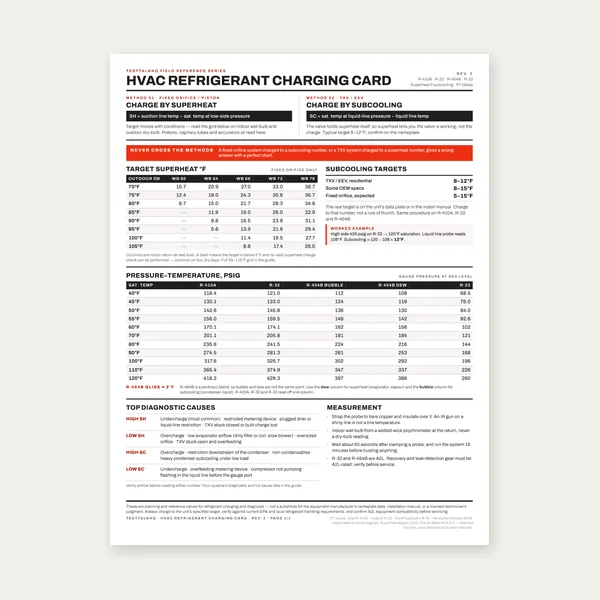
HVAC Refrigerant Charging Card
One page. Superheat, subcooling and PT for four refrigerants.
$3.99
Buy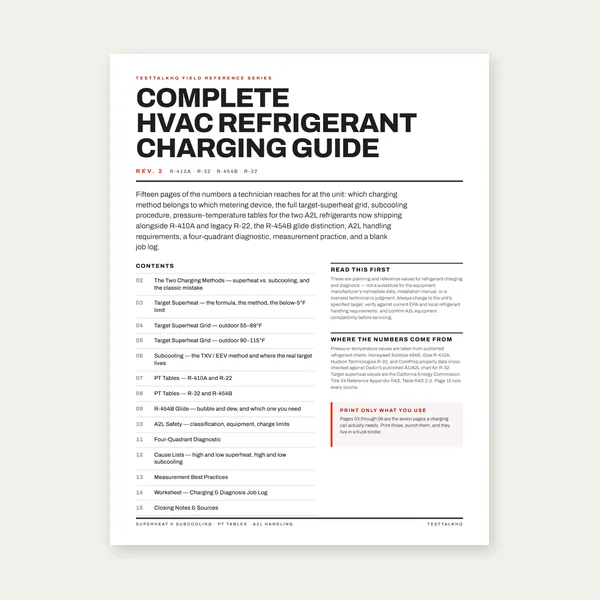
Complete HVAC Charging Guide
15 pages. Full superheat grid, PT tables, A2L safety and diagnosis.
$12.99
Buy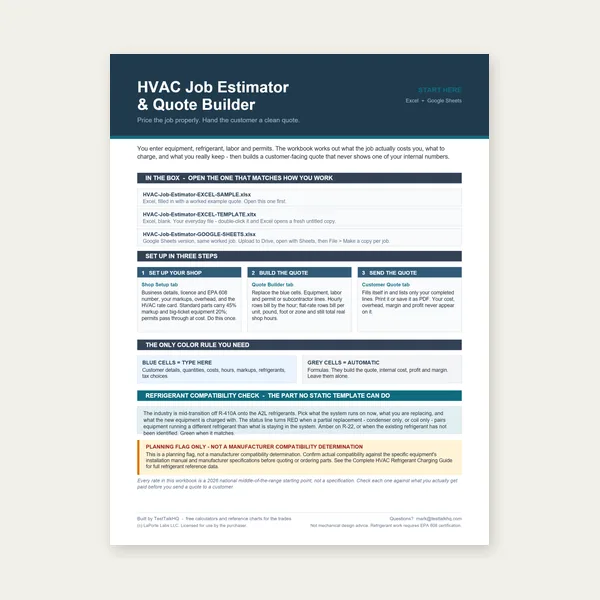
HVAC Job Estimator
Quote HVAC work and catch a refrigerant mismatch before you order.
Excel or Google Sheets. Best on a computer.
$29.00
Buy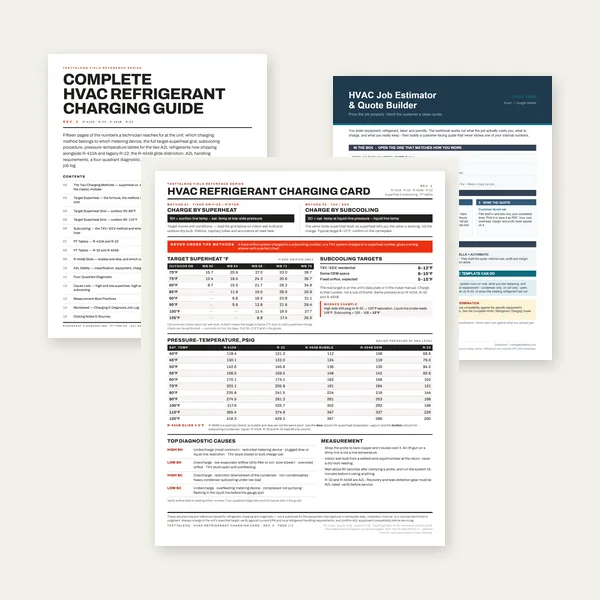
HVAC Complete Bundle
Card, 15-page guide and the estimator workbook. All six files.
Excel or Google Sheets. Best on a computer.
$34.99
$45.98 if bought separately — save $10.99
BuyCheckout opens here — you stay on this page.