When the compressor is “big enough on paper” but the tool still fades, the failure mode usually points to duty cycle, delivery CFM, hose drop, or running the pump at its thermal limit. Here’s how to diagnose the common symptoms.
Pressure Drop Mid-Use
Symptom: Gauge at the tank looks fine at idle, but tool pressure falls after 10–30 seconds of continuous trigger time (sander, HVLP, plasma, blast).
Likely causes: Compressor delivery CFM below continuous tool demand; long undersized hose; regulator too far from the tool; simultaneous second tool.
Diagnose: Put a gauge at the tool end while running. If tank pressure holds but tool pressure collapses, fix hose/fittings first. If tank pressure also falls steadily under continuous use, the pump cannot sustain the SCFM — look up the tool in the per-tool calculator and compare to the compressor’s delivery CFM at that PSI.
Tool Bogging Down / Losing Power
Symptom: Impact still snaps fasteners, but the DA sander slows, the die grinder whines down, or plasma cut quality collapses mid-plate.
Likely causes: Continuous duty tool on an intermittent-sized compressor; moisture icing or loading the air path; worn vanes/turbine in the tool.
Diagnose: Swap to a known-good intermittent tool (nailer/impact). If intermittent tools feel fine but continuous tools fail, you have a delivery-CFM problem, not a “dead compressor.” Check the CFM chart for continuous vs intermittent classes.
Moisture / Condensation When Running Near Duty Limit
Symptom: Water at the gun, fish-eyes in paint, plasma cutter moisture alarms, or puddles in the FRL after long runs.
Likely causes: Compressor running almost continuously (high duty) without enough cooling between cycles; missing dryer/filter; hot humid intake air.
Diagnose: Note pump duty percentage during the bad job. If the pump rarely unloads, you are past comfortable duty for a piston unit — either reduce continuous load, add receiver + better drying, or move to a duty-rated machine (see Rotary Screw vs Piston). Drain tanks and FRL bowls every shift; drying gear does not fix chronic oversizing of load vs pump.
Higher pressure can worsen condensation behavior and still will not create SCFM the pump cannot deliver.
Quick Diagnostic Table
| Symptom | Check First | Likely Fix |
|---|---|---|
| Tank PSI falls under continuous tool | Delivery CFM vs tool SCFM | Larger pump or lower continuous load |
| Tank holds, tool fades | Hose ID, leaks, tool-end gauge | 3/8" hose, fix leaks, move FRL |
| Impacts OK, sander dies | Duty class mismatch | Size for continuous tools |
| Water in paint / plasma | Duty + dryer + drains | Reduce duty, dry air, maintain drains |
Compare the tool to the pump Look up typical SCFM and recommended delivery CFM before you replace equipment.
Related
HVAC
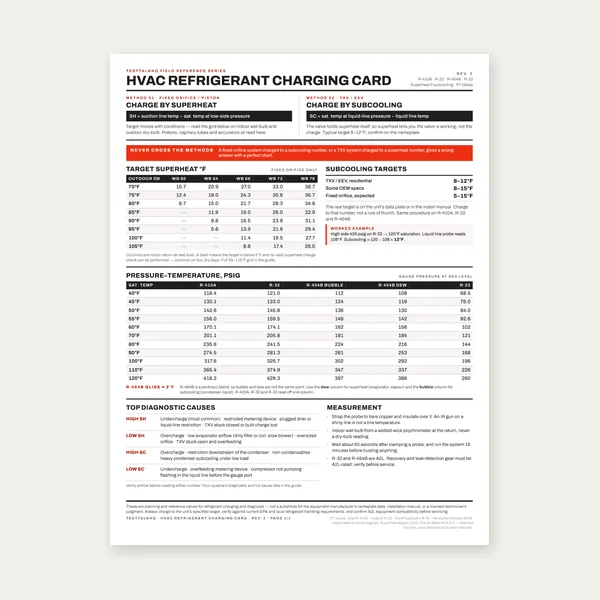
HVAC Refrigerant Charging Card
One page. Superheat, subcooling and PT for four refrigerants.
$3.99
Buy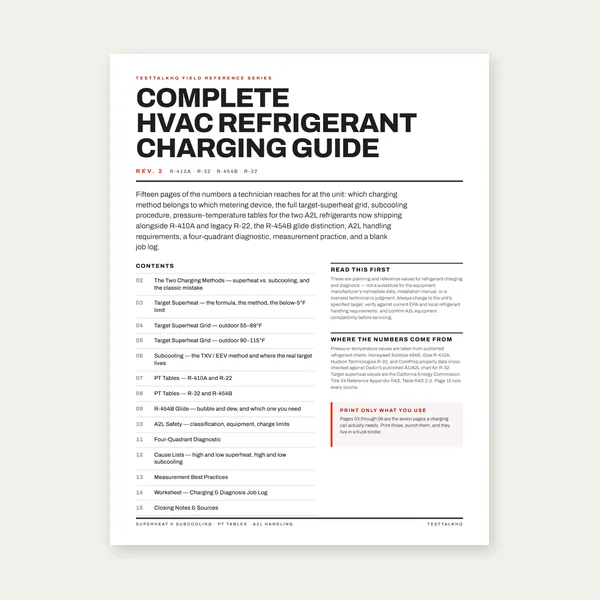
Complete HVAC Charging Guide
15 pages. Full superheat grid, PT tables, A2L safety and diagnosis.
$12.99
Buy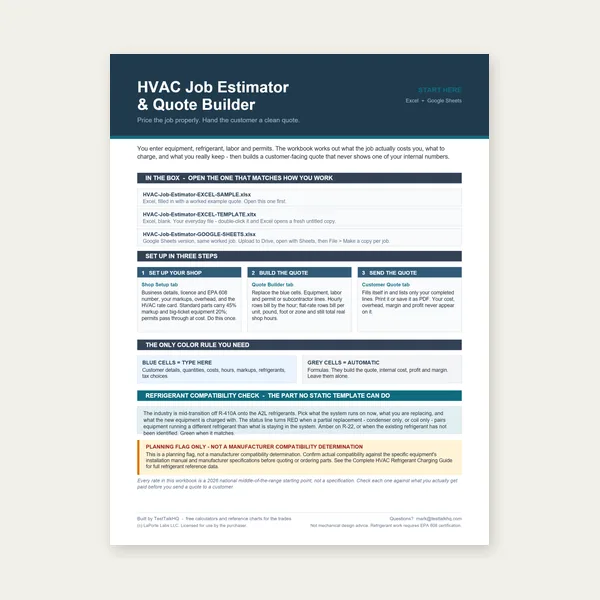
HVAC Job Estimator
Quote HVAC work and catch a refrigerant mismatch before you order.
Excel or Google Sheets. Best on a computer.
$29.00
Buy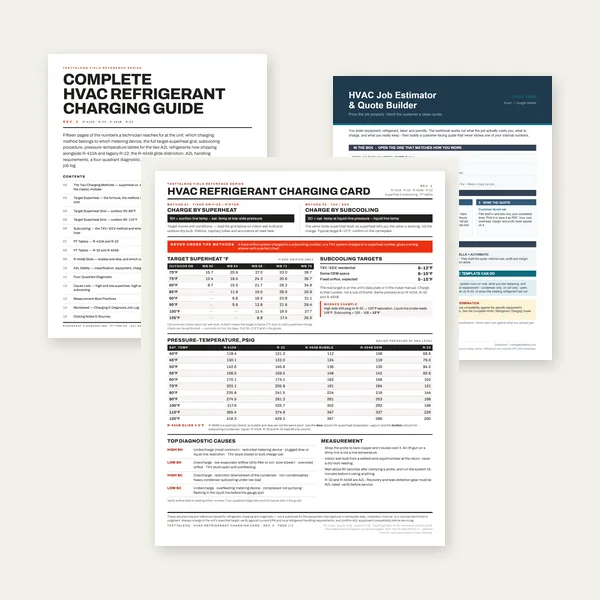
HVAC Complete Bundle
Card, 15-page guide and the estimator workbook. All six files.
Excel or Google Sheets. Best on a computer.
$34.99
$45.98 if bought separately — save $10.99
BuyCheckout opens here — you stay on this page.