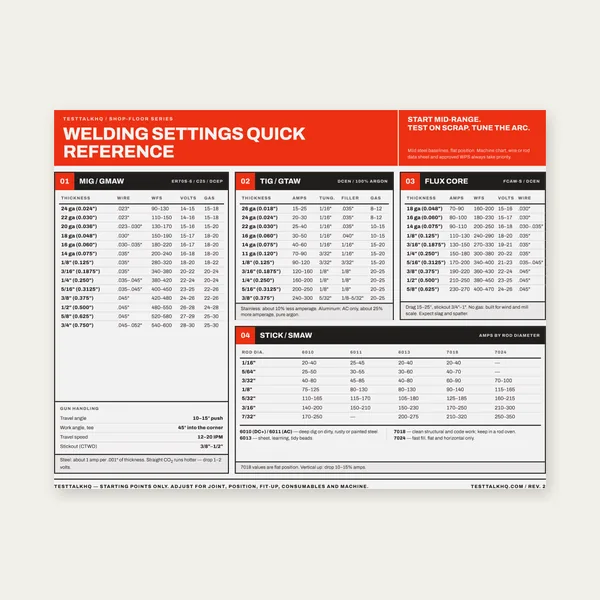
Welding Reference Card
One page. MIG, TIG, stick and flux core settings by thickness.
$3.99
BuyDiagnose why the coping template failed when the numbers looked right
Field fixes for root gaps on thick wall, templates that will not wrap true, fragile fishmouth tips, and wrong joint angles measured on the fixture.

Most “bad templates” are measurement or print-scale errors — not bad math.
Open Tube Notch Generator → Read the Guide →| Symptom | Likely cause | First fix |
|---|---|---|
| Gap at the root of the joint | Thick wall (outer cut line) or axes not centered/coplanar | Slight bevel + re-fixture; verify centering |
| Template does not wrap true / ends overlap or gap | Printer scaled the PDF; wrong OD | Measure reference square; re-measure OD |
| Horns / tips tear or break | Near-equal diameters (full-depth fishmouth) | Support tips; rough carefully; consider notcher for volume |
| Joint sits at wrong angle after fit | Angle entered ≠ fixture angle | Measure fixture with digital angle gauge; reprint |
| Seam of strip does not meet | Wrong OD or pages taped with wrong overlap | Confirm circumference ≈ π×OD; align dashed seam |
The generator cuts on the outer surface (thin-wall assumption). Thick-wall tube has a different inner intersection — the ID wants a slightly different profile. A light bevel toward the root usually closes the gap enough for a sound weld. If the gap is uneven around the saddle, the axes are probably not centered or not coplanar in the real fixture even though the drawing says they are.
Almost always printer scaling. If you did not verify the 1 in / 50 mm square, the strip will be short or long and the ends will not meet. Reprint at 100% Actual Size and re-measure the square before blaming the math. Second cause: nominal OD instead of measured OD — especially on painted, plated, or out-of-round tube.
When branch OD equals run OD at 90°, the notch is a full-depth fishmouth. The thin tips (“horns”) are geometrically correct and mechanically fragile. Support them while grinding, avoid aggressive cut-off wheels at the tip, and consider a dedicated notcher or CNC laser if you make many equal-diameter joints.
Entering 90° when the fixture is really 75° produces a template that looks fine on paper and fails on dry-fit. Measure the angle on the clamped assembly, not from memory. Shallow angles (<~35°) make long templates that amplify small angular errors — the tool warns on those inputs for a reason.
Still choosing between a printed template, hole saw, or dedicated notcher? See Template vs Hole Saw vs Notcher. Related bend geometry: Tube Bending Calculator and Tube Bending Guide.
One page. MIG, TIG, stick and flux core settings by thickness.
$3.99
Buy
19 pages. Four processes, stainless and aluminum, symbols and inspection.
$12.99
Buy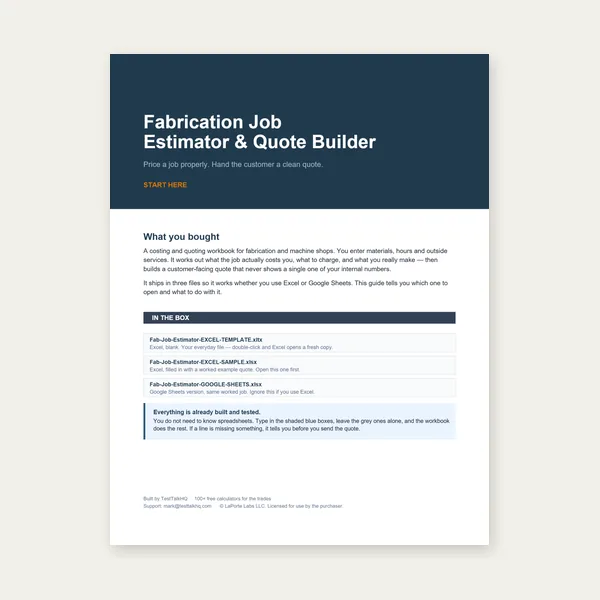
Price the job, then hand over a quote with no internal numbers.
Excel or Google Sheets. Best on a computer.
$29.00
Buy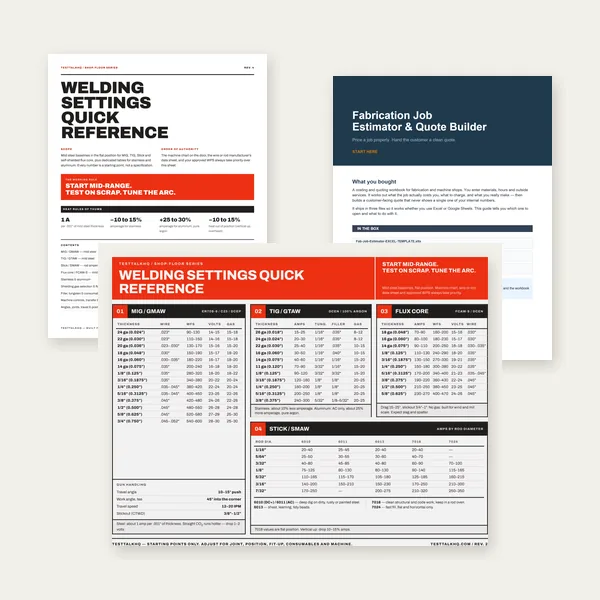
Card, 19-page guide and the estimator workbook. All six files.
Excel or Google Sheets. Best on a computer.
$34.99
$45.98 if bought separately — save $10.99
BuyCheckout opens in a new tab.
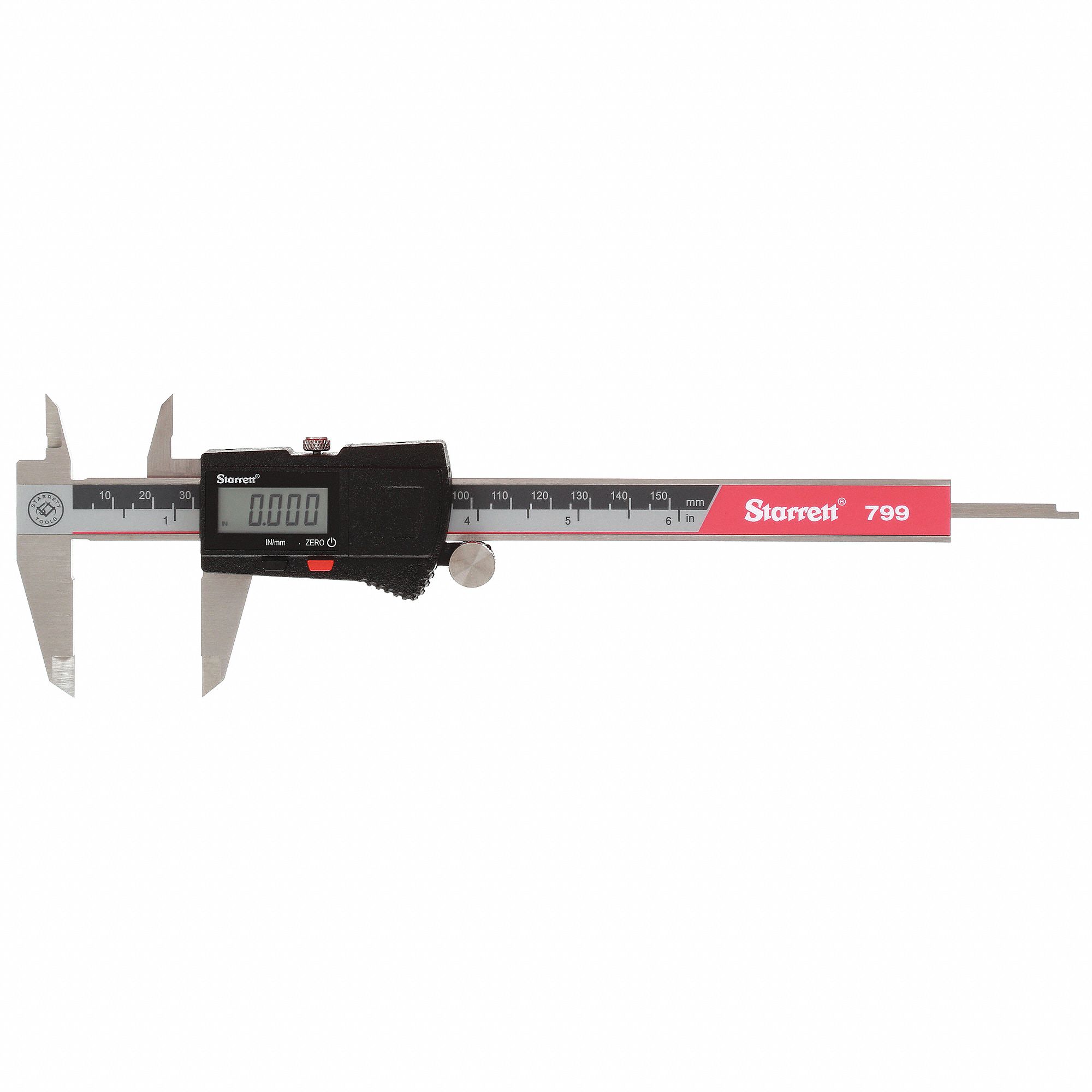
Measure OD and joint angle accurately, then grind or cut the cope — products from the TestTalkHQ affiliate catalog
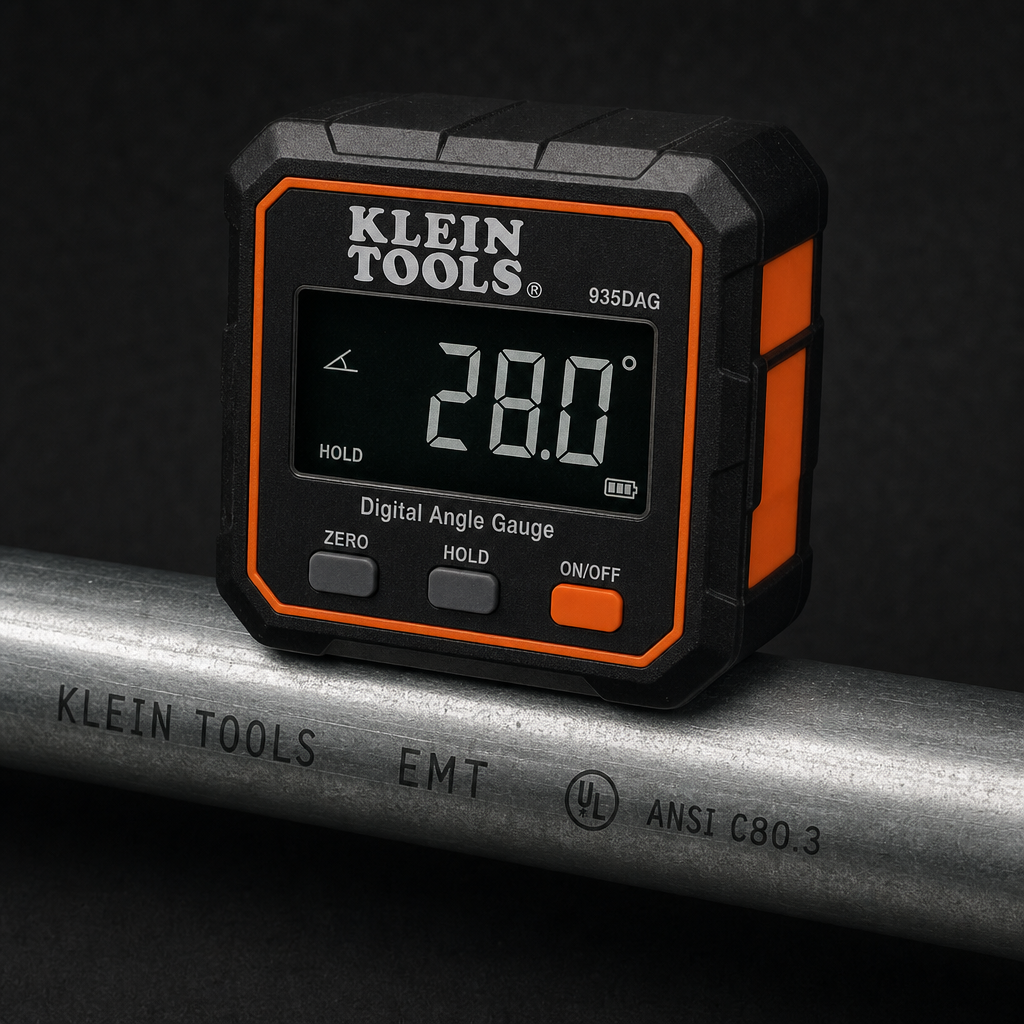
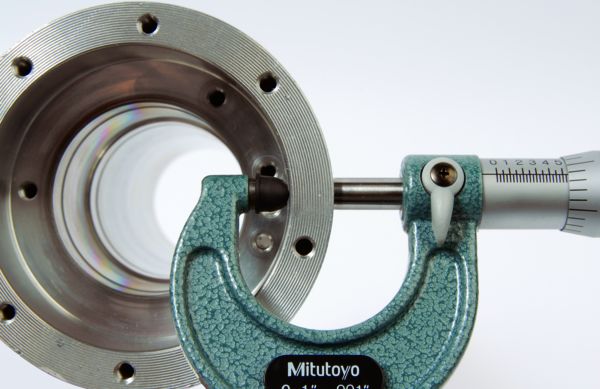
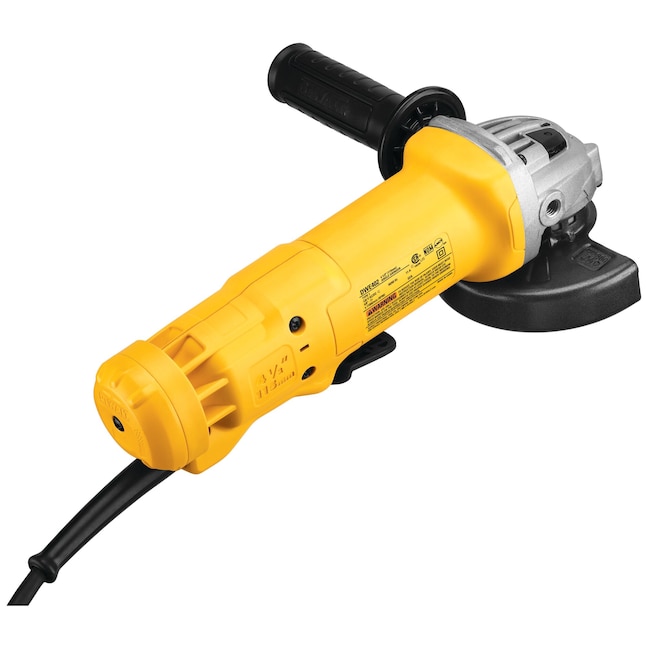

As an Amazon Associate, TestTalkHQ earns from qualifying purchases. Catalog gap: no dedicated tube notcher or tube fixturing/jig products in the affiliate CSV at publish time.