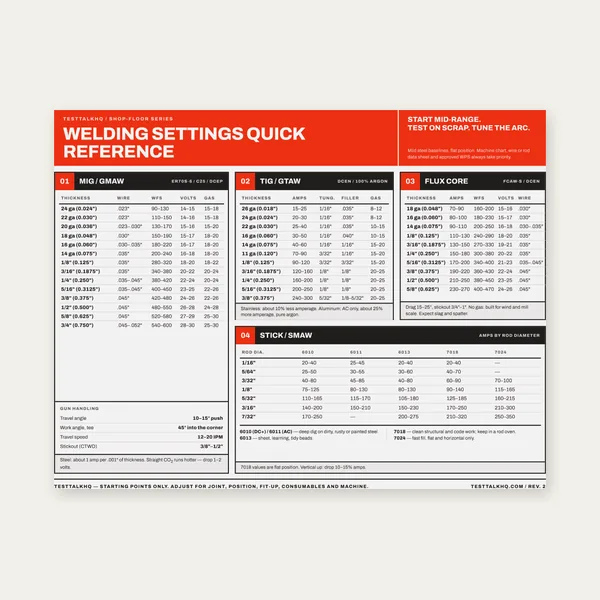
Welding Reference Card
One page. MIG, TIG, stick and flux core settings by thickness.
$3.99
BuySame dials, different torch path — pick the technique that keeps kJ/mm inside the WPS without guessing
This is the technique fork that sits beside the Heat Input Calculator and Heat Input Guide. Not a restatement of the formula — a decision guide for when to stringer, when a controlled weave earns its keep, and how travel must be measured so HI paperwork stays honest. If the number already “passed” and the joint still fails, go to Heat Input Troubleshooting.

Heat input is energy per unit joint length (along the seam), not per unit torch-tip path. A weave that covers 3/4" of joint in the time a stringer covers 3/4" of tip travel dumps more arc-seconds into that joint inch — HI rises even if amps and volts never moved.
That is why shops “run the same settings” and still leave the qualified HI window: the technique changed the effective travel along the joint.
| Factor | Stringer | Weave |
|---|---|---|
| Heat input tendency | Lower at same A/V if travel along joint is honest and brisk | Higher — more arc time per joint inch |
| Distortion risk | Usually lower heat load; more passes may add shrinkage cycles | Higher local heat; fewer passes sometimes, hotter HAZ |
| Fusion / sidewall | Needs correct angle and prep; cold lap risk if too fast | Can wet sidewalls on wide grooves if oscillation controlled |
| WPS / toughness jobs | Default when max HI is tight | Only if procedure qualifies weave width/frequency |
| Thin sheet | Usually preferred | Easy to overheat and buckle |
| Thick fill | Many stringers; easy HI tracking | Limited weave may fill faster — recalculate HI every width change |
Mark a known joint length. Time only arc-on while the torch advances that mark — for weaves, do not time the zigzag path length. Feed A, V, and that joint-axis travel into the Heat Input Calculator.
Preheat vs. Interpass Temperature covers the other half of the thermal triad — temperatures between passes, not torch path. The Heat Input Guide covers formula and bands. This page only answers: stringer or weave when kJ/mm is the constraint.
One page. MIG, TIG, stick and flux core settings by thickness.
$3.99
Buy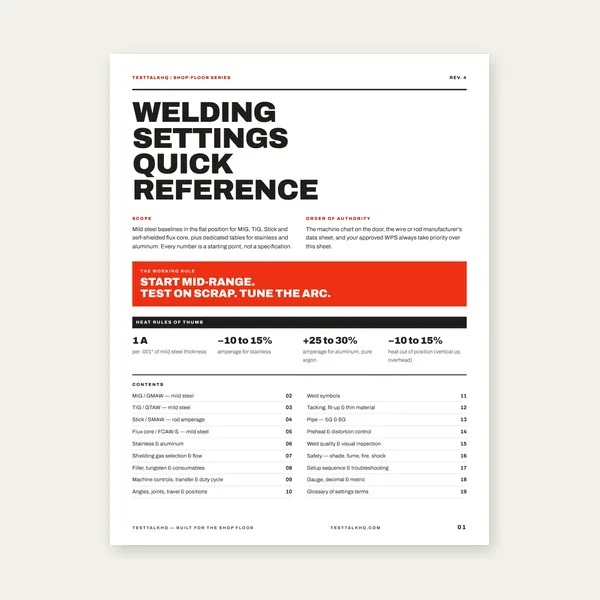
19 pages. Four processes, stainless and aluminum, symbols and inspection.
$12.99
Buy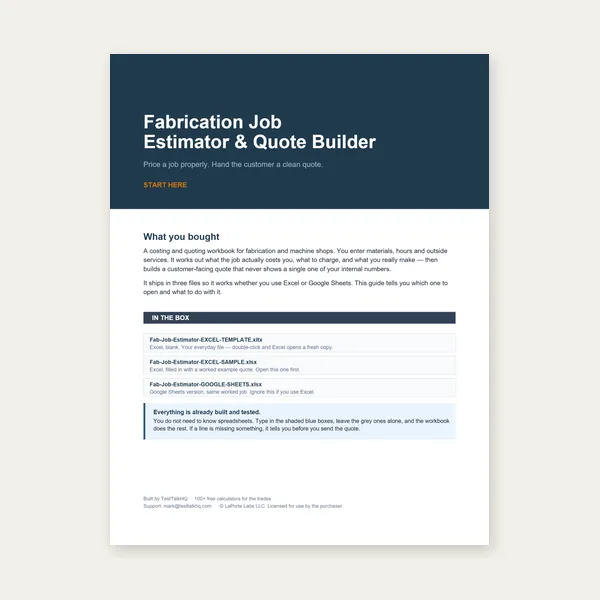
Price the job, then hand over a quote with no internal numbers.
Excel or Google Sheets. Best on a computer.
$29.00
Buy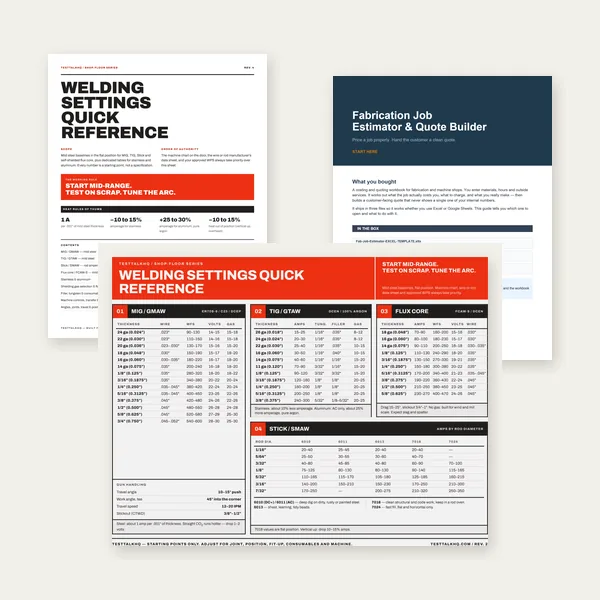
Card, 19-page guide and the estimator workbook. All six files.
Excel or Google Sheets. Best on a computer.
$34.99
$45.98 if bought separately — save $10.99
BuyCheckout opens in a new tab.
Five CSV catalog picks — see the puddle, hold stable arcs, and verify thermal stack after weaves
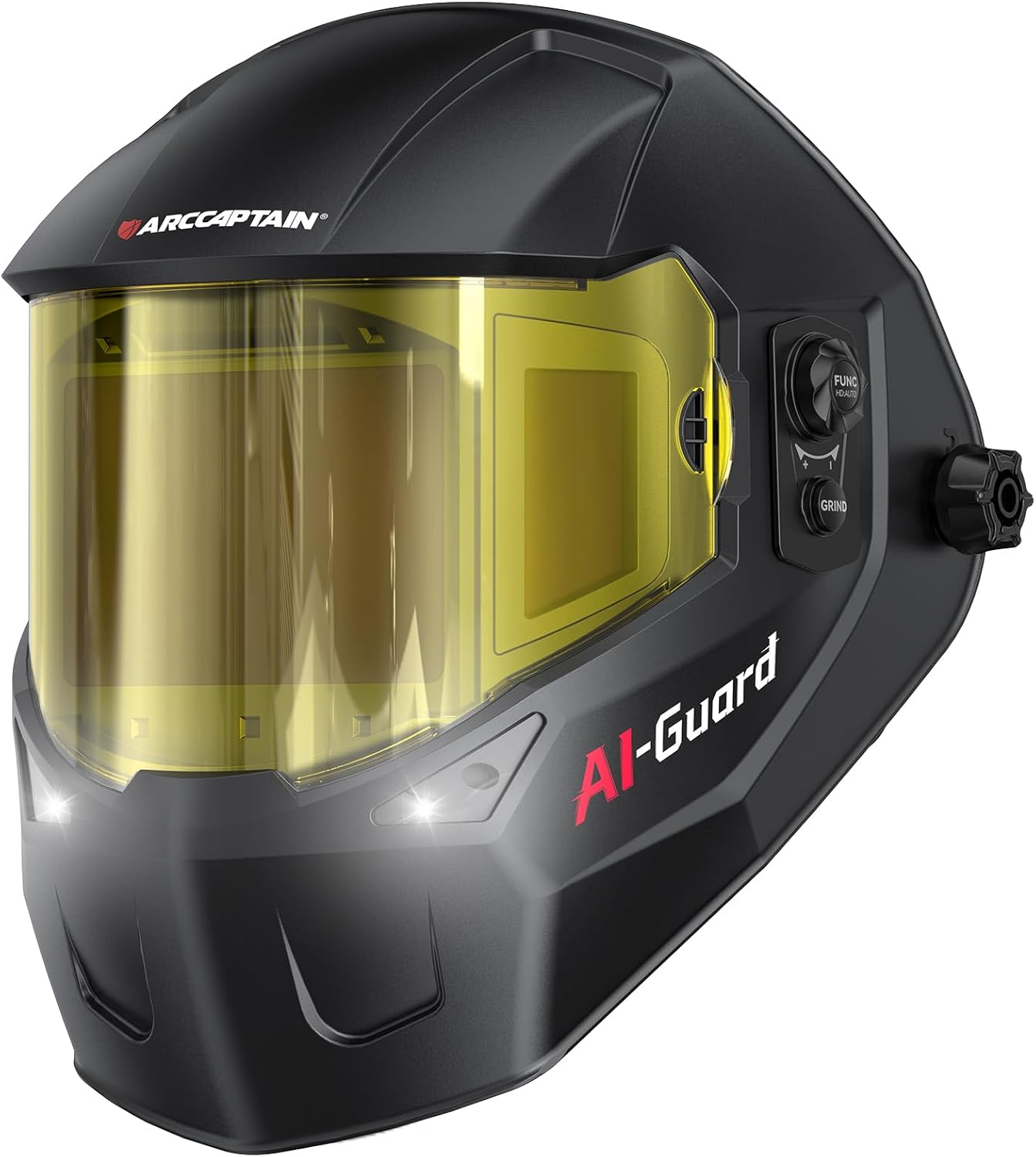
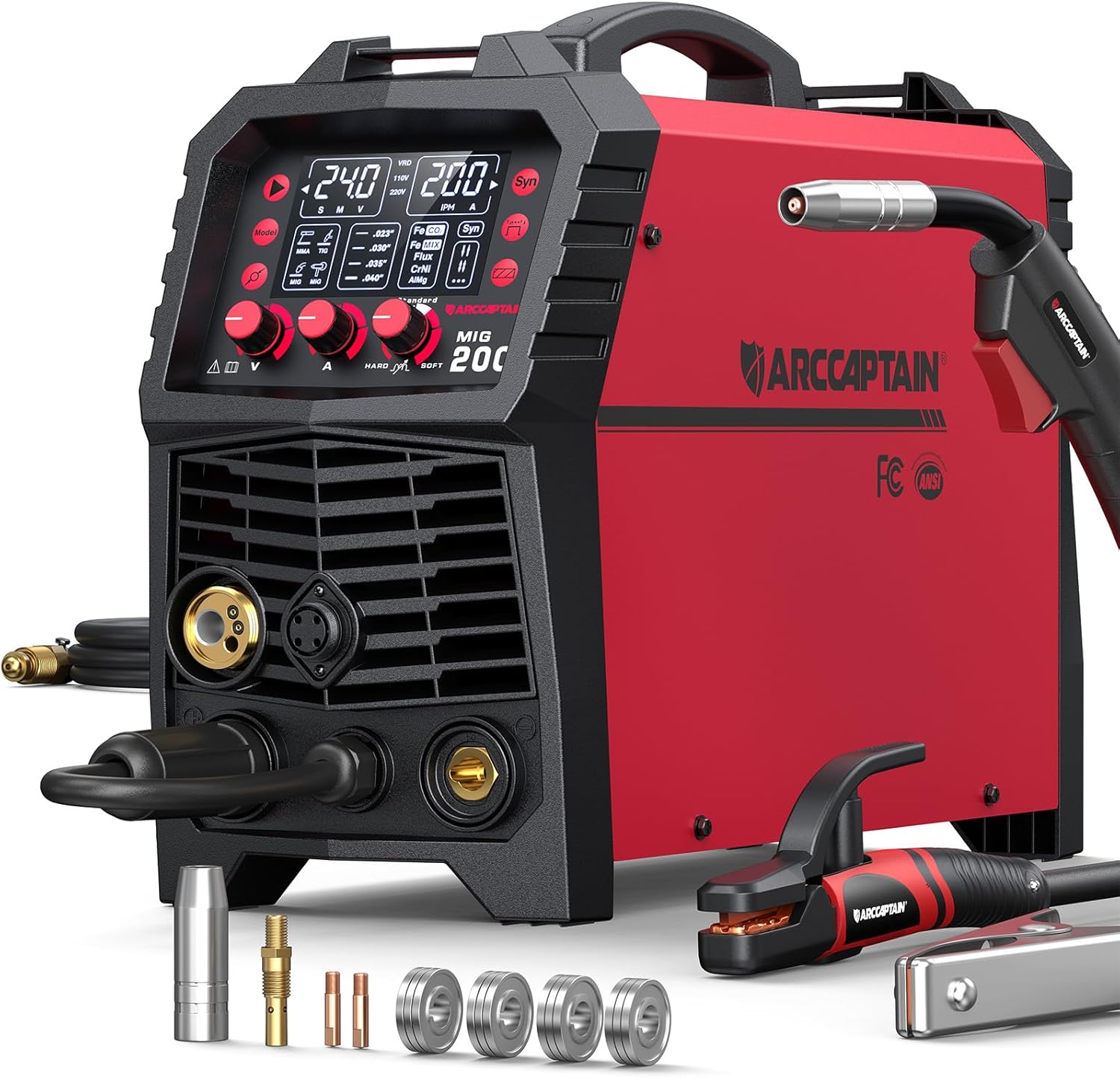
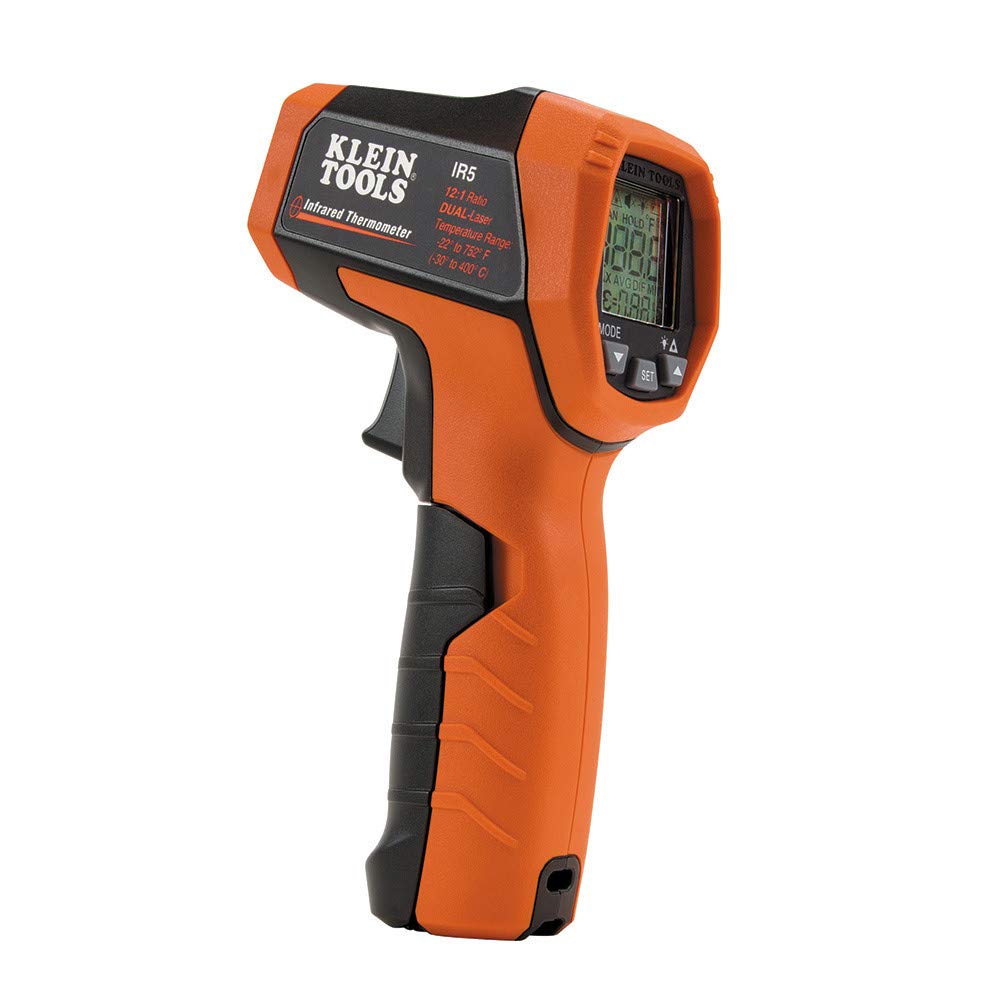
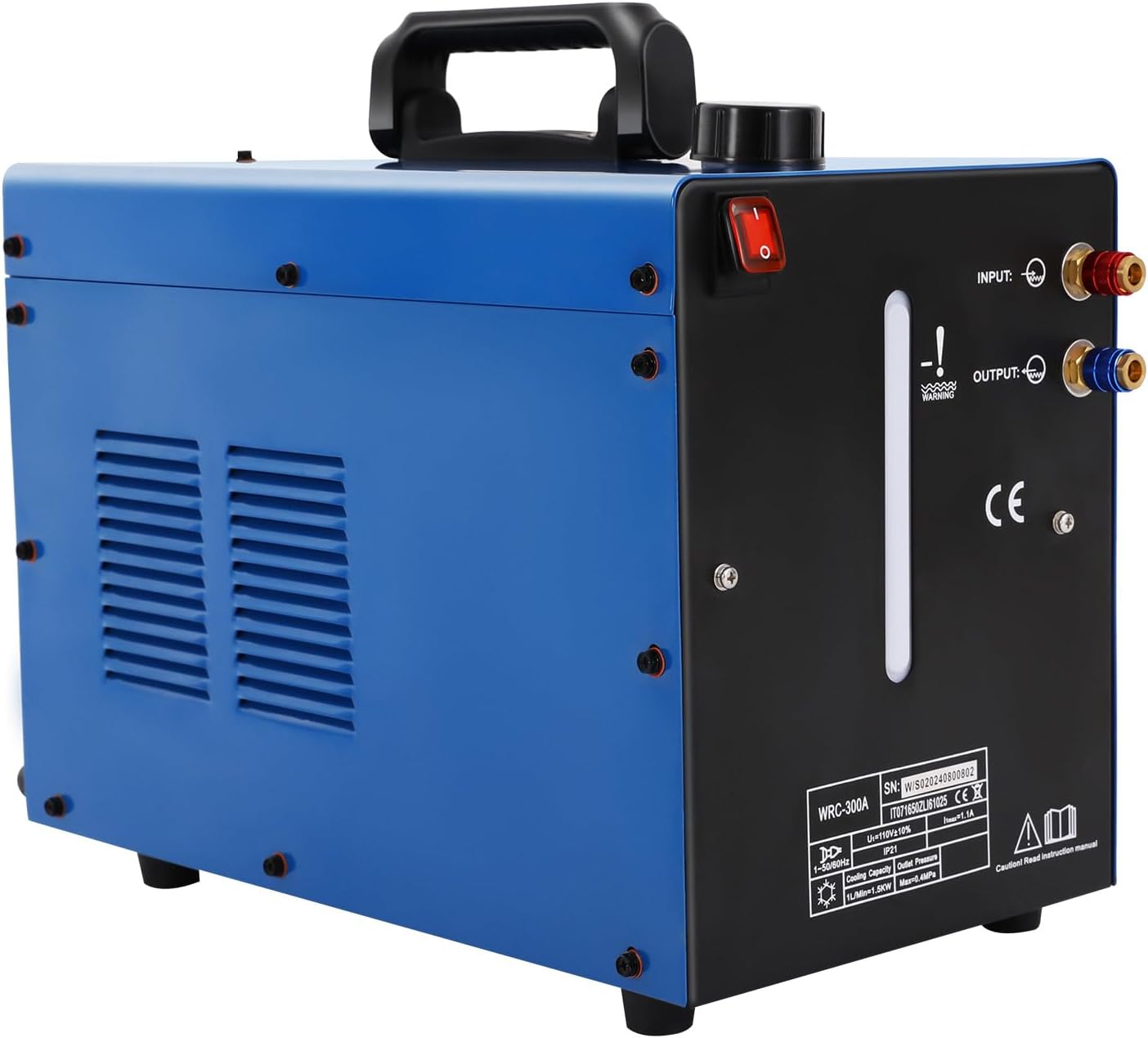
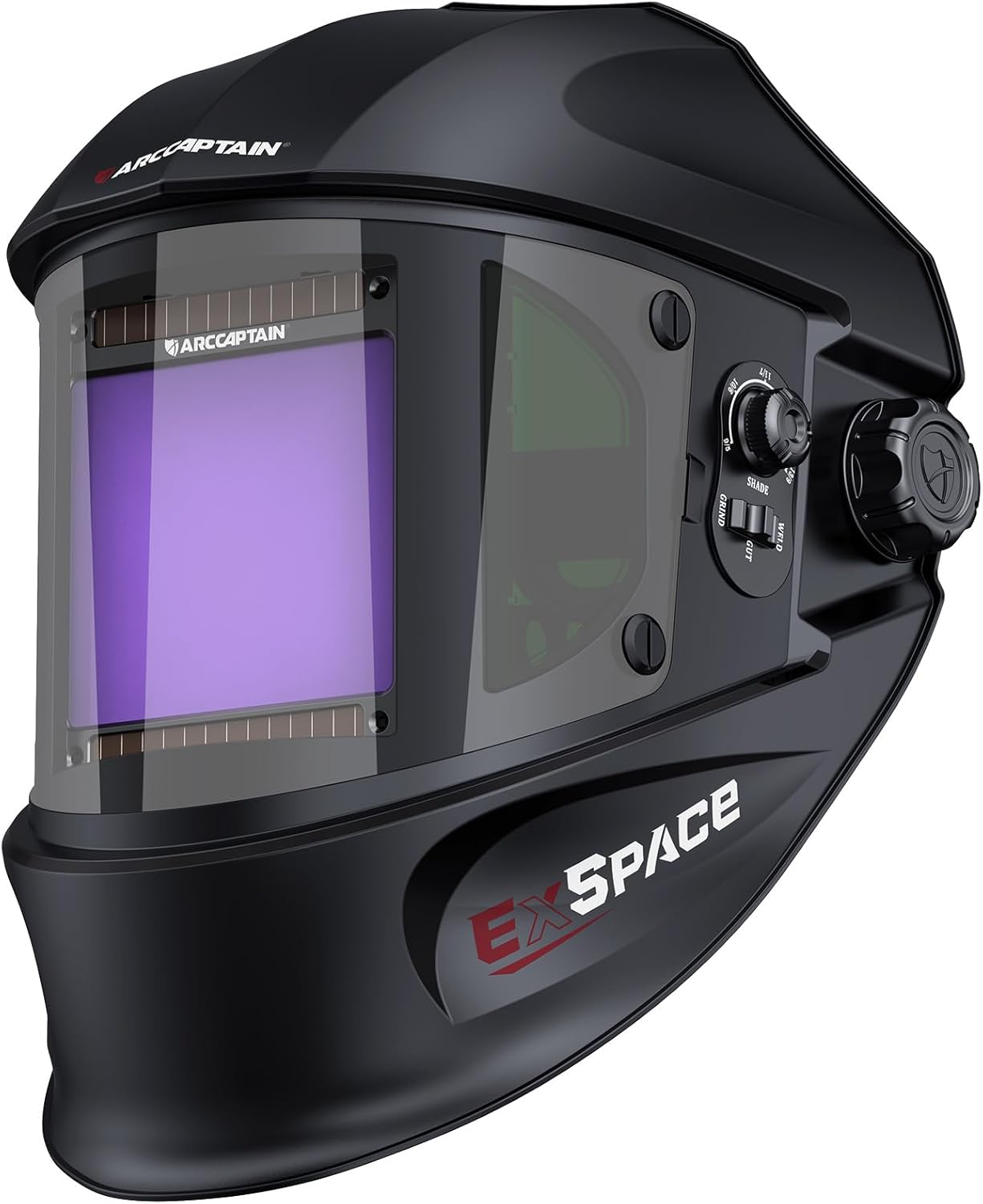
As an Amazon Associate, TestTalkHQ earns from qualifying purchases. All five cards are sourced only from the affiliate CSV. Catalog gap: no fillet/weld gauge or dedicated travel timer SKU for joint-axis timing.
If it slows progress along the joint at the same A/V, yes. If you raise travel along the joint enough to offset oscillation time, HI can match — prove it with a stopwatch, do not assume.
Usually no — technique can be an essential variable independent of the HI number. Follow the qualified procedure.
Sometimes more passes add shrinkage cycles; often lower HI per pass still wins on thin work. See distortion troubleshooting when the pattern is bow/buckle, not just HI math.