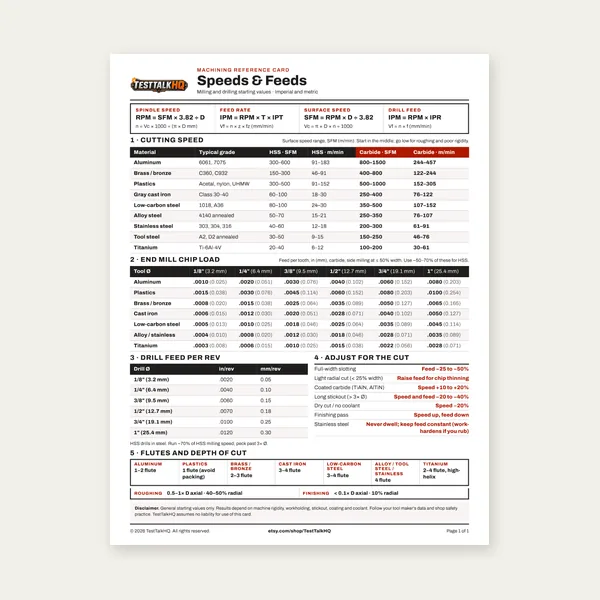
Machining Speeds & Feeds Card
One page. Speeds, chip load and drill feed, imperial and metric.
$3.99
BuyShort pours, leftover yards, calculated vs placed mismatch, wrong truck yardage, thickness variance, and multi-section volume errors
This is diagnosis — not a restatement of L × W × thickness. For the formula walkthrough use the Concrete Volume Guide. Quick slab/bag lookups: Concrete Volume Chart. Run odd shapes in the Concrete Volume Calculator. Choosing delivery vs bags? Use Ready-Mix vs Bagged Concrete — Which to Use. Stay here when the math already “passed” and the pour still came up short or long.

| Symptom | What it usually means | First fix | Next tool |
|---|---|---|---|
| Ordered short or big leftover | No waste factor; irregular shape / slope / voids ignored | Re-measure; add 5–15% waste; re-order next size up | Calculator |
| Calc ≠ what got placed | Porous subgrade absorption; over-excavation; form bulge | Probe grade depth; measure actual trench/form cavity | Guide |
| Truck wrong yardage | ft³ vs yd³ mix-up; fractional yards rounded wrong | Convert ÷27; round up to plant increments | Chart |
| Thickness varies across pour | Subgrade not level; forms set to plan, not measured grade | String-line / laser grade; use average or high-side thickness | Calculator |
| Footings + slab combined wrong | One footprint calc for stacked sections | Calc each section; sum yards; then waste | Calculator |
What it looks like: The slab dies mid-pour and you scramble for bags (cold joint risk), or the truck sits with a half-yard nobody wants. The spreadsheet said 2.0 yd³ exact.
Why this is not “re-learn the formula”: The guide teaches L × W × T ÷ 27. Here you hunt waste omission and shape lies that survive a clean rectangle calc.
Likely causes:
What it looks like: Forms were set to plan. Ticket matched the sheet. The pour still drank extra yards, or finished thin in spots while the truck emptied early elsewhere.
Likely causes:
Fix: Probe actual depth at several stations, measure form ID (not lumber label), then re-calc from the cavity. Use the upper waste row on the chart for footings and over-dig.
What it looks like: You ordered “45 bags worth” or “40 cubic feet” and the plant dispatched 1.5 yd³ — or you said 1.48 yd³ and they rounded down to 1.25.
Likely causes:
Fix: Write the order as X.XX yd³ including Y% waste on the ticket. Convert bags to yards only after yield math. Confirm plant minimums before arguing the ticket — then settle bags vs truck on Ready-Mix vs Bagged.
Re-run before you call the plant Thirty seconds in the calculator beats a short-load fee and a cold joint.
Open Concrete Volume CalculatorWhat it looks like: Edge forms were set to 4″. Center finishes at 3″, edges at 5″. Volume “should have been enough,” but the surface ate every yard.
Likely causes:
Fix: String-line or laser the grade before ordering. Volume from average measured thickness (or high-side if you refuse thin spots). Re-enter that thickness in the calculator — do not trust the lumber stamp alone.
What it looks like: Footings + slab, or stepped foundation, ordered as one slab footprint. Footings starve or the slab is thin at the step.
Likely mistakes:
Fix: Calc footings, piers, and slab as separate line items, sum yd³, then apply one waste factor to the total (or per section if conditions differ). The calculator is built for one shape per run — that is intentional; run twice and add.
If diagnosis says you need more concrete now, the delivery method may matter as much as the yards. Settle ready-mix vs bagged before the next ticket.
One page. Speeds, chip load and drill feed, imperial and metric.
$3.99
Buy
27 pages. Milling, drilling, tapping, turning and CNC routing.
$12.99
Buy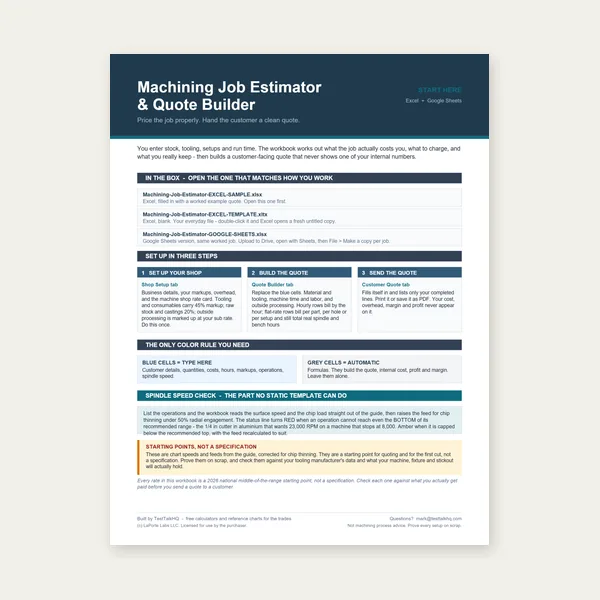
Quote shop work and check operations against your spindle's top speed.
Excel or Google Sheets. Best on a computer.
$29.00
Buy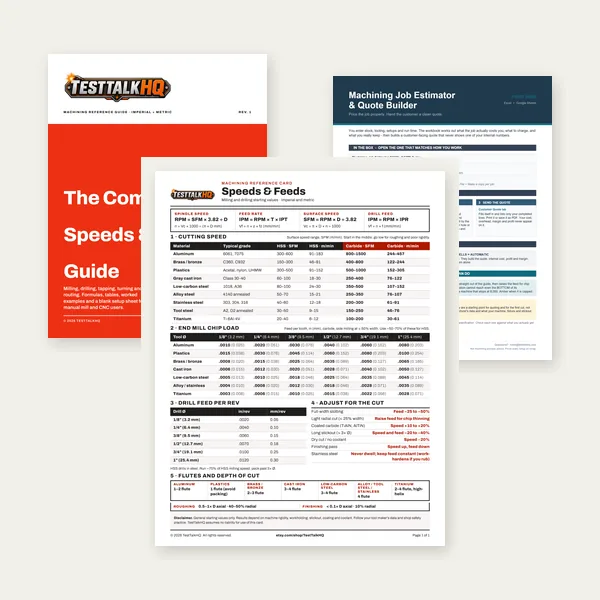
Card, 27-page guide and the estimator workbook. All six files.
Excel or Google Sheets. Best on a computer.
$34.99
$45.98 if bought separately — save $10.99
BuyCheckout opens in a new tab.
Five picks from the TestTalkHQ affiliate catalog for bag handling, silica exposure when mixing, and cutting forms — see catalog gap note below.


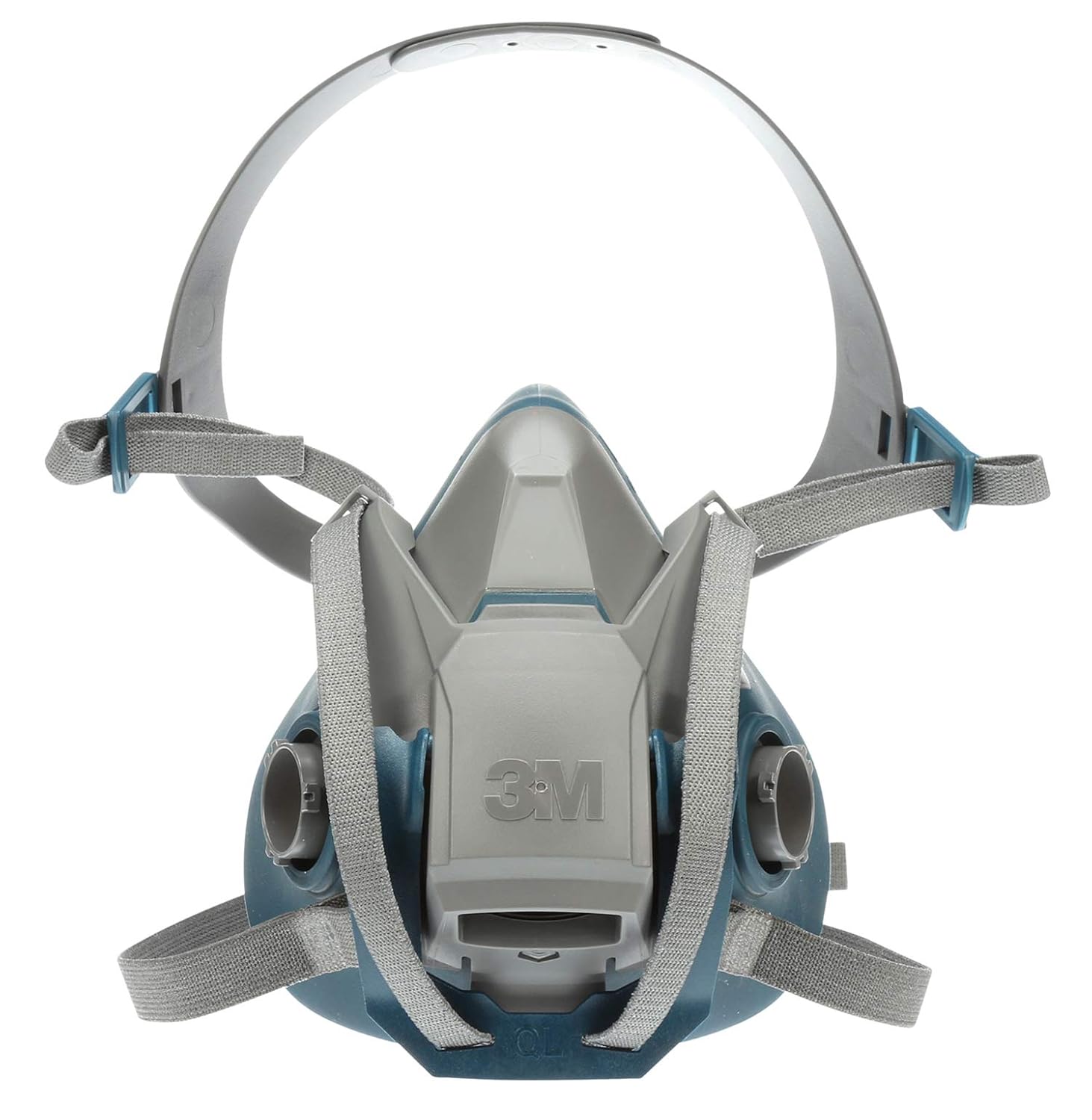

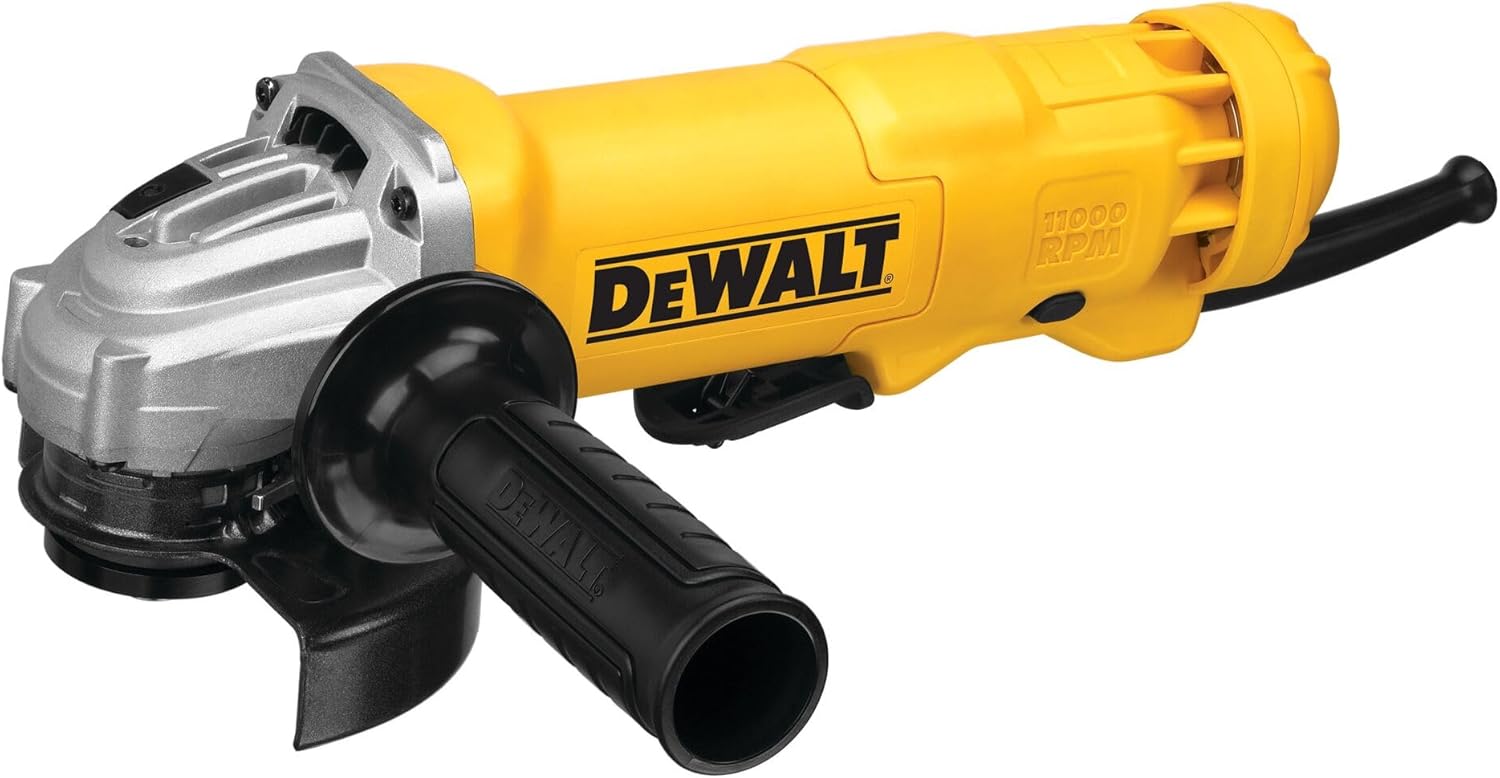
As an Amazon Associate, TestTalkHQ earns from qualifying purchases. Catalog gap: no concrete mixer, wheelbarrow, bull float, magnesium trowel, screed, or premix bags in the affiliate CSV. Cards above are PPE/cutting tools present in the catalog — add masonry placement SKUs before carding them.
Not for field estimating. Steel displacement is tiny compared to form bulge, spill, and grade error. Add waste instead.
After waste, round up to the next plant increment (e.g. 1.75 or 2.00). Never round down.
Only as an emergency. Timing and mix differences create cold joints. Better to order enough the first time.
No. The guide teaches how to calculate. This page diagnoses short pours, leftovers, placed mismatches, ticket errors, thickness variance, and multi-section mistakes.