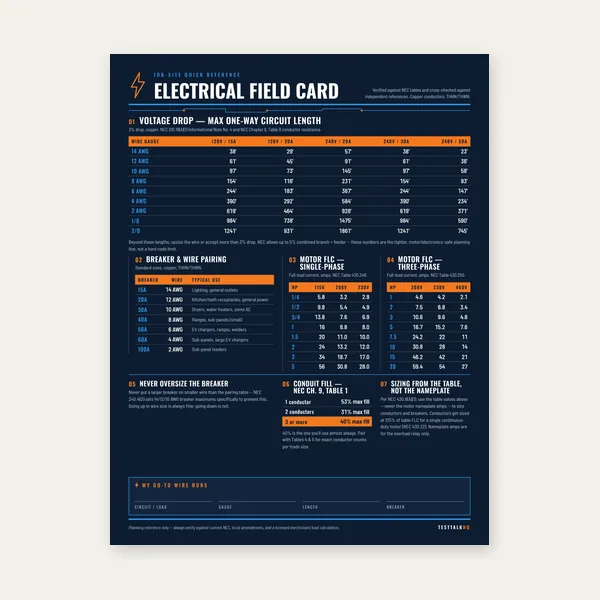
Electrical Reference Card
One page. Voltage drop lengths, breaker and wire pairing, motor FLC.
$3.99
BuyStandard, GFCI, AFCI, and dual-function — what each does and where NEC requires them.
Not every breaker in your panel does the same job. A standard thermal-magnetic breaker protects against overload and short circuit. A GFCI breaker adds shock protection. An AFCI breaker targets arc faults that cause fires. Dual-function breakers combine both. Choosing the wrong type — or mixing up outlet GFCI protection with breaker GFCI protection — is one of the most common code mistakes on residential work.
Use the Circuit Breaker Sizing Calculator for ampacity and NEC 240.6 standard sizes. This guide covers type, not amp rating.

The breaker most people picture is a standard thermal-magnetic unit listed to UL 489. The thermal element responds to sustained overload — current above the rated ampacity for enough time to heat a bimetal strip until it trips. The magnetic element responds instantly to high fault current — a dead short or severe ground fault that produces a sharp current spike. Together they protect the conductors and equipment on ordinary branch circuits where no special shock or arc-fault protection is required.
Standard breakers are appropriate for general lighting and receptacle circuits in locations that do not trigger GFCI or AFCI requirements. They do not detect ground-fault current below the magnetic trip threshold, and they do not detect low-level arcing that can ignite insulation without ever drawing enough current to trip the thermal element. That limitation is exactly why GFCI and AFCI devices exist as separate categories.
A GFCI breaker monitors the current balance between the hot and neutral conductors (and grounded conductor on multi-wire setups). If as little as 4–6 milliamps leaks to ground — through a person, through water, through damaged insulation — the GFCI trips in milliseconds. The goal is shock prevention, not fire prevention.
GFCI protection can be provided by a GFCI receptacle, a GFCI breaker, or a faceless GFCI device. A GFCI breaker protects the entire branch circuit from the panel, including any downstream standard receptacles wired from the load side of the GFCI device. A GFCI receptacle only protects itself and downstream outlets on that branch — not upstream wiring. That distinction matters when troubleshooting: a trip at the breaker means the fault could be anywhere on the circuit; a trip at one receptacle narrows the search.
AFCI breakers detect dangerous arcing conditions — loose terminations, damaged cord conductors, pierced cable behind drywall — that produce intermittent arcs. Standard breakers may never see enough sustained current to trip on those faults. AFCI technology uses electronic monitoring to recognize arc signatures and trip before the arc ignites surrounding material.
NEC AFCI requirements expanded significantly over the 1999–2020 code cycles. What started as bedroom-only protection now covers most habitable room branch circuits in dwelling units under current editions. Combination-type AFCIs (often labeled CAFCI or just AFCI on residential breakers) are the listed type required for most dwelling branch circuits — not the older branch/feeder AFCI devices that only protected part of the circuit path.
Dual-function breakers combine arc-fault and ground-fault detection in a single device. They exist because some locations — kitchen countertop receptacles, laundry areas, bathrooms in certain configurations — require both types of protection on the same circuit. Installing one dual-function breaker is often simpler than coordinating separate AFCI and GFCI devices on the same branch, and it eliminates the question of which protection applies where on a shared circuit path.
Dual-function breakers cost more than standard units and require a compatible panel (same manufacturer series in most cases). They are not a substitute for understanding which protection type NEC actually requires — they are a way to satisfy both requirements with one device where both apply.
GFCI protection is required for receptacles in bathrooms, garages and accessory buildings, outdoors, crawl spaces, unfinished basements, kitchens (countertop), sinks within six feet, laundry areas, and other locations listed in NEC 210.8 for dwelling units. Commercial and other occupancies have parallel requirements in 210.8(B) and related sections. The protection can be at the receptacle or the breaker — but it must be present on every required outlet.
AFCI protection is required for most 120-volt, single-phase, 15- and 20-amp branch circuits supplying outlets or devices in kitchens, family rooms, dining rooms, living rooms, parlors, libraries, dens, bedrooms, sunrooms, recreation rooms, closets, hallways, laundry areas, and similar spaces in dwelling units. There are limited exceptions for certain fixed motor-appliance circuits and fire-alarm wiring — verify against the current NEC edition and local amendments.
For a room-by-room breakdown, see GFCI and AFCI Requirements by Location.
Look at the breaker handle and label in the panel:
Standard: No GFCI or AFCI marking — just amp rating and poles (e.g., 20A 1P).
GFCI breaker: Test button on the face, often labeled GFCI. Tripping the test button should kill power to the entire protected branch.
AFCI breaker: Test button, often labeled AFCI or CAFCI. May trip more readily on certain motor loads or dimmers if the arc signature is misread — a known troubleshooting issue on older AFCI firmware.
Dual-function: Labeled as dual-function, AFCI/GFCI, or similar. One test button exercises both functions per manufacturer instructions.
Document what you find on the Panel Schedule Calculator — noting breaker type per circuit prevents accidental replacement with the wrong device during service work.
Both satisfy NEC GFCI requirements when installed correctly. A GFCI breaker protects the entire home run from the panel. A GFCI receptacle is cheaper per location but only protects downstream on that branch. You cannot use a standard breaker plus a downstream GFCI receptacle to protect a circuit that requires AFCI at the panel — if AFCI is required, the arc-fault protection must be at the breaker (or listed device) on that branch.
Electrical arcing causes thousands of residential fires annually. As AFCI technology matured and costs dropped, code-making panels extended protection from bedrooms to most living spaces. Inspectors in AFCI jurisdictions now expect combination-type AFCIs on new work and many remodels that extend branch circuits into required areas.
Breaker type (standard, GFCI, AFCI, dual) answers what protection the device provides. Breaker size (15A, 20A, 30A) answers how much load current it will carry before the thermal element trips. These are independent decisions. The Circuit Breaker Sizing Calculator handles ampacity; this guide handles protection category.
Physically, if the panel accepts the device, yes. Electrically and from a code standpoint, GFCI breakers are required only in NEC 210.8 locations — but installing one on a garage circuit that already requires GFCI is correct. Do not downgrade a circuit that requires AFCI to a GFCI-only breaker unless you provide listed AFCI protection elsewhere on that branch.
Under current NEC dwelling-unit rules, kitchen branch circuits typically require both AFCI (210.12) and GFCI for countertop receptacles (210.8). A dual-function breaker is the straightforward solution for those circuits.
AFCIs can trip on certain vacuum cleaners, older dimmers, or damaged cords that produce arc-like signatures. That is not a reason to remove AFCI protection — it is a reason to find the offending load or wiring defect. Repeated nuisance trips on a specific circuit warrant investigation.
One page. Voltage drop lengths, breaker and wire pairing, motor FLC.
$3.99
Buy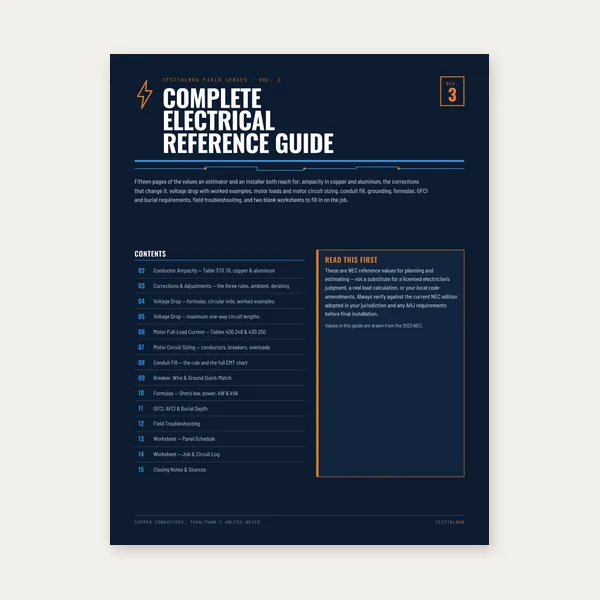
15 pages. Ampacity, corrections, voltage drop, motor circuits, conduit fill.
$12.99
Buy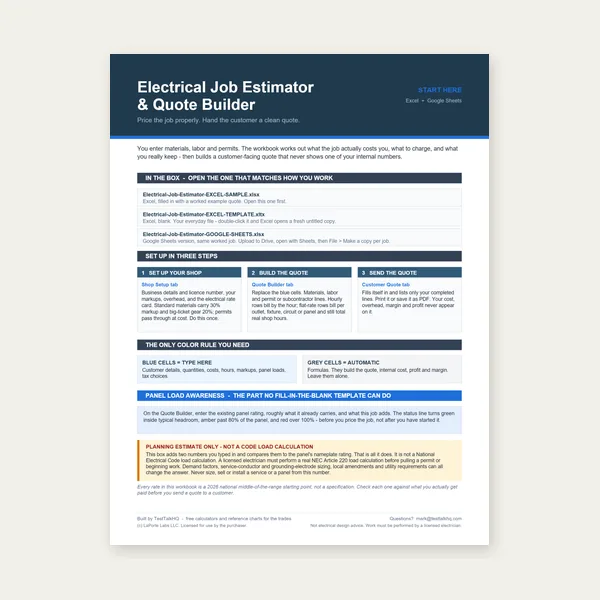
Quote electrical work and flag panel headroom before you price it.
Excel or Google Sheets. Best on a computer.
$29.00
Buy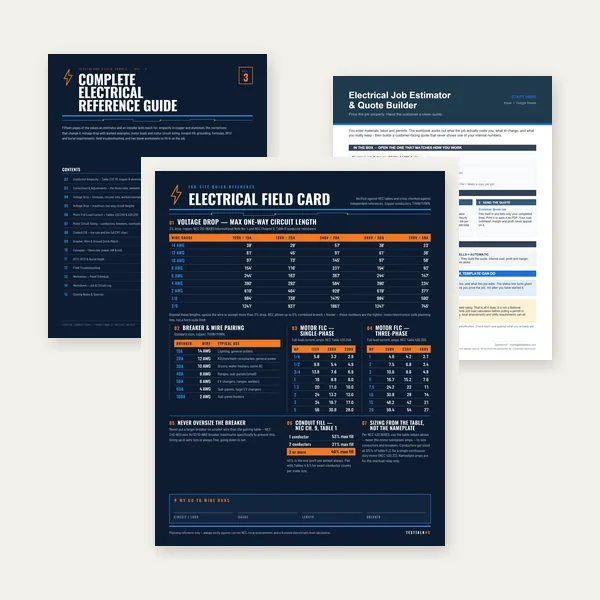
Card, 15-page guide and the estimator workbook. All six files.
Excel or Google Sheets. Best on a computer.
$34.99
$45.98 if bought separately — save $10.99
BuyCheckout opens in a new tab.
Verify protection type, trace circuits, and test before you swap breakers
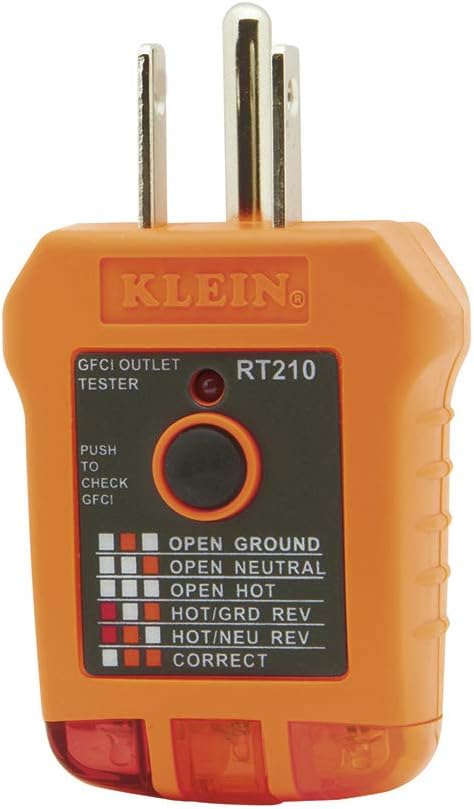
Confirms GFCI function at receptacles and identifies wiring faults before you assume the breaker is the problem. Essential when distinguishing between a failed GFCI receptacle and a tripping GFCI breaker protecting the branch.
Check Price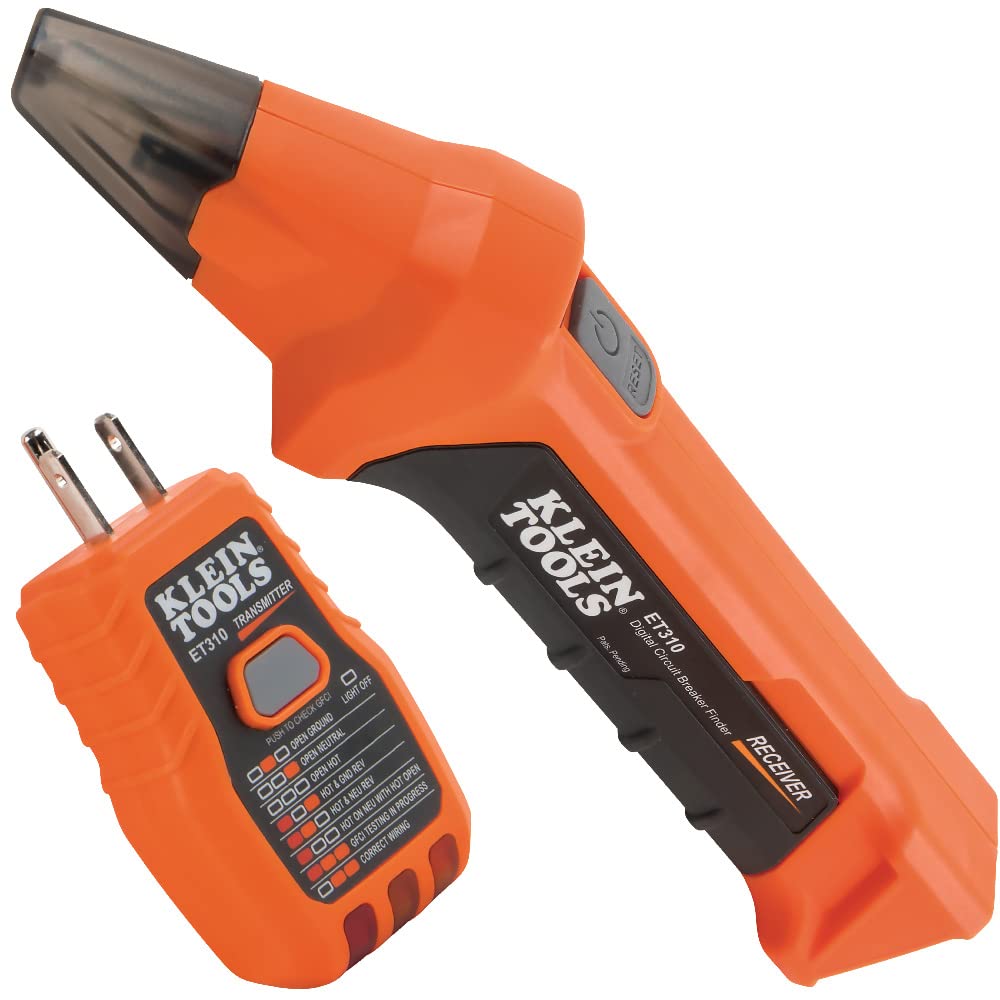
Maps outlets to breakers so you can read the label on the correct device — standard, GFCI, AFCI, or dual-function — without guessing at a crowded panel directory.
Check Price
Non-contact voltage detection plus true-RMS measurement for verifying dead circuits before replacing breakers. Standard practice before any panel work.
Check Price
A listed standard thermal-magnetic breaker for comparison — same form factor as GFCI/AFCI units in the QO line but without integrated protection electronics. Useful reference when matching series and amp rating.
Check Price
Confirms conductors are de-energized before opening the panel to inspect breaker types. Fast first check on any troubleshooting visit.
Check PriceAs an Amazon Associate, TestTalkHQ earns from qualifying purchases.
Panel directories often list only circuit description and amp rating — not whether the device is GFCI or AFCI. During service upgrades or troubleshooting, assuming every 20-amp bedroom circuit has AFCI protection because code requires it is reasonable for new construction but wrong for older panels with piecemeal upgrades. Physically verify the device. A standard breaker on a circuit that requires AFCI is a code violation even if the breaker never trips under normal load.
GFCI, AFCI, and dual-function breakers must be listed for the panelboard in which they are installed. Cross-brand breakers are not acceptable even if they snap in physically. When ordering replacements, match manufacturer, series (QO vs Homeline vs BR, etc.), amp rating, poles, and protection type. The Panel Schedule Calculator helps document what is installed so the next person does not order a standard breaker for an AFCI-required circuit.
Identifying breaker types is DIY-safe with the panel cover on and proper PPE — but replacing breakers, adding circuits, or resolving repeated GFCI/AFCI trips involves live-bus proximity and code knowledge. If the panel is crowded, poorly labeled, or fed from a live main without a main breaker, hire a licensed electrician. Permits apply to most panel modifications.
Amp rating from load: Circuit Breaker Sizing Calculator and the Circuit Breaker Sizing Chart (125% continuous lookup). Protection type (standard / GFCI / AFCI / dual-function): Circuit Breaker Types Explained. Trips after the size looks correct: Why Does My Breaker Keep Tripping?.