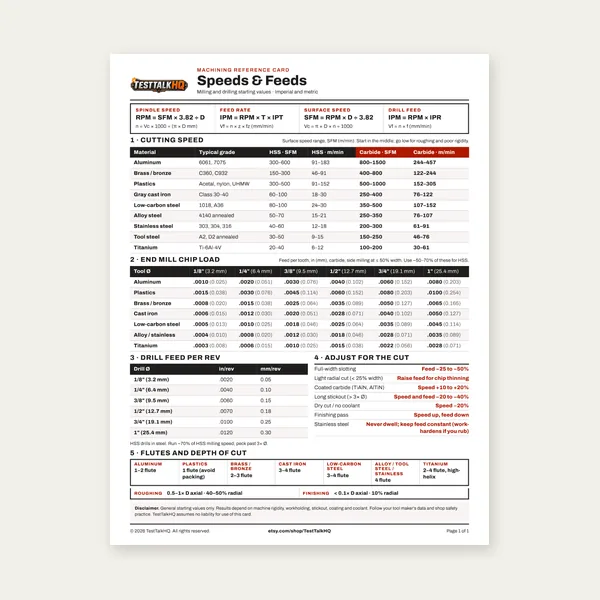
Machining Speeds & Feeds Card
One page. Speeds, chip load and drill feed, imperial and metric.
$3.99
BuyPrecision hole finishing for dowel pins, bushings, and press fits
A drilled hole gets you close. A reamed hole gets you precise. When a hole needs to accept a dowel pin, bushing, or precision shaft, drilling alone won't deliver the tolerance or surface finish required. Reaming is the finishing operation that brings a pre-drilled hole to exact size with a clean, consistent bore. This guide covers stock allowance, speeds and feeds by material, hand vs machine reaming, and how to avoid the most common reaming mistakes. Use the Reaming Speed and Feed Calculator for exact numbers on your job.

A drill bit cuts a hole through a combination of cutting and tearing action at the chisel point — it produces a hole that's round but not perfectly so, with a rougher surface finish and looser tolerance than many applications require. A drilled hole typically lands within ±0.005 to ±0.010 inches of nominal diameter with a surface finish around 125–250 microinches Ra.
A reamer removes a small, controlled amount of material from an already-drilled hole using multiple cutting edges working simultaneously around the circumference. This produces a much rounder, straighter hole with tighter tolerance — typically ±0.0005 to ±0.001 inches — and a smoother finish around 16–32 Ra. Reaming doesn't correct hole location or major out-of-round error from drilling; it follows the existing hole and refines size and finish.
| Reamer Diameter | Stock Allowance (on diameter) | Drill Size Before Reaming |
|---|---|---|
| Under 1/4 in | 0.010–0.015 in | Reamer dia minus 0.012 |
| 1/4 to 1/2 in | 0.015–0.020 in | Reamer dia minus 0.018 |
| 1/2 to 1 in | 0.020–0.030 in | Reamer dia minus 0.025 |
| Over 1 in | 0.030–0.040 in | Reamer dia minus 0.035 |
Stock allowance is the single most important variable in successful reaming. Leave too little material and the reamer skates over high spots without fully cleaning up the hole, leaving witness marks or undersized sections from the original drill. Leave too much and the reamer is forced to remove material like a drill rather than finish like a reamer — this causes excessive cutting force, chatter, bell-mouthing at the entrance, and rapid reamer wear.
Always drill with a bit sized specifically for reaming stock — don't assume a standard tap-drill-style chart applies. If you don't have the exact undersized drill, go slightly smaller rather than larger. A hole reamed from slightly too little stock can be re-reamed with a second pass. A hole reamed from too much stock is often scrapped or oversized beyond tolerance.
| Material | HSS SFM | Carbide SFM | Feed Rate Notes |
|---|---|---|---|
| Mild Steel | 40–60 | 100–150 | Cutting oil recommended |
| Tool Steel | 20–35 | 60–100 | Cutting oil required |
| Stainless Steel | 15–30 | 50–90 | Cutting oil required, watch work hardening |
| Cast Iron | 40–60 | 100–150 | Dry preferred |
| Aluminum | 100–150 | 250–400 | WD-40 or kerosene |
| Brass | 80–120 | 200–300 | Light oil |
| Copper | 50–80 | 150–250 | Cutting oil |
| Plastic | 100–150 | 200–350 | Dry |
Reaming SFM runs roughly half of drilling SFM for the same material — the multiple cutting edges and finish requirement demand a gentler approach than aggressive material removal. Going too fast causes chatter and poor finish rather than tool breakage, which is the more common failure mode in reaming versus drilling or tapping.
| Reamer Diameter | Feed Rate (IPR) |
|---|---|
| Under 1/8 in | 0.001–0.003 |
| 1/8 to 1/4 in | 0.003–0.006 |
| 1/4 to 1/2 in | 0.006–0.010 |
| 1/2 to 1 in | 0.010–0.015 |
| Over 1 in | 0.015–0.025 |
Feed rate in reaming is typically 2–3 times higher than the equivalent drill feed for the same diameter, because the reamer is removing a thin, controlled chip across multiple flutes rather than the full hole diameter at once. A higher feed actually helps surface finish in reaming up to a point — too low a feed can cause the reamer to rub rather than cut cleanly, leading to built-up edge and poor finish, especially in softer materials like aluminum.
Hand reamers have a long tapered lead (typically 8–10 flutes of taper) that gradually engages the hole, allowing the operator to feel resistance and control entry by hand with a tap wrench. They're designed for slow, controlled rotation — one revolution at a time — and are common for fitting dowel pins, finishing holes in the field, or precision work where machine power-feeding risks tearing the surface.
Machine reamers (chucking reamers) have a short chamfer and are designed to run at calculated RPM and feed in a drill press, mill, or CNC machine. They're the standard for production work where consistency matters. Never run a hand reamer at machine speed — the long taper isn't designed for rapid engagement and will produce a torn, oversized hole. Never hand-turn a machine reamer expecting hand-reamer results — the short chamfer engages too abruptly for controlled hand feel.
Full decision fork (when hand wins, when chucking is required, spiral vs straight, wrong-tool failures): Hand Reaming vs Machine Reaming — Which to Use.
| Problem | Likely Cause | Fix |
|---|---|---|
| Oversized hole | Too much stock allowance, reamer not on center, dull reamer | Reduce stock allowance, check spindle alignment, replace reamer |
| Bell-mouthed entrance | Reamer entering misaligned, too aggressive feed | Use floating holder, reduce feed, check tool alignment |
| Poor surface finish | Wrong SFM, no cutting fluid, dull reamer, too little stock | Adjust speed, add cutting fluid, replace reamer, increase stock slightly |
| Reamer chatter | Too much stock allowance, loose workholding, excessive speed | Reduce stock, secure workpiece, reduce SFM |
| Undersized hole | Too little stock, reamer not cutting full diameter (built-up edge) | Re-ream with second pass, check for built-up edge, add cutting fluid |
| Tapered hole | Reamer not parallel to hole axis, worn machine spindle | Check alignment, use floating holder, inspect spindle |
For exact RPM and feed on your reamer size and material, use the Reaming Speed and Feed Calculator. Related tools: Tapping Speed and Feed Calculator, Drill Speed Calculator, and Tap Drill Size Calculator.
When speeds matched the tables but holes still failed size or finish, see Reaming Speed Troubleshooting.
One page. Speeds, chip load and drill feed, imperial and metric.
$3.99
Buy
27 pages. Milling, drilling, tapping, turning and CNC routing.
$12.99
Buy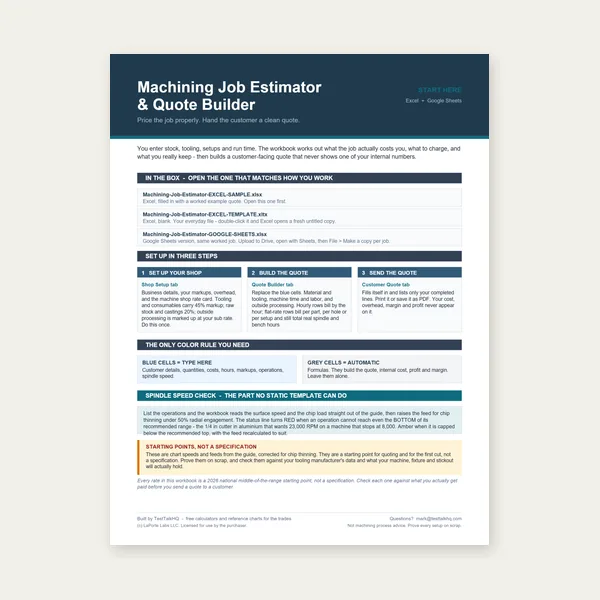
Quote shop work and check operations against your spindle's top speed.
Excel or Google Sheets. Best on a computer.
$29.00
Buy
Card, 27-page guide and the estimator workbook. All six files.
Excel or Google Sheets. Best on a computer.
$34.99
$45.98 if bought separately — save $10.99
BuyCheckout opens in a new tab.
Drill sets and cutting fluid for accurate predrill and precision reaming
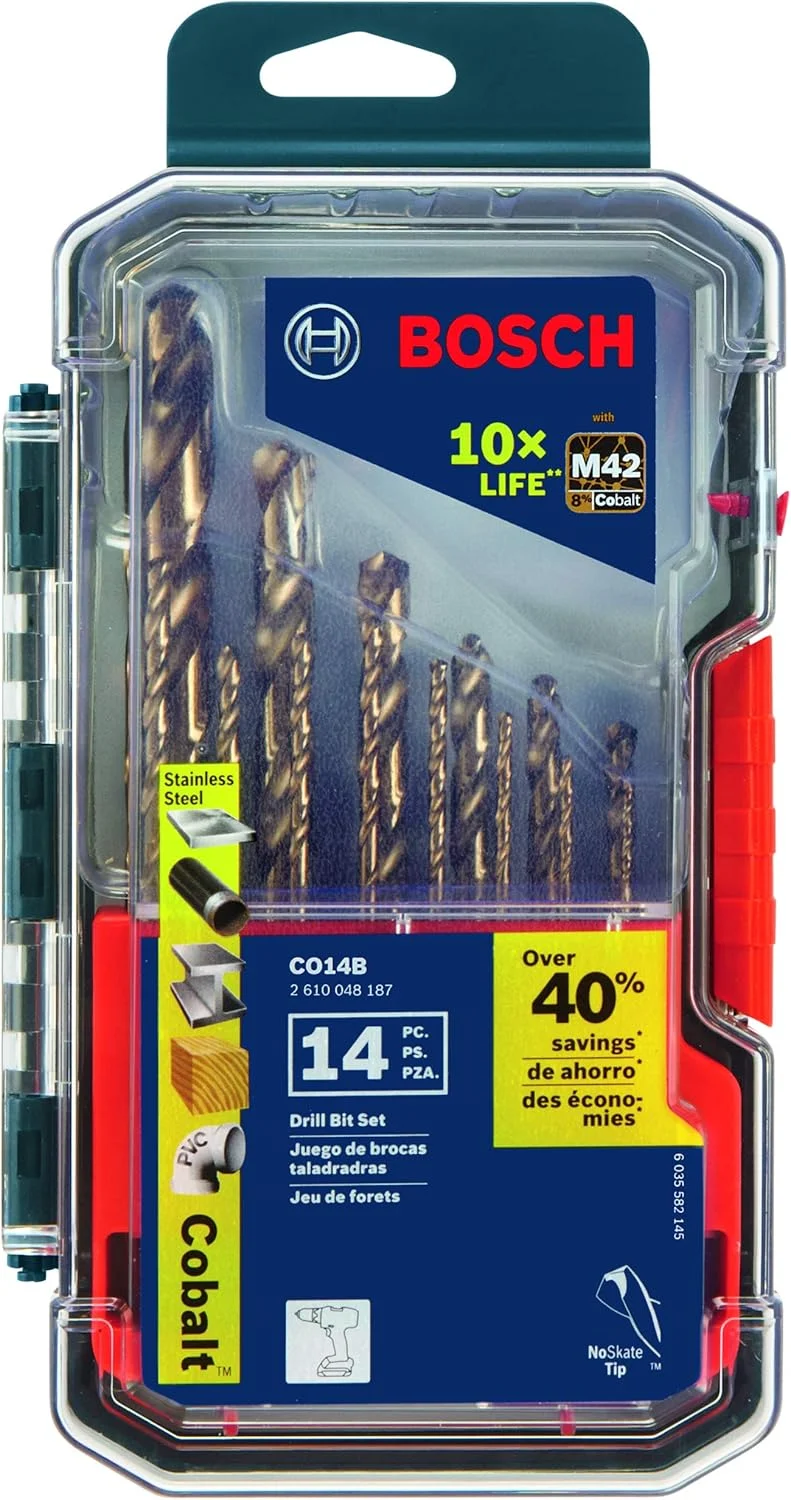

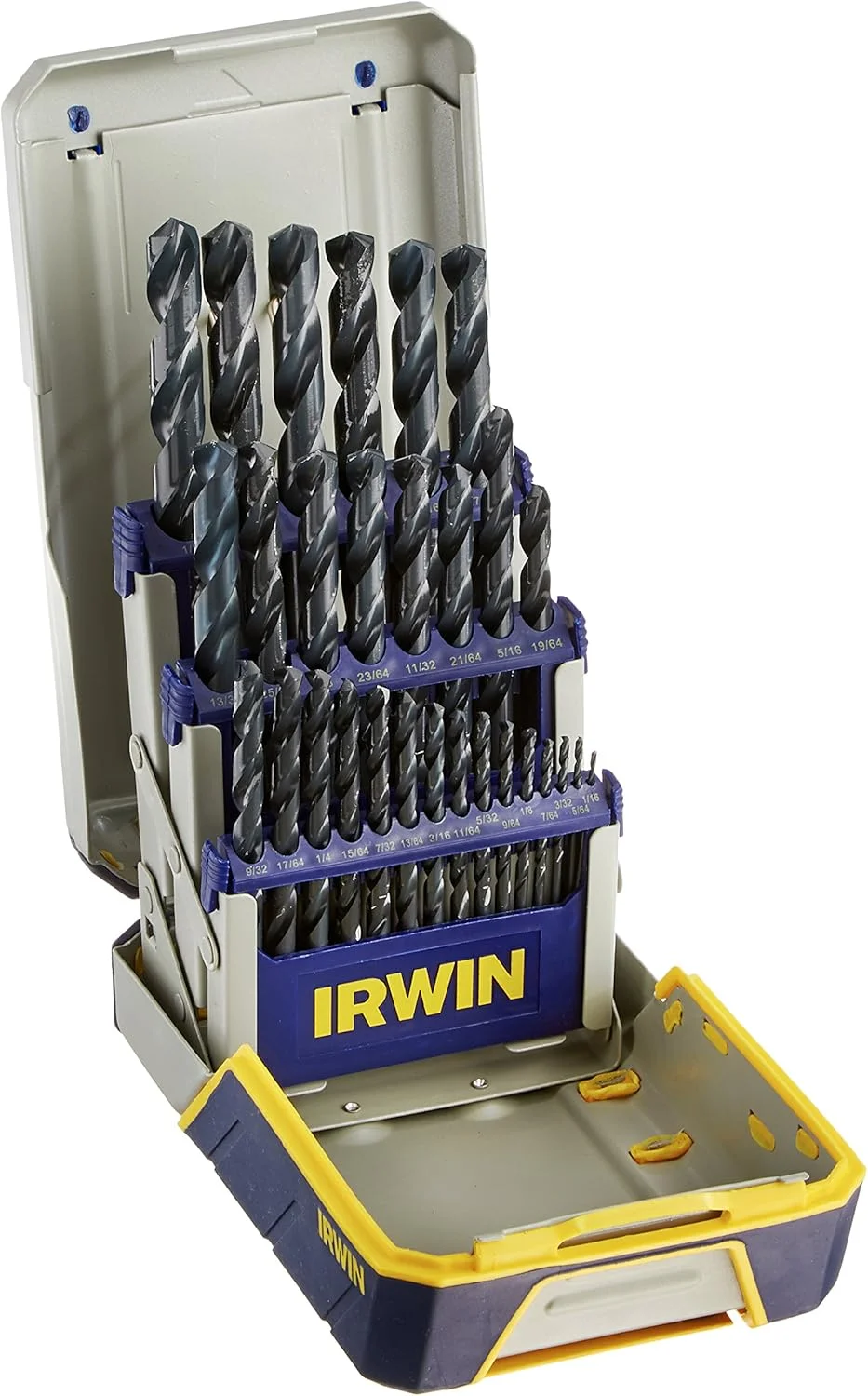
As an Amazon Associate, TestTalkHQ earns from qualifying purchases.
Dowel pins and bushings require precision-reamed holes for proper fit. A slip fit dowel pin hole is typically reamed to the nominal pin diameter plus 0.0002–0.0005 inches for easy assembly. A press fit requires the hole to be reamed slightly under the pin diameter, with the exact interference determined by the application's required holding force.
Always consult the dowel pin manufacturer's recommended hole tolerance — standard dowel pins are ground to tight tolerance and expect a matching precision hole.
Stainless steel work-hardens under cutting forces exactly as it does in drilling and tapping. A reamer that rubs instead of cuts cleanly in stainless will work-harden the surface ahead of the cutting edges, making subsequent passes progressively harder and risking reamer damage.
Use sharp reamers only — a dull reamer in stainless is far worse than in mild steel. Adequate cutting fluid is non-negotiable, and feed should be steady and continuous without dwelling.
Straight flute reamers are the standard general-purpose choice for through holes in most materials. Spiral flute reamers (similar concept to spiral flute taps) help evacuate chips from blind holes and are preferred when reaming interrupted surfaces like keyways or holes that cross other features.
Right-hand spiral with right-hand cutting flutes pulls chips up and out — the correct choice for most blind hole reaming applications.
Reamers are precision tools and dull faster than they appear to visually — a reamer that looks fine can already be producing oversized, rough holes due to edge wear invisible to the naked eye. Signs of a dull reamer: increased cutting force, squealing or chatter, poor surface finish, oversized holes.
HSS reamers can be resharpened by a qualified tool grinding service, but resharpening changes the diameter slightly — track resharpened reamers separately from new ones if tolerance matters. Carbide reamers generally aren't field-resharpened and are replaced when worn.