How Many Wires Fit in Conduit? Conduit Fill Explained | TestTalkHQ
:root{–orange:#e8611a;–orange-dark:#c4500f;–dark:#111111;–dark2:#1a1a1a;–dark3:#222222;–dark4:#2c2c2c;–gray:#888888;–border:#333333;–text:#e8e8e8;–text-dim:#aaaaaa;–green:#2ecc71;–yellow:#f1c40f;–red:#e74c3c;–blue:#3498db;}
*{box-sizing:border-box;margin:0;padding:0;}
body{background:var(–dark);color:var(–text);font-family:’Barlow’,sans-serif;font-size:16px;line-height:1.7;}
.hero{background:var(–dark2);border-bottom:3px solid var(–orange);padding:48px 24px 40px;text-align:center;position:relative;overflow:hidden;}
.hero::before{content:”;position:absolute;top:0;left:0;right:0;bottom:0;background:repeating-linear-gradient(45deg,transparent,transparent 20px,rgba(232,97,26,0.03) 20px,rgba(232,97,26,0.03) 40px);}
.hero-badge{display:inline-block;background:var(–orange);color:white;font-family:’Barlow Condensed’,sans-serif;font-weight:700;font-size:11px;letter-spacing:2px;text-transform:uppercase;padding:4px 14px;border-radius:2px;margin-bottom:14px;position:relative;}
.hero h1{font-family:’Barlow Condensed’,sans-serif;font-weight:900;font-size:clamp(26px,5vw,52px);text-transform:uppercase;letter-spacing:0.5px;color:white;line-height:1.1;max-width:800px;margin:0 auto 14px;position:relative;}
.hero h1 span{color:var(–orange);}
.hero-meta{display:flex;justify-content:center;gap:24px;flex-wrap:wrap;font-size:13px;color:var(–text-dim);position:relative;}
.article-wrap{max-width:800px;margin:0 auto;padding:40px 20px 60px;}
h2{font-family:’Barlow Condensed’,sans-serif;font-size:28px;font-weight:700;text-transform:uppercase;color:white;border-left:4px solid var(–orange);padding-left:14px;margin:40px 0 16px;}
h3{font-family:’Barlow Condensed’,sans-serif;font-size:20px;font-weight:700;text-transform:uppercase;color:var(–orange);margin:28px 0 12px;}
p{color:var(–text-dim);margin-bottom:18px;font-size:15.5px;line-height:1.8;}
p strong{color:var(–text);}
ul,ol{margin:10px 0 18px 22px;color:var(–text-dim);font-size:15.5px;line-height:1.8;}
li{margin-bottom:10px;}
li strong{color:var(–text);}
a{color:var(–orange);text-decoration:none;}
a:hover{text-decoration:underline;}
.lead{font-size:17px;color:var(–text);line-height:1.8;margin-bottom:24px;padding:20px 22px;background:var(–dark2);border-left:4px solid var(–orange);border-radius:4px;}
.pro-tip{background:rgba(232,97,26,0.08);border:1px solid rgba(232,97,26,0.25);border-left:4px solid var(–orange);border-radius:4px;padding:18px 22px;margin:24px 0;font-size:14.5px;color:var(–text-dim);line-height:1.7;}
.pro-tip strong{color:var(–orange);display:block;margin-bottom:6px;font-size:12px;text-transform:uppercase;letter-spacing:1px;}
.warning-box{background:rgba(231,76,60,0.08);border:1px solid rgba(231,76,60,0.25);border-left:4px solid var(–red);border-radius:4px;padding:18px 22px;margin:24px 0;font-size:14.5px;color:var(–text-dim);line-height:1.7;}
.warning-box strong{color:var(–red);display:block;margin-bottom:6px;font-size:12px;text-transform:uppercase;letter-spacing:1px;}
.info-box{background:rgba(52,152,219,0.07);border:1px solid rgba(52,152,219,0.2);border-left:4px solid var(–blue);border-radius:4px;padding:18px 22px;margin:24px 0;font-size:14.5px;color:var(–text-dim);line-height:1.7;}
.info-box strong{color:var(–blue);display:block;margin-bottom:6px;font-size:12px;text-transform:uppercase;letter-spacing:1px;}
.diagram{background:var(–dark2);border:1px solid var(–border);border-radius:8px;overflow:hidden;margin:28px 0;}
.diagram-title{background:var(–dark4);padding:10px 16px;font-family:’Barlow Condensed’,sans-serif;font-size:13px;font-weight:700;text-transform:uppercase;letter-spacing:1px;color:var(–orange);border-bottom:1px solid var(–border);}
.diagram svg{display:block;width:100%;height:auto;}
.data-table{background:var(–dark2);border:1px solid var(–border);border-radius:8px;overflow:hidden;margin:28px 0;}
.data-table-title{background:var(–dark4);padding:10px 16px;font-family:’Barlow Condensed’,sans-serif;font-size:13px;font-weight:700;text-transform:uppercase;letter-spacing:1px;color:var(–orange);border-bottom:1px solid var(–border);}
.data-table-wrap{overflow-x:auto;}
table{width:100%;border-collapse:collapse;font-size:13.5px;}
thead tr{background:var(–dark4);}
thead th{padding:10px 14px;text-align:left;font-size:11px;font-weight:700;text-transform:uppercase;letter-spacing:1px;color:var(–text-dim);border-bottom:1px solid var(–border);}
tbody tr:nth-child(even){background:rgba(255,255,255,0.02);}
tbody tr:hover{background:rgba(232,97,26,0.05);}
tbody td{padding:9px 14px;border-bottom:1px solid rgba(255,255,255,0.04);color:var(–text-dim);}
tbody td:first-child{color:var(–text);font-weight:500;}
.pass{color:var(–green) !important;font-weight:600;}
.warn{color:var(–yellow) !important;font-weight:600;}
.fail{color:var(–red) !important;font-weight:600;}
.mistake-list{counter-reset:mistake-counter;list-style:none;margin:0 0 18px 0;padding:0;}
.mistake-item{counter-increment:mistake-counter;background:var(–dark2);border:1px solid var(–border);border-radius:6px;padding:18px 20px 18px 60px;margin-bottom:12px;position:relative;}
.mistake-item::before{content:counter(mistake-counter);position:absolute;left:16px;top:50%;transform:translateY(-50%);background:var(–red);color:white;width:32px;height:32px;border-radius:50%;display:flex;align-items:center;justify-content:center;font-family:’Barlow Condensed’,sans-serif;font-weight:900;font-size:18px;}
.mistake-item h4{font-family:’Barlow Condensed’,sans-serif;font-size:16px;font-weight:700;text-transform:uppercase;color:var(–red);margin-bottom:6px;}
.mistake-item p{margin:0;font-size:14px;}
.products-section{background:var(–dark2);border:1px solid var(–border);border-radius:8px;padding:28px;margin:36px 0;}
.products-section h3{font-family:’Barlow Condensed’,sans-serif;font-size:20px;font-weight:700;text-transform:uppercase;color:white;margin:0 0 6px;padding-left:0;border:none;}
.products-subtitle{font-size:13px;color:var(–text-dim);margin-bottom:22px;}
.product-grid{display:grid;grid-template-columns:repeat(auto-fit,minmax(200px,1fr));gap:16px;}
.product-card{background:var(–dark3);border:1px solid var(–border);border-radius:6px;padding:16px;position:relative;transition:border-color 0.2s;}
.product-card:hover{border-color:var(–orange);}
.product-card.featured{border-color:var(–orange);}
.product-badge{position:absolute;top:10px;right:10px;background:var(–orange);color:white;padding:3px 8px;border-radius:10px;font-size:9px;font-weight:700;text-transform:uppercase;}
.product-badge.best{background:var(–green);}
.product-card img{width:100%;height:140px;object-fit:contain;background:var(–dark4);padding:8px;border-radius:4px;margin-bottom:12px;}
.product-card h4{color:white;font-size:13px;font-weight:600;margin-bottom:10px;line-height:1.4;min-height:38px;}
.product-features{list-style:none;margin:0 0 14px 0;padding:0;}
.product-features li{font-size:12px;color:var(–text-dim);padding:3px 0;border-bottom:1px solid rgba(255,255,255,0.04);}
.product-features li:last-child{border-bottom:none;}
.product-features li::before{content:”✓ “;color:var(–green);font-weight:bold;}
.product-btn{display:block;padding:10px;background:var(–orange);color:white;text-align:center;border-radius:4px;font-family:’Barlow Condensed’,sans-serif;font-size:14px;font-weight:700;text-transform:uppercase;transition:background 0.2s;}
.product-btn:hover{background:var(–orange-dark);text-decoration:none;}
.products-disclaimer{font-size:11px;color:var(–gray);font-style:italic;text-align:center;margin-top:14px;}
.calc-cta{background:var(–dark2);border:2px solid var(–orange);border-radius:8px;padding:24px 28px;margin:36px 0;text-align:center;}
.calc-cta h3{font-family:’Barlow Condensed’,sans-serif;font-size:22px;font-weight:700;text-transform:uppercase;color:white;margin:0 0 8px;}
.calc-cta p{color:var(–text-dim);font-size:14px;margin-bottom:16px;}
.calc-cta a.cta-btn{display:inline-block;background:var(–orange);color:white;padding:13px 28px;border-radius:6px;font-family:’Barlow Condensed’,sans-serif;font-size:18px;font-weight:700;text-transform:uppercase;letter-spacing:0.5px;transition:background 0.2s;}
.calc-cta a.cta-btn:hover{background:var(–orange-dark);text-decoration:none;}
.faq-section{margin:40px 0;}
.faq-item{background:var(–dark2);border:1px solid var(–border);border-radius:6px;margin-bottom:12px;}
.faq-q{padding:16px 20px;font-size:15px;font-weight:600;color:white;border-left:3px solid var(–orange);}
.faq-a{padding:0 20px 16px 20px;font-size:14px;color:var(–text-dim);line-height:1.75;border-left:3px solid transparent;}
.section-divider{display:flex;align-items:center;gap:10px;margin:36px 0;}
.section-divider span{font-size:10px;font-weight:700;text-transform:uppercase;letter-spacing:2px;color:var(–text-dim);white-space:nowrap;}
.section-divider::before,.section-divider::after{content:”;flex:1;height:1px;background:var(–border);}
.footer-note{text-align:center;font-size:12px;color:var(–gray);padding-top:20px;border-top:1px solid var(–border);margin-top:40px;}
@media(max-width:600px){.product-grid{grid-template-columns:1fr;}.hero-meta{gap:12px;}.mistake-item{padding:16px 16px 16px 56px;}}
TestTalkHQ.com — Electrical
How Many Wires Fit in Conduit?
Conduit Fill Explained the Right Way
📅 March 2026
⏱ 9 min read
🔌 Electrical / Conduit
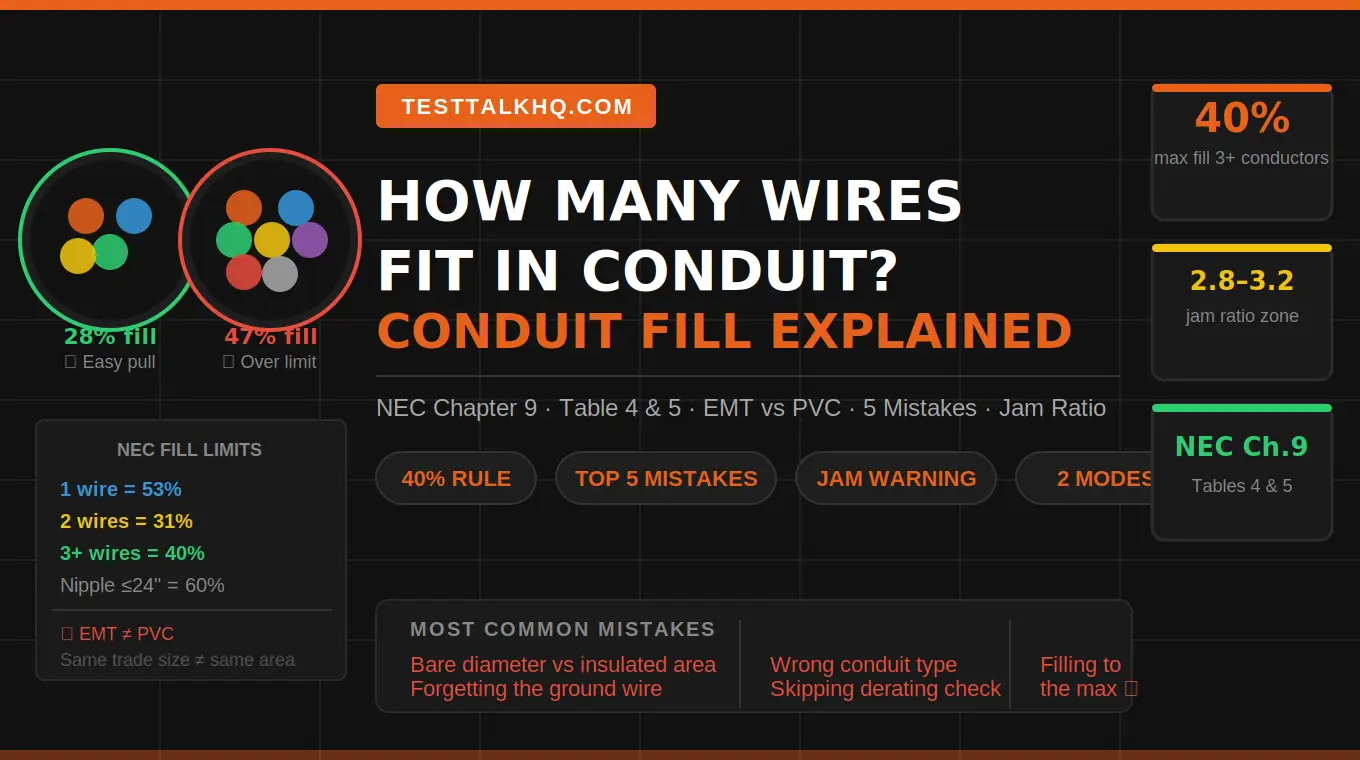
Overfilled conduit is one of the most common inspection failures in electrical work — and one of the most avoidable. Before you start pulling wire, you need to know exactly how much conduit area those conductors will occupy. Here’s the right way to calculate it, and the five mistakes that catch people off guard.
Why Conduit Fill Rules Exist
The NEC limits how full you can stuff a conduit for two practical reasons — both of which show up as real problems on real jobs.
Heat dissipation. Conductors under load generate heat. When conductors are packed tightly against each other in a conduit, that heat can’t escape efficiently. Sustained elevated temperature degrades wire insulation, reduces conductor ampacity, and over years creates the conditions for insulation failure and fire. This is also why NEC 310.15(C)(1) requires ampacity derating when more than three current-carrying conductors share a conduit — the code acknowledges that heat buildup is real and quantifiable.
Installation damage. If you’ve ever tried to pull wire through an overfilled conduit, you know exactly what happens. The friction is brutal, the insulation gets torn against fittings and the other conductors, and what should take 20 minutes becomes a half-day ordeal — or a complete repull when the insulation damage shows up during testing. Damaged insulation from a bad pull is an invisible defect that can fail months or years after the job is done.
📊 NEC Conduit Fill Limits — By Number of Conductors
53%
1 conductor
31%
2 conductors
40%
3+ conductors
NEC Chapter 9, Table 1 — Short nipples ≤24″ may use 60%
The Three Fill Percentages You Need to Know
NEC Chapter 9, Table 1 establishes three maximum fill percentages based entirely on how many conductors are in the conduit:
- 1 conductor: 53% maximum. A single large conductor — like a service entrance feeder — gets more room because there’s no concern about conductors stacking against each other or jamming.
- 2 conductors: 31% maximum. The most restrictive rule in the table. Two round conductors naturally stack on top of each other, taking up disproportionate space and creating more pulling friction than two conductors at 31% fill might suggest.
- 3 or more conductors: 40% maximum. The rule you’ll use on 95% of jobs. Three or more conductors stack more efficiently than two, which is why the limit is actually higher than the 2-conductor rule.
ℹ Short Nipples — The 60% Exception
NEC Chapter 9, Table 1, Note 4 allows conduit nipples 24 inches or shorter to be filled to 60%. A nipple is a short section connecting two enclosures where the conductors are already terminated on both ends. The short distance means heat buildup and pull tension are not concerns. This is a legitimate code exception, not a workaround — but only for true nipples.
How the Fill Calculation Actually Works
The math is straightforward: add up the cross-sectional area of every conductor in the conduit, compare that total to the conduit’s allowable fill area, and confirm you’re under the limit.
The conductor areas come from NEC Chapter 9, Table 5 — they’re based on the conductor plus its insulation, not the bare wire. This is where a lot of people go wrong. The conduit areas come from NEC Chapter 9, Table 4, which lists the allowable fill area for each conduit type and trade size at 31%, 40%, and 53%.
📐 How to Calculate Conduit Fill — Step by Step
STEP 1
Count all conductors
incl. grounds
Note insulation type
THHN, XHHW, THW
→
STEP 2
Look up area per
conductor in
NEC Table 5
sq in per conductor
→
STEP 3
Add all conductor
areas together
= Total wire area
in square inches
→
STEP 4
Compare to conduit
allowable area from
NEC Table 4
40% column for 3+ wires
→
PASS
or
FAIL
Worked Example — 4 Conductors in 3/4″ EMT
You’re running 4 conductors of 12 AWG THHN (hot, hot, neutral, ground) in 3/4″ EMT. How does the fill look?
Step 1 — Conductor area: From NEC Table 5, 12 AWG THHN = 0.0133 sq in per conductor
Step 2 — Total wire area: 4 × 0.0133 = 0.0532 sq in
Step 3 — Allowable conduit area: 3/4″ EMT total area = 0.533 sq in. At 40% fill: 0.533 × 0.40 = 0.213 sq in
Step 4 — Compare: 0.0532 / 0.533 = 9.98% — well under 40%. You could fit significantly more wire in this conduit.
Now let’s push it. Same conduit, but you’re adding 6 more circuits — 18 conductors total of 12 AWG THHN:
Total area: 18 × 0.0133 = 0.2394 sq in
Fill percentage: 0.2394 / 0.533 = 44.9% — over the 40% limit. Fail. Step up to 1″ EMT (40% area = 0.346 sq in), which gives 0.2394 / 0.864 = 27.7%. Pass with room to spare.
Run the Numbers in Seconds
Our free conduit fill calculator covers EMT, PVC Schedule 40 and 80, RMC, and IMC. Two modes — find minimum conduit size, or find max conductors in a conduit you have.
Why Conduit Type Matters More Than You Think
Here’s the thing that catches even experienced electricians: trade size is nominal, not actual. A 3/4″ EMT, a 3/4″ PVC Schedule 40, and a 3/4″ PVC Schedule 80 all have different internal diameters — and therefore different fill capacities — even though they’re all called “three-quarter inch.”
📏 Same Trade Size, Different Internal Area — 3/4″ Conduit Types
All labeled “3/4 inch” — but internal area differs significantly
EMT
0.533 in²
Largest internal area
IMC
0.586 in²
Slightly smaller
RMC
0.549 in²
Similar to EMT
PVC Sch 40
0.508 in²
Thicker walls
PVC Sch 80
0.409 in²
Smallest — easiest to miss
That difference between EMT (0.533 sq in) and PVC Schedule 80 (0.409 sq in) at 3/4″ trade size is about 23% less internal area. If you calculate for EMT and install PVC Schedule 80, you’ll be over the fill limit — and potentially fail inspection — without having miscounted a single wire. Always use the correct conduit type when running your fill numbers.
The 5 Conduit Fill Mistakes That Fail Inspections
-
Using Bare Wire Diameter Instead of Insulated Area
The most common and most costly error. Table 5 lists insulated conductor areas — which include the insulation. A 12 AWG THHN conductor isn’t just the 0.092″ diameter bare copper wire. With insulation it occupies 0.0133 sq in of cross-sectional area. Using the bare wire diameter understates the space requirement and leads to a conduit that’s physically too small to pull through.
-
Forgetting the Ground Wire
Grounds count. Period. NEC 300.17 requires all conductors in the conduit to be counted for fill purposes — including equipment grounding conductors. A “three-wire circuit” is actually four conductors (hot, hot or neutral, neutral, ground). Forgetting the ground on every circuit adds up fast on panels with multiple runs in a single conduit.
-
Using EMT Dimensions for PVC or Vice Versa
Selecting the wrong conduit type from Table 4 changes the fill calculation completely. This is especially easy to get wrong on jobs where part of a run is EMT inside the building and PVC underground — if you use EMT numbers for the whole run, your underground section may be overfilled.
-
Ignoring Ampacity Derating on Bundled Conductors
Fill compliance and ampacity derating are separate calculations that both apply. A conduit with 7 current-carrying conductors might pass the 40% fill check — but it also requires 70% derating on the conductor ampacity per NEC 310.15(C)(1). Ignoring the derating means your conductors are undersized for the load, which is a separate code violation on top of any fill issues.
-
Filling to the Maximum Instead of Designing for the Pull
Code says 40% is the limit, not the target. Filling a conduit to exactly 40% on a 200-foot run with four 90-degree bends is a miserable pull that risks insulation damage. Experienced electricians design for 30–35% on long or complex runs. The extra conduit costs pennies compared to the labor cost of a failed pull and rewire.
⚠ The Jam Ratio Problem
The NEC includes an informational note about a phenomenon called jamming: when three conductors of the same size are pulled through a conduit and the ratio of the conduit inside diameter to the conductor outside diameter falls between 2.8 and 3.2, the conductors can physically lock together mid-pull. A conduit can pass the 40% fill calculation and still be at risk of jamming. Our conduit fill calculator flags this automatically when the geometry puts you in the jam zone.
Common Conduit Fill Scenarios — Quick Reference
📋 Max 12 AWG THHN Conductors by Conduit Type and Size (40% Fill)
| Trade Size | EMT | PVC Sch 40 | PVC Sch 80 | RMC |
|---|---|---|---|---|
| 1/2″ | 9 | 8 | 6 | 9 |
| 3/4″ | 16 | 15 | 12 | 16 |
| 1″ | 26 | 25 | 20 | 26 |
| 1-1/4″ | 45 | 43 | 37 | 45 |
| 1-1/2″ | 61 | 59 | 51 | 62 |
| 2″ | 101 | 98 | 86 | 102 |
Each conductor = 0.0133 sq in (12 AWG THHN, NEC Table 5). Remember: grounds count toward this number.
💡 Pro Tip — Size Up Now, Thank Yourself Later
The cheapest time to upsize conduit is before it’s in the wall or buried. If you’re running new conduit to a panel location, sub-panel, or any location where future circuits are likely, go one trade size bigger than your calculation requires. The cost difference between 3/4″ and 1″ EMT is a few dollars per 10-foot stick. The cost of pulling the conduit back out to upsize it later is not.
Tools for Conduit Work
🔧 What You Need Before the Pull
Calculate the fill, bend the conduit, pull the wire — in that order
Top Pick
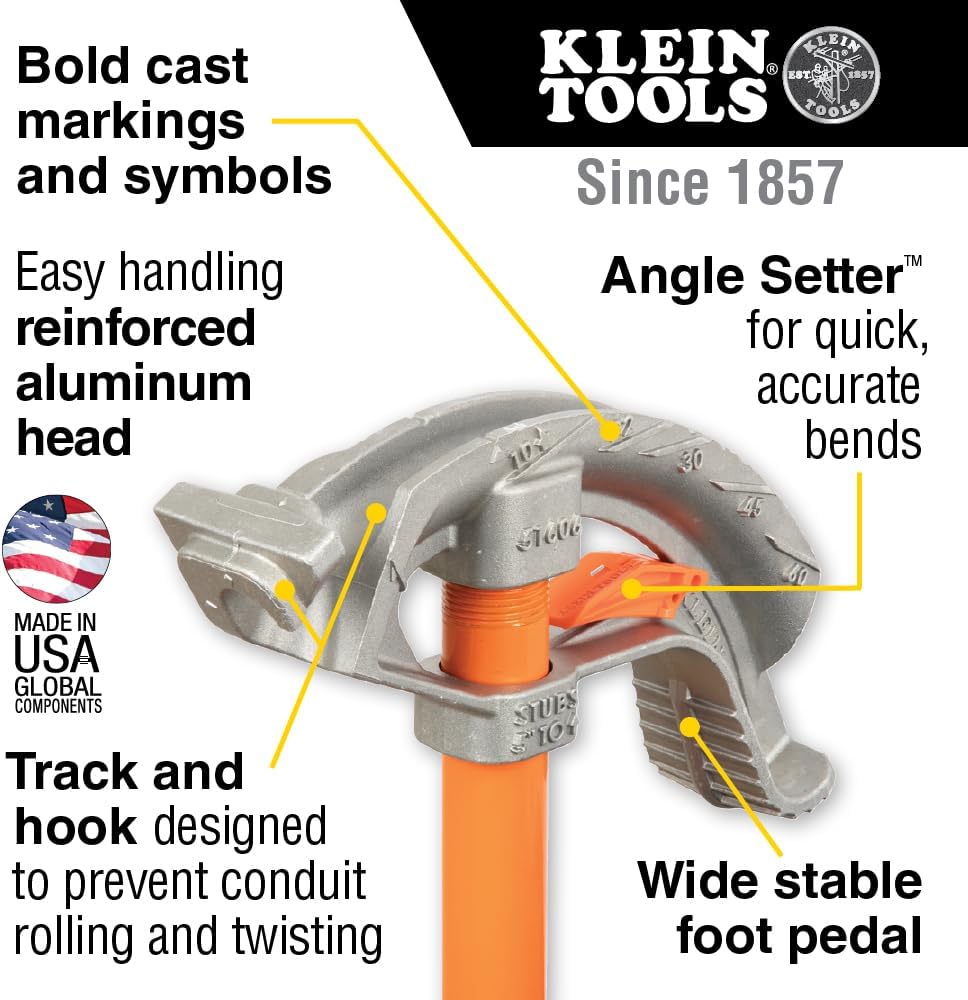
Klein Tools 56401 1/2″ EMT Conduit Bender
- Built for 1/2″ EMT — most common trade size
- Degree markings cast in — no guessing kicks
- Heavy-duty cast iron head — built to last
- Klein — the brand electricians trust
View on Amazon →
Wire Up
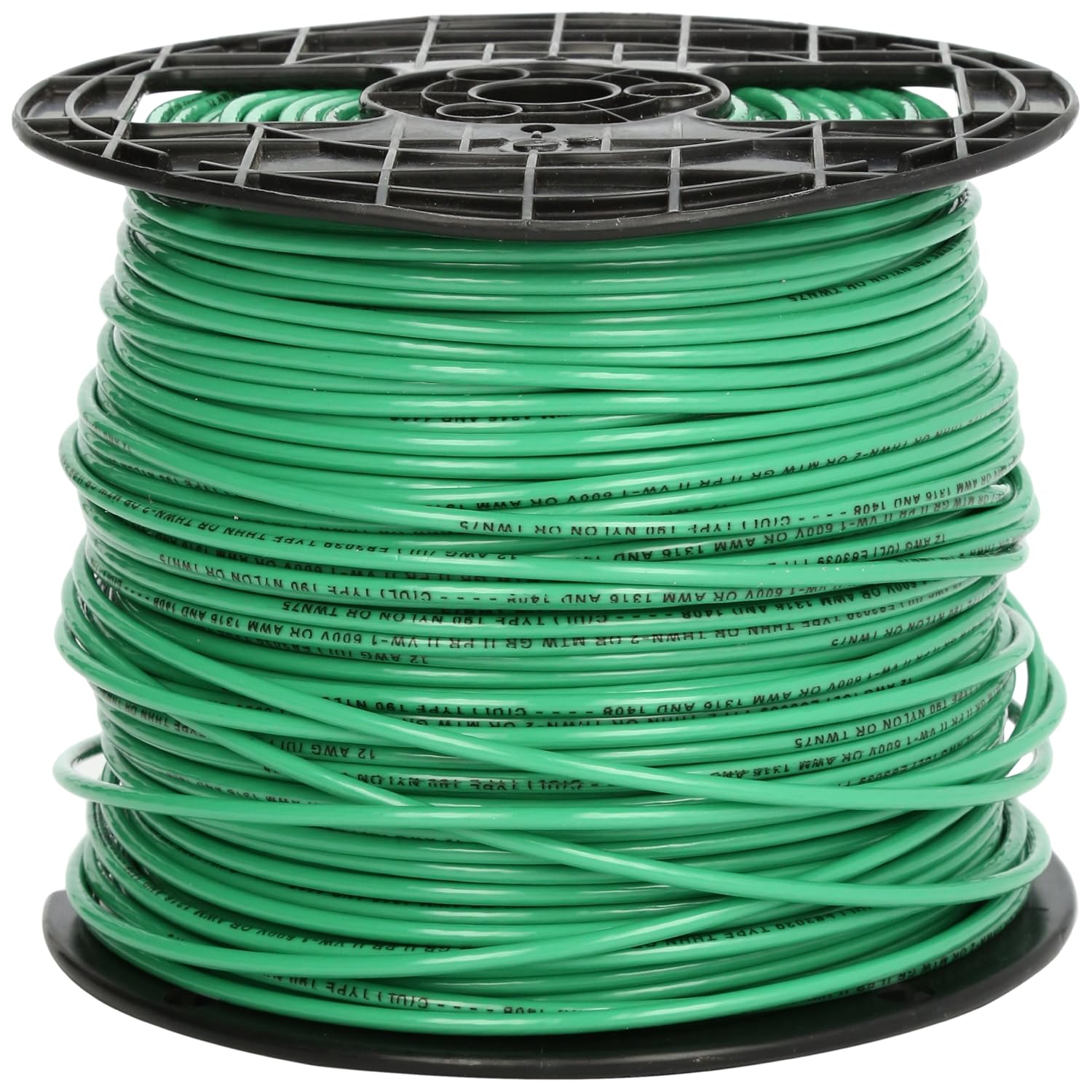
Southwire THHN 12 AWG Stranded — 500ft
- THHN — the conductor type in this calculator
- Stranded — pulls easier than solid
- 500ft spool — standard job site quantity
- Southwire — industry standard brand
View on Amazon →
Reference
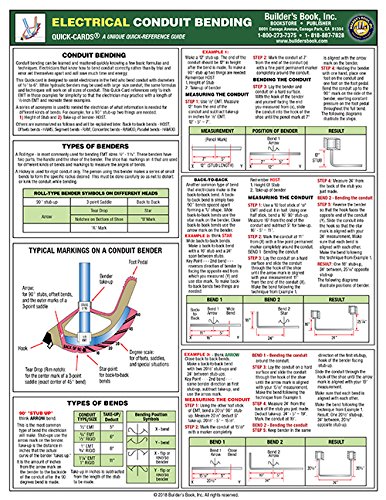
Electrical Conduit Bending Reference Chart
- Offsets, kicks, saddles — all on one chart
- Covers EMT, IMC, and rigid conduit
- Hang it in the shop or van for quick reference
- Under $10 — best value reference tool
As an Amazon Associate, TestTalkHQ earns from qualifying purchases.
FAQ
Does the ground wire count toward conduit fill?
Yes, always. Equipment grounding conductors count toward conduit fill per NEC 300.17 — they take up physical space just like any other conductor. They do not count toward ampacity derating (for that calculation, grounds are excluded). Fill and derating are separate calculations with separate rules about what gets counted.
What happens if I overfill conduit?
In the field: the pull becomes brutally difficult, insulation gets damaged against the conduit and other conductors, and you risk either a failed pull or hidden insulation damage that shows up as a fault months later. At inspection: it’s a code violation requiring correction before the job passes. Beyond code, overfilled conduit traps heat that degrades insulation over time, reducing conductor life and increasing fire risk.
Why is the 2-conductor fill limit lower (31%) than the 3+ conductor limit (40%)?
Two round conductors of similar size naturally stack on top of each other inside a circular conduit, creating a more eccentric cross-section that takes up more proportional space and creates more friction than three or more conductors which stack more efficiently. The 31% limit reflects this geometric reality and the greater pulling difficulty of two-conductor runs.
Can I mix wire sizes in the same conduit?
Yes. When mixing wire sizes or insulation types, calculate the total area by adding the individual Table 5 areas of each conductor separately. You cannot use NEC Annex C shortcut tables for mixed-size runs — those tables only apply when all conductors are the same size and insulation type. Our conduit fill calculator handles this automatically.
What is the nipple fill rule and when does it apply?
NEC Chapter 9, Table 1, Note 4 allows conduit nipples 24 inches or shorter to be filled to 60%. A nipple is a short conduit section connecting two enclosures where conductors are already terminated on both ends. The very short length means heat buildup is not a concern and pulling is essentially nonexistent. Standard runs and long sections do not qualify for the 60% exception regardless of how you label them.
Should I design for 40% fill or something less?
40% is the code limit, not the professional target. Experienced electricians design for 30–35% fill on typical runs and 25–30% on runs over 100 feet or with multiple bends. The lower fill makes pulling significantly easier, reduces insulation damage risk, and leaves capacity for future circuit additions without re-pulling conduit. Going to the maximum fill every time is a sign of minimum-compliance thinking, not professional practice.
Ready to Run Your Fill Numbers?
Our free conduit fill calculator covers EMT, PVC Sch 40/80, RMC, and IMC — with jam ratio warnings, nipple toggle, and pull difficulty advisories built in.
📐 Open Conduit Fill Calculator →
Data per NEC Chapter 9, Tables 1, 4, and 5. Always verify with current NEC edition and local jurisdiction requirements. TestTalkHQ.com — free tools for tradespeople.
Conduit Fill Calculator → (interactive Chapter 9 / Annex C sizing)
When fill math and the field disagree — wires that will not pull, inspector rejects, jam mid-pull, nipple-rule mix-ups, or adds to occupied conduit — use Conduit Fill Troubleshooting. When capacity forces a change, compare upsize vs multiple runs.
Fill is not the pull. Offset and saddle layout: Conduit Bending Layout Guide. Tension and sidewall pressure: Wire Pulling Tension Calculator.
Already know the installed raceway and need to audit mixed gauges or insulation types? Use the Wire Fill Calculator and its Wire Fill Guide.