Concrete Volume Calculator

Calculate cubic yards, bag counts, and order quantities for slabs, footings, columns, stairs, and piers.

Embed this calculator Free · no API key · keep the attribution link

Copy the snippet below to embed this calculator on your site. The attribution link must stay intact and dofollow (no rel="nofollow"). Browse all embeddable calculators

<div class="ttq-embed" style="max-width:100%;margin:0 auto;">
  <iframe src="https://testtalkhq.com/embed/concrete-volume-calculator/?theme=light&utm_source=embed" width="100%" height="980" frameborder="0" loading="lazy" scrolling="no" title="Concrete Volume Calculator — TestTalkHQ" style="border:0;max-width:100%;width:100%;"></iframe>
  <p style="font:400 13px/1.4 system-ui,sans-serif;text-align:center;margin:6px 0 0;">Powered by the <a href="https://testtalkhq.com/concrete-volume-calculator/?utm_source=embed&utm_medium=referral&utm_campaign=calculator_embed&utm_content=concrete-volume-calculator" target="_blank" rel="noopener">Concrete Volume</a> from <a href="https://testtalkhq.com/?utm_source=embed&utm_medium=referral&utm_campaign=calculator_embed&utm_content=concrete-volume-calculator" target="_blank" rel="noopener">TestTalkHQ</a></p>
</div>

Recommended Concrete Jobsite Gear

Concrete prep and handling tools using existing TestTalkHQ affiliate links and working repo image assets.

Measure
Heavy-Duty Digital Scale

660 lb Heavy-Duty Digital Scale

  • Verify aggregate and bag weight
  • Support repeatable mix batching
  • Useful for small-batch QC checks
View on Amazon →
Handling
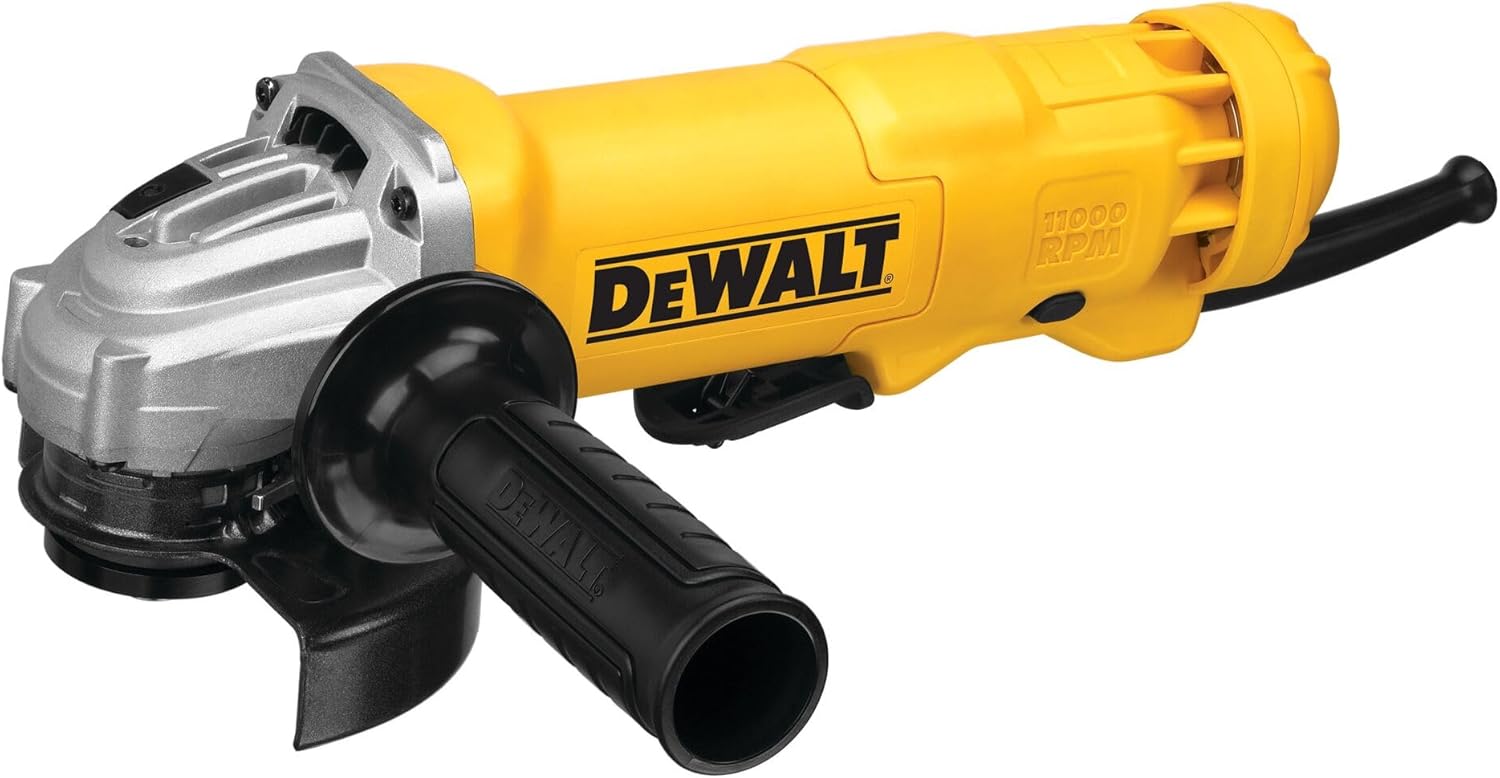
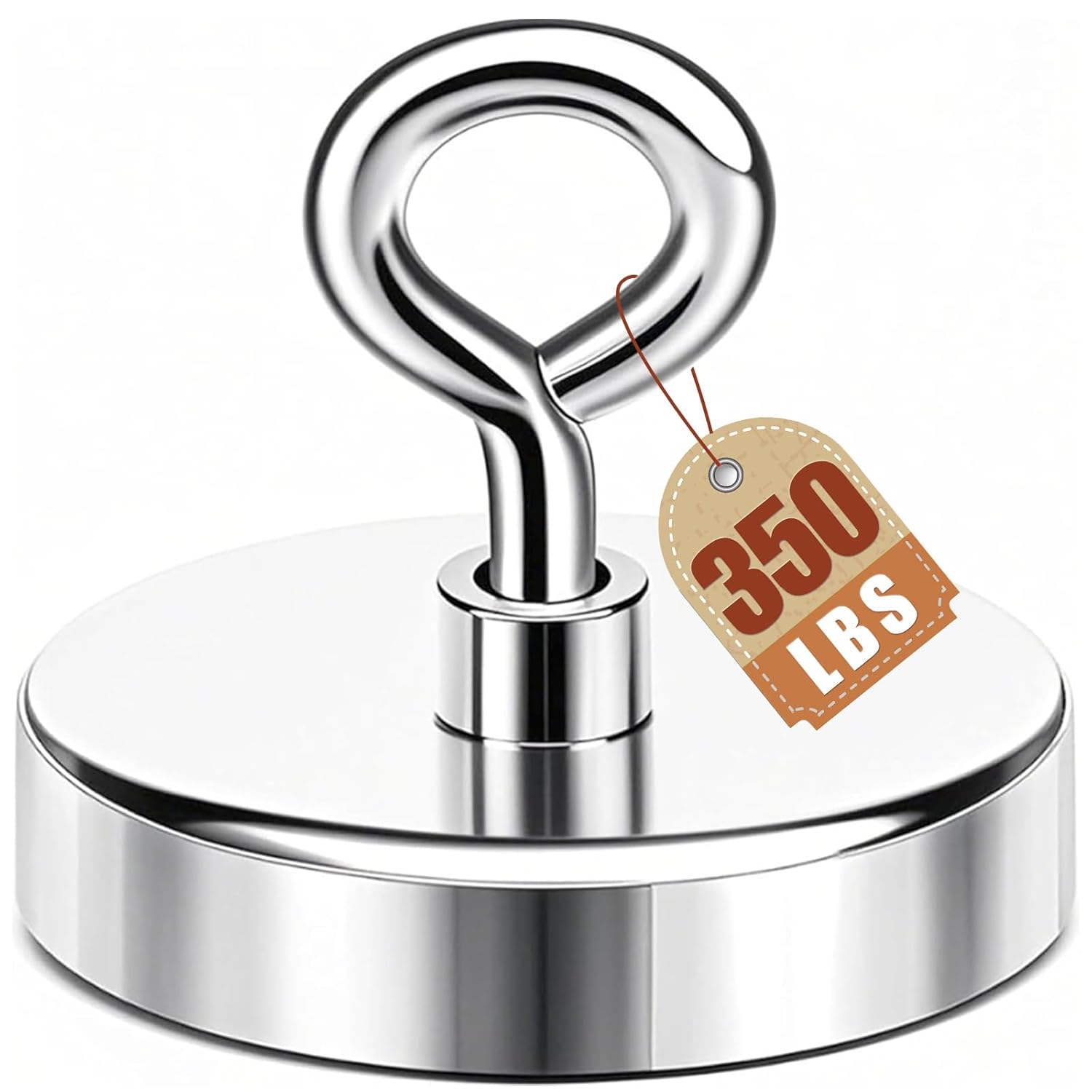
DIYMAG Lifting Magnet

DIYMAG 350 lb Lifting Magnet

  • Move rebar and steel forms safely
  • Reduce awkward hand lifting
  • Speed up cleanup of ferrous scraps
View on Amazon →
Safety
Leather Work Gloves

Leather Work Gloves

  • Protect hands during form setup
  • Improve grip on wet materials
  • Useful for bag handling and cleanup
View on Amazon →
Storage
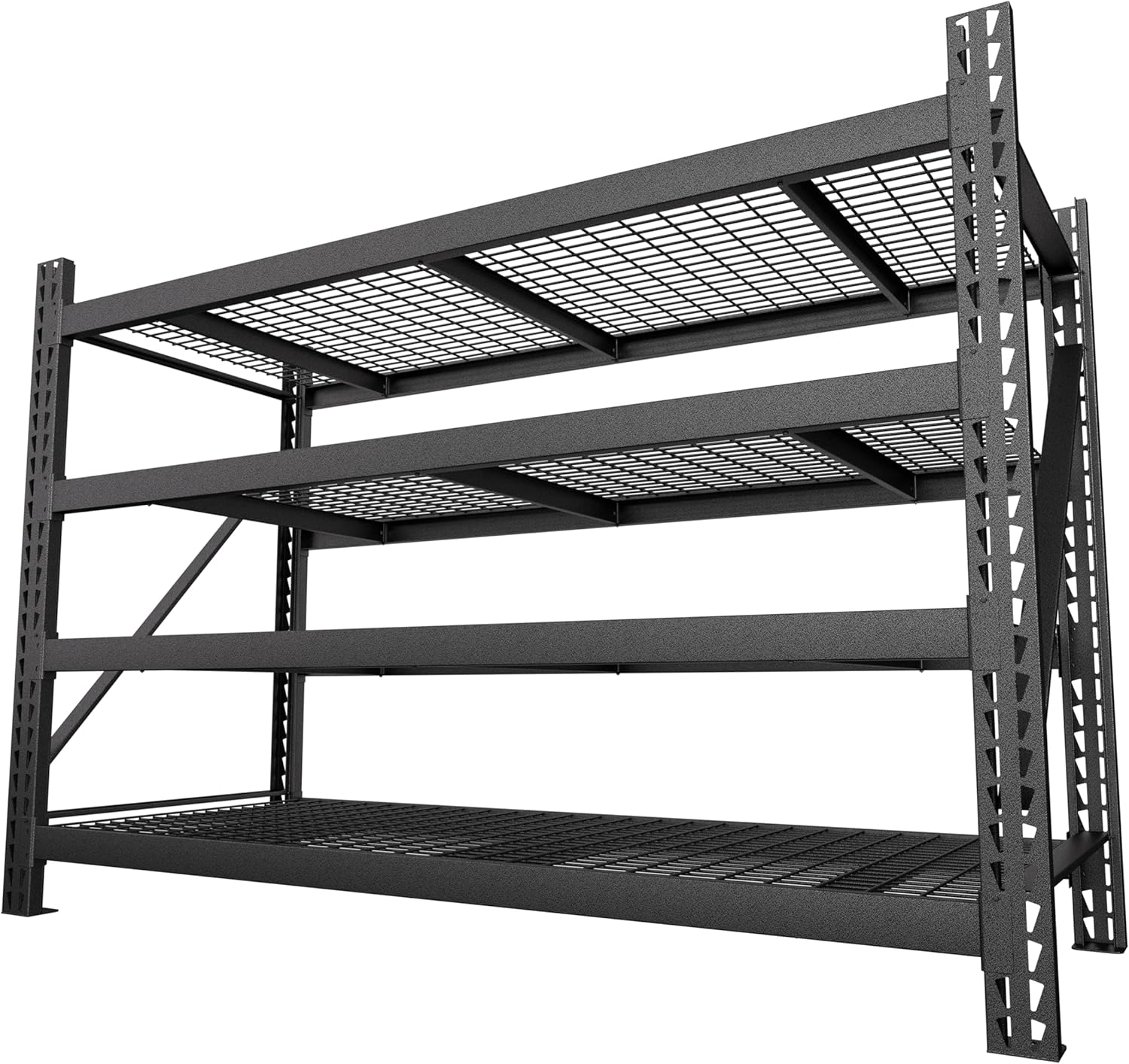
Jobsite Storage Rack

Heavy Duty Storage Rack

  • Organize mix tools and accessories
  • Keep bags dry and off floor
  • Cleaner jobsite staging workflow
View on Amazon →

How To Calculate Concrete Volume

The base formula stays the same across shapes: volume in cubic feet, then divide by 27 to get cubic yards.

Quick process

  1. Measure all dimensions accurately.
  2. Convert inches to feet when needed.
  3. Compute cubic feet based on project shape.
  4. Convert to cubic yards and add waste factor.

Bag yield reference

Bag SizeApprox. YieldTypical Use
40 lb0.30 ft^3Small repairs
60 lb0.45 ft^3Posts and pads
80 lb0.60 ft^3Most DIY pours

Frequently Asked Questions

How many 80 lb bags are in one cubic yard?

About 45 bags, because one 80 lb bag yields roughly 0.6 cubic feet and a cubic yard is 27 cubic feet.

Should I add extra concrete?

Yes. Add 5% to 10% for waste, form irregularities, and spill loss. Complex pours may require more.

When should I order ready-mix instead of bags?

For most projects above 1 to 1.5 cubic yards, ready-mix is usually faster, cleaner, and often lower total effort.

→ Fence Post Spacing & Concrete Calculator

→ Concrete vs Gravel vs Packed Dirt for Fence Posts
→ Concrete Volume Guide

→ Concrete Volume Chart

Machining

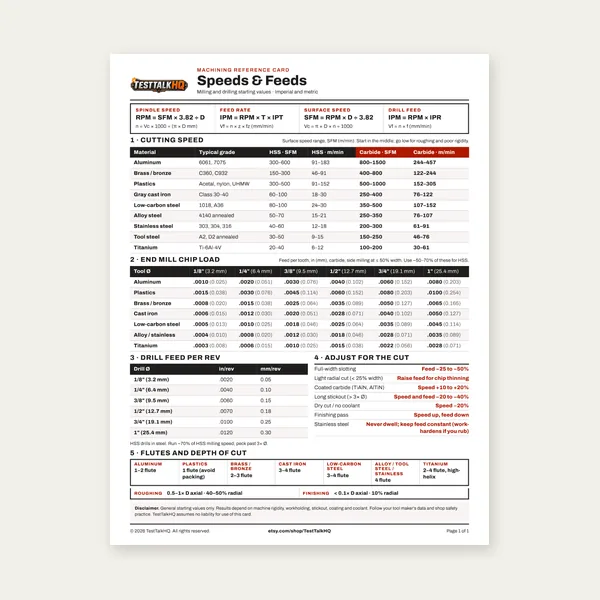
Machining Speeds & Feeds Card

Machining Speeds & Feeds Card

One page. Speeds, chip load and drill feed, imperial and metric.

$3.99

Buy

Complete Machining Speeds & Feeds Guide

Complete Machining Speeds & Feeds Guide

27 pages. Milling, drilling, tapping, turning and CNC routing.

$12.99

Buy
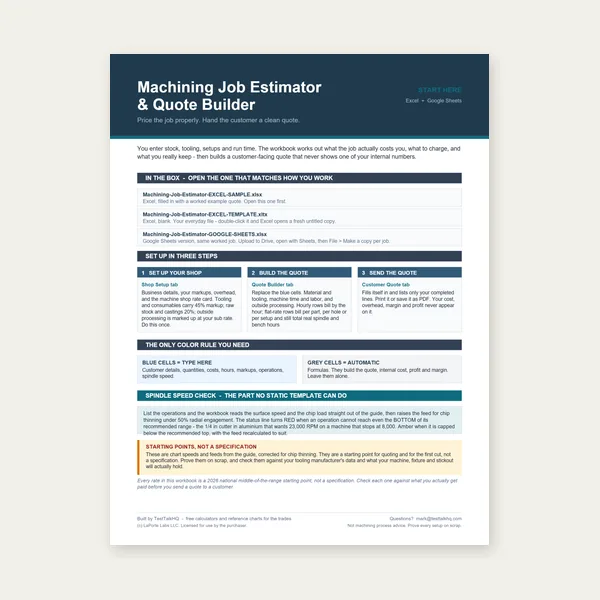
Machining Job Estimator

Machining Job Estimator

Quote shop work and check operations against your spindle's top speed.

Excel or Google Sheets. Best on a computer.

$29.00

Buy
BEST VALUE
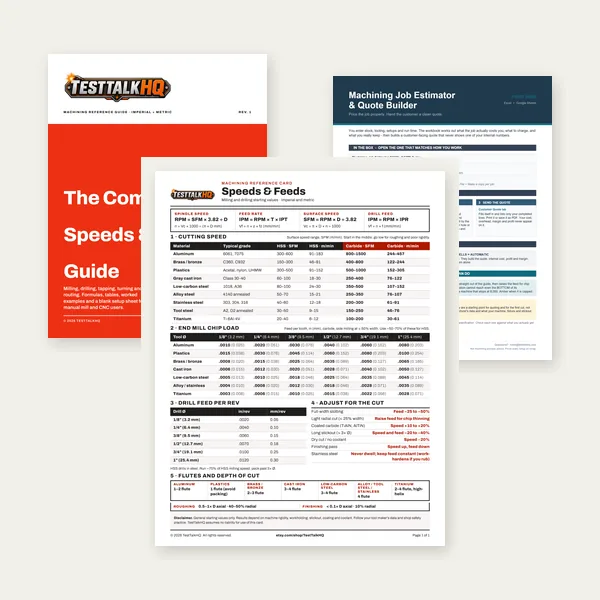
Machining Complete Bundle

Machining Complete Bundle

Card, 27-page guide and the estimator workbook. All six files.

Excel or Google Sheets. Best on a computer.

$34.99

$45.98 if bought separately — save $10.99

Buy

See all Machining products

Checkout opens in a new tab.

What this calculator does

This tool turns your pour dimensions into cubic yards, cubic feet, and bag counts so you can order ready-mix or buy bagged concrete without guessing. It handles slabs, continuous footings, columns, stair runs, and round piers or sonotubes from the same form. Optional price-per-yard input gives you a quick material budget before you call the plant or load the trailer.

What each input means

  • Project type: Picks the geometry—slab, footing, column, stairs, or cylinder—so only the fields you need appear.
  • Length, width, and thickness (slab): Overall footprint and slab depth in feet and inches. Thickness is the controlling number for yardage on flatwork.
  • Footing length, width, and depth: Total run of trench or wall footing in feet, with cross-section width and depth in inches.
  • Column width/diameter and height: Square or round pier size and vertical height, plus count when you have multiple posts.
  • Stair width, rise, run, and step count: Defines the stair volume from tread and riser geometry across the full flight.
  • Cylinder diameter, depth, and hole count: Round pier or tube forms—diameter and depth in inches and feet, multiplied by number of holes.
  • Price per cubic yard: Local ready-mix rate for a rough cost line on the estimate (optional).

Using the results on the job

Order ready-mix using the cubic yards figure and add 5–10% overage when grade, forms, or access are uncertain—running short mid-pour is expensive. Bag counts are useful for small pads, post holes, or touch-up; round up to full pallets when the supplier sells by the layer. Compare the order recommendation to your pump or chute plan before the truck arrives, and write the final yardage on the pour ticket so the crew and driver agree on quantity.

For footings and walls, verify trench width matches what you modeled—bell bottoms and keyways add volume fast. Stair pours often need a second person on forms; the calculator gives volume only, not finish labor. On cylinder piers, double-check diameter is outside form size if you are using sonotube labels versus measured ID.