⚙️ Welder Review
Vevor MIG 270 Review: A Beginner-Friendly 3-in-1 That Actually Delivers
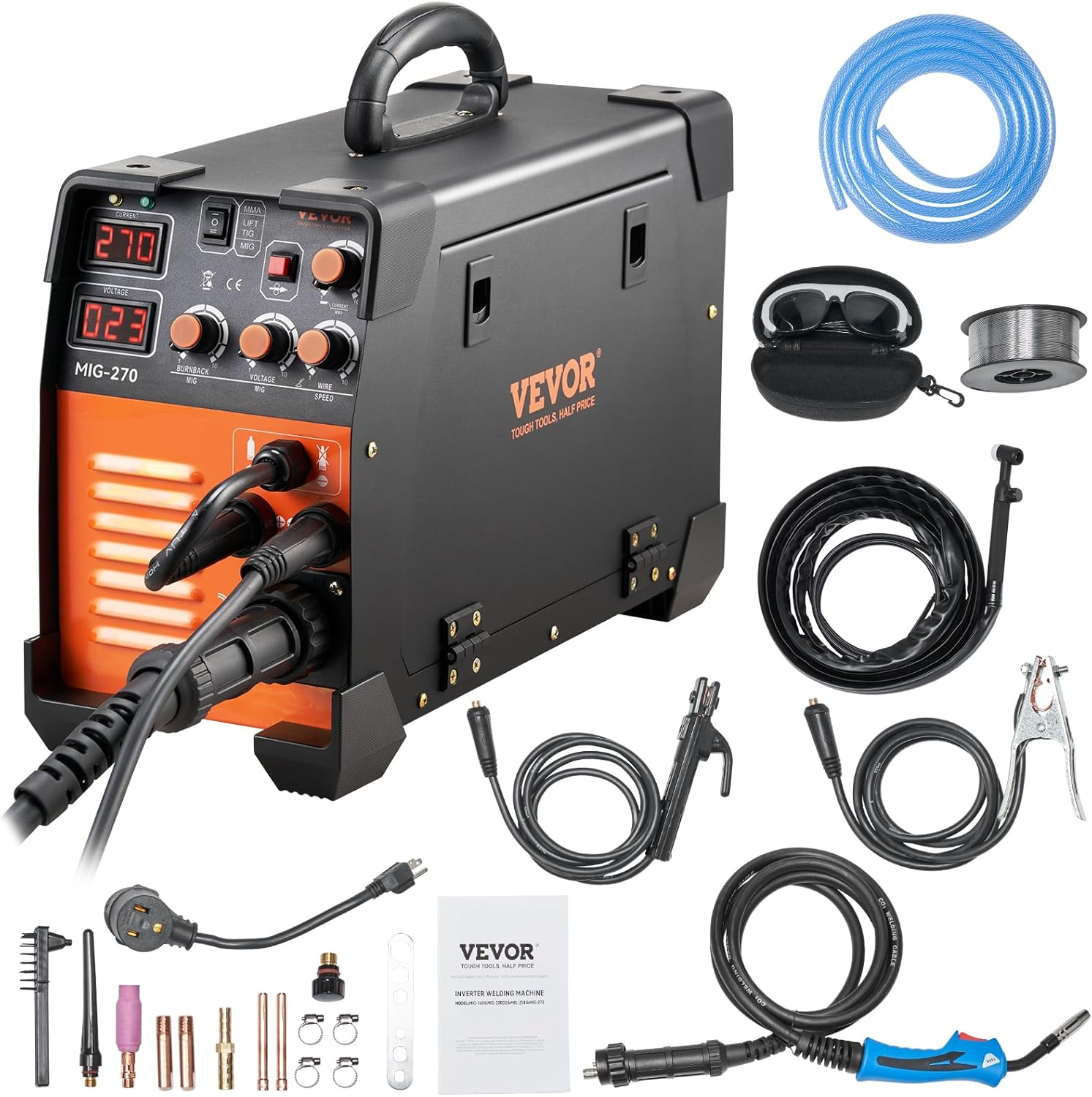
The short version: MIG is solid, stick is better than most budget machines, lift TIG is basic but functional. It’s a beginner and weekend-fab machine. Know that going in and you’ll be happy with it. Expect it to replace a dedicated TIG setup and you’ll be disappointed.
Need starting wire speed and voltage?
Plug your material thickness into the MIG Welding Calculator for a baseline, then tune by eye and sound on the machine.
Jump to what you need
Verdict & performance ratings
Bottom Line: Solid bang-for-the-buck for beginners and weekend fabricators
The Vevor MIG 270 handles three processes decently in one box at a price that’s hard to argue with. It’s not a pro machine. But if you’re learning to weld or need one unit for mixed shop work, this punches above its weight class.
What Works
- MIG is the strongest of the three modes — smooth arc, good penetration on thin-to-mid stock
- Auto-feed button is a genuinely useful feature
- Stick is better than most budget machines — handles 6011 rods without drama
- Versatile enough to cover 90% of hobby and light fab work
- Price point is hard to beat for a 3-in-1 unit
What Doesn’t
- Lift TIG is basic — no pedal, no fine heat control
- Build quality is good, not industrial-grade
- Takes some dial-in time to find the right settings
- Not a machine you’ll grow into if you do this professionally
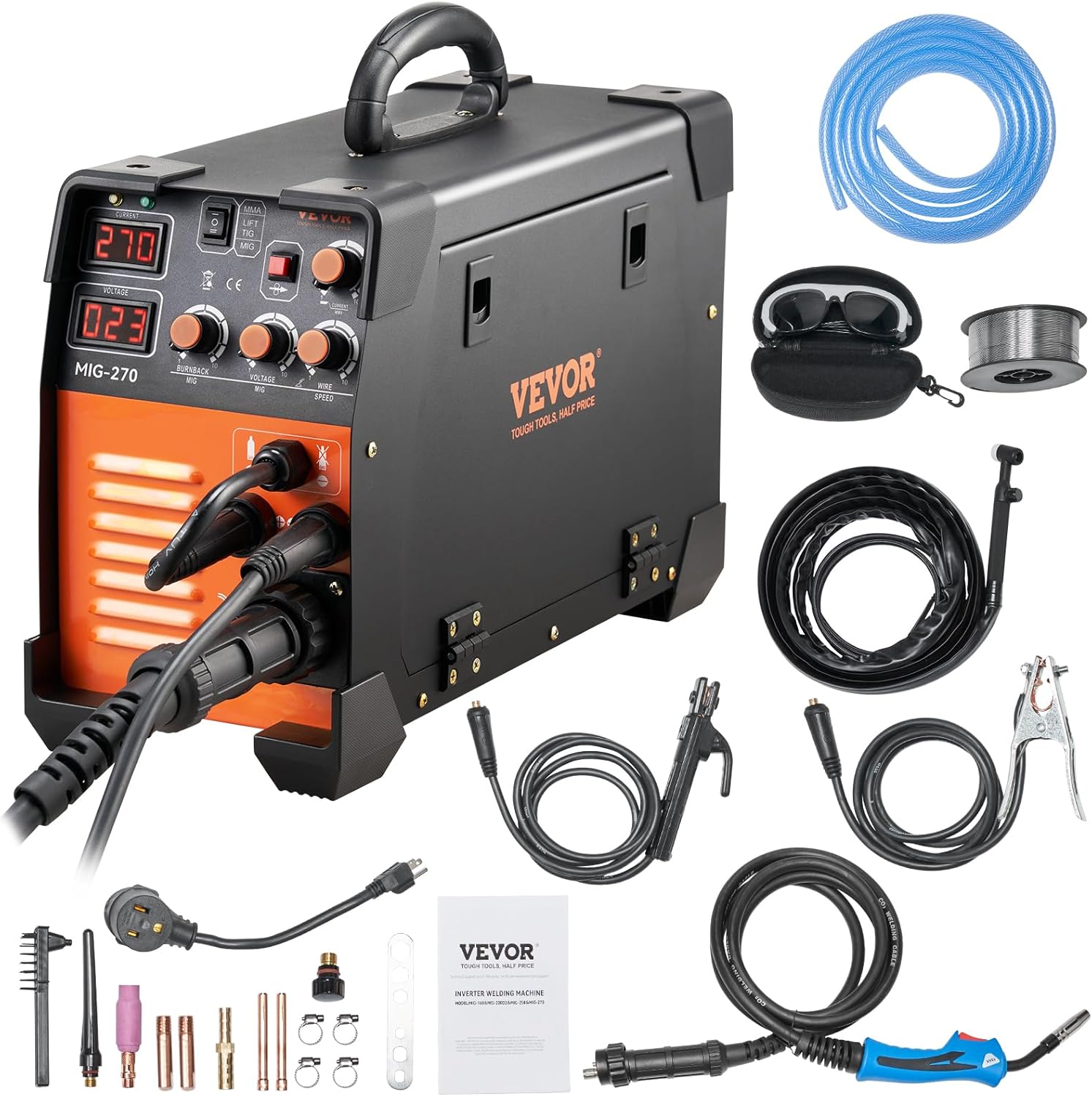
VEVOR MIG Welder 270A — 3-in-1 MIG / TIG / Stick
110V/220V dual voltage. LCD display. Handles MIG (gas or flux-core), lift TIG, and stick in one compact unit. Good starting machine for home shops and hobby fabricators.
What You’re Looking At
If you want a welder that can do MIG, stick, and TIG without spending serious money on three separate machines, the Vevor MIG 270 is one of the more honest options in the budget 3-in-1 category. We ran this thing for a full week — built a welding cart with it, tested it on everything from 20-gauge sheet to solid bar stock, and put Brian (who’d never stick welded before) on it to see how a first-timer handled it.
Quick Specs
| Processes | MIG (Gas + Flux-Core), Lift TIG, Stick (SMAW) |
| Output | 270A MIG / 200A TIG / 200A Stick |
| Input Voltage | 110V / 220V Dual Voltage |
| Wire Feed Speed | Adjustable, auto-feed button included |
| Display | LCD digital readout |
| Duty Cycle | 60% at rated output |
| Weight | Approx. 30 lbs |
| Best For | Home shops, light fab, beginners, hobbyists |
Review video
Hands-On Testing
We didn’t just unbox this thing and read specs at it. We ran it through a pile of scrap — 20-gauge sheet all the way up to solid bar stock and thick tubing — over the course of a full week. The welding cart you see in the video was built almost entirely with this machine.
MIG Welding
This is where the 270 earns its keep. Once you dial in the settings, it lays down smooth beads with good penetration on sheet metal. Even on thinner stock, we didn’t burn through — and that’s the thing with budget MIG machines, they often run hot and sloppy. This one was controllable.
The standout feature is the auto-feed button. Instead of pulling the trigger and burning through wire while you try to position yourself, you hit the button and it feeds the wire through. Small thing, but genuinely useful when you’re setting up a run.
We did the hammer test after welding some thin sheet — picked it up, dropped it, bent the steel. Welds held. For the price, that tells you what you need to know.
Stick Welding
Stick is usually the mode where budget 3-in-1 machines fall apart. Inconsistent arc, poor rod control, frustrating for beginners. The Vevor surprised us here. We ran 6011 rods on tubing and solid block, cranked voltage from 18V up to 22V on thicker stock, and the arc stayed consistent enough to use.
Brian’s first stick bead wasn’t pretty — but it stuck and it held through drops and hammering. That’s the real test. If you’re trying to stick weld dirty outdoor material or do farm repairs, this machine can handle it.
Lift TIG
Let’s be straight about lift TIG: it’s not what you’d use to walk the cup on stainless pipe. You strike an arc, you’re at full power until you break contact. No pedal, no fine control. That said, on clean sheet and tubing, the arc started consistently and penetration was adequate for hobby-level work and quick touch-ups.
If TIG is a major part of what you do, get a dedicated TIG machine. If you just want to dabble or handle occasional TIG work without buying a second machine, this covers it.
Who This Is For
✓ Buy This If You Are…
- Brand new to welding
- A weekend fabricator or DIYer
- Working on auto body patch panels
- Running a home shop or garage
- Looking for one machine that covers 90% of situations
- On a budget and need versatility
✗ Look Elsewhere If You Are…
- A full-time production welder
- Doing precision TIG work
- Welding heavy structural plate regularly
- Chasing perfect bead appearance
- Planning to grow into the machine professionally
The Bottom Line: If you can use a hot glue gun, you can learn MIG on this machine. That’s how approachable it is. The ugly stick welds survived the hammer test. The MIG beads on thin sheet were clean. At this price point for three processes, the value is real.
Related Tools & Calculators
Use these alongside the machine while you’re learning:
Gear to Run With It
Confirmed affiliate links — all pulled from the TestTalkHQ product sheet.
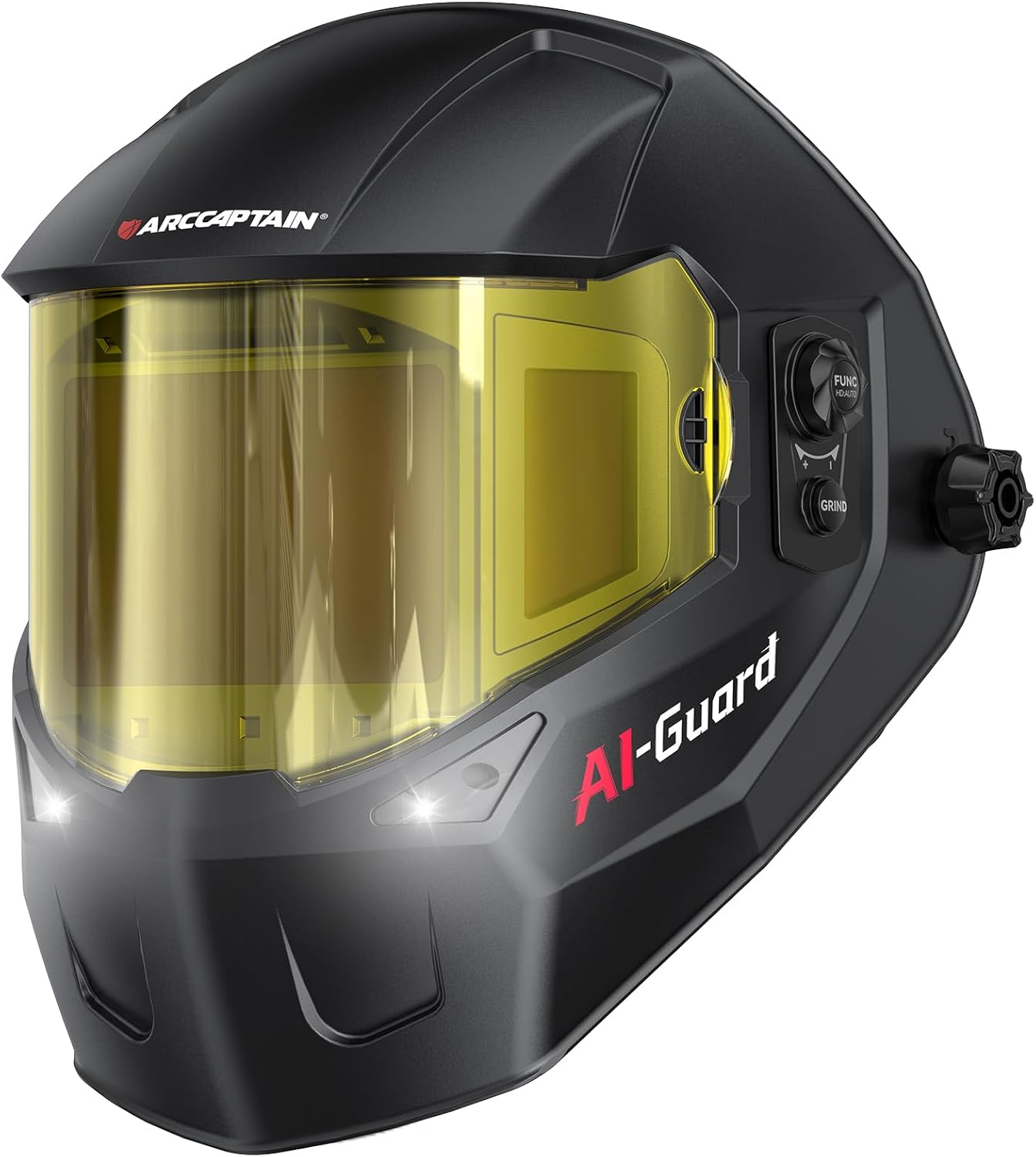

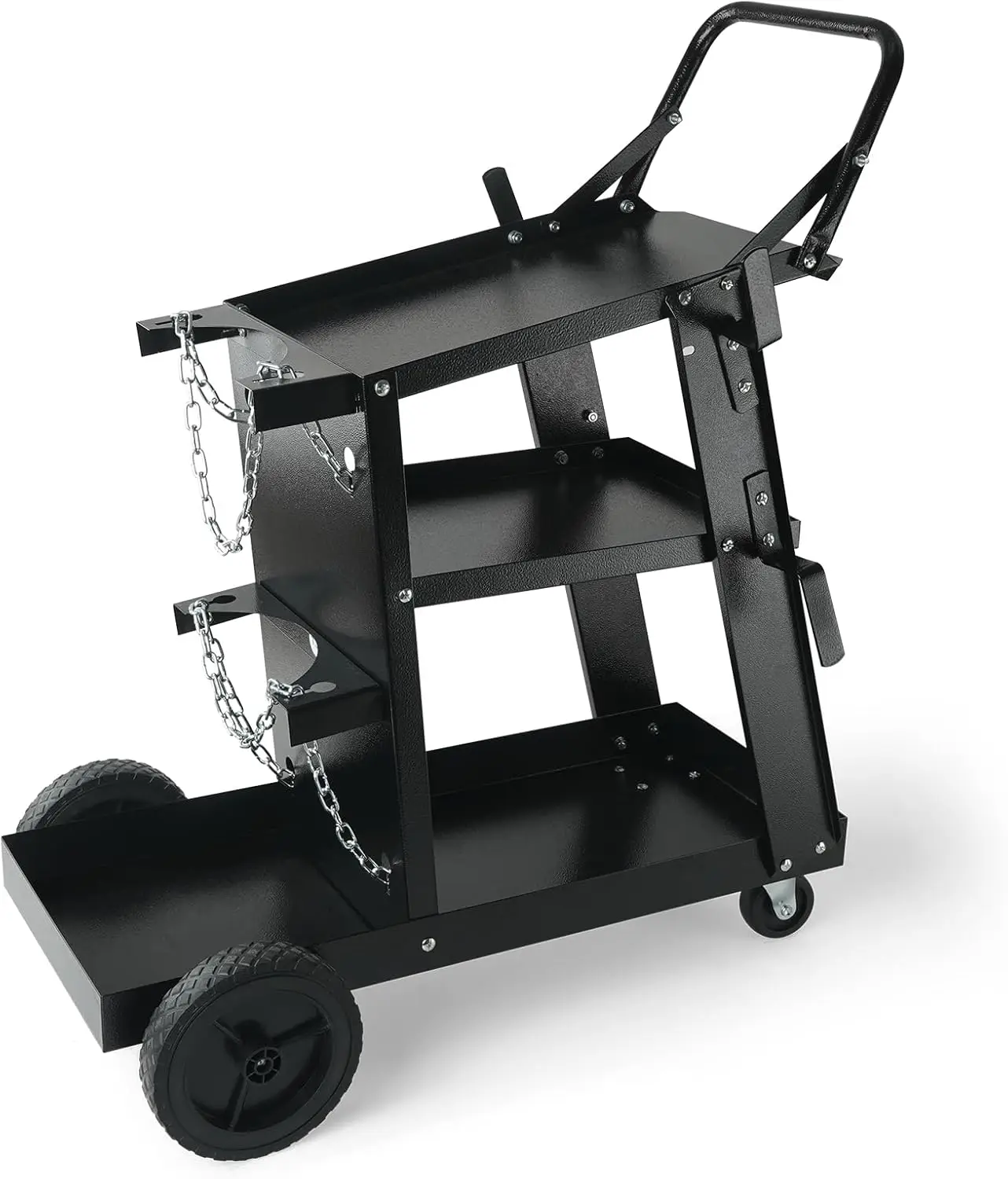
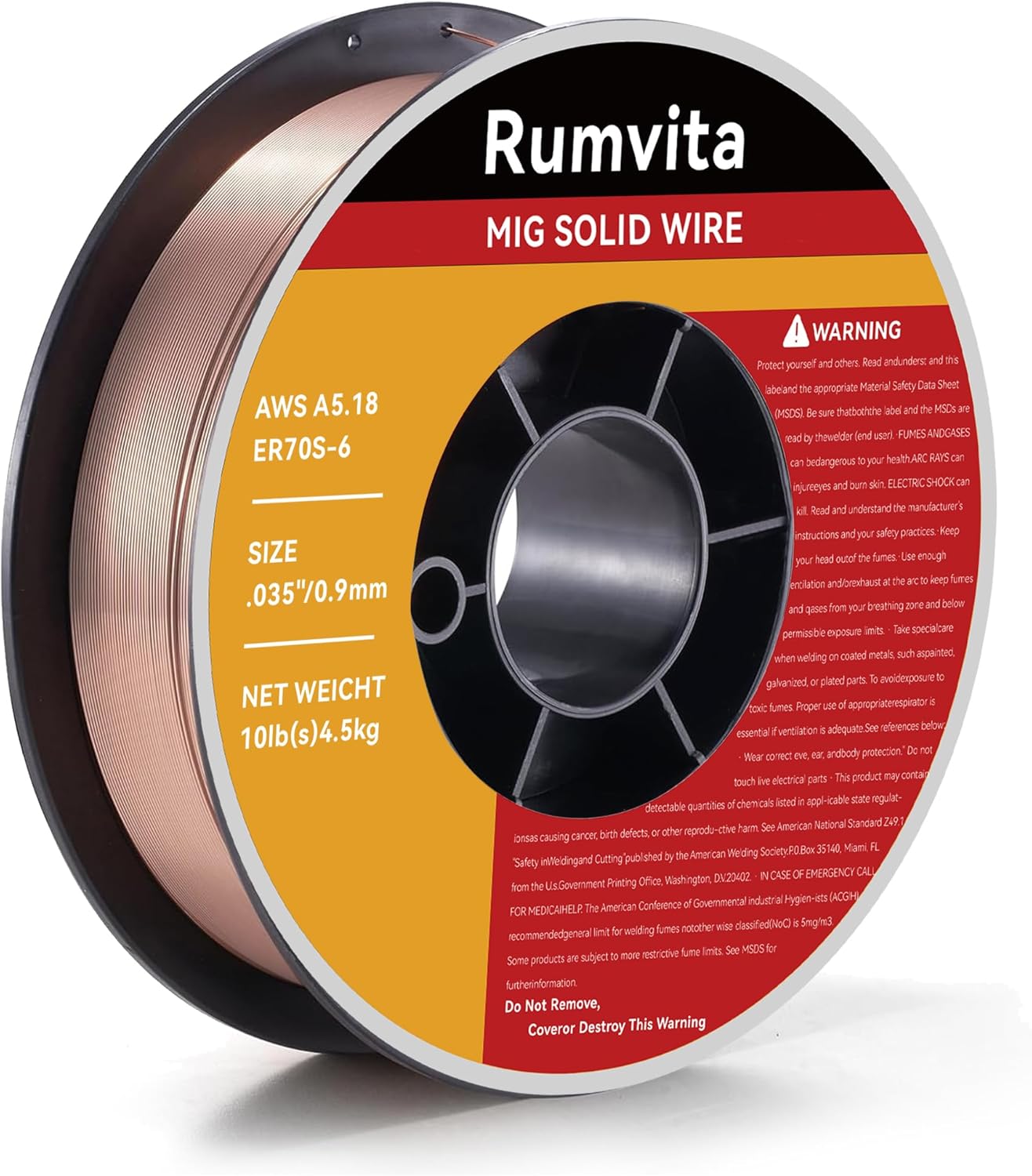
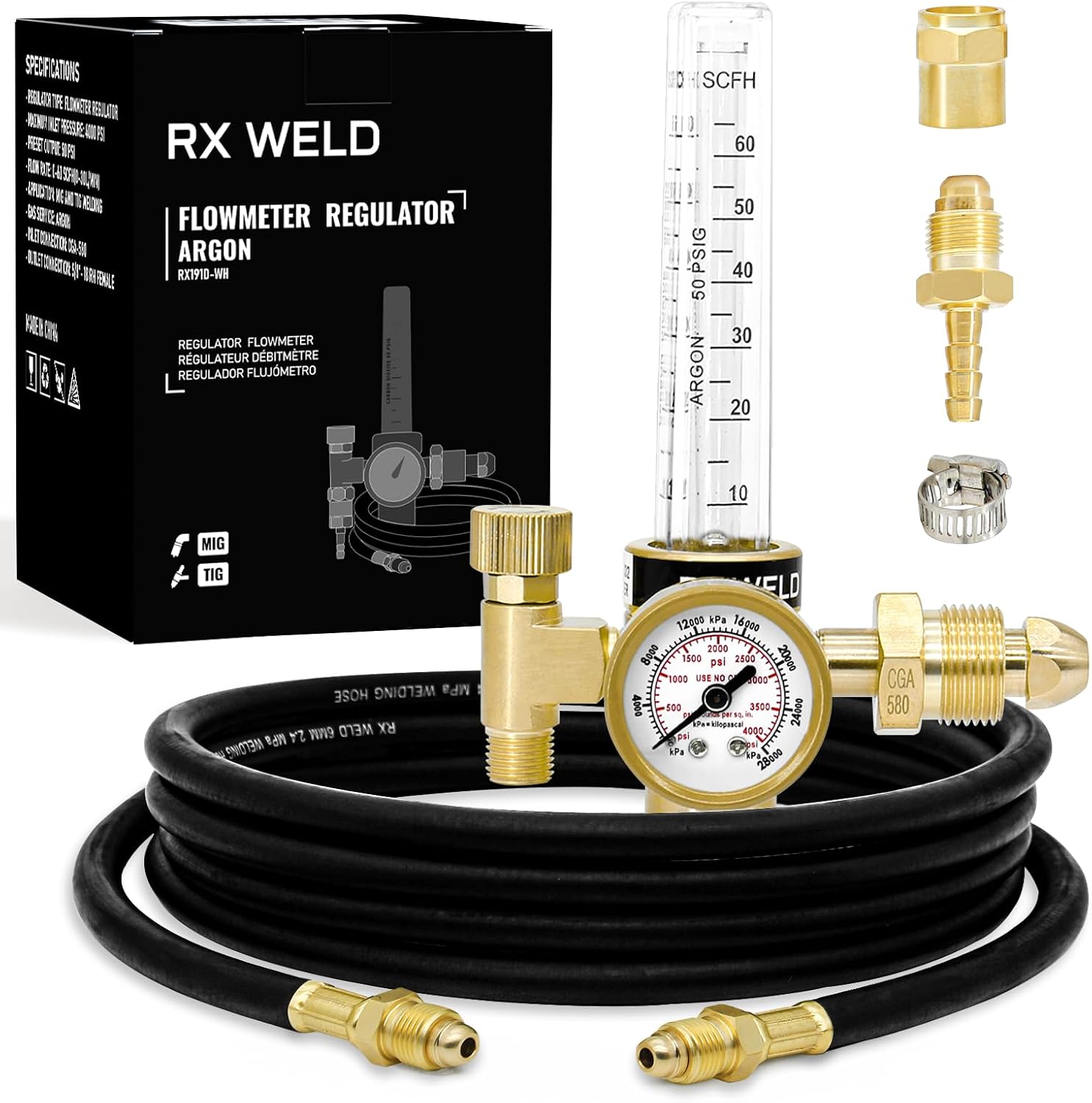

As an Amazon Associate, TestTalkHQ earns from qualifying purchases at no extra cost to you. Reviews are based on hands-on testing. All opinions are our own.
FAQ
Is the Vevor MIG 270 good for a total beginner?
Yes, if your expectations match the class of machine. MIG is approachable on this unit, and stick performed better than typical budget combo boxes in our testing. Plan on some dial-in time on scrap.
Will lift TIG replace a real TIG setup?
No. There’s no pedal and limited heat control. It’s fine for dabbling and quick fixes on clean material; for precision or stainless pipe work, budget for a dedicated TIG machine.
Does it plug into 110V and 220V?
The specs list dual-voltage input (110V / 220V). Use the correct outlet and adapter pigtail per the manual so you’re not starving the machine on thin house circuits.