Vevor 15L Ultrasonic Cleaner Review: Professional Capacity for Serious Cleaning Jobs
Rating: 4.5/5 Stars
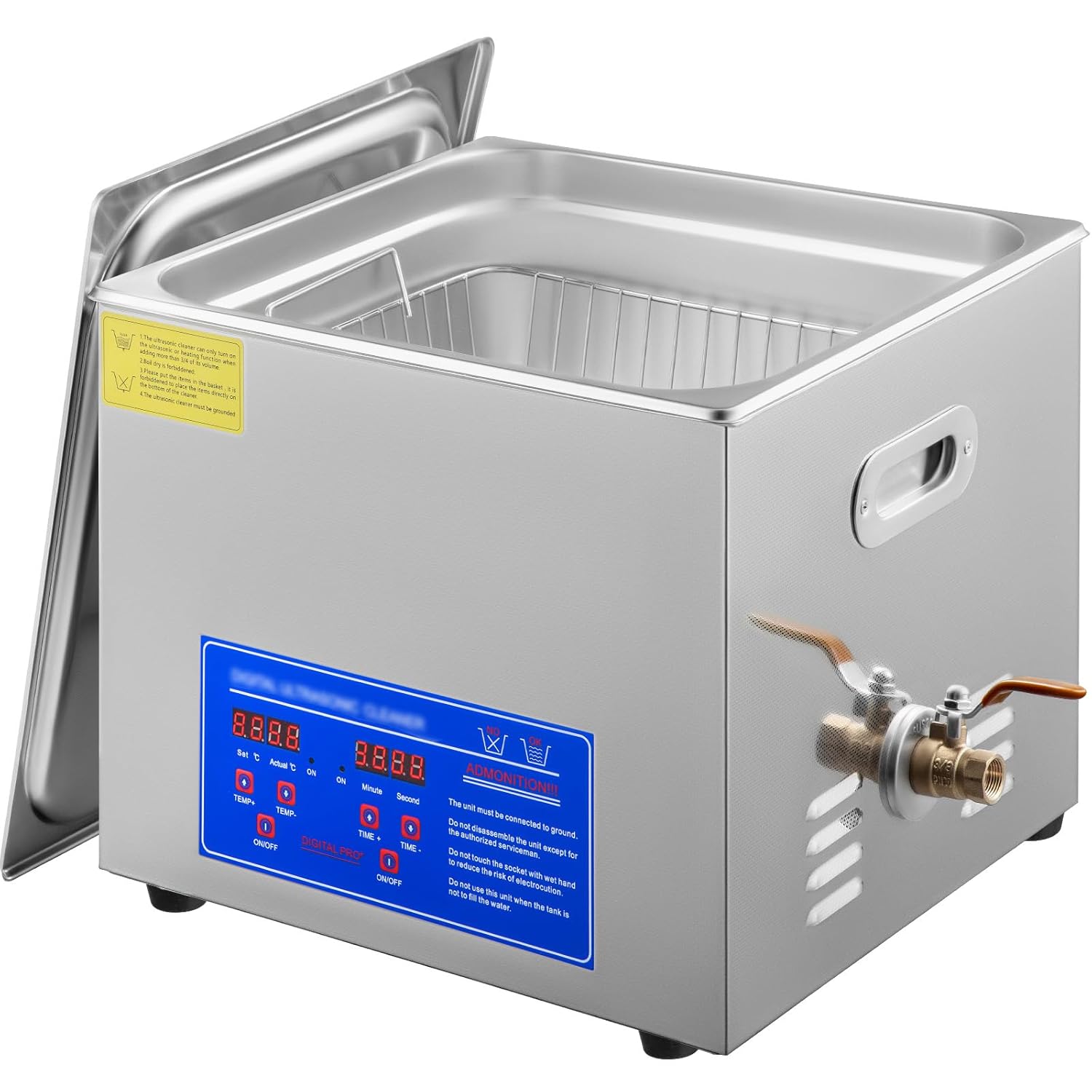
When 6 liters isn’t enough and 10 liters still leaves you wishing for more capacity, the Vevor 15L Ultrasonic Cleaner is where you end up. This is genuine professional-tier equipment. The kind of unit you’d find in gunsmith shops, automotive restoration facilities, and industrial cleaning operations. After extensively testing it on heavily soiled brass casings and various other components, I can confirm this is the ultrasonic cleaner you buy when you’re completely done messing around with smaller units.
The Capacity Difference: 15 Liters Changes Everything
The jump from 10L to 15L might seem incremental on paper, but in practical use, it’s transformative.
What 15 liters actually means:
- Room for complete AR-15 bolt carrier groups
- Multiple firearms components simultaneously
- Large carburetors without playing Tetris
- Entire sets of brass casings (hundreds at once)
- Manifolds and cylinder heads (depending on size)
- You stop thinking “will it fit?” and start thinking “how much can I clean at once?”
Tank dimensions:
- Interior: 14″ L × 12″ W × 5.9″ D
- Actual capacity with basket: ~13.5 liters usable
- Basket reduces effective depth slightly but keeps parts organized
This is the size where ultrasonic cleaning transitions from “convenient tool” to “production capability.
Build Quality: Industrial-Grade Everything
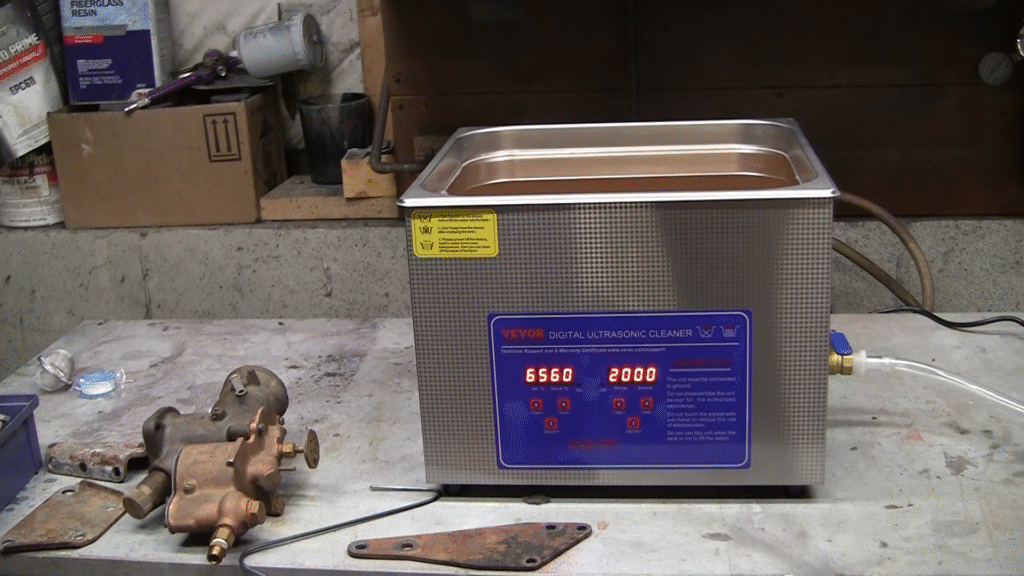
The Vevor 15L is built for commercial use that happens to be priced for prosumers:
Construction specifications:
- Tank: Heavy-gauge stainless steel (corrosion and rust-proof)
- Exterior: Stainless steel housing (not plastic like consumer models)
- Transducers: Six sets (most units have 2-3) – this is significant
- Basket: Large stainless steel with reinforced handles
- Drain valve: Industrial ball valve on side
- Power: 360W ultrasonic + 400W heating = substantial cleaning power
The six transducer sets are particularly important – more transducers mean more uniform ultrasonic energy distribution throughout the tank. In a 15L unit, you need that coverage to ensure effective cleaning across the entire volume.
The Heating System: Professional Temperature Control
Built-in heating makes this a true professional cleaning system:
Temperature specifications:
- Maximum: 80°C (176°F)
- Digital control: Precise temperature setting in Celsius
- Heating power: 400 watts
- Real-time display: Shows current temperature
The heating function is essential for this capacity – trying to heat 15 liters of water without a built-in element would take forever and waste energy.
Transducer Configuration: Why Six Sets Matter
Most ultrasonic cleaners have 2-3 transducer sets. The Vevor 15L has six.
Why this matters:
- More uniform cleaning throughout the large tank
- Better energy distribution to all parts
- Stronger cavitation action
- No “dead zones” where cleaning is less effective
Important operational note: Because transducers can be positioned high on the tank walls, you should always fill the unit to the recommended level. Running transducers without solution contact can damage them. Never run the ultrasonic function without liquid in the tank.
Real-World Test: Heavily Soiled Brass Casings
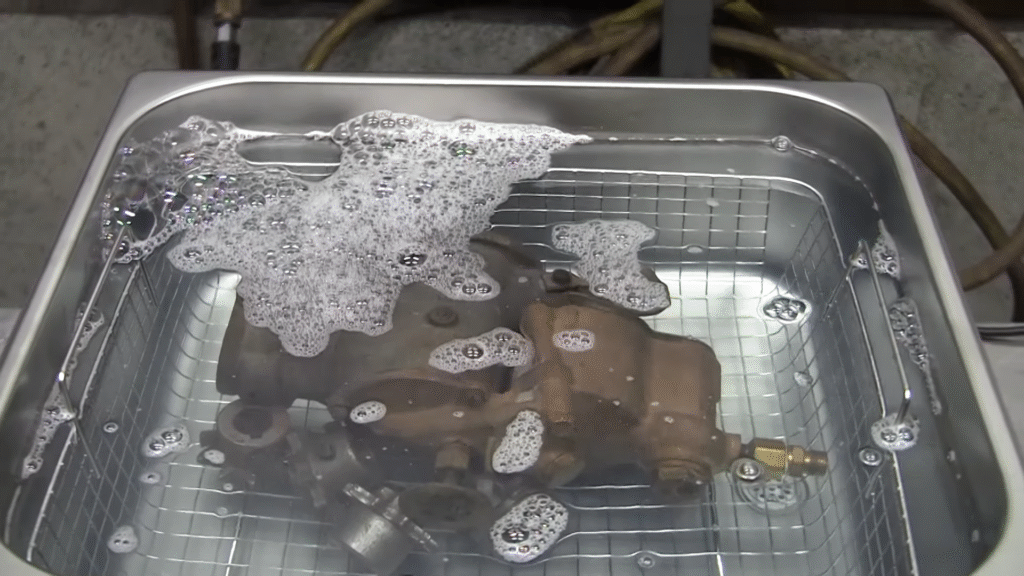
For my test, I chose one of the most visually satisfying cleaning demonstrations: once-fired .223 brass casings. Then a carburetor for good measure, to show the size of this unit. Finally I placed various bolt sizes in a container and placed that in the ultrasonic cleaner.
The challenge: These casings were heavily soiled – a mix of brass I’d fired myself and casings picked up at the range. Some had been sitting in a container for months with carbon fouling, dirt, and grime. They were legitimately filthy.
Cleaning Setup
Solution:
- Entire bottle of Purple Power concentrate
- Hot water to fill line
- Total volume: ~14 liters
Why Purple Power: It’s an excellent degreaser that works well for brass cleaning.
Critical warning about Purple Power and Simple Green: DO NOT use these on aluminum. They will eat aluminum components. I use these primarily for brass, steel, and stainless steel. For aluminum parts (like AR receivers), use different solutions or plain water with dish soap.
Temperature: Set to heat (exact temp not recorded, but heating was activated)
Time: 15 minutes
Process:
- Filled tank with Purple Power and hot water
- Activated heating function
- Set timer for 15 minutes
- Dumped brass casings into basket
- Turned on ultrasonic function
- Covered unit to reduce noise
During Cleaning
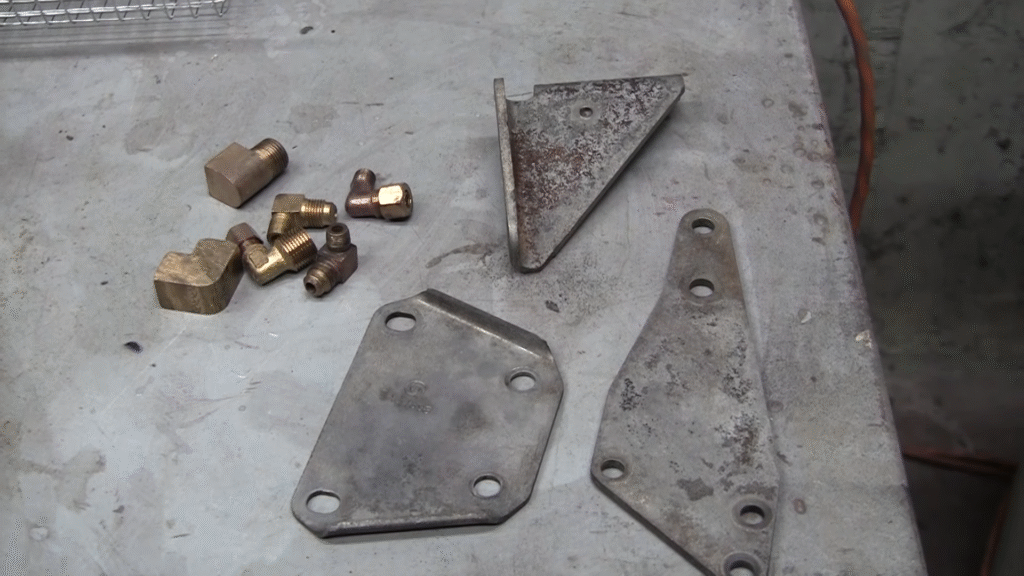
The ultrasonic action was immediately visible. With the clear lid, you could watch contamination literally bloom off the brass in satisfying waves. The cavitation bubbles were aggressively working on every surface.
Noise level: Approximately 92 dB with lid on – noticeable but you can talk over it easily. Not obnoxiously loud for a shop environment.
Results After 15 Minutes
The transformation was dramatic:
The brass casings went from heavily soiled and grimy to squeaky clean. Casings that looked dull and filthy came out shining and spotless.
What was cleaned:
- Exterior brass surfaces: spotless
- Case mouths: clean
- Primer pockets: remarkably clean (normally require manual picks)
- Interior case walls: clean when checked with Q-tip
The solution: Turned dark from all the contamination removed. The purple color was barely visible under the layer of crud that came off the brass.
Why I clean brass this way: Before reloading, I want to inspect every casing for cracks, damage, or defects. Ultrasonic cleaning lets me see every detail clearly. Clean brass also means I can spot problems that would be hidden under grime.
Post-Cleaning Process
After the ultrasonic cycle:
- Rinsed brass with clean water to remove Purple Power residue
- Laid out on paper towels to air dry
- Inspected for damage or cracks
- Ready for de-priming and resizing
Note: You won’t get “tumbled brass” shine from ultrasonic cleaning – you’ll get clean brass. If you want that polished look, you can tumble afterward. But for functionality and inspection, ultrasonic cleaning is superior.
The Drainage System: A Professional Feature That Matters
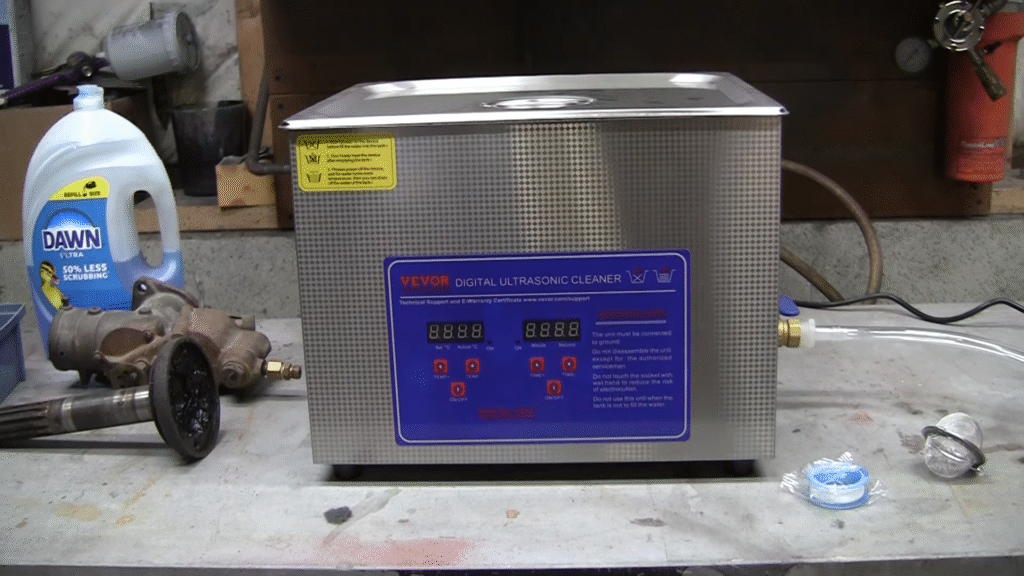
One of the best features on the Vevor 15L is the side-mounted drain valve.
Why this is crucial: 15 liters of water weighs approximately 33 pounds (15 kg). Add the weight of the unit itself, and you’re looking at 50+ pounds. Trying to tip and pour that without making a massive mess is impractical and potentially dangerous.
The Vevor solution:
- High-quality ball valve on the side
- Included drain tube (with adapter fitting)
- Position unit on table edge
- Open valve
- Water drains into bucket below
- Clean, safe, no heavy lifting
This feature alone justifies choosing a quality unit over cheap alternatives.
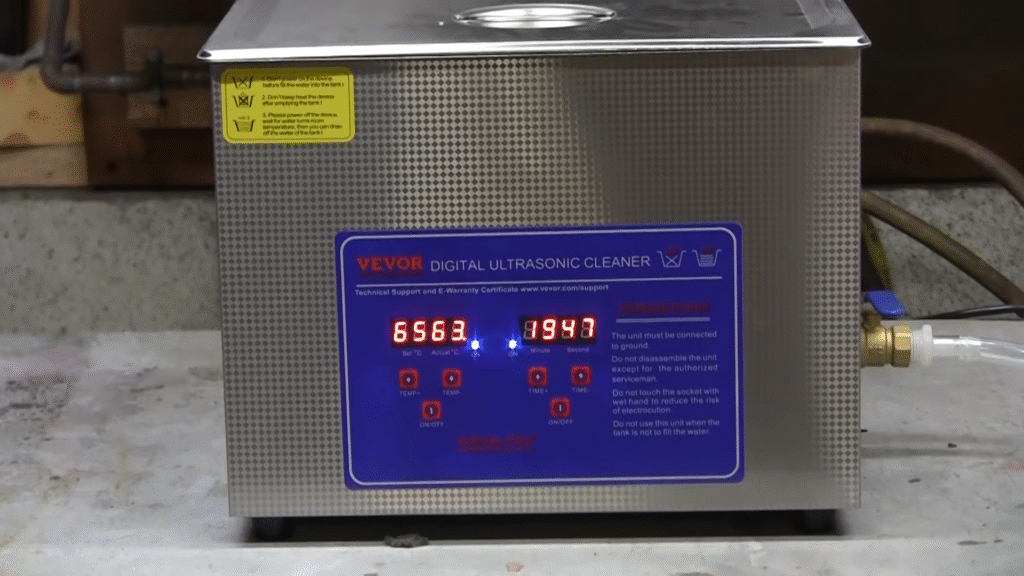
Digital Controls and Timer
Timer function:
- Range: 0-30 minutes
- Digital display with countdown
- Automatic shutoff when time expires
- Can run continuously if desired (though 30-minute cycles are recommended)
Temperature control:
- Set in Celsius (time to learn metric!)
- Real-time temperature display
- Heat can be turned on/off independently
- Precise control for different materials
Power controls:
- Main power switch on rear
- Independent heat and ultrasonic activation
- Fan runs when unit is powered (cooling electronics)
Cleaning Solution Options and Methods
Method 1: Direct immersion (what I did)
- Fill tank with cleaning solution
- Add parts directly to basket
- Most straightforward approach
Method 2: Container-within-tank method
- Fill tank with plain water
- Put cleaning solution and parts in separate plastic container
- Submerge container in water-filled tank
- Ultrasonic waves pass through plastic
- Keeps tank clean, allows use of harsh chemicals like gasoline or acetone
Method 2 is brilliant for:
- Cosmoline removal (gasoline-based solutions)
- Parts requiring harsh solvents
- Keeping tank pristine for next use
- Using expensive specialized solutions (less waste)
Solution Recommendations by Application
Brass cleaning:
- Purple Power or Simple Green (NOT on aluminum)
- Hot water
- 15-20 minute cycles
Firearms (steel/stainless):
- Simple Green HD
- Dawn dish soap
- Ed’s Red (homemade gun cleaner: ATF, acetone, mineral spirits, etc.)
- Hot water, 15-30 minutes
Jewelry and delicate items:
- Mild dish soap
- Lower temperature
- Shorter cycles (3-5 minutes)
Heavy automotive work:
- Commercial degreasers
- Simple Green Pro HD
- Hot water, multiple cycles
Cosmoline removal:
- Mineral spirits or gasoline (in separate container)
- Hot water in main tank
- Multiple cycles
Critical reminder: Always completely dry parts after water-based cleaning. Use compressed air to blow out all crevices, then apply penetrating oil like WD-40 to displace any remaining moisture. Then lubricate normally. This prevents rust on steel parts.
Power Requirements
Specifications:
- Ultrasonic: 360 watts
- Heating: 400 watts
- Total when both running: 760 watts
This is substantial power draw. You’d need at minimum an 1000W power station to run this off-grid, though 1500-1800W would be safer with margin for startup surge.
For shop use on standard household power, it’s no issue.
Noise and Vibration
Measured noise level: ~92 dB with lid on
Subjective assessment: Noticeable but not problematic. You can work in the same room, hold conversations, etc. In a typical shop with other equipment, it blends into the background.
Potential camera interference: Ultrasonic frequency can sometimes interfere with cameras – causing wavy lines on screen or audio distortion. This is electromagnetic interference from the ultrasonic energy, not a defect.
What You Can Clean (Real-World Applications)
Based on capacity and testing:
Firearms:
- Complete AR-15 bolt carrier groups
- Multiple pistol frames and slides
- Barrel assemblies
- Small parts by the dozens
- Suppressors (multiple cycles for carbon buildup)
Reloading:
- Hundreds of brass casings simultaneously
- Dies and shell holders
- Case trimmers and tools
Automotive:
- Carburetors (even large multi-barrel units)
- Fuel injectors
- Throttle bodies
- Small engine components
- Bearings and seals
Industrial:
- Hand tools (large sets)
- Precision measuring instruments
- Drill bits and cutting tools
- Manufacturing parts
Jewelry (commercial):
- Multiple pieces simultaneously
- Estate jewelry restoration
- Watch components
Comparison to Smaller Units
15L vs 10L:
- 50% more capacity
- Can handle larger single components
- More simultaneous cleaning
- Higher power consumption
- Takes up more space
- ~$50-70 more expensive
15L vs 6L:
- More than double the capacity
- Night and day difference in versatility
- 6L for hobbyists, 15L for serious/commercial use
- 15L costs 2-3x more
The decision point: If you regularly find yourself thinking “I wish this was bigger” with a 6-10L unit, step up to 15L. If you’re space-constrained or budget-limited, smaller units work fine.
Who Should Buy the Vevor 15L
Perfect for:
- Gunsmiths and firearms professionals
- Reloaders processing hundreds of cases
- Automotive restoration shops
- Small manufacturing operations
- Jewelry businesses
- Anyone who needs serious capacity regularly
Skip it if:
- Occasional jewelry cleaning only
- Limited shop space
- Budget under $200
- You rarely clean large or multiple items
Maintenance and Care
After each use:
- Open drain valve
- Empty into bucket (saves solution if reusable)
- Rinse tank if heavily contaminated
- Wipe dry
- Leave lid slightly open to air dry
- Store
Periodic maintenance:
- Check drain valve for buildup
- Inspect transducers (visible on tank bottom)
- Verify heating element function
- Clean exterior housing
The stainless steel construction throughout means minimal maintenance and long service life.
Value Proposition and Pricing
MSRP: $199.99 (sometimes on sale for $150-180)
Historical context: Just 3-4 years ago, ultrasonic cleaners of this capacity were $1,500-2,000. Industrial models large enough for rifles were $6,000-7,000. Prices have dropped dramatically as manufacturing has scaled up.
At under $200, the Vevor 15L represents exceptional value for professional-capacity equipment.
What you’re getting:
- 15-liter capacity
- Six transducer sets
- Built-in heating (400W)
- Digital controls
- Professional drainage system
- Commercial-grade construction
Tips for Best Results
- Always fill to recommended level – protects transducers
- Never run ultrasonic without liquid – will damage unit
- Start with hot water – reduces heating time significantly
- Use container method for harsh chemicals – keeps tank clean
- Multiple shorter cycles beat one very long cycle
- Thoroughly dry parts after water-based cleaning – prevents rust
- Re-lubricate immediately – ultrasonic strips all oil
- Save cleaning solution – can be reused multiple times
What I’d Change
The included drain tube adapter doesn’t fit the valve directly – you need to buy your own adapter (standard 1/2″ fitting). This is a minor annoyance that should be fixed at the factory.
Celsius-only temperature display – adding Fahrenheit would help US users, though conversion is simple enough.
No built-in degas function – higher-end units have this to eliminate air bubbles before cleaning. Not critical but would be a nice addition.
These are nitpicks on an otherwise excellent professional-grade unit.
Final Verdict: Professional Capacity at Prosumer Pricing
Rating: 4.5/5 Stars
The Vevor 15L Ultrasonic Cleaner is the unit you buy when you’ve outgrown everything smaller. The combination of substantial capacity, six transducer sets for uniform cleaning, built-in heating, and professional drainage makes this suitable for light commercial use or serious hobbyist applications.
The brass cleaning test demonstrated the effectiveness – hundreds of heavily soiled casings came out spotless in 15 minutes with zero manual scrubbing. For gunsmiths, reloaders, or automotive restorers, this capacity and performance level is genuinely transformative.
Yes, it costs more than smaller units. Yes, it takes up more space. But if you need 15 liters of capacity, you need 15 liters – nothing smaller will do. At under $200, this represents exceptional value for professional-grade equipment that would have cost 10x more just a few years ago.
Where to Buy: Check Current Price on Amazon →
Bottom Line: When 10 liters isn’t enough and you need genuine professional capacity, the Vevor 15L delivers commercial performance at prosumer pricing. This is the last ultrasonic cleaner you’ll need to buy – it has the capacity and features to handle whatever you throw at it for years.
Frequently Asked Questions
Q: How many brass casings can I clean at once?
A: Hundreds. In my test, I cleaned several hundred .223 cases simultaneously with room to spare.
Q: Will this fit an AR-15 upper receiver?
A: Depends on length, but most 16″ uppers will fit. Measure your specific components.
Q: Can I use this for aluminum parts?
A: Yes, but NOT with Purple Power or Simple Green – use aluminum-safe solutions or plain dish soap.
Q: How long does it take to heat 15 liters?
A: Approximately 25-30 minutes from room temperature. Starting with hot tap water dramatically reduces this.
Q: Is this overkill for home use?
A: If you only clean jewelry occasionally, yes. If you reload, work on guns, or restore equipment, absolutely not.
Q: How does it compare to the DK Sonic 10L?
A: Vevor 15L has 50% more capacity and costs ~$50 more. Both are excellent; choose based on your capacity needs.