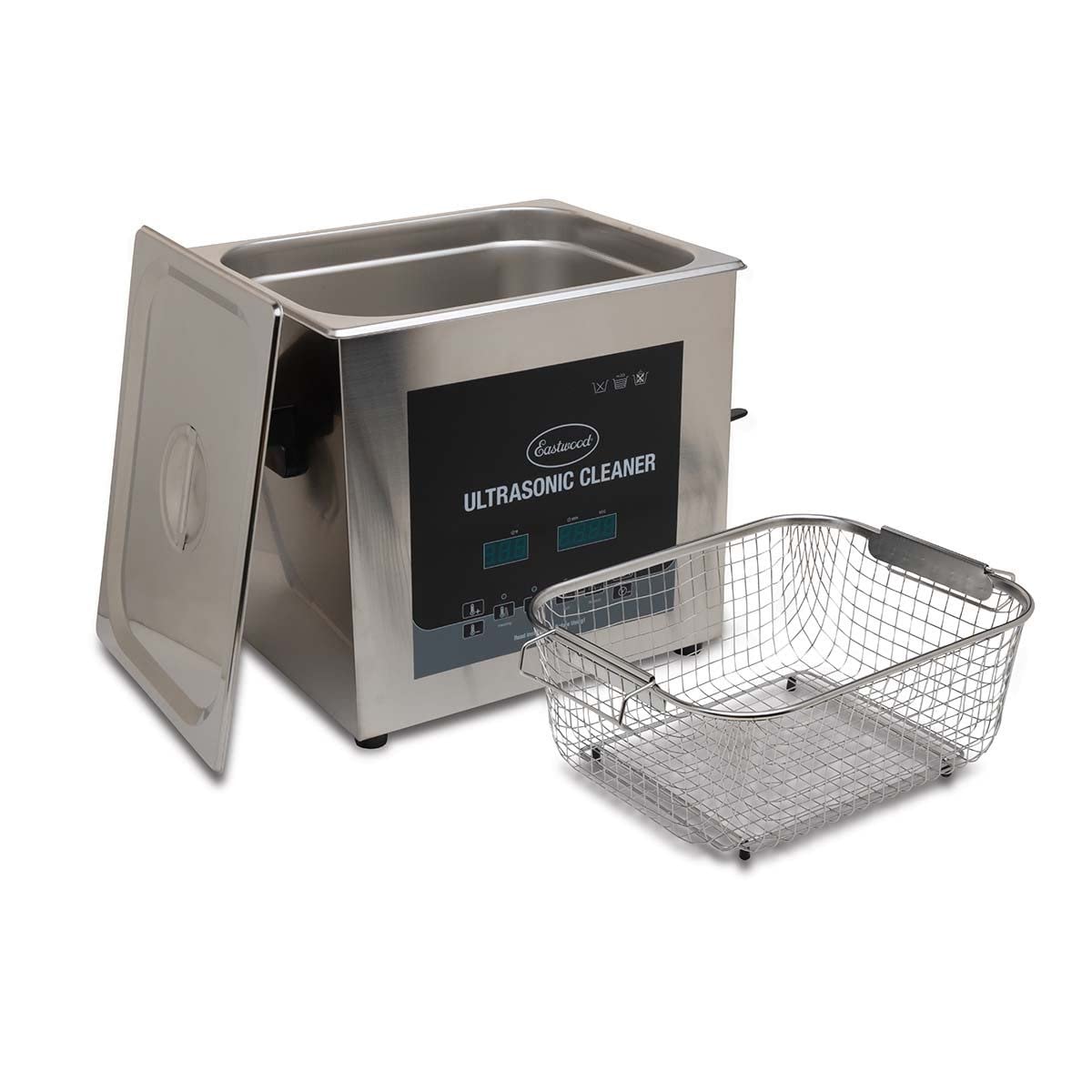
Eastwood 9L Heated Ultrasonic Cleaner Review: Automotive-Grade Cleaning with Professional Degas Function
Rating: 4.5/5 Stars
When you’re serious about automotive restoration and carburetor rebuilding, you eventually realize that generic ultrasonic cleaners are fine, but automotive-specific units are better. The Eastwood 9L Heated Ultrasonic Cleaner with Degas function represents that next step – a unit designed by a company that understands shop environments, automotive contamination, and the specific needs of mechanics and restorers.
After putting this through legitimate torture testing with carburetors that were so bad they shouldn’t have even gone in an ultrasonic cleaner, I can confirm this is the real deal for automotive work.
The Torture Test: Worst-Case Scenario Carburetors
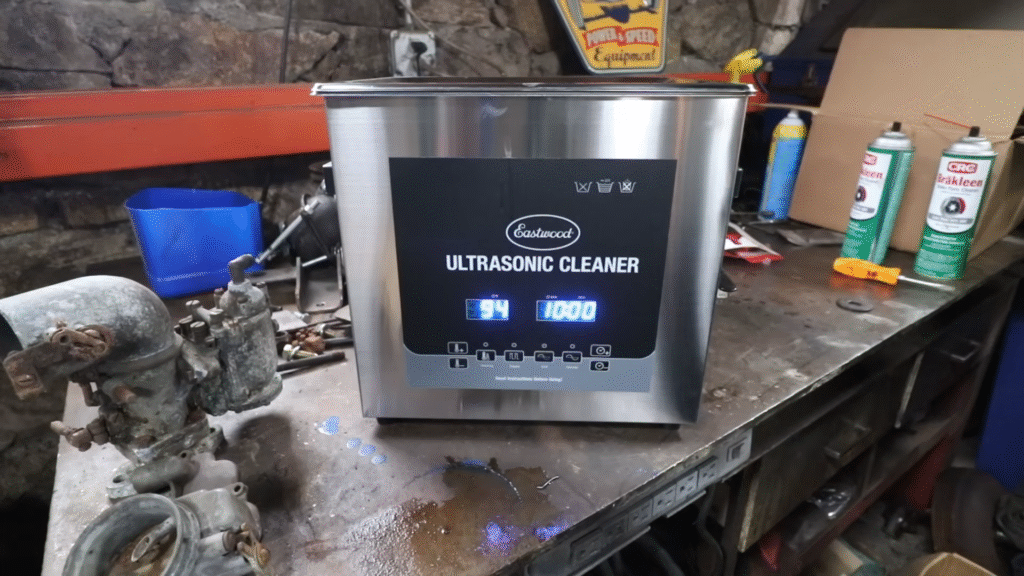
To truly test the Eastwood 9L, we deliberately chose the nastiest carburetors we could find – carbs that were beyond what you’d normally put in an ultrasonic cleaner.
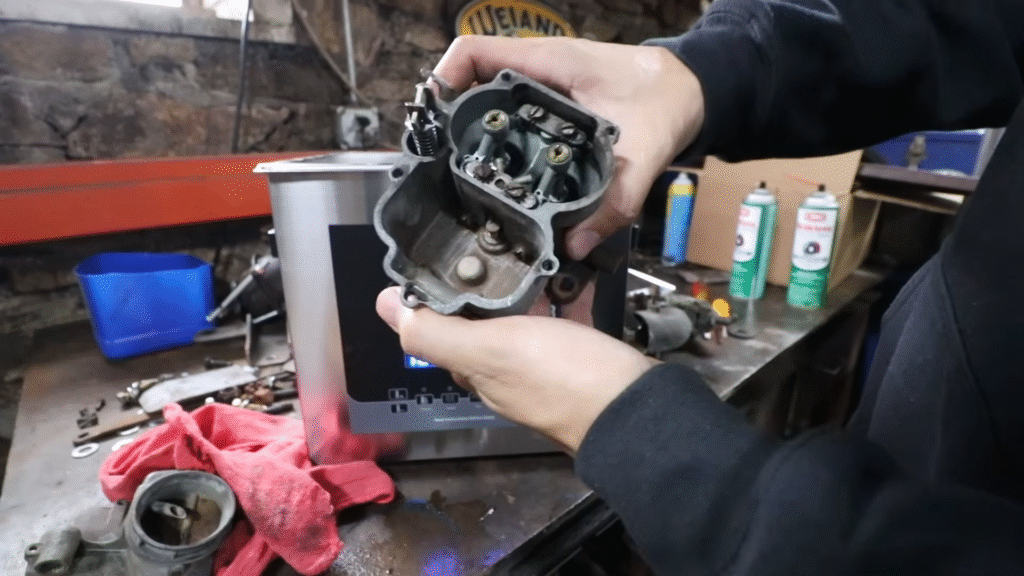
Test Subject #1: Holley Carburetor
Condition:
- Heavily rusted (had been sitting on an outdoor engine)
- Completely seized (throttle shaft wouldn’t move)
- Water and rust inside the bowl
- Half-dollar sized pile of rust contamination inside
- Visibly corroded external surfaces
Important note: This is NOT how you should normally use an ultrasonic cleaner. You should disassemble carburetors and pre-clean them. We did this specifically as a worst-case torture test.
Test Subject #2: Winfield Carburetor
Condition:
- Heavily tarnished
- Seized throttle mechanism
- Brass bowl completely obscured by tarnish
- Significant contamination throughout
Both carburetors were dunked whole into cleaning solution that was already pitch black from cleaning a previous carburetor. These were genuinely the worst conditions you could subject an ultrasonic cleaner to.
The Eastwood Difference: Degas Function Explained
The standout feature on the Eastwood 9L is the degas function – something you typically only find on professional and industrial units.
What degas actually does: Trapped air bubbles in cleaning solution create “dead zones” where ultrasonic energy can’t penetrate. The degas function pulses the ultrasonic frequency in a specific pattern to force these air bubbles out of the solution before actual cleaning begins.
Why this matters:
- More uniform cleaning throughout the tank
- Better penetration into tight spaces
- Improved effectiveness on first cycle
- Professional-level results
Most consumer ultrasonic cleaners don’t have this. The Eastwood does because it’s designed for professional shop use where consistent, repeatable results matter.
Build Quality: Designed for Shop Environments
The Eastwood 9L is built like equipment that belongs in a professional restoration shop:
Construction:
- Heavy-gauge stainless steel tank
- Robust stainless steel exterior
- Commercial-grade digital controls
- Reinforced basket (though mesh could be finer – more on this later)
- Industrial drainage system
- Quality heating element
This isn’t a consumer product with a premium price – it’s professional equipment from a company (Eastwood) with decades of experience in automotive tools and restoration supplies.
Capacity: The 9L Sweet Spot
Tank capacity: 9 liters (2.4 gallons)
The 9L size is particularly well-suited for automotive work:
What fits:
- Complete carburetors (even large 4-barrel units)
- Multiple smaller carburetors simultaneously
- Fuel injectors
- Throttle bodies
- Brake calipers
- Small engine components
- Entire sets of carburetor parts
Comparison to other sizes:
- Larger than 6L units (more versatility)
- Smaller than 10L+ units (faster heating, less solution waste)
- Perfect middle ground for automotive focus
Eastwood also makes a 6L version if space or budget is tighter, but the 9L provides noticeably more working room.
Digital Controls and Operating Modes
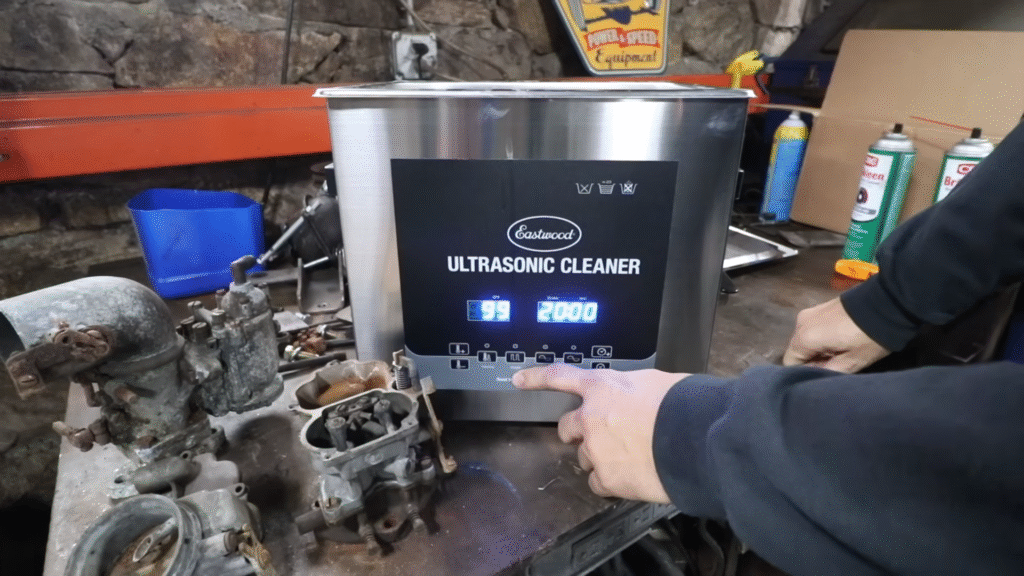
The Eastwood features professional-grade controls with multiple operating modes:
Heating Function
- Temperature range: Up to 80°C (176°F) minimum, likely higher
- Digital temperature control: Precise setting and real-time display
- Pre-heat capability: Heat solution before adding parts
In our test, we preheated to 100°F before starting, which improved initial cleaning effectiveness.
Degas Mode
- Purpose: Removes trapped air bubbles from solution
- When to use: Run 5-10 minutes when first filling with fresh solution
- Why it matters: Professional feature that dramatically improves cleaning uniformity
Ultrasonic Modes
- Normal function: Standard ultrasonic cleaning
- Soft function: Gentler cleaning for delicate items
- Timer control: Set cleaning duration
The ability to choose between normal and soft modes is useful when you’re cleaning both heavy automotive parts and more delicate components.
Real-World Cleaning Results
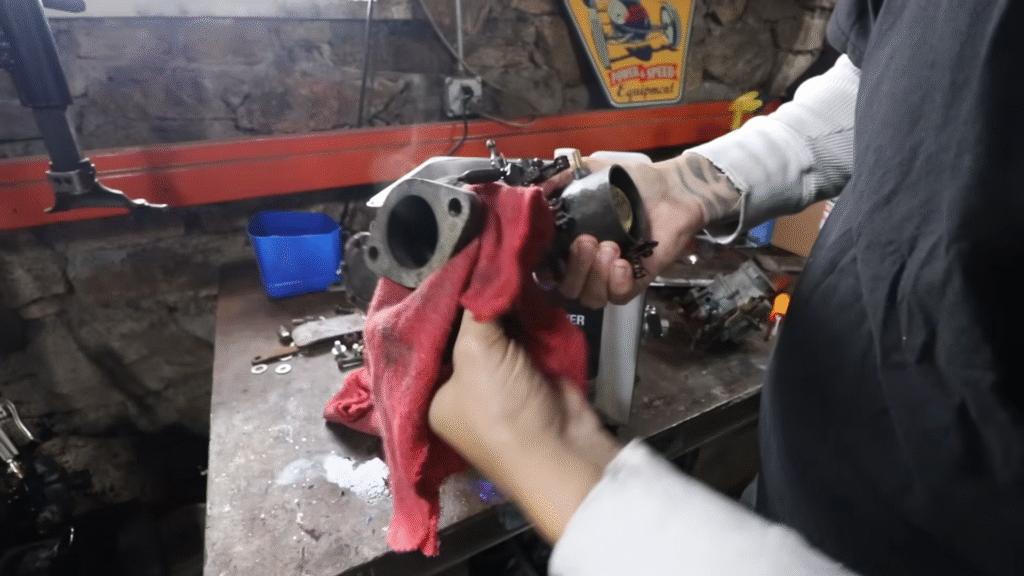
Holley Carburetor – After 30 Minutes Total
Cycle 1 (20 minutes):
- Visible improvement immediately
- External surfaces noticeably cleaner
- A leaf that was stuck inside turned to mush (ultrasonic action destroyed organic material)
- Brass jets became visible through contamination
- Squirters cleaned on inside
- Bowl still heavily contaminated from rust
Cycle 2 (10 additional minutes):
- External appearance dramatically improved
- You could see the difference between cleaned bottom and uncleaned top
- Interior bowl significantly cleaner (though still needed attention due to extreme rust)
- Critical result: Throttle shaft freed up – was completely seized, now moves freely
- Inside of bowl showing brass again
Important context: This carburetor had a half-dollar sized pile of rust pulled out before cleaning. The amount of contamination was absurd – far beyond what you’d encounter in normal use.
Winfield Carburetor – After 30 Minutes Total
Results:
- Heavy tarnish starting to lift
- Brass bowl becoming visible through decades of oxidation
- Throttle mechanism freed – was completely stuck, now functional
- Significant visual improvement throughout
The “pulling a turkey out of the oven” moment: The solution was so hot after heating that removing parts required caution. This temperature is exactly what you want for breaking down grease and oil.
The Basket Issue (Minor Complaint)
The included stainless steel basket works fine for complete assemblies, but the mesh openings are too large for small carburetor parts.
The problem:
- Jets fall through
- Small screws drop to tank bottom
- Tiny springs can get lost
The solution: Either use a finer mesh bag inside the basket, or purchase a separate fine-mesh basket. This is a minor annoyance but worth noting for carburetor rebuilders who need to clean dozens of tiny parts.
Cleaning Solution Recommendations
For the testing, we used automotive degreaser (specific brand not mentioned, but likely Simple Green or similar).
For carburetor cleaning:
- Automotive degreaser (Simple Green HD, Purple Power)
- Hot water
- Temperature: 60-80°C
- Time: 20-30 minutes for heavily contaminated parts
For general automotive work:
- Simple Green Pro HD
- Ed’s Red (homemade gun/parts cleaner)
- Commercial carburetor cleaning solutions
- Hot water with dish soap (for lighter cleaning)
The solution in the test was already pitch black from a previous carburetor cleaning, yet still performed effectively. This demonstrates the robust cleaning power even in degraded solution.
Temperature Performance
The heating function is essential for automotive work where you’re dealing with baked-on carbon, grease, and oil.
Why heat matters:
- Breaks down oil molecules
- Softens carbon deposits
- Improves cleaning solution effectiveness
- Speeds up overall cleaning time
The ability to preheat the solution before adding parts means cleaning action starts immediately at full effectiveness rather than waiting for temperature to rise.
What This Can and Cannot Do
What ultrasonic cleaning excels at:
- Removing carbon deposits
- Cleaning intricate passages and jets
- Freeing seized components (as demonstrated)
- Removing grease and oil
- Cleaning threads and crevices
What it cannot do (or shouldn’t be used for):
- Rust removal (though it helps loosen surface rust)
- Stripping heavy scale or corrosion
- Replacing mechanical disassembly for inspection
- Cleaning chrome (conflicting information – Eastwood is testing this)
Realistic expectations: Even in our torture test with absurdly contaminated carburetors, 30 minutes of ultrasonic cleaning produced dramatic results. With properly disassembled and pre-cleaned parts (as you should normally do), results would be even better.
The Chrome Question
The Eastwood team mentioned conflicting information about whether chrome can safely go in ultrasonic cleaners. Some sources say it strips chrome, others say it’s fine.
They’re planning to test a chrome carburetor top to definitively answer this question. This kind of real-world testing is exactly what you want from a company – they’re not just selling equipment, they’re using it themselves and sharing results.
Eastwood Brand Value
Eastwood has been serving the automotive restoration community for decades. When you buy an Eastwood product, you’re getting:
- Company expertise in automotive applications
- Customer support from people who understand car work
- Quality standards aimed at professional users
- Warranty backing from an established company
This isn’t a no-name Amazon brand that might disappear in six months. Eastwood has a reputation to maintain and a customer base that demands quality.
Comparison to Generic Brands
Eastwood 9L advantages over generic units:
- Degas function (professional feature)
- Automotive-focused design and testing
- Established company support
- Quality control standards
- Designed by people who actually restore cars
Generic brand advantages:
- Usually cheaper ($50-100 less)
- Essentially similar cleaning performance for basic use
- More size options available
The decision: If you’re casually cleaning parts occasionally, generic brands work fine. If you’re running a restoration shop, doing frequent carburetor work, or need consistent professional results, the Eastwood justifies its premium.
Who Should Buy the Eastwood 9L
Perfect for:
- Automotive restoration professionals
- Carburetor rebuilders and tuners
- Classic car enthusiasts
- Small engine repair shops
- Motorcycle mechanics
- Anyone doing frequent automotive parts cleaning
Skip it if:
- You only clean parts occasionally (get a cheaper generic)
- You primarily need jewelry cleaning (wrong tool)
- Budget is extremely tight
Value Proposition
The Eastwood 9L typically runs $300-400 depending on sales and promotions. This is premium pricing compared to generic 9-10L ultrasonic cleaners at $150-250.
What you’re paying for:
- Degas function (worth it alone for professional use)
- Eastwood quality standards
- Company support and warranty
- Equipment designed by automotive people for automotive work
For professional use or serious enthusiasts, the premium is justified. For occasional home use, you can save money with generic brands.
Real-World Shop Use
Based on the video, this unit is being used regularly in Iron Trap Garage’s shop across multiple projects. Steve (mentioned in the video) has become well-versed in operating it, and they’re using it on “all the cars in the shop.”
This real-world validation matters. This isn’t a unit that gets used once for a video then sits on a shelf. It’s earning its keep as a daily shop tool.
Maintenance and Durability
After use:
- Drain cleaning solution (industrial valve makes this easy)
- Wipe tank interior
- Rinse if heavily contaminated
- Store with lid off to air dry
The stainless steel construction throughout means minimal maintenance and long service life in shop environments where equipment takes abuse.
Tips for Carburetor Cleaning
Based on the testing results:
- Disassemble first – Don’t follow our torture test example in normal use
- Pre-clean heavily soiled parts – Remove loose rust and debris
- Use fresh, hot solution – Don’t start with pitch-black liquid like we did
- Run degas mode when filling with fresh solution
- Multiple short cycles rather than one marathon session
- Get a fine mesh basket for small jets and parts
- Dry thoroughly after cleaning – use compressed air
- Inspect while clean – perfect time to check for wear or damage
What I’d Change
The basket mesh needs to be finer for carburetor work. This should be included, not require a separate purchase.
More detailed documentation on chrome compatibility would be helpful. The company is testing this, which is good, but clear guidance upfront would be better.
Celsius and Fahrenheit display options – most US automotive shops think in Fahrenheit.
These are minor complaints on an otherwise excellent professional-grade unit.
Final Verdict: Professional Performance for Serious Automotive Work
Rating: 4.5/5 Stars
The Eastwood 9L Heated Ultrasonic Cleaner with Degas function is the ultrasonic cleaner you buy when you’re serious about automotive restoration and carburetor work. The torture test with seized, rusted carburetors proved the capability – if it can handle that abuse and still produce results, it’ll excel at normal cleaning tasks.
The degas function is a genuinely professional feature that separates this from generic ultrasonic cleaners. Combined with Eastwood’s reputation, quality construction, and automotive-focused design, this is equipment that belongs in serious shops.
Yes, it costs more than generic brands. But if you’re running a restoration business, doing frequent carburetor rebuilds, or simply demand professional-level results, the Eastwood 9L justifies its premium. This is a tool that’ll earn its keep day after day, year after year.
Where to Buy: Check Current Price at Eastwood →
Also Available: 6L version for smaller budgets/spaces
Bottom Line: Professional automotive ultrasonic cleaning with the degas function and Eastwood quality backing. The 9L capacity is perfect for carburetors and automotive parts, and the torture test proved it can handle the worst conditions you’ll encounter. If you’re serious about automotive restoration, this is the ultrasonic cleaner to buy.
Frequently Asked Questions
Q: Can I clean chrome parts in this?
A: Eastwood is still testing this definitively. Conflicting information exists – use caution until confirmed.
Q: Do I really need the degas function?
A: For professional use where consistency matters, yes. For occasional home use, it’s a nice-to-have rather than essential.
Q: How does this compare to the Vevor 10L?
A: Similar capacity, but Eastwood has degas function and automotive-focused design. Vevor is cheaper. Choose based on whether you value the professional features.
Q: Can I clean a complete carburetor without disassembly?
A: The torture test proved you CAN, but you SHOULDN’T. Always disassemble for proper inspection and optimal cleaning.
Q: What size basket should I get for small parts?
A: Look for fine-mesh stainless steel baskets with openings around 2-3mm to prevent jets and small screws from falling through.
Q: Is the 6L or 9L better for home use?
A: 9L provides more versatility. Get 6L only if space or budget is extremely constrained.
Comparing ultrasonic cleaners for automotive work? Check our complete ultrasonic cleaner directory for all sizes and features.