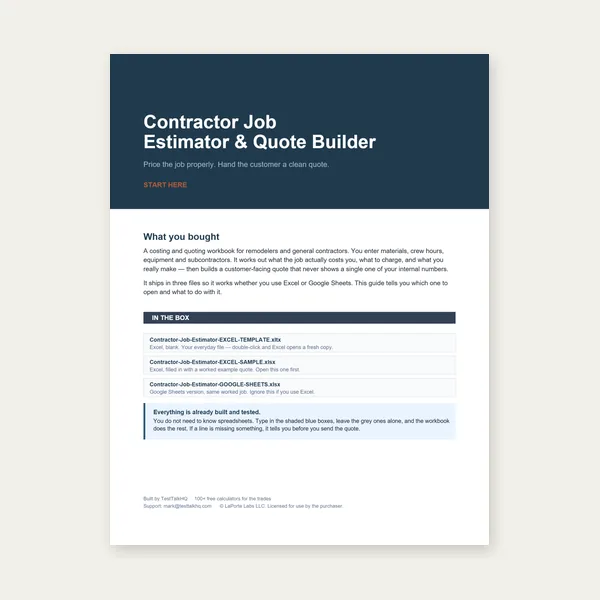
Contractor Job Estimator
Price remodels and GC work, then send a quote with no internal numbers.
Excel or Google Sheets. Best on a computer.
$29.00
BuySteel · Aluminum · Stainless · Titanium · Copper · Brass
Melting ranges and shop densities for the metals you cut, weld, and weigh every week. Complements the Metal Weight Calculator with the same density constants.

Melting point tells you how hot a process needs to get before the base metal liquifies. Density drives weight estimates for shipping, crane picks, and material cost. Values below are typical for common shop alloys — exact melt ranges vary by grade and alloying elements.
Run weight jobs with the Metal Weight Calculator or Pipe & Tube Weight Calculator — those tools use the same density constants listed here.
Steel, aluminum, stainless, titanium, copper, and brass — melting ranges plus shop density in lb/in³ and g/cm³.
| Material | Melting Point (°F) | Melting Point (°C) | Density (lb/in³) | Density (g/cm³) | Density (lb/ft³) |
|---|---|---|---|---|---|
| Mild / Carbon Steel | 2,600–2,800 | 1,425–1,540 | 0.284 | 7.85 | 490 |
| Stainless Steel 304 | 2,550–2,650 | 1,400–1,450 | 0.289 | 8.00 | 499 |
| Stainless Steel 316 | 2,500–2,550 | 1,370–1,400 | 0.289 | 8.00 | 499 |
| Aluminum 6061 | 1,080–1,205 | 582–652 | 0.098 | 2.70 | 169 |
| Aluminum 7075 | 890–1,175 | 477–635 | 0.101 | 2.81 | 175 |
| Titanium (commercially pure) | 3,034 | 1,668 | 0.163 | 4.51 | 282 |
| Copper (pure) | 1,984 | 1,085 | 0.323 | 8.96 | 559 |
| Brass (common yellow) | 1,650–1,720 | 900–940 | 0.308 | 8.40–8.73 | 532 |
Density values match TestTalkHQ weight calculators (lb/in³). Melting ranges are approximate for common commercial alloys — always confirm against mill certs for critical work.
Price remodels and GC work, then send a quote with no internal numbers.
Excel or Google Sheets. Best on a computer.
$29.00
BuyCheckout opens in a new tab.
Handling, cutting, and measuring tools that pair with density and melt-point planning.
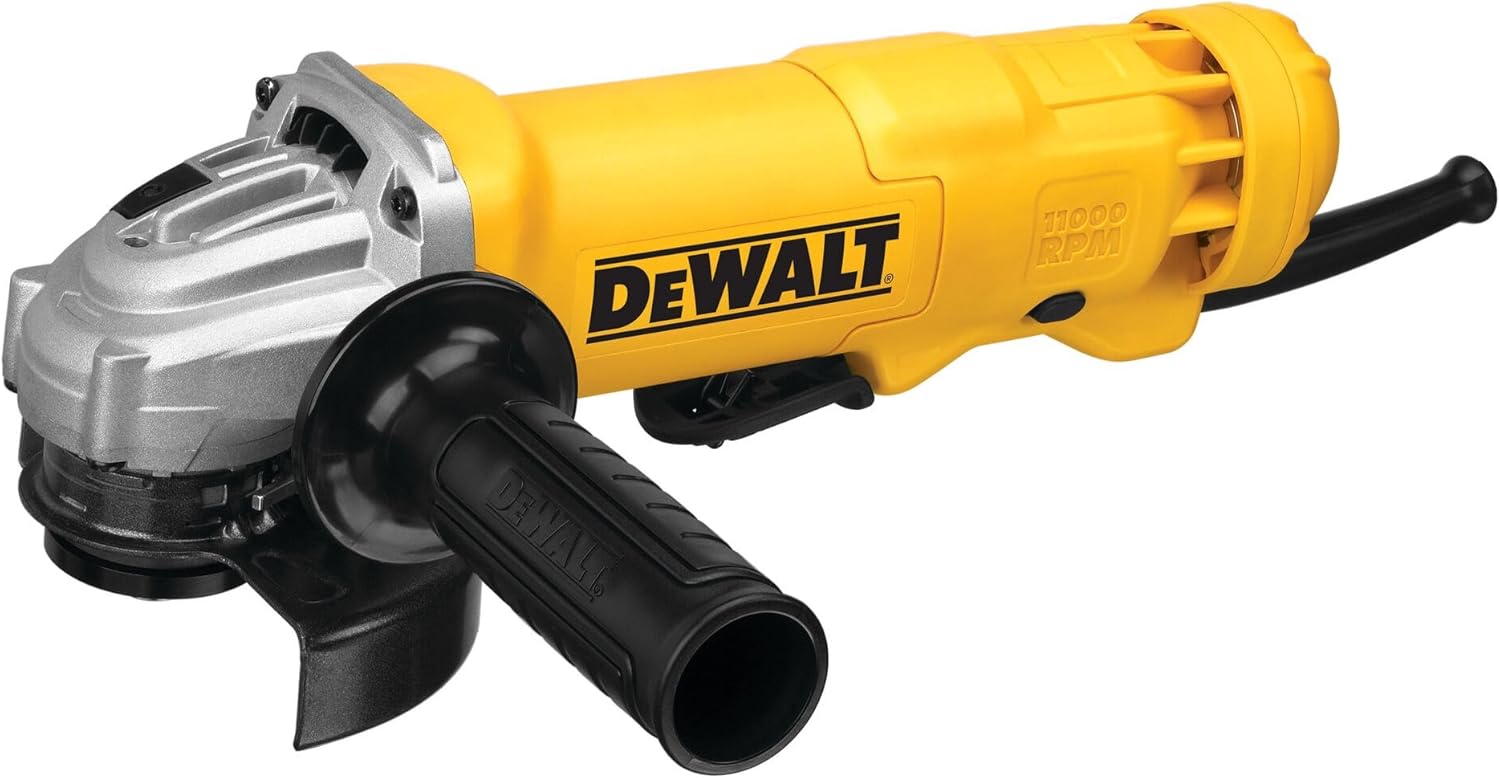
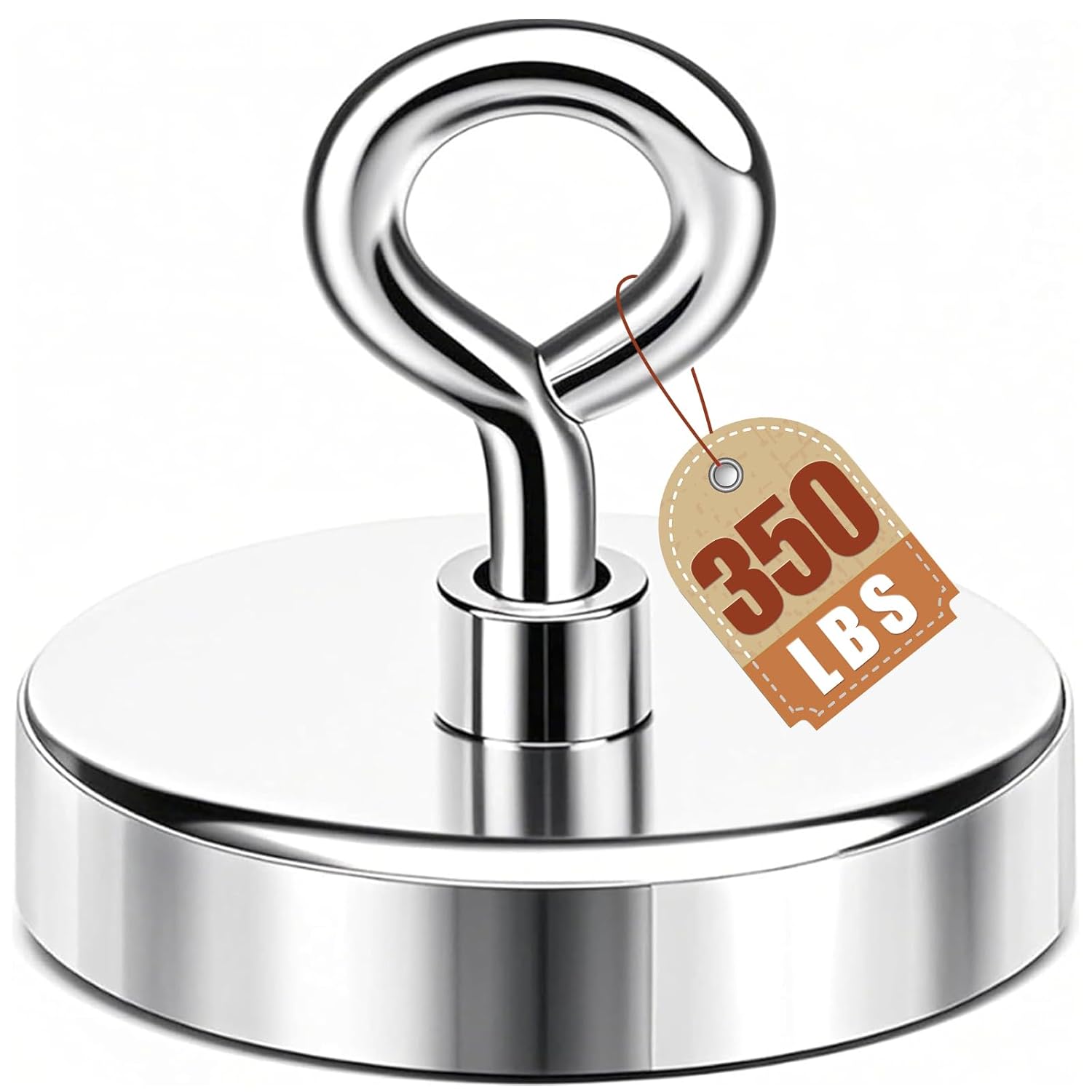

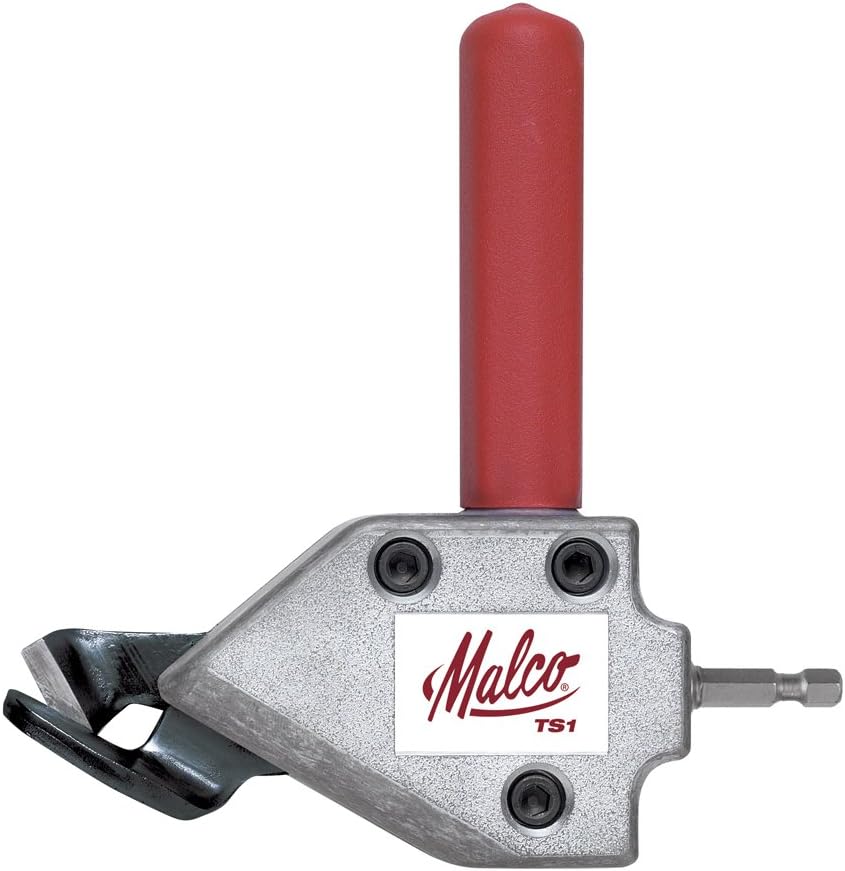
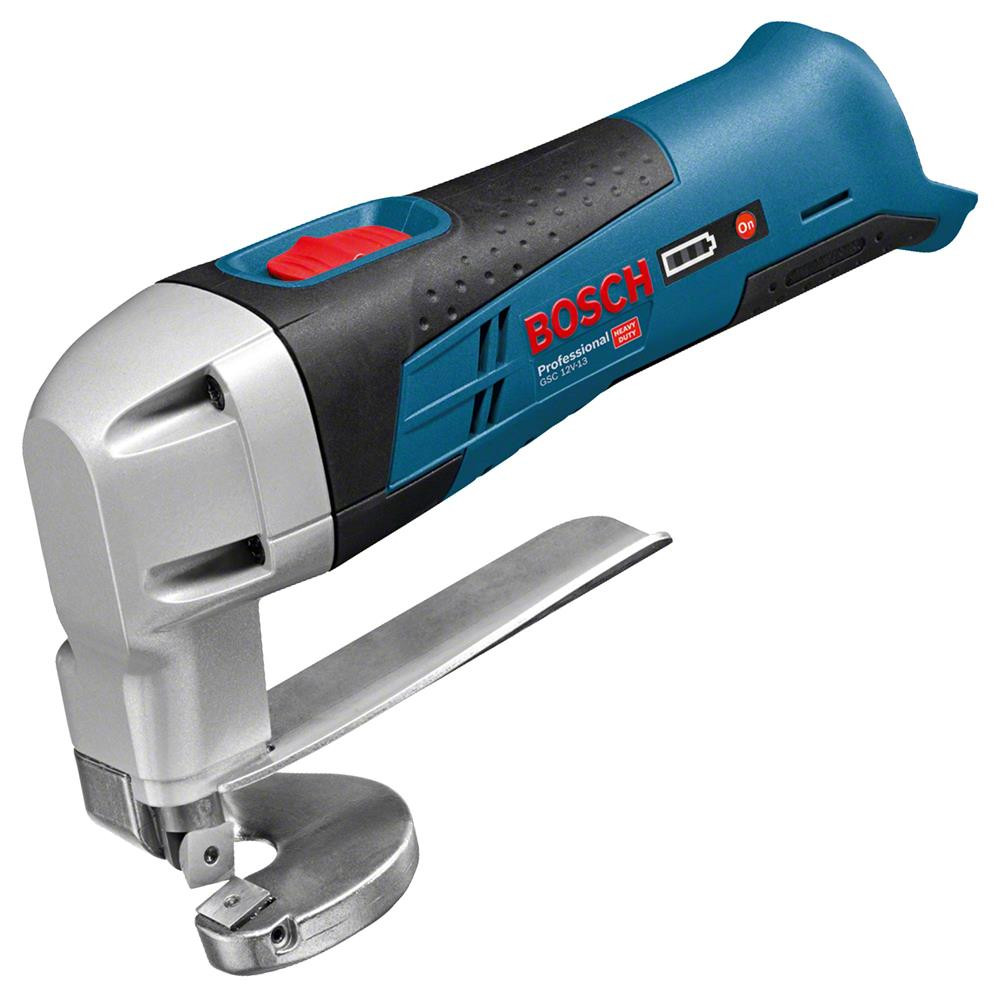
As an Amazon Associate, TestTalkHQ earns from qualifying purchases.
Relative to mild steel (1.0×):
| Material | vs Mild Steel | Shop note |
|---|---|---|
| Mild Steel | 1.00× | Baseline for fab weight estimates |
| Stainless 304/316 | 1.02× | Slightly heavier; corrosion resistance premium |
| Copper | 1.14× | Heaviest common non-ferrous in this list |
| Brass | 1.08× | Heavier than steel; easy to machine |
| Titanium | 0.57× | ~half steel weight; high melt point |
| Aluminum 6061 | 0.35× | Roughly one-third the weight of steel |
| Aluminum 7075 | 0.36× | Slightly denser than 6061 |
Aluminum melts far below steel — that is why MIG/TIG aluminum needs different heat control and why a steel-set plasma chart underperforms on thick aluminum. Copper conducts heat away from the weld puddle aggressively; expect higher amperage than thickness alone suggests. Titanium has a high melt point and must be shielded from oxygen at temperature — shop welding titanium is specialized work. Brass zinc content can fume when overheated; ventilate and avoid overheating the melt zone.
Metal Weight Calculator · Pipe & Tube Weight Calculator · Sheet Metal Gauge Chart · Gauge to Thickness Converter