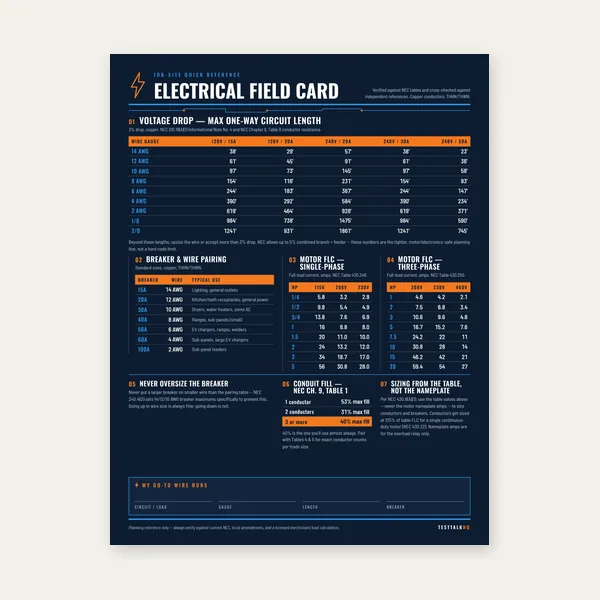
Electrical Reference Card
One page. Voltage drop lengths, breaker and wire pairing, motor FLC.
$3.99
BuyHand bender vs hydraulic/mechanical bender vs segment bending — capacity, field flexibility, and when the shoe is not enough
The guide covers mark layout on a hand head. This page is the decision fork: which tooling class to pull for the conduit type, trade size, and radius on this job. After you choose, layout marks with the calculator.

Best for: Everyday EMT and some IMC stubs, offsets, saddles, and box offsets on rough-in — especially ½", ¾", and 1" where you need to move floor to floor with one tool.
Pros: Portable; stamped deduct/multiplier workflow; arrow/star/teardrop marks electricians already know; cheapest path to a clean 90° on small thin-wall.
Cons: Size-limited; wrong shoe kinks pipe; large rigid is miserable or unsafe; standard centerline radius may not meet a long sweep callout.
If the failure mode is technique (springback, plane, take-up) rather than capacity, stay on the hand bender and diagnose with conduit bending troubleshooting.
Best for: Larger rigid (RMC), heavier IMC, and production runs where hand force would ovalize the pipe or burn the crew out. Chicago-style and hydraulic shoes publish their own deduct tables — never reuse EMT hand-bender deducts.
Pros: Force and shoe geometry matched to thicker walls; more consistent angles on big pipe; safer than muscling rigid in a hand head.
Cons: Weight, setup time, and cost; overkill for a handful of ½" EMT stubs; still needs correct shoe size and springback discipline.
One page. Voltage drop lengths, breaker and wire pairing, motor FLC.
$3.99
Buy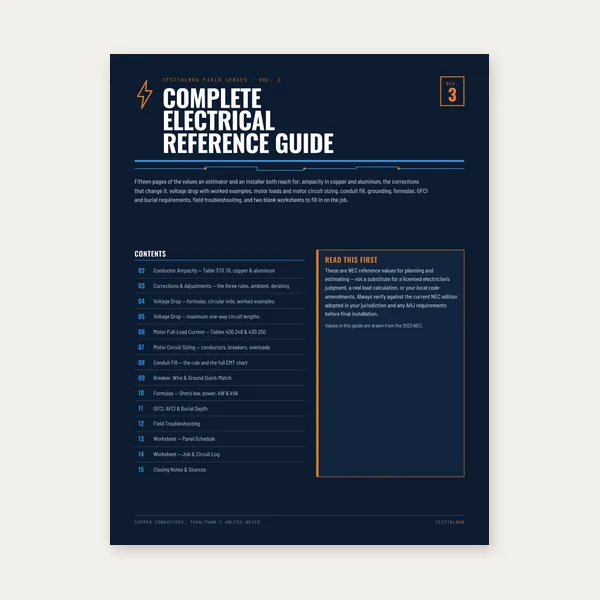
15 pages. Ampacity, corrections, voltage drop, motor circuits, conduit fill.
$12.99
Buy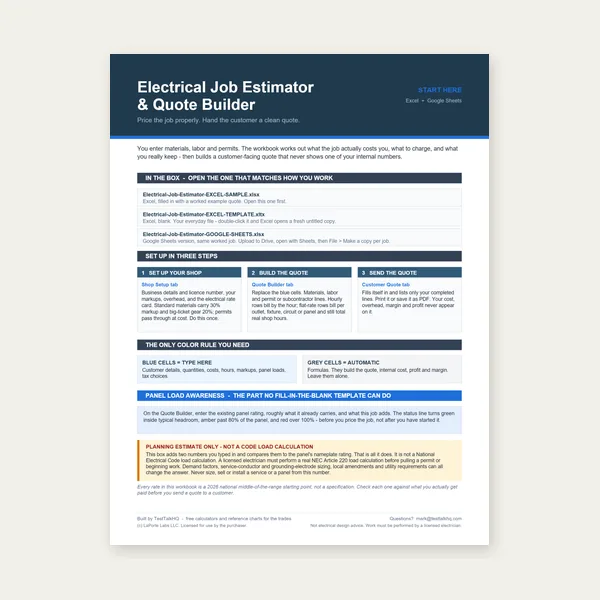
Quote electrical work and flag panel headroom before you price it.
Excel or Google Sheets. Best on a computer.
$29.00
Buy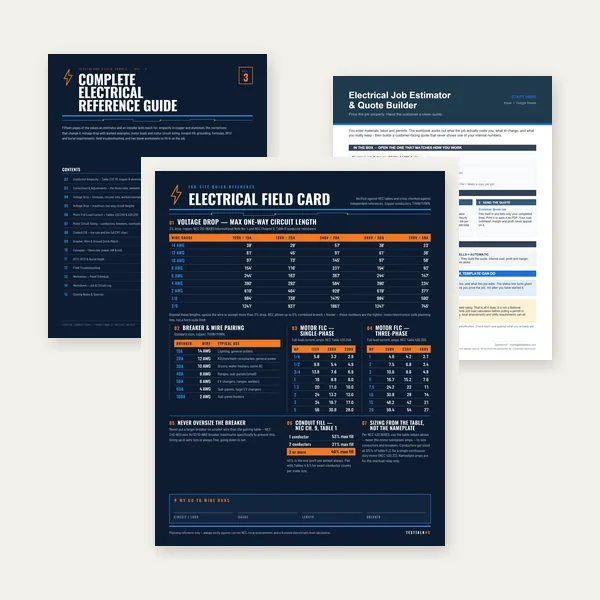
Card, 15-page guide and the estimator workbook. All six files.
Excel or Google Sheets. Best on a computer.
$34.99
$45.98 if bought separately — save $10.99
BuyCheckout opens in a new tab.
Five catalog picks aligned to this fork — EMT hand benders for field work, a digital angle gauge for verification, a pocket card for multipliers, and fish tape for the pull
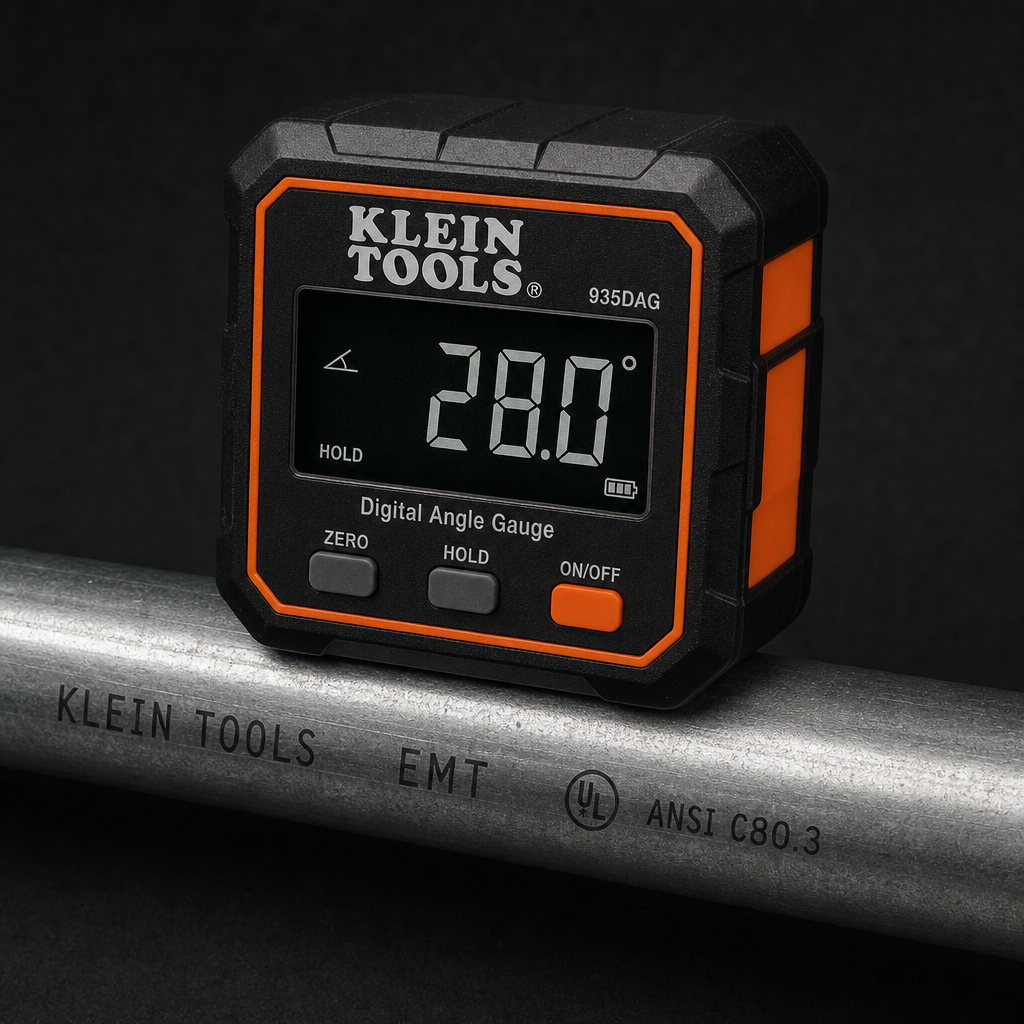
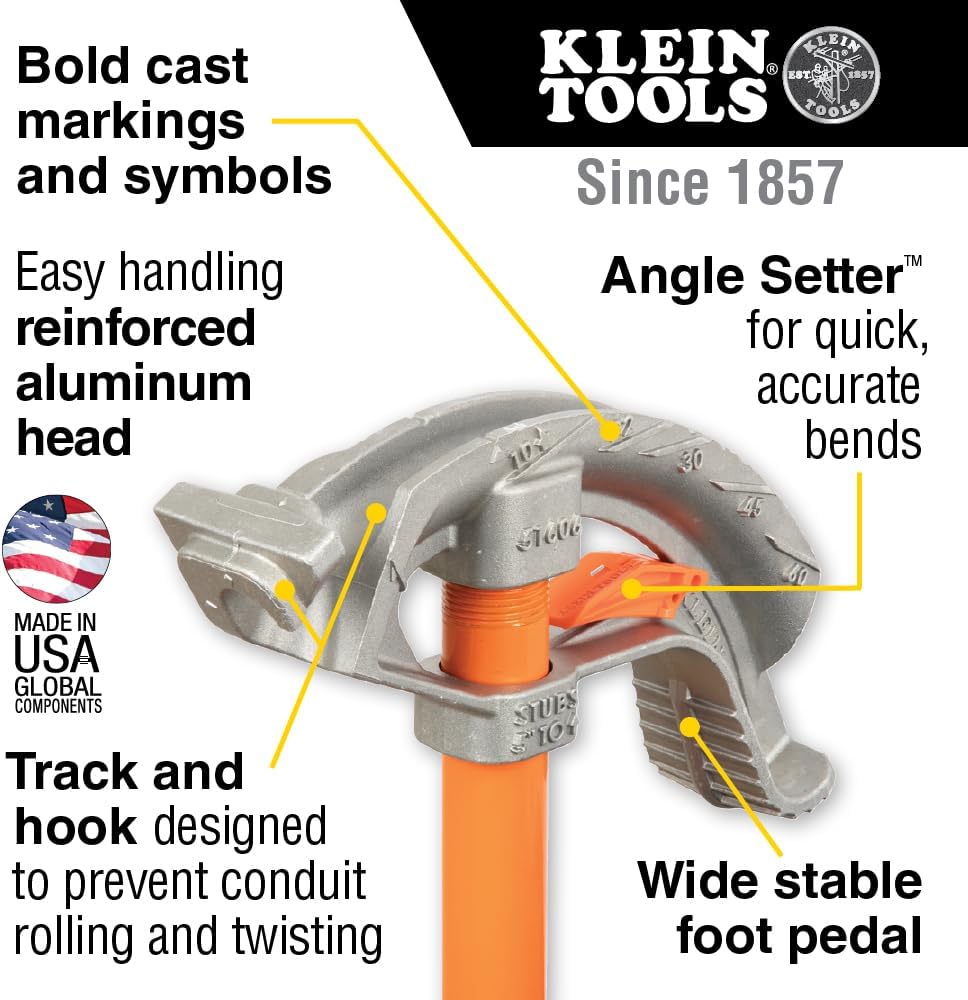
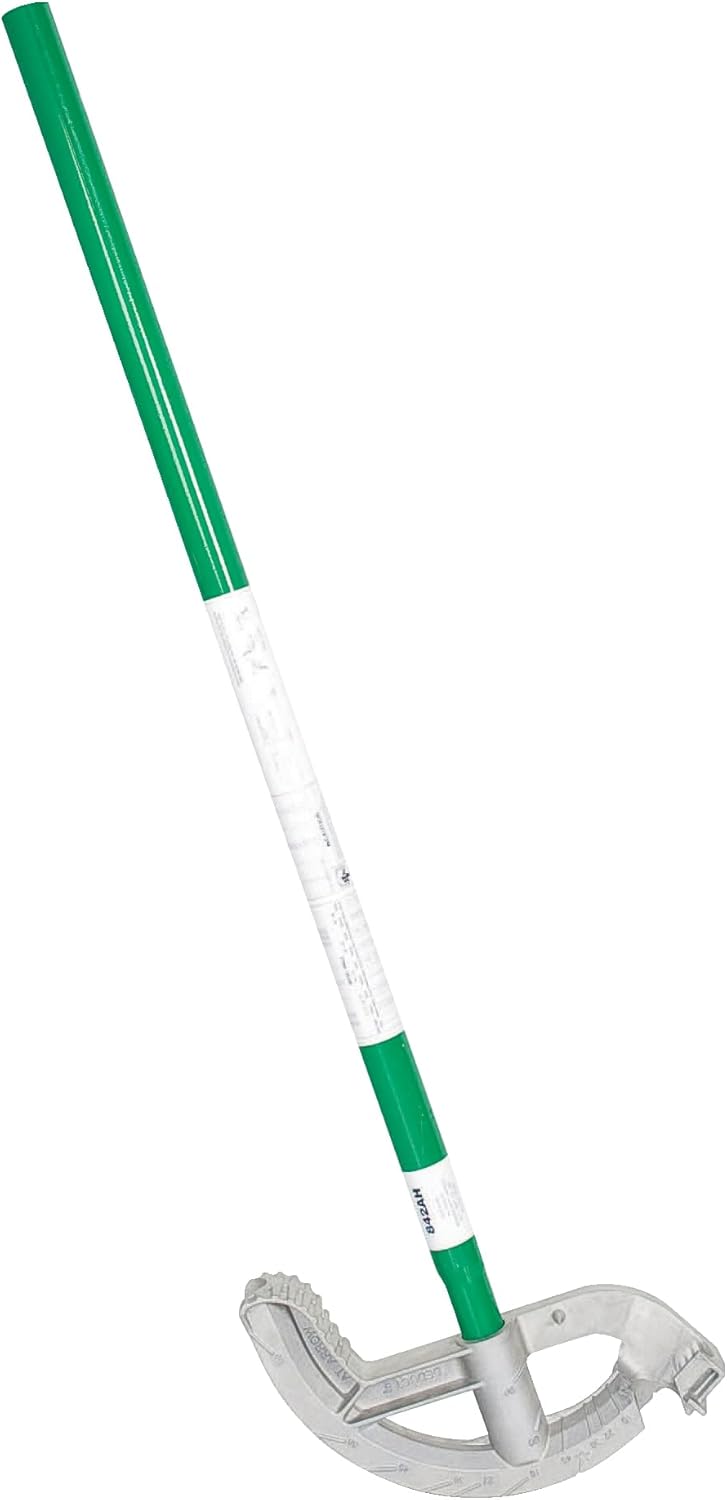
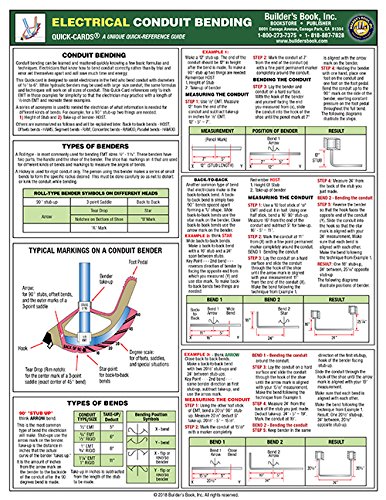
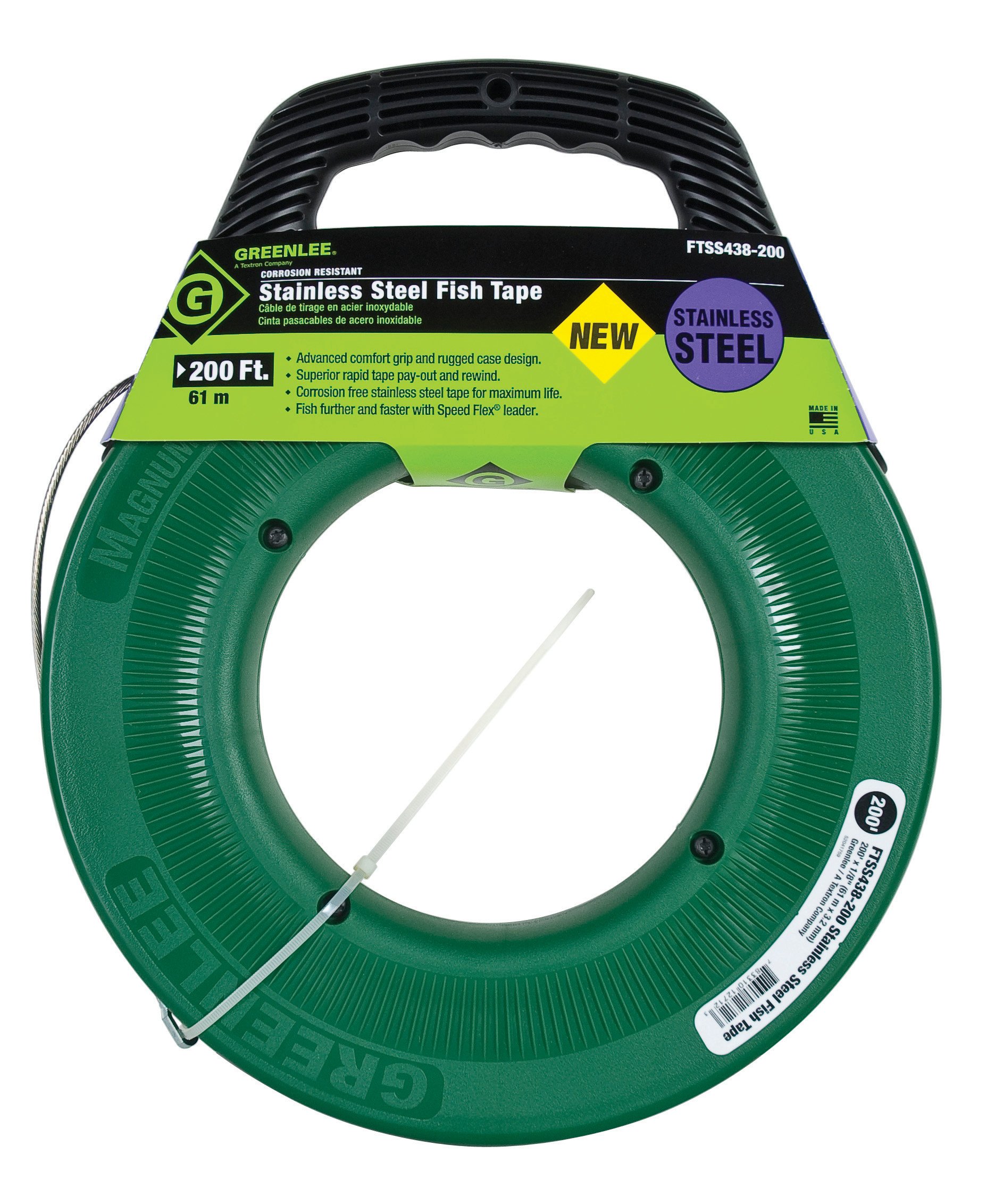
As an Amazon Associate, TestTalkHQ earns from qualifying purchases. Catalog focuses on hand-bender field kits — hydraulic machines are a shop/truck class decision beyond these cards.
Best for: Centerline radii that exceed what a standard hand or even many machine shoes will form in one pull — long sweeps around columns, gradual kicks for aesthetics or cable stress, and one-off radii where a factory sweep is not available.
Pros: Custom radius without waiting on special fittings; works with hand or machine force if increments stay consistent.
Cons: Slow; uneven if chord marks or degrees wander; looks faceted with too few segments; not a substitute for a missing rigid shoe on a short 90°.
Uneven segment sweeps are a diagnosis problem — see segment troubleshooting — not a reason to abandon segment technique when the radius truly requires it.
| Job signal | Lean toward | Why |
|---|---|---|
| ½–1" EMT stubs, offsets, saddles on rough-in | Hand bender | Speed + published deduct workflow |
| 1¼"+ EMT / IMC still hand-capable, high volume | Matched larger hand shoe | Same method, correct groove |
| Rigid / heavy IMC, large trade sizes | Hydraulic or mechanical | Force + correct CLR / deduct |
| Spec calls for long CLR sweep beyond shoe | Segment bend or factory sweep | Radius exceeds one-shot capacity |
| Repeated kinks on “correct” marks | Recheck shoe class, then diagnose | Often wrong tool, not wrong math |
Geometry (multipliers, shrink) is shared across classes; deducts and feel are not. Tube fabrication CLR tools on the tube bending calculator serve a different audience — do not mix those workflows with EMT hand-bender deducts.
No. Each trade size needs a matching shoe. Carrying ½" and ¾" covers most branch work; add 1" when that size is common.
No. A 3-point saddle is three planned angles to clear an obstacle. Segment bending is many small equal kicks to approximate a large radius.
When the radius is standard, quantity is high, and labor time beats field kicks — or when appearance must be perfectly smooth.
Calculator and guide — then verify deducts on the shoe you actually use.