An appliance that spills is not always an appliance with too little combustion air. It is an appliance that, at the moment it was running, could not get the air it needed at a pressure that let the flue draw — and the room’s pressure is set by the whole house, not by the two louvers in the closet door. That is why these faults are intermittent, why they cluster in winter and in the evening, and why measuring the opening with a tape measure so often proves nothing. This is how to find the real cause in the order that wastes the least time.

First: is it spilling, and is there CO?
Before any diagnosis, establish the fact. Put a CO monitor at head height near the appliance and start the appliance from cold with every other gas appliance in the house also firing. Watch the draft hood or diverter for the first few minutes.
| What you see | What it means |
|---|---|
| Spillage at the draft hood for a few seconds on a cold start, then it establishes | Normal on an atmospheric appliance with a cold flue. The flue has to warm before it draws. |
| Spillage still present after the flue has had time to warm | A real fault. Stop and diagnose before the appliance runs unattended. |
| Rising CO at the appliance | Stop immediately. Shut the appliance down and make it safe before continuing. |
| Vent connector that never gets warm along its length | The flue never drew at all. Check the vent and the chimney before blaming combustion air. |
The worst-case depressurization test
This is the test that actually decides it, and it is a test of the house rather than of the closet. The principle is simple: set the building up to fight the appliance as hard as it realistically can, then measure whether the appliance space goes negative enough to overcome the flue’s draft.
- Close all exterior doors and windows. The house should be in its winter condition, not propped open the way you found it.
- Turn on every exhaust appliance at once: range hood on high, every bathroom fan, the clothes dryer, any whole-house or attic exhaust fan, and open the fireplace damper.
- Run the air handler on continuous fan, because return-side duct leakage inside the building envelope is one of the biggest depressurizing loads there is — and it is invisible.
- Set interior doors to the position that isolates the appliance space most — try them both ways. A closed bedroom door with a supply register inside and no return path pressurizes that room and depressurizes everywhere else, including the mechanical closet.
- With the manometer referenced from the appliance space to outdoors, read the pressure. Then start the appliance and watch the draft hood.
What you are looking for is not a single pass/fail number — the limits depend on the appliance and vent type, and your jurisdiction’s protocol governs — but the shape of the result is always informative. If the space sits near neutral with everything running and the appliance drafts cleanly, the combustion air provision is doing its job. If the space goes sharply negative the moment the dryer and the range hood come on, no amount of recalculating Section 304 will fix it, because the openings are not the constraint.
HVAC
HVAC Refrigerant Charging Card
$3.99
Buy
Complete HVAC Charging Guide
$12.99
Buy
HVAC Job Estimator
$29.00
Buy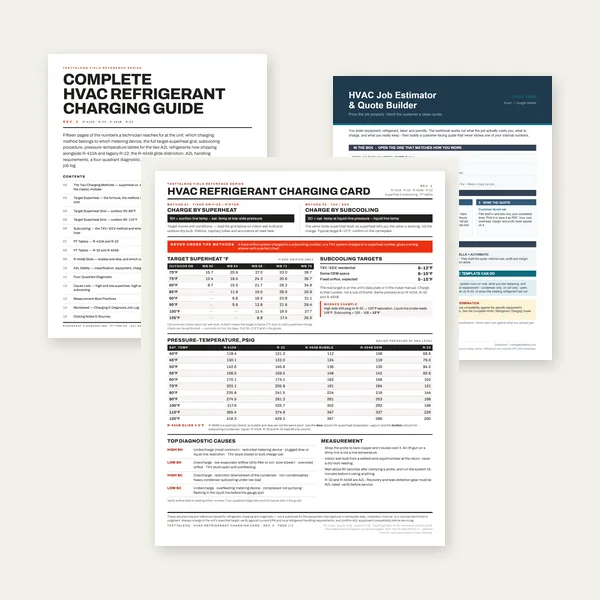
HVAC Complete Bundle
$39.00
BuyCheckout opens here — you stay on this page.
The instruments this job actually needs
Combustion air is one of the few areas where the paperwork and the reality come apart completely. An installation can satisfy every ratio in Section 304 and still spill, and the only way to know which you have is to measure. Three readings settle almost every case: the pressure in the appliance space under worst-case conditions, whether air is genuinely moving through the lower opening, and whether the vent connector ever gets hot. Louvers, grilles and combustion air ducts are sheet-metal goods bought locally, so TestTalkHQ does not link them.
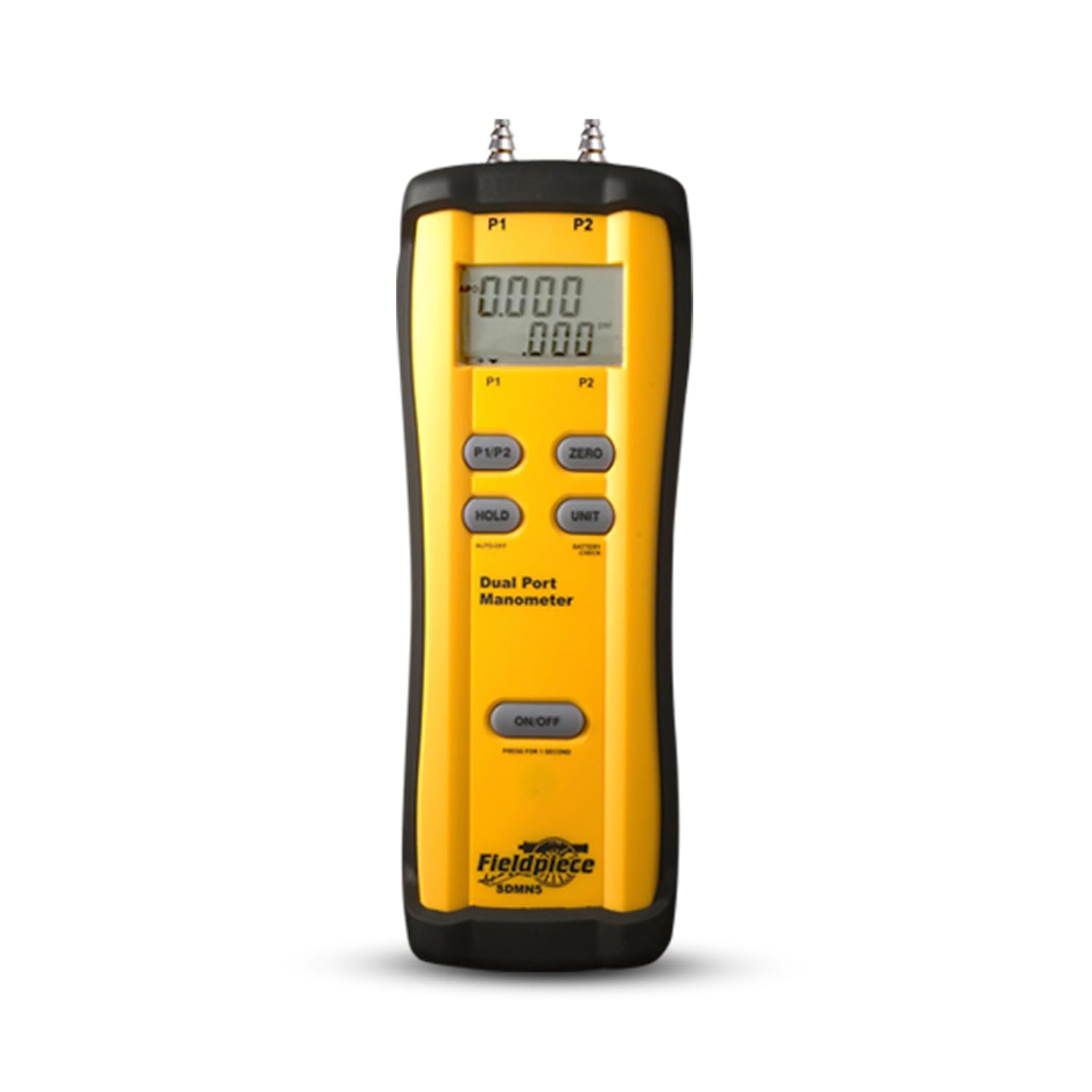
Fieldpiece SDMN5 Dual-Port Manometer
- Reads the depressurization the appliance space is actually under
- Dual port references the room against outdoors in one reading
- Turns a calculated opening into a tested one
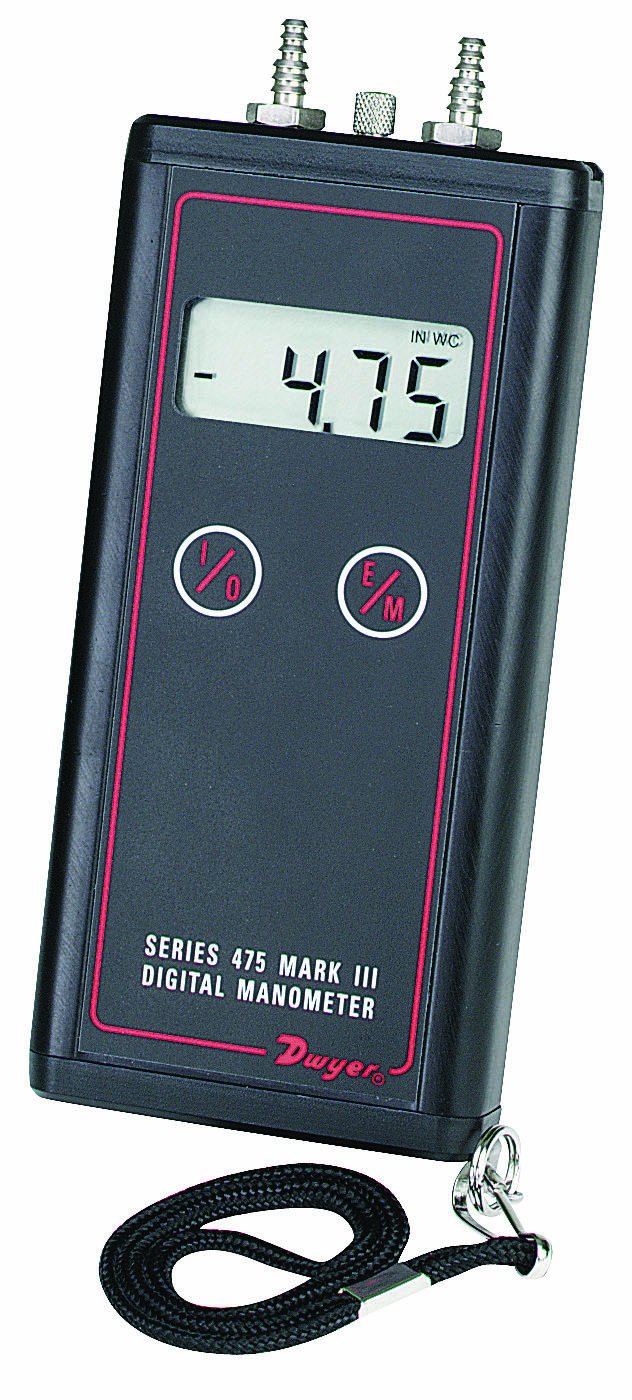
Dwyer Series 475 Mark III Manometer
- Resolution down where room depressurization lives
- Also reads draft at the diverter and static in the duct
- A long-standing reference instrument for this work
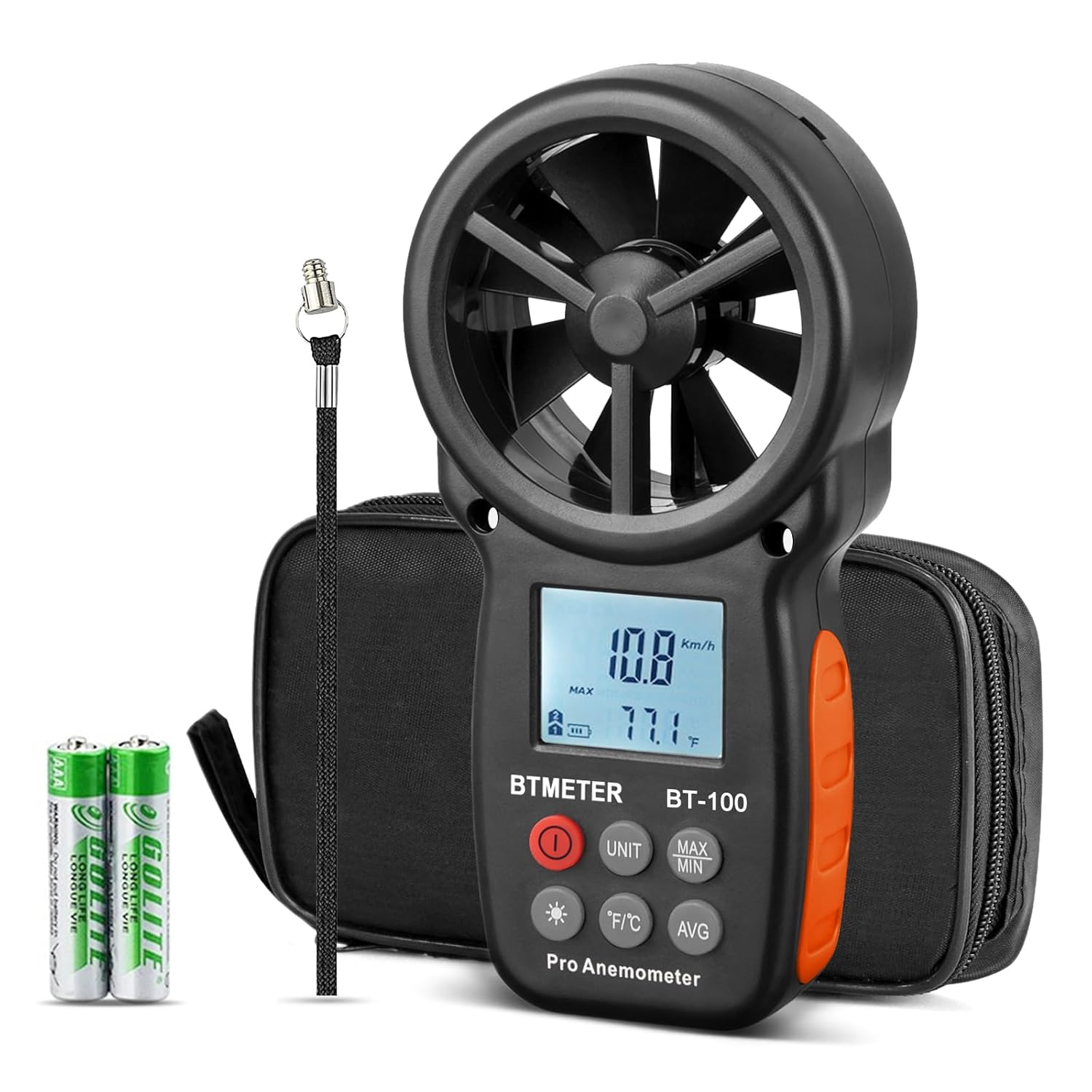
BTMETER BT-100 Handheld Anemometer
- Confirms the lower opening is feeding rather than exhausting
- Catches a louver blanked off behind insulation or paint
- Velocity × free area is the air the room really gets
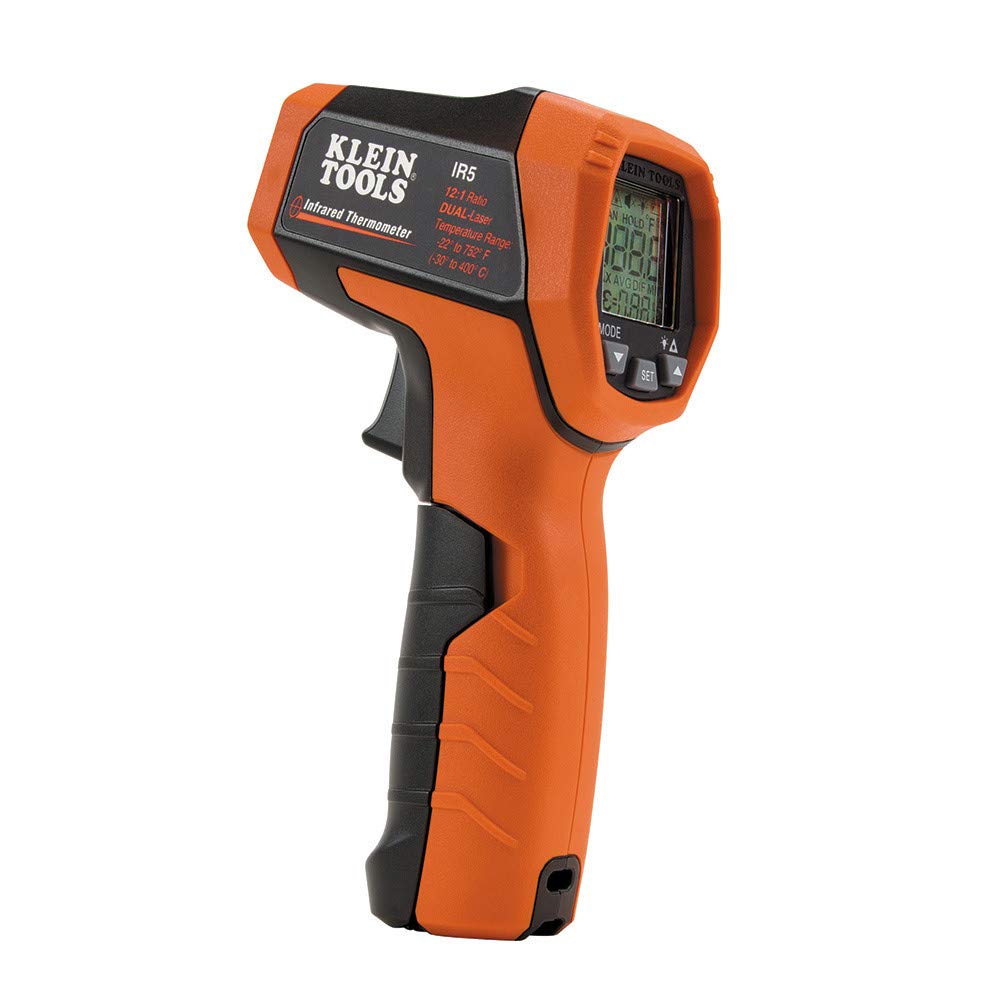
Klein Tools IR5 Infrared Thermometer
- Reads the draft hood and vent connector without contact
- A connector that never warms up is one that never drew
- Dual laser keeps the spot where you aimed it
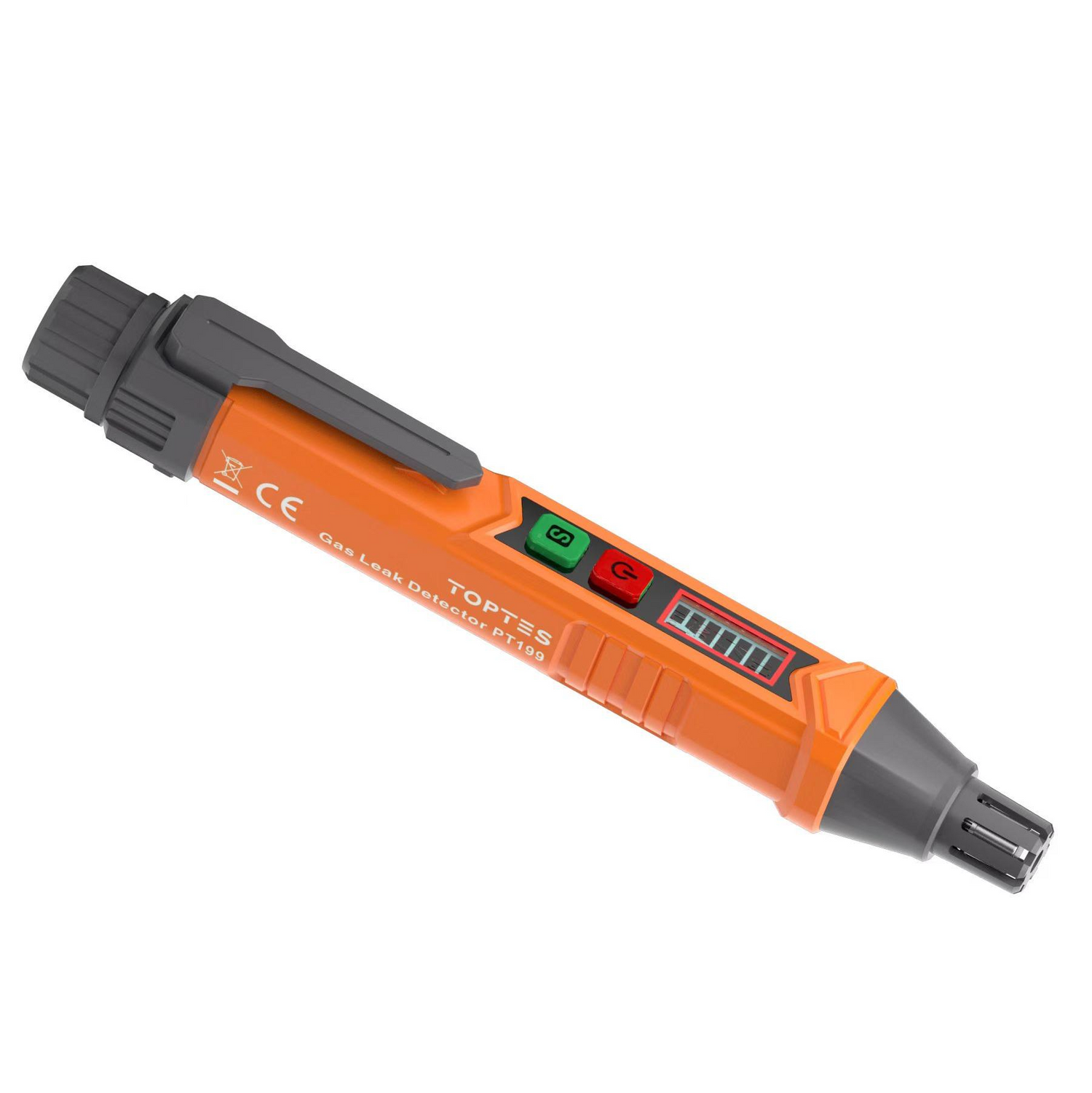
PT199 Natural Gas Leak Detector
- Rides in the bag alongside the manometer on any gas call
- Audible and visual alarm for combustible gas
- Does not replace a CO monitor — carry both
As an Amazon Associate, TestTalkHQ earns from qualifying purchases. Prices and availability can change.
The pattern tells you the cause
Combustion air faults are rarely constant. What varies, and when, narrows the field faster than anything you can measure.
| Pattern | Most likely cause | Where to look |
|---|---|---|
| Only in winter, worse on cold still nights | Stack effect. A tall house on a cold night pulls hard on its lowest level, which is where the mechanical room usually is. | Top-floor leakage, attic hatch, chimney chase; house pressure with the manometer |
| Only when the range hood or dryer runs | Exhaust-driven depressurization. The openings cannot supply both the appliance and the fan. | Worst-case test; makeup air for the hood; is the dryer in the same enclosure? |
| Only when the air handler runs | Return-side duct leakage inside the appliance closet, or a return grille in the closet door | Pressure in the closet with the fan on and off, doors both ways |
| Started after the basement was finished | The volume that was doing the work under 304.5 got partitioned away, or the openings were drywalled over | What the space was before; find the original louvers |
| Started after a window or siding job | Infiltration dropped. A house that was passively feeding the appliance stopped. | Blower-door number if one exists; consider outdoor air |
| Started after a furnace replacement | Higher input than the old unit, or an orphaned water heater now alone on an oversized chimney | Both data plates; re-total the input and re-check the opening |
| Fine when the utility room door is open, spills when closed | The room is relying on volume it only has with the door open — which 304.5 does not allow | Door undercut is not a combining opening; size real openings |
| New construction, correct on paper, spills anyway | Tight envelope. The standard method’s assumed leakage is not there. | Infiltration method, or go to outdoor air |
The basement-finishing case deserves its own paragraph
It is the most common of all of these and the hardest to see, because nothing about the appliance changed. Under 304.5 the required volume of indoor air is the volume of the appliance space plus any space communicating with it through openings not fitted with doors. A big open basement supplied that volume for years. Then somebody framed a rec room, hung a door on the mechanical area, and the appliance’s legal volume fell from six thousand cubic feet to four hundred overnight. No permit was pulled for the furnace because the furnace was not touched.
Run the numbers on what remains: at 50 ft³ per 1,000 Btu/h, a 140,000 Btu/h pair needs 7,000 ft³. Almost no mechanical closet has it. The fix is either combining openings back into the adjoining space — two openings, each 1 in² per 1,000 Btu/h and not less than 100 in², which at 140,000 Btu/h is two 140 in² openings — or outdoor air, which needs far less hole.
Openings that exist but do not work
An opening on the drawing is not an opening in the wall. Things to actually put your hands on:
- Insulation stuffed into the duct. Extremely common where a combustion air duct runs up into an attic and somebody later air-sealed or topped up the insulation. The duct terminates in a blanket.
- Painted-over louvers. Several coats of paint on a fine grille can take most of the free area, and painters do not know what it is for.
- Fine screening. The code allows nothing finer than ¼ inch mesh. Insect screen blocks a great deal more than its open area suggests, and it lints up until it blocks everything.
- Storage. Ducts must terminate in an unobstructed space. A cardboard box against the lower opening is a closed opening.
- One duct teed into both openings. Forbidden by 304.11, and it converts a high-low pair into a single point with no circulation through the enclosure.
- A horizontal upper duct sloping down. Also forbidden, and it quietly drains the warm air out of the enclosure instead of admitting air to it.
- The opening sized to net free area with a louver added afterwards. Measure the gross opening and the louver’s published free area and check the product against what the input rating actually requires.
- Exterior intake buried in snow or grade. The lowest side is required to be 12 inches above finished ground. Mulch, a new deck or a regraded flowerbed can undo that.
When it is not the combustion air at all
Three faults masquerade as combustion air problems and are worth ruling out before cutting any holes. An oversized or orphaned chimney: a 40,000 Btu/h water heater left alone on a flue sized for it plus a 100,000 Btu/h furnace will struggle to warm that flue enough to draw, and the fix is a correctly sized liner rather than a bigger louver. A short-cycling, oversized appliance never gets the flue hot, so it spills on every cycle — worth checking the sizing with the furnace sizing calculator and reading common furnace sizing problems. And gas pressure or a dirty burner producing CO has nothing to do with air supply to the room; that is a combustion analysis problem.