Once an impact-energy calculation shows a number that is too big for comfort, there are three different tools for bringing it down, and they are not interchangeable. Flow control changes how fast the piston arrives. A built-in cushion changes how the arrival energy is absorbed inside the cylinder. An external shock absorber replaces that absorption with a purpose-built device outside the cylinder entirely. Picking the wrong one for the energy involved is how people end up replacing the same cracked end cap twice.
Flow control: cheapest, and the first thing to try
A needle valve metering the exhaust on approach reduces velocity directly, and because kinetic energy scales with velocity squared, even a modest speed reduction produces a disproportionate energy reduction. A 20% slower approach is roughly a 36% smaller impact. This costs one inexpensive valve, needs no redesign, and is reversible if the application changes.
Run the impact energy calculator at the slower velocity before assuming flow control alone solves it — sometimes it gets you most of the way and a cushion adjustment finishes the job; sometimes the moving weight is simply too large for velocity reduction to be enough on its own.
Built-in pneumatic cushions: good for a defined, moderate range
A cushion works by trapping exhaust air ahead of a tapered plunger near the end of the stroke, restricting its escape and building back-pressure that decelerates the piston before metal touches metal. Advantages: no extra parts, no extra mounting space, adjustable within a limited range via the cushion needle valve, and it is already there on any cylinder ordered with cushions.
Limits: rated energy absorption capacity is modest and fixed by the cylinder’s bore and cushion length — it is a published number on the data sheet, not something you can specify up after the fact. Performance also degrades with seal wear, and a cushion that was adequate when new can fall short years later at an unchanged velocity, which is why a cushion-related failure is sometimes a maintenance problem rather than a sizing one.
Any trade
Contractor Job Estimator
Price remodels and GC work, then send a quote with no internal numbers.
Excel or Google Sheets. Best on a computer.
$29.00
BuyCheckout opens in a new tab.
Gear for measuring and fixing it
Most of this comes down to two things: knowing what speed and distance you actually have, and having a way to turn the speed down.
Regulator & Flow Control 0-150 PSI
- Metering the exhaust is the cheapest lever on approach velocity
- No hardware change, small cycle-time cost
- Station-level control instead of dropping the whole header
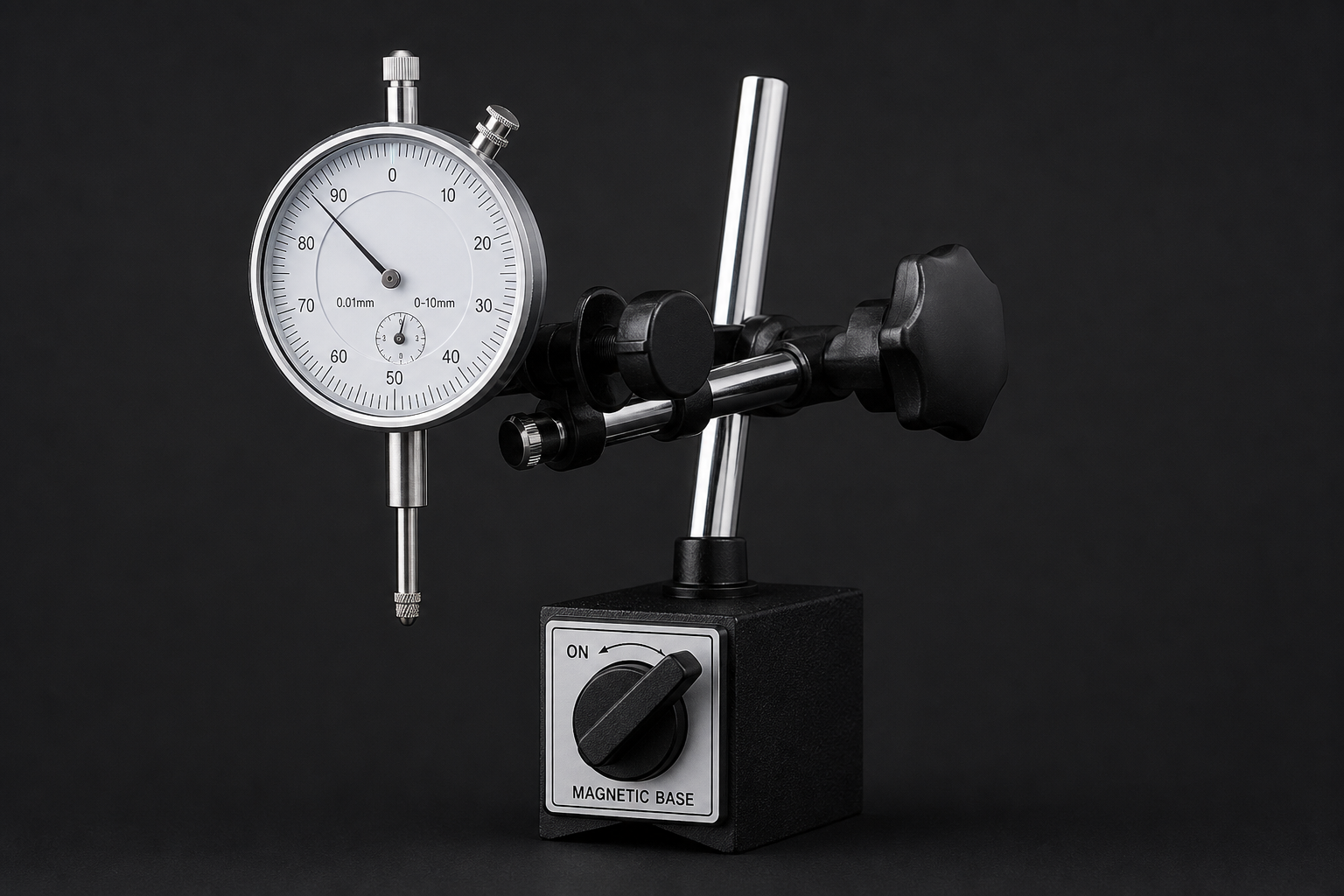
Dial Indicator Set with Magnetic Base
- Finds how much real cushion travel is left before the hard stop
- Catches a worn or bottomed cushion sleeve early
- Magnetic base reads off the machine, not the drawing
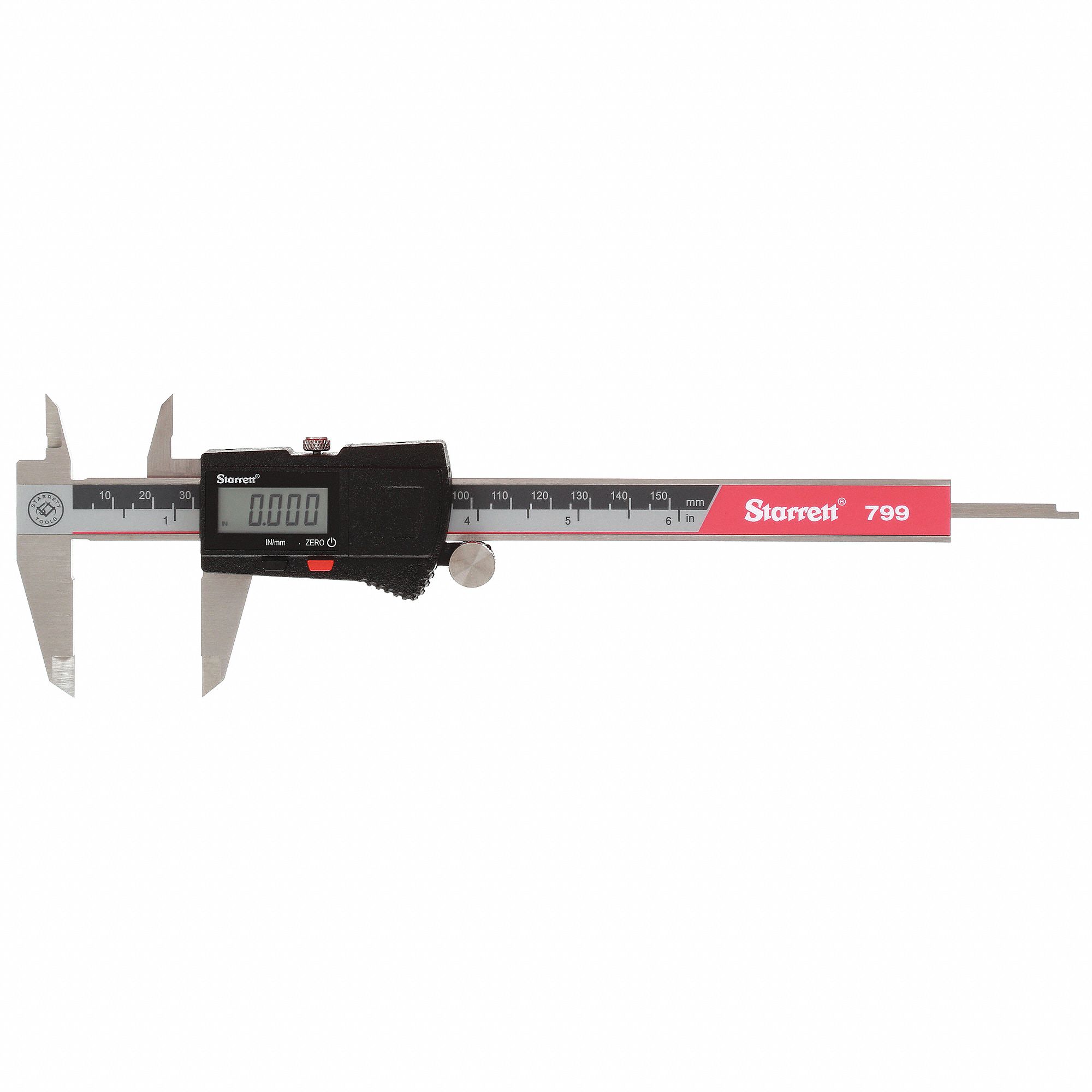
Starrett EC799A Electronic Caliper 0–6 in
- Stroke length for the stroke ÷ time velocity check
- Same tool checks cushion sleeve wear and rod condition
- Inch and metric on one readout
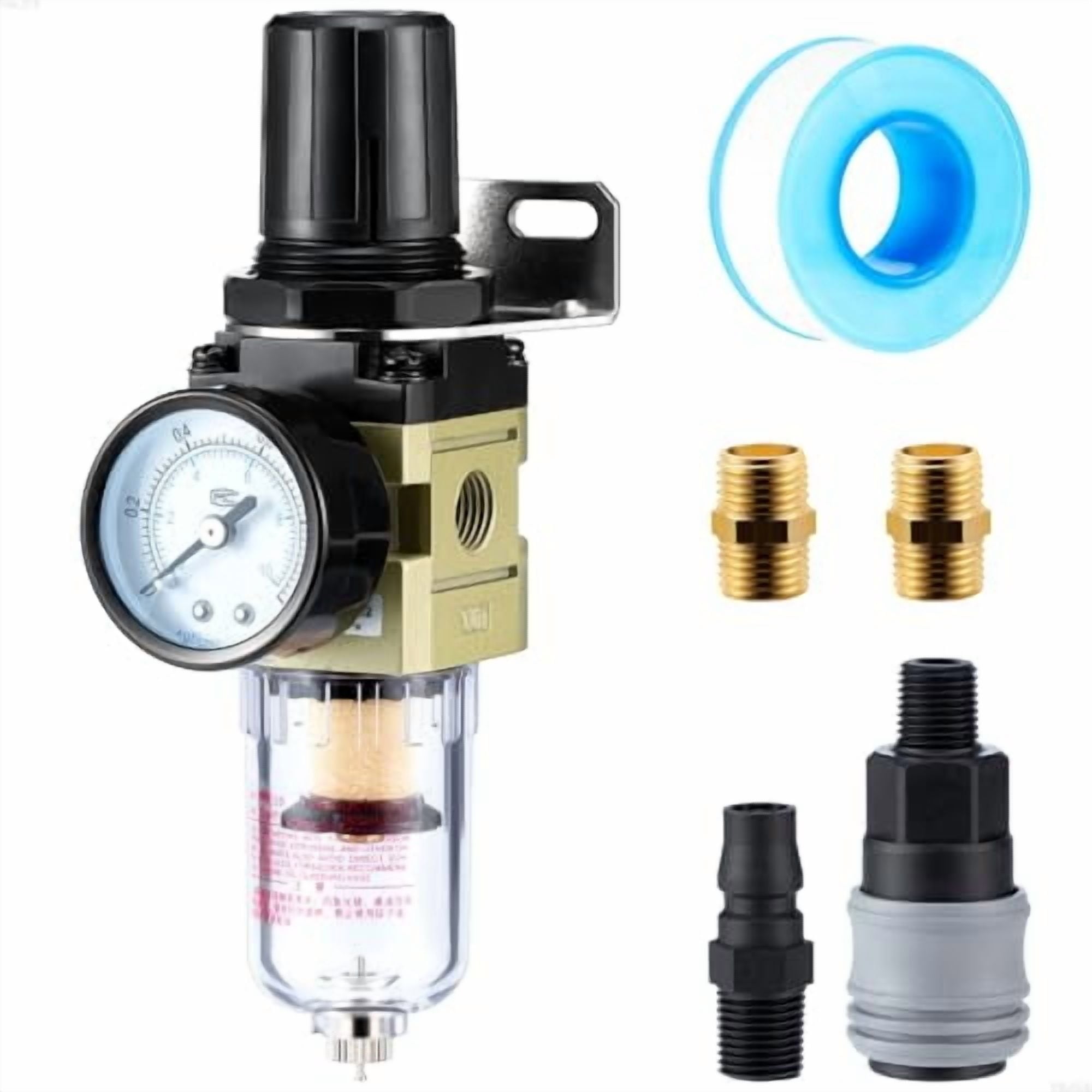
Hromee 1/4 in Filter Regulator AW2000-02
- A regulator at the actuator is the only honest read on drive pressure
- Filtration keeps grit out of the cushion needle valve
- Lower feed pressure trims velocity along with force
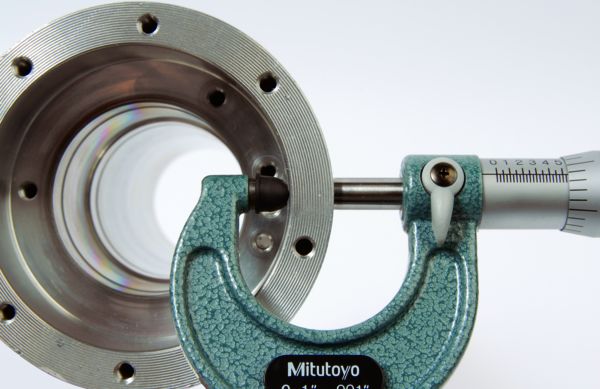
Mitutoyo 103-177 Outside Micrometer 0–1 in
- Checks for wear or scoring from repeated hard stops
- Pairs with a buckling check for the static side of sizing
- Same tool, a different failure mode
As an Amazon Associate, TestTalkHQ earns from qualifying purchases. Prices and availability can change.
External shock absorbers: for energy a cushion cannot take
A dedicated hydraulic shock absorber — a self-contained unit mounted at the stop, independent of the cylinder — absorbs far more energy per inch of travel than a pneumatic cushion, because it uses metered hydraulic fluid rather than compressible air to do the work. It mounts externally, so it does not depend on the cylinder having cushions at all, and it can be sized and replaced independently of the actuator.
The trade-offs are real: added cost, added mounting space and alignment requirements, and a wear part with its own service life that needs checking on a schedule, not assumed to last forever. Sizing one correctly means matching its rated energy-per-cycle capacity to your calculated kinetic energy with margin, the same comparison the impact energy calculator sets up — just checked against the shock absorber’s data sheet instead of the cylinder’s.
Putting the three together
These are not mutually exclusive, and the strongest fix on a difficult application is usually two of the three at once: flow control to pull velocity down to something reasonable, paired with either an adequate built-in cushion or an external shock absorber to handle what remains. Trying to solve a large energy problem with cushion adjustment alone, when the moving weight or velocity is simply too high for the cylinder’s rated capacity, just produces the same failure on a longer timeline.
A decision order that works
- Calculate the kinetic energy at the actual measured velocity, not the catalog rating.
- Check it against the cylinder’s rated cushion capacity. If there is comfortable margin, stop here.
- If there is no margin, try flow control first — it is reversible, cheap, and often enough on its own.
- If cycle time cannot absorb the needed speed reduction, specify an external shock absorber sized to the remaining energy.