
There is a category of compressed air moisture complaint that survives all the usual advice. The tank is drained, there is a filter at every drop, a dryer is fitted and its light is green — and there is still water where there should not be. That is a system problem rather than a maintenance problem, and it needs measurements rather than parts. This walks through the diagnosis in the order that finds the cause fastest, using numbers you can take with a thermometer and a pressure gauge.
Start here: the basics are covered elsewhere
If the symptom is water spitting from a blow gun in a shop with no dryer at all, or fish-eyes in a paint job with nothing but a cheap water trap at the gun, that is the small-shop case and it is already answered in air compressor troubleshooting — drain daily, fit a real filter/regulator at the drop, add a coalescing filter for finish work, give the air a cool-down run before the gun. Start there; this article assumes you have done all of that and the water is still arriving.
What follows is the level above: a system that has an aftercooler, a separator, a receiver and a dryer, and still passes water. There are only six causes that account for almost all of it.
The diagnosis, in order
| What you see | Most likely cause | The measurement that proves it |
|---|---|---|
| Water everywhere, worse on hot days, dryer gauge reads normal | Aftercooler approach too wide — dryer is over capacity on water | Air temp out of the aftercooler minus cooling air temp in |
| Water only at one bench or one end of the shop | That run is colder than the dew point | Infrared thermometer on the pipe at that location, on a cold morning |
| Started when a machine or shift was added | Dryer now over its rated flow | Actual delivered CFM against the dryer’s corrected rating |
| Refrigerated dryer: pressure drop climbing, air gets wetter | Evaporator icing up | Evaporator gauge below the green band; pressure drop across the dryer |
| Desiccant dryer: dew point drifts up over weeks | Bed contaminated, purge set wrong, or a valve not switching | Dew point transmitter trend; listen to the purge cycle; feel tower temperatures |
| Seasonal — fine all summer, water every winter | Refrigerated dew point specified against the compressor room, not the coldest pipe | Coldest pipe temperature vs the dryer’s pressure dew point |
Test 1 — the aftercooler approach
This takes two minutes and it is the highest-yield test in compressed air. Measure the air temperature in the pipe immediately after the aftercooler, and the temperature of the cooling air entering it. The difference is the approach. On a healthy air-cooled machine it is 15 to 20°F. If you measure 30 or 35°F, stop diagnosing the dryer — you have found the problem.
Why it matters so much: the aftercooler and separator normally remove 70 to 80 percent of the water, leaving the dryer a manageable 20 to 30 percent. Widen the approach and that split moves sharply. Put the same conditions into the condensate calculator with a 100°F aftercooler outlet and then a 115°F one and watch the dryer’s share go from under a third to about half — more than twice as much water arriving at a dryer that was never sized for it.
The causes are all boring and all fixable: a cooler core packed with dust and shop debris, a fan that has lost a blade or is turning slowly on a tired motor, a compressor room that has crept up to 100°F because the extract fan is switched off, or an air-cooled machine sited so its own hot exhaust recirculates back into its intake.
Test 2 — find the coldest metal
Air condenses where it is cooled below its dew point, and nowhere else. Walk the whole distribution system with an infrared thermometer on the coldest morning you can manage and note the lowest reading. Compare it with the dryer’s pressure dew point.
If the coldest pipe is below the dew point, the dryer is working exactly as advertised and your specification was wrong. A refrigerated dryer holding a 38°F pressure dew point is doing its job perfectly while a run through an unheated bay at 30°F rains water into the pipe and then freezes it at the drop. No amount of servicing the dryer changes that. The fix is a lower dew point — usually a desiccant dryer — or heat tracing and insulation on the offending run, or rerouting it.
Test 3 — is the dryer actually inside its rating?
Dryers are rated at defined conditions — commonly a 100°F inlet, 100 psig and a 100°F ambient under the ISO 7183 rating conditions. Four things push a dryer outside them, and any one of them is enough:
- Flow. The obvious one. Compare the compressor’s actual delivered CFM against the dryer’s rating, not against its model number.
- Inlet temperature. Every degree above the rated inlet is more water arriving. This is Test 1 in another form.
- Line pressure. A dryer rated at 100 psig and run at 80 sees the same mass of air moving faster, with less residence time. Its real capacity is lower. If somebody dropped system pressure last year to save energy, this is a live suspect.
- Ambient. A refrigerated dryer rejects heat to the room. In the same hot corner as the compressor, its condenser cannot do its job.
Every manufacturer publishes correction factors for these. Multiply them, apply them to the nameplate, and compare that against your real duty. Many dryers that look oversized on paper are over capacity in practice.
The parts of the chain we have verified links for
Point-of-use filtration, regulation and a receiver with a working drain. Refrigerated and desiccant dryers, oil/water separators and zero-loss demand drains are discussed throughout this article but are not linked, because TestTalkHQ does not carry sourced affiliate links for them yet.
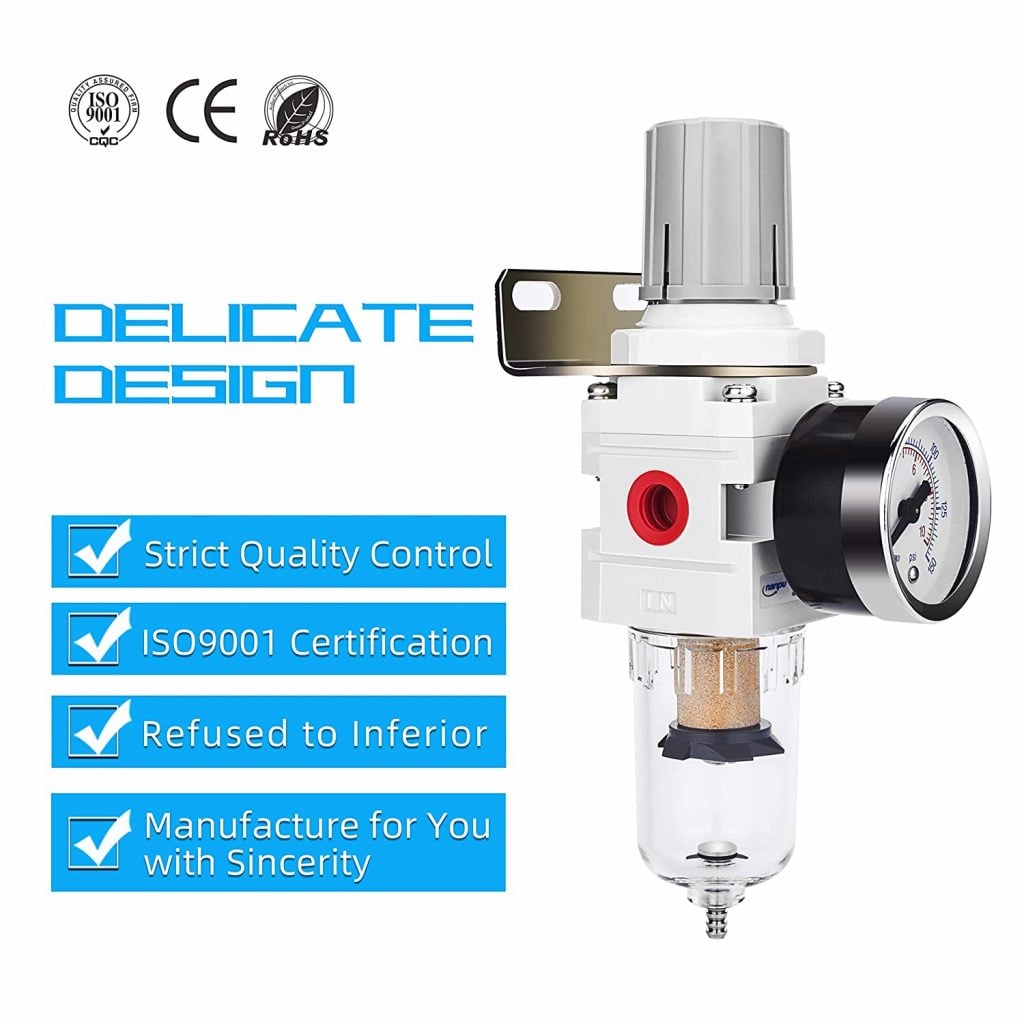
Hromee AW2000-02 Filter / Regulator
- Catches free water the upstream drains missed
- The bowl tells you how bad the problem really is
- Belongs at the drop, not back at the compressor
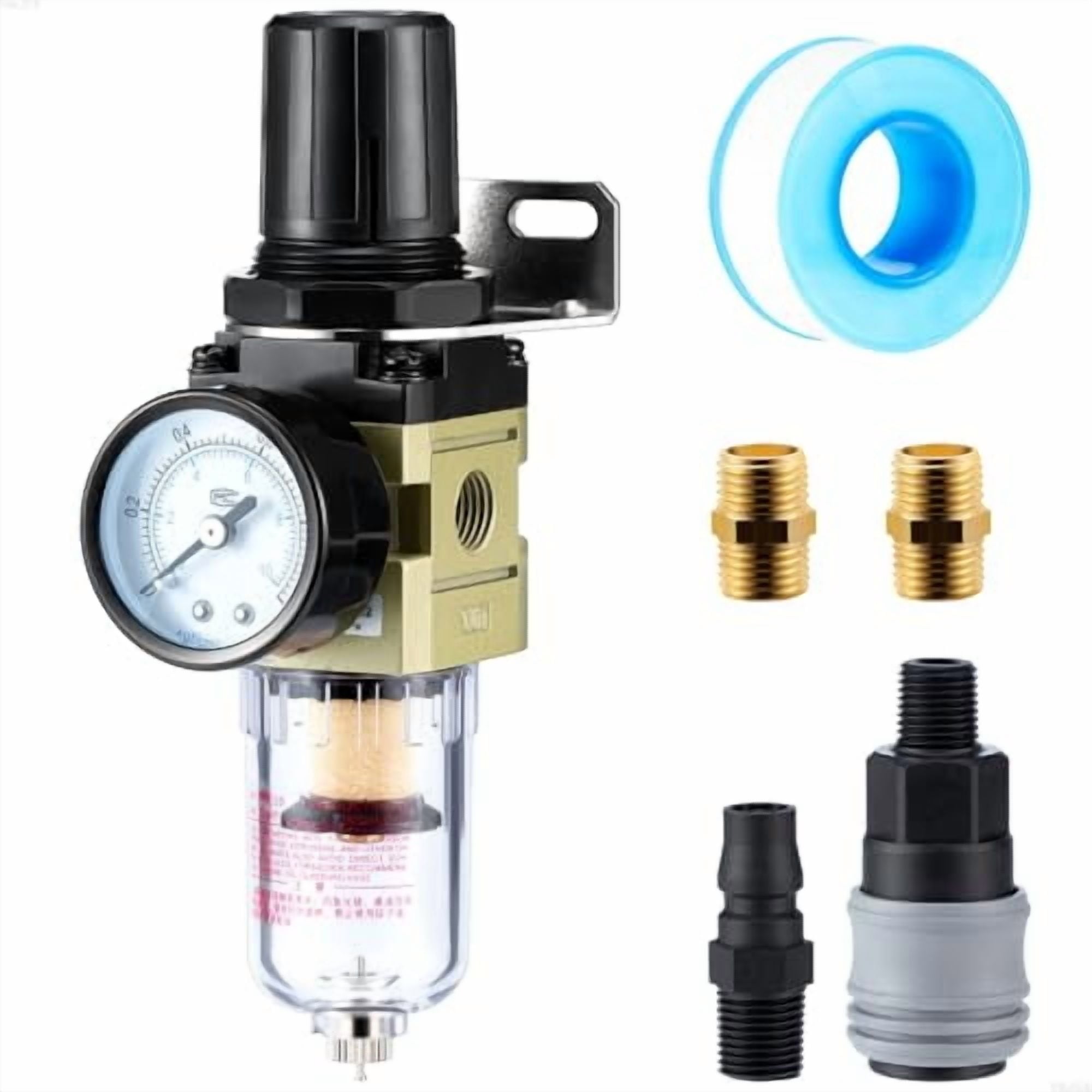
Hromee 1/4" Filter / Regulator
- One per bench beats one for the whole shop
- Every drop sees a different pipe temperature
- Cheap enough to fit everywhere water matters

LE LEMATEC Regulator 0–150 PSI
- Line pressure sets how much water the air can hold
- Holds the pressure the dew point was specified at
- Gauge reads against the local atmosphere
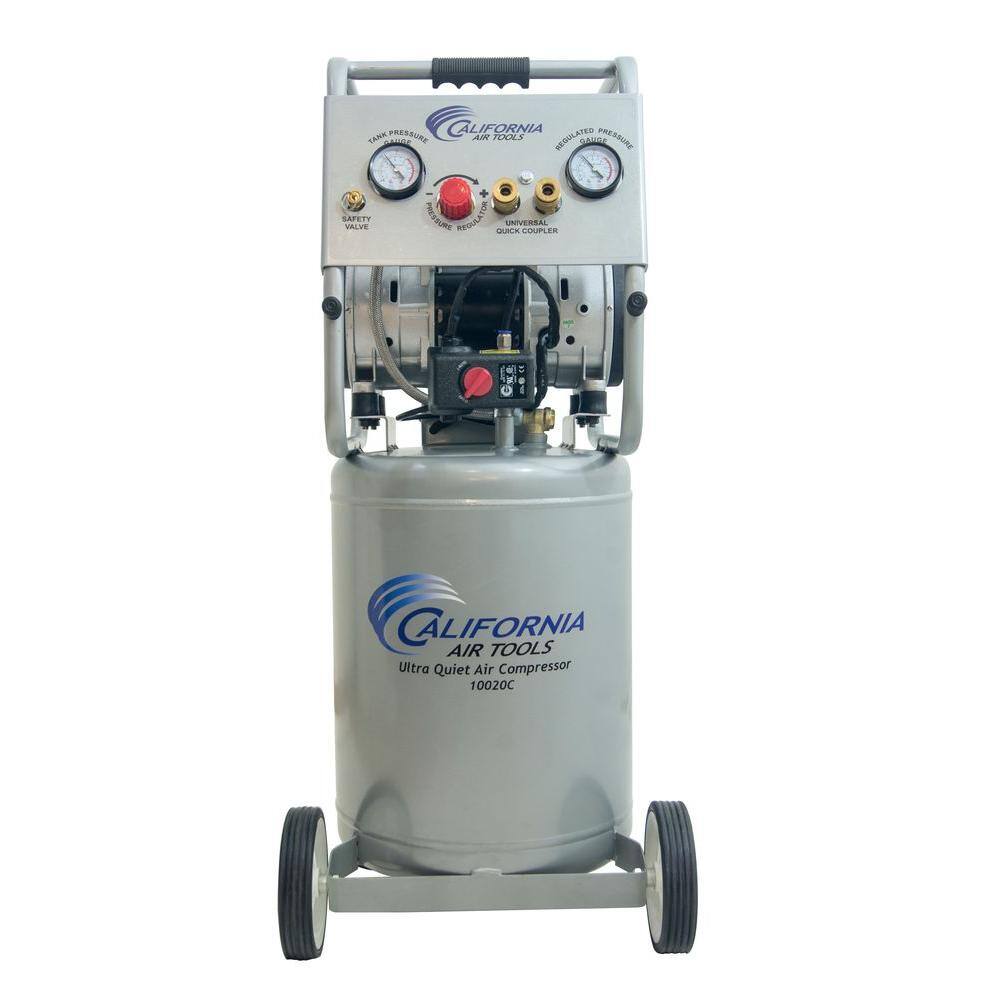
California Air Tools 10020CAD Auto Drain
- Condensate leaves without anyone remembering
- A forgotten manual drain rusts tanks from inside
- Oil-free, so the condensate is far less troublesome
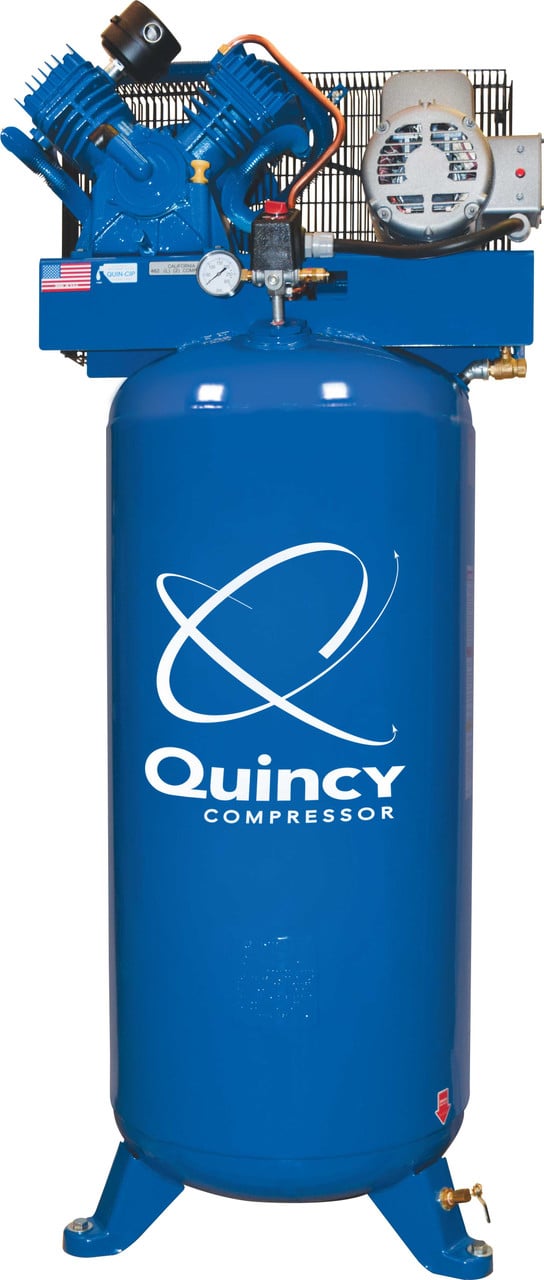
Quincy QT-54 5 HP 60-Gallon
- A big receiver is the shop’s first real separator
- Air slows, cools and drops water before the mains
- Drain it daily or it becomes a water tank
As an Amazon Associate, TestTalkHQ earns from qualifying purchases. Prices and availability can change.
Refrigerated dryer failure modes
The evaporator is icing up
A refrigerated dryer works by chilling the air to just above freezing. If the refrigeration control loses regulation, the evaporator drops below 32°F, the condensate in it freezes, and the ice restricts the passages. The signature is a rising pressure drop across the dryer, air that is getting wetter rather than drier, and an evaporator gauge sitting below its green band. On a non-cycling dryer this normally means the hot gas bypass valve has drifted out of adjustment or failed; on a cycling dryer, a thermal mass or control fault. Either way the dryer usually recovers when you shut it down and let it thaw — which is also the confirmation that it was ice.
The condenser is blocked
Air-cooled condensers collect dust and lint exactly like the aftercooler does. A blocked condenser cannot reject heat, head pressure rises, and the dryer stops achieving its dew point. It is usually a five-minute job with a soft brush and low-pressure air, and it is usually the thing nobody has done since installation.
The separator drain inside the dryer is blocked
The dryer chills the air and condenses water inside itself, then drains it. If that drain is blocked, the dryer fills, and it will carry the water it just condensed straight out to the shop. A dryer whose own drain has failed is worse than no dryer, because it delivers the water in slugs. Check it the same way you check every other drain: watch a cycle.
The bypass is open
Most installations have a bypass so the dryer can be serviced without shutting the shop down. A surprising number of them are open, usually because someone chased a pressure drop and never closed the valve. It costs nothing to check and it explains the symptom completely.
Desiccant dryer failure modes
Purge flow is wrong
A heatless desiccant dryer regenerates one tower by expanding a fraction of its own dried output through the offline bed and venting it. That purge flow is an intended, continuous consumption of compressed air, and its setting is a genuine adjustment. Set too low, the bed does not regenerate and the dew point drifts up over days and weeks. Set too high, the dew point is fine and you are throwing away a large amount of expensive air. Both are common and both look like something else. The specific purge rate belongs to the model — get it from the data sheet rather than from a rule of thumb, and set it with a flow meter rather than by ear.
A switching valve is not switching
Desiccant dryers alternate towers on a timer or on dew point. If a switching valve sticks, one tower does all the work and is never regenerated, so the dew point climbs steadily. The tell is temperature: on a working heatless dryer the towers should feel different as they cycle. If both towers stay the same temperature through several cycles, something is not switching. Listen for the purge exhaust too — a healthy heatless dryer has a distinct, regular cycle you can set a watch by.
The bed is contaminated or flooded
Desiccant is destroyed by liquid water and poisoned by oil. Both usually arrive because the upstream aftercooler, separator or coalescing filter failed and nobody noticed. The symptom is a dew point that has degraded permanently and does not recover after servicing; often accompanied by desiccant dust downstream, which is why a particulate filter belongs after every desiccant dryer. Replacing a bed without finding out what killed it guarantees a repeat.
What not to do
- Do not raise system pressure to "push the water through". Higher pressure marginally reduces the water the air can carry, but it also raises the compressor’s energy cost, raises every leak’s flow, and does nothing about the liquid already in the pipe. It is not a moisture fix.
- Do not stack more filters in series. Filters remove liquid and aerosol. They do not change the dew point. If the air still condenses downstream, the water reappears after your new filter and you have bought pressure drop for nothing.
- Do not fit a bigger dryer before measuring the aftercooler. If the approach is 35°F, a bigger dryer will also struggle, and you will have spent the money on the wrong stage.
- Do not diagnose in March. Water load can more than double between spring and the worst week of summer, and the coldest-pipe problem only appears in winter. Run both extremes through the condensate calculator before deciding anything is fixed.
- Do not assume the drain works because it is automatic. Watch a cycle. Every time.