Black Iron vs Copper vs Aluminum Air Pipe
Which material to run, and why PVC is never on the list
Three materials realistically compete for shop compressed air, and they differ far more in labour and longevity than in pressure drop. Here is the honest comparison, including the one material that should never be used at any price.
The short answer
For most shops the decision is between threaded black iron, Type L copper, and a modular aluminium push-to-connect system. Black iron is the cheapest per foot and the most labour-intensive, and it rusts from the inside. Copper is smooth, corrosion-free and mid-priced with moderate skill required. Aluminium is the fastest to install and the easiest to modify, at the highest material cost. PVC is not a candidate at any price.
| Criterion | Black iron / steel | Type L copper | Aluminium system |
|---|---|---|---|
| Material cost | Lowest | Middle to high | Highest |
| Install labour | Highest — cut, thread, dope, wrench | Moderate — solder or press | Lowest — cut and push |
| Internal roughness | 0.00015 ft, rises with age | 0.000005 ft, stable | Smooth, stable |
| Corrosion in wet air | Rusts internally; scale narrows bore | Does not rust | Does not rust |
| Modifying later | Hard — break into threaded run | Moderate | Trivial — cut in a tee |
| Weight / support | Heavy | Light | Lightest |
| Skills needed | Threading or pipe dies | Soldering or press tool | Hand tools |
Rule out PVC before anything else
PVC and CPVC appear in shop air systems because they are cheap, light and easy to glue, and they are genuinely dangerous in that service. Both embrittle with age and with exposure to compressor oil carryover, and a failure under stored pressure is not a split — it is fragmentation. Pipe manufacturers explicitly exclude compressed air from their approved uses, and the practice has drawn OSHA citations.
This is not a performance preference. Use steel, stainless, copper, or an aluminium or composite system that is rated and listed for compressed air service. If an existing shop has PVC air lines, replacing them is the first job, not a later one.
Black iron and galvanized steel
Threaded steel is the traditional answer and still the cheapest way to buy a given diameter. It is strong, entirely immune to being knocked with a ladder, and every supply house stocks it.
- The labour is the real cost. Cutting, threading, deburring and doping a long run with many fittings takes far longer than the material saving, particularly if you are renting or buying a threader.
- It rusts from the inside. Compressed air is saturated and condenses in the pipe; black iron corrodes and the scale both roughens and narrows the bore. That means the pressure drop of a ten-year-old line is worse than the number you calculated when it was new, and rust eventually ends up in tools and on paintwork.
- Galvanizing helps but is not a cure — threading cuts through the coating at every joint, which is exactly where water sits.
- Changing it later is a project. Breaking into a threaded run means unions or cutting and re-threading.
It remains a sound choice for a permanent layout in a shop that will not change, where the budget is material-led and the labour is your own.
Type L copper
Copper's advantage is the bore. It is drawn tubing, so its internal roughness is roughly thirty times lower than commercial steel and — more importantly — it stays that way, because copper does not rust. A copper line delivers the pressure drop you calculated for as long as it exists.
- Lower friction factor at the same flow. In like-for-like runs copper typically shows a usefully lower friction factor than steel, though the effect is smaller than the diameter effect — do not choose copper expecting it to substitute for a size step.
- Type L, not Type M. Type L has the heavier wall appropriate for pressure service; note that its inside diameters are slightly smaller than Schedule 40 steel of the same nominal size, which the calculator accounts for.
- Soldering or press. Soldered joints need skill and a clean, dry pipe; press fittings are fast and repeatable but the tool is an investment or a rental.
- Support and expansion need attention on long runs, and copper is soft enough to be damaged by shop traffic where steel would not be.
Gear that decides whether your pipe size survives contact with the shop
The main is only one link. These are the parts that most often become the new restriction once the pipe itself is right.
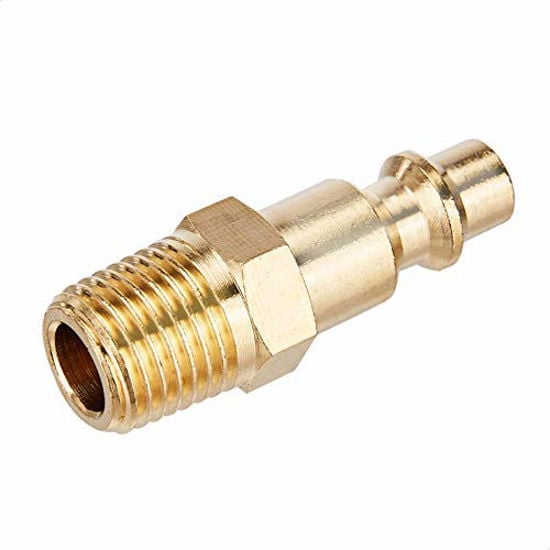
Quick Connect Brass Coupler Kit
Industrial-interchange couplers with a decent bore, so the last two inches of the system are not the biggest restriction in it.
View on Amazon
Regulator & Flow Control 0-150 PSI
Lets you set pressure at the point of use instead of raising header pressure to paper over distribution losses.
View on Amazon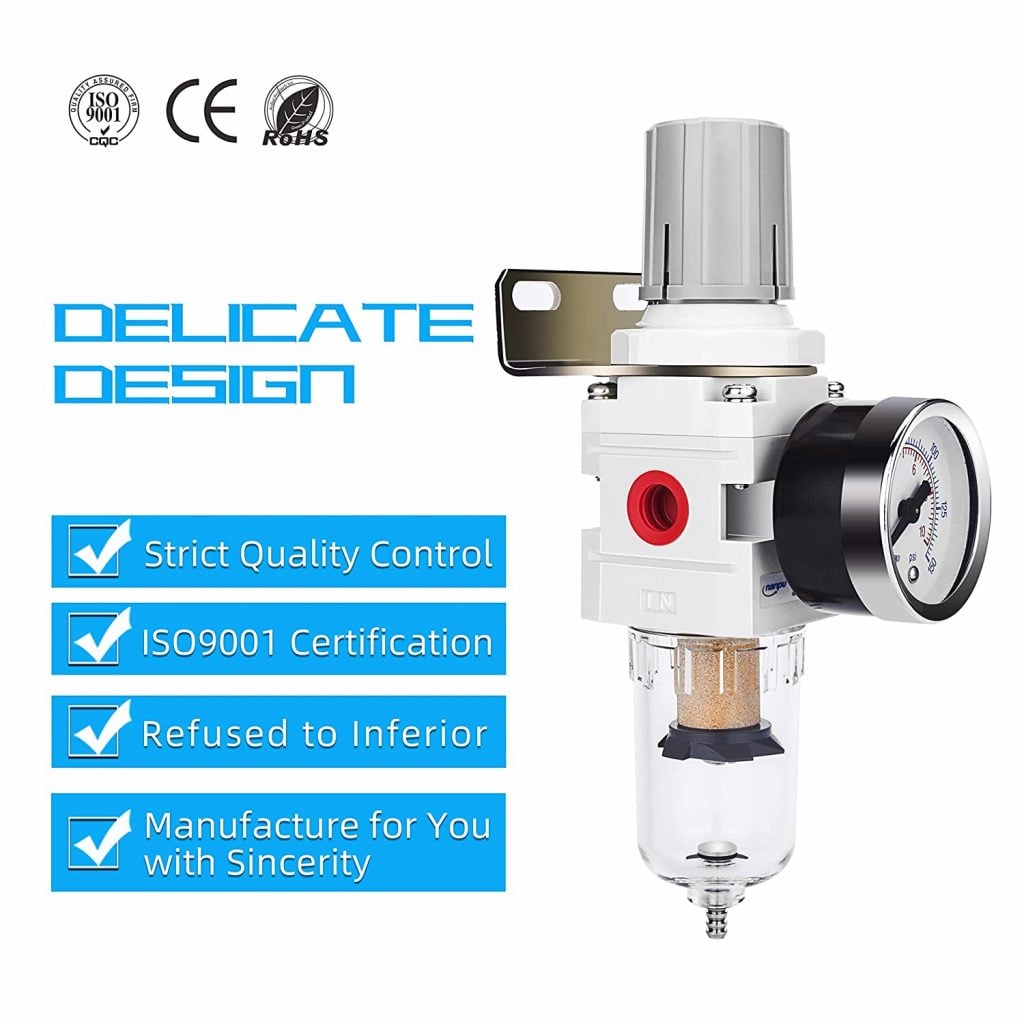
Filter / Regulator Combo
Water and scale in the bore raise real pressure drop over time. A filter at each drop keeps the pipe you sized behaving like the pipe you sized.
View on Amazon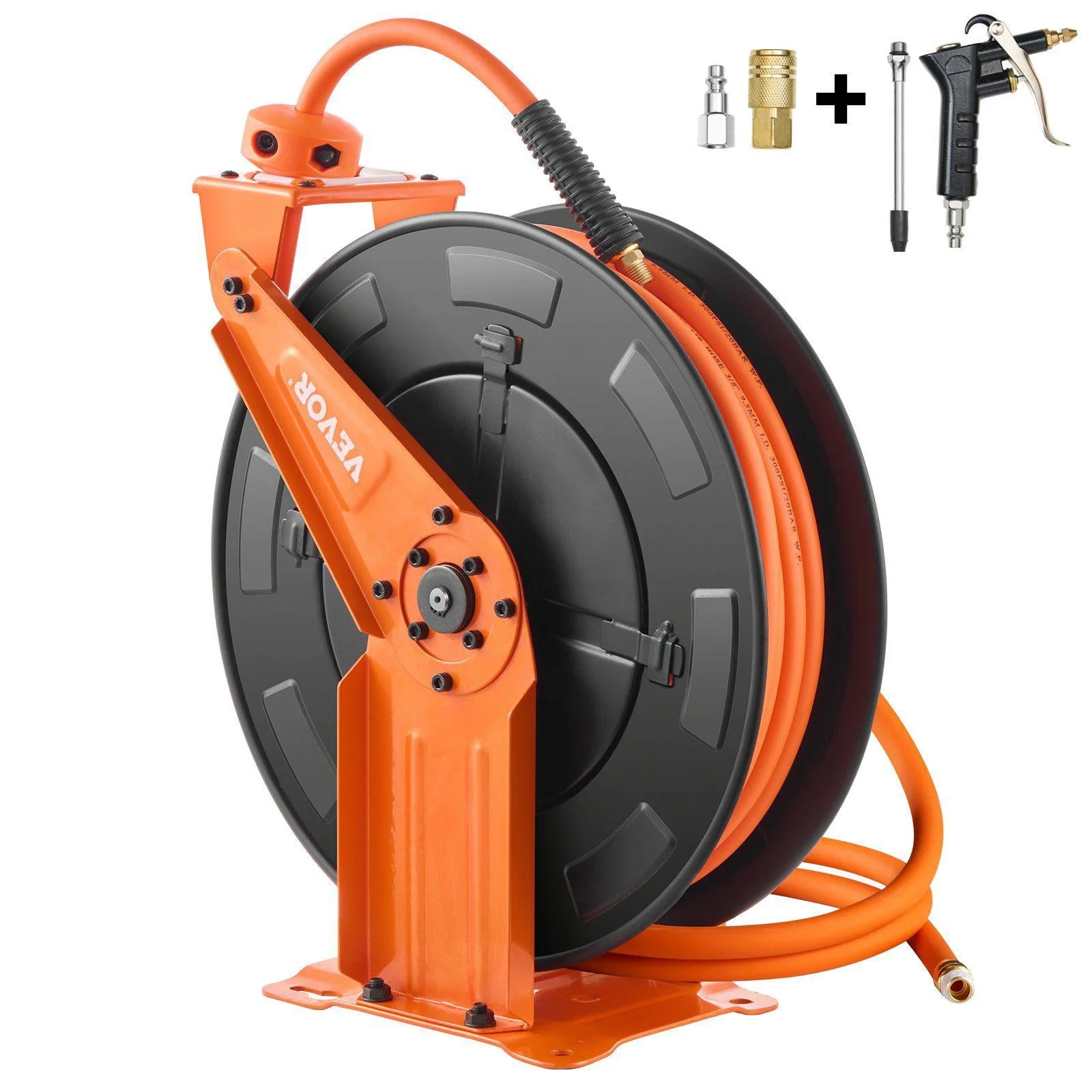
Relhost 65ft Retractable Reel
A 3/8 in bore instead of 1/4 in is frequently worth more real psi at the tool than one step up in hard pipe.
View on Amazon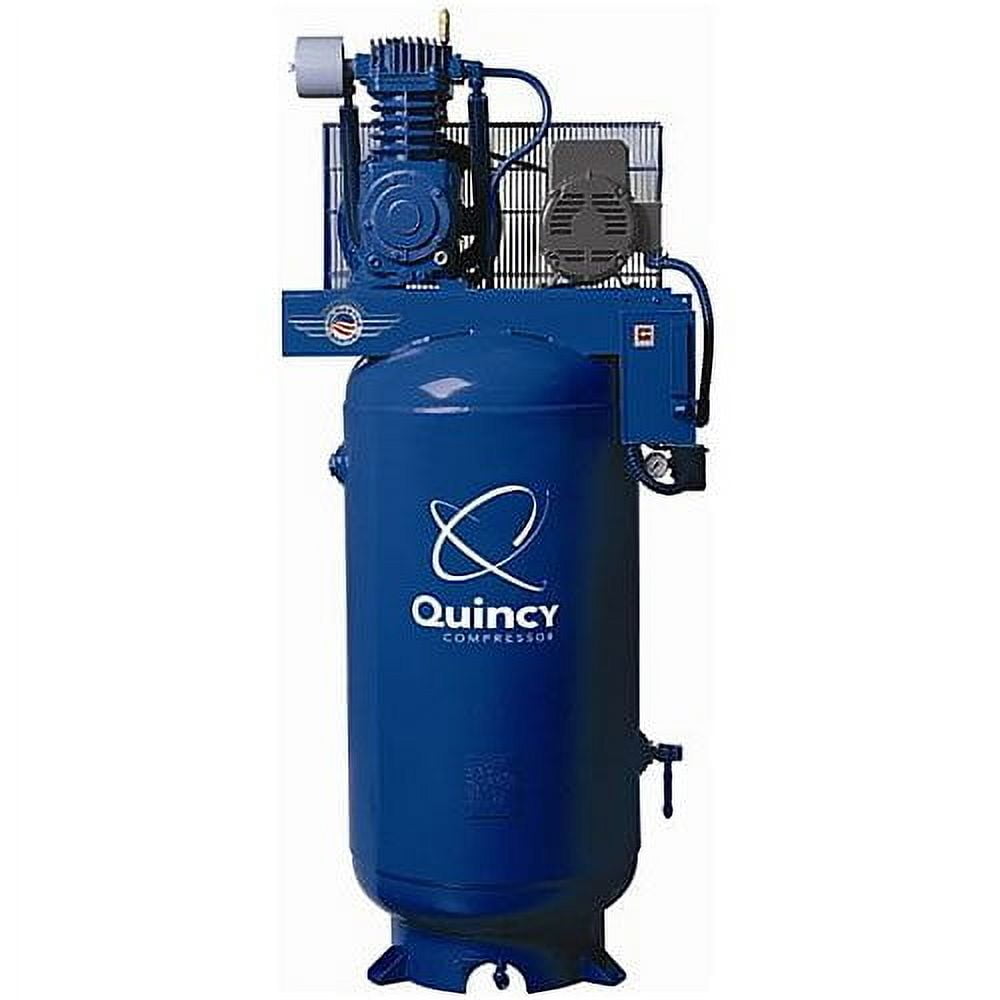
Quincy QT-7.5 80-Gallon
Receiver volume smooths the peak draws that a steady-flow pipe calculation assumes away.
View on AmazonAs an Amazon Associate, TestTalkHQ earns from qualifying purchases. Prices and availability can change.
Modular aluminium push-to-connect systems
Proprietary aluminium air-pipe systems have become the default in commercial installs for one reason: a person with hand tools can install a whole shop in a day, and change it the following week.
- Install speed is the headline. Cut square, deburr, push. No threading, no flame, no permit for hot work.
- Smooth, corrosion-free bore that stays that way, like copper.
- Modification is trivial, which matters more than most people expect. Shops move benches, add bays and relocate equipment, and a system you can cut a tee into in ten minutes gets laid out correctly over time instead of being extended with whatever fits.
- Check the inside diameter from the manufacturer. These systems do not follow Schedule 40 or copper dimensions, and a nominal 25 mm product is not a 1 inch Schedule 40 bore. Use the published ID with the calculator's custom diameter option rather than assuming.
- Material cost is the highest of the three, and fittings are proprietary, so you are tied to one supplier for the life of the system.
Because these systems are easy to extend, they are also easy to extend badly. The pressure drop rules do not change: a long small-bore extension off a properly sized main is just as undersized in aluminium as it would be in steel.
Does material change the pipe size you need?
Much less than people hope. Roughness sets the friction factor, and friction factor moves the answer by a modest percentage. Diameter sets pressure drop by roughly the fifth power, so one step up in size swamps any realistic difference in material.
The one case where material genuinely changes the sizing outcome is the ten-year view: a steel line that scales up over a decade drifts away from its design pressure drop, while copper and aluminium do not. If the system has to be right in 2036 as well as today, that is the argument.
Run your own numbersThe pipe size calculator gives pressure drop and velocity for every common size at your flow, pressure, run length and fitting count.
Open the calculatorWhich to pick, by shop
- Small permanent home shop, own labour, tight budget — black iron. The layout will not change and the material saving is real.
- Home or pro shop that wants it done once and left alone — Type L copper. Stable bore, no rust, no proprietary lock-in.
- Working shop that reconfigures, or a commercial install on a schedule — aluminium. The install and modification speed pays for the material.
- Existing PVC — replace it, in any of the three.
- Food, medical, or breathing air — outside the scope of this comparison; those services have their own material and certification requirements.
Frequently asked questions
Can I use PVC pipe for compressed air?
No. PVC and CPVC become brittle with age and exposure to compressor oil and can shatter into fragments under stored air pressure. Manufacturers exclude compressed air service and the practice has drawn OSHA citations. Use steel, stainless, copper, or an aluminium or composite system listed for compressed air.
Is copper better than black iron for shop air?
For bore quality, yes. Copper is drawn tubing with far lower internal roughness and it does not rust, so it holds its calculated pressure drop indefinitely, while black iron scales and narrows over the years. Black iron is cheaper per foot but much more labour to install.
Does pipe material change the size I need?
Only slightly. Roughness affects the friction factor by a modest amount, whereas pressure drop scales with roughly the fifth power of diameter. Choose material on cost, labour and corrosion, then size on flow, length and fittings — the same job usually lands on the same nominal size in either material.
Are aluminium push-to-connect air systems worth the cost?
In a shop that changes layout, usually yes. Install and modification are dramatically faster, the bore is smooth and corrosion-free, and the system tends to stay correctly laid out because extending it properly is easy. The trade-offs are the highest material cost and proprietary fittings.
Do aluminium air pipe systems use the same inside diameters as steel?
No, and this matters for sizing. Proprietary systems follow their own dimensions, so a nominal 25 mm product does not have a 1 inch Schedule 40 bore. Take the published inside diameter from the manufacturer and enter it in the calculator's custom diameter option.
Related calculators & guides
Three materials realistically compete for shop compressed air, and they differ far more in labour and longevity than in pressure drop. Here is the honest comparison, including the one material that should never be used at any price.
The short answer
For most shops the decision is between threaded black iron, Type L copper, and a modular aluminium push-to-connect system. Black iron is the cheapest per foot and the most labour-intensive, and it rusts from the inside. Copper is smooth, corrosion-free and mid-priced with moderate skill required. Aluminium is the fastest to install and the easiest to modify, at the highest material cost. PVC is not a candidate at any price.
| Criterion | Black iron / steel | Type L copper | Aluminium system |
|---|---|---|---|
| Material cost | Lowest | Middle to high | Highest |
| Install labour | Highest — cut, thread, dope, wrench | Moderate — solder or press | Lowest — cut and push |
| Internal roughness | 0.00015 ft, rises with age | 0.000005 ft, stable | Smooth, stable |
| Corrosion in wet air | Rusts internally; scale narrows bore | Does not rust | Does not rust |
| Modifying later | Hard — break into threaded run | Moderate | Trivial — cut in a tee |
| Weight / support | Heavy | Light | Lightest |
| Skills needed | Threading or pipe dies | Soldering or press tool | Hand tools |
Rule out PVC before anything else
PVC and CPVC appear in shop air systems because they are cheap, light and easy to glue, and they are genuinely dangerous in that service. Both embrittle with age and with exposure to compressor oil carryover, and a failure under stored pressure is not a split — it is fragmentation. Pipe manufacturers explicitly exclude compressed air from their approved uses, and the practice has drawn OSHA citations.
This is not a performance preference. Use steel, stainless, copper, or an aluminium or composite system that is rated and listed for compressed air service. If an existing shop has PVC air lines, replacing them is the first job, not a later one.
Black iron and galvanized steel
Threaded steel is the traditional answer and still the cheapest way to buy a given diameter. It is strong, entirely immune to being knocked with a ladder, and every supply house stocks it.
- The labour is the real cost. Cutting, threading, deburring and doping a long run with many fittings takes far longer than the material saving, particularly if you are renting or buying a threader.
- It rusts from the inside. Compressed air is saturated and condenses in the pipe; black iron corrodes and the scale both roughens and narrows the bore. That means the pressure drop of a ten-year-old line is worse than the number you calculated when it was new, and rust eventually ends up in tools and on paintwork.
- Galvanizing helps but is not a cure — threading cuts through the coating at every joint, which is exactly where water sits.
- Changing it later is a project. Breaking into a threaded run means unions or cutting and re-threading.
It remains a sound choice for a permanent layout in a shop that will not change, where the budget is material-led and the labour is your own.
Type L copper
Copper's advantage is the bore. It is drawn tubing, so its internal roughness is roughly thirty times lower than commercial steel and — more importantly — it stays that way, because copper does not rust. A copper line delivers the pressure drop you calculated for as long as it exists.
- Lower friction factor at the same flow. In like-for-like runs copper typically shows a usefully lower friction factor than steel, though the effect is smaller than the diameter effect — do not choose copper expecting it to substitute for a size step.
- Type L, not Type M. Type L has the heavier wall appropriate for pressure service; note that its inside diameters are slightly smaller than Schedule 40 steel of the same nominal size, which the calculator accounts for.
- Soldering or press. Soldered joints need skill and a clean, dry pipe; press fittings are fast and repeatable but the tool is an investment or a rental.
- Support and expansion need attention on long runs, and copper is soft enough to be damaged by shop traffic where steel would not be.
Gear that decides whether your pipe size survives contact with the shop
The main is only one link. These are the parts that most often become the new restriction once the pipe itself is right.
Quick Connect Brass Coupler Kit
Industrial-interchange couplers with a decent bore, so the last two inches of the system are not the biggest restriction in it.
Regulator & Flow Control 0-150 PSI
Lets you set pressure at the point of use instead of raising header pressure to paper over distribution losses.
Filter / Regulator Combo
Water and scale in the bore raise real pressure drop over time. A filter at each drop keeps the pipe you sized behaving like the pipe you sized.
Relhost 65ft Retractable Reel
A 3/8 in bore instead of 1/4 in is frequently worth more real psi at the tool than one step up in hard pipe.
Quincy QT-7.5 80-Gallon
Receiver volume smooths the peak draws that a steady-flow pipe calculation assumes away.
As an Amazon Associate, TestTalkHQ earns from qualifying purchases. Prices and availability can change.
Modular aluminium push-to-connect systems
Proprietary aluminium air-pipe systems have become the default in commercial installs for one reason: a person with hand tools can install a whole shop in a day, and change it the following week.
- Install speed is the headline. Cut square, deburr, push. No threading, no flame, no permit for hot work.
- Smooth, corrosion-free bore that stays that way, like copper.
- Modification is trivial, which matters more than most people expect. Shops move benches, add bays and relocate equipment, and a system you can cut a tee into in ten minutes gets laid out correctly over time instead of being extended with whatever fits.
- Check the inside diameter from the manufacturer. These systems do not follow Schedule 40 or copper dimensions, and a nominal 25 mm product is not a 1 inch Schedule 40 bore. Use the published ID with the calculator's custom diameter option rather than assuming.
- Material cost is the highest of the three, and fittings are proprietary, so you are tied to one supplier for the life of the system.
Because these systems are easy to extend, they are also easy to extend badly. The pressure drop rules do not change: a long small-bore extension off a properly sized main is just as undersized in aluminium as it would be in steel.
Does material change the pipe size you need?
Much less than people hope. Roughness sets the friction factor, and friction factor moves the answer by a modest percentage. Diameter sets pressure drop by roughly the fifth power, so one step up in size swamps any realistic difference in material.
The one case where material genuinely changes the sizing outcome is the ten-year view: a steel line that scales up over a decade drifts away from its design pressure drop, while copper and aluminium do not. If the system has to be right in 2036 as well as today, that is the argument.
Run your own numbersThe pipe size calculator gives pressure drop and velocity for every common size at your flow, pressure, run length and fitting count.
Which to pick, by shop
- Small permanent home shop, own labour, tight budget — black iron. The layout will not change and the material saving is real.
- Home or pro shop that wants it done once and left alone — Type L copper. Stable bore, no rust, no proprietary lock-in.
- Working shop that reconfigures, or a commercial install on a schedule — aluminium. The install and modification speed pays for the material.
- Existing PVC — replace it, in any of the three.
- Food, medical, or breathing air — outside the scope of this comparison; those services have their own material and certification requirements.
Frequently asked questions
Can I use PVC pipe for compressed air?
No. PVC and CPVC become brittle with age and exposure to compressor oil and can shatter into fragments under stored air pressure. Manufacturers exclude compressed air service and the practice has drawn OSHA citations. Use steel, stainless, copper, or an aluminium or composite system listed for compressed air.
Is copper better than black iron for shop air?
For bore quality, yes. Copper is drawn tubing with far lower internal roughness and it does not rust, so it holds its calculated pressure drop indefinitely, while black iron scales and narrows over the years. Black iron is cheaper per foot but much more labour to install.
Does pipe material change the size I need?
Only slightly. Roughness affects the friction factor by a modest amount, whereas pressure drop scales with roughly the fifth power of diameter. Choose material on cost, labour and corrosion, then size on flow, length and fittings — the same job usually lands on the same nominal size in either material.
Are aluminium push-to-connect air systems worth the cost?
In a shop that changes layout, usually yes. Install and modification are dramatically faster, the bore is smooth and corrosion-free, and the system tends to stay correctly laid out because extending it properly is easy. The trade-offs are the highest material cost and proprietary fittings.
Do aluminium air pipe systems use the same inside diameters as steel?
No, and this matters for sizing. Proprietary systems follow their own dimensions, so a nominal 25 mm product does not have a 1 inch Schedule 40 bore. Take the published inside diameter from the manufacturer and enter it in the calculator's custom diameter option.