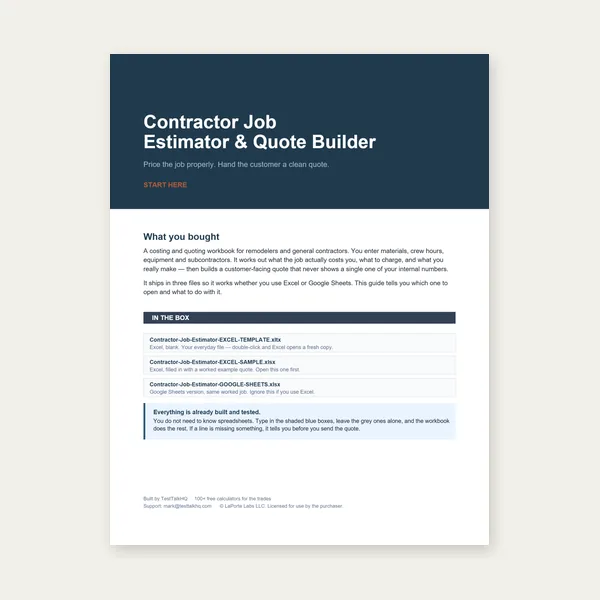
Contractor Job Estimator
Price remodels and GC work, then send a quote with no internal numbers.
Excel or Google Sheets. Best on a computer.
$29.00
BuyWhich edge metal to use — corrosion, stiffness, cost, cutting, and finish — the real choice homeowners and installers face
Same angle as MIG vs TIG vs Stick: both can work; the job conditions pick the winner. Size the lineal with the drip edge calculator, then pick the metal. Install order still matters either way — guide.
Mistakes: troubleshooting. Shingles: shingle calculator. Hub: roofing calculators.
Count sticks first.Metal choice does not change the 3 in joint-overlap math.
Open Calculator →Aluminum does not rust. In coastal air, salt spray, and chronically wet eaves, that is the headline advantage. Watch dissimilar-metal contact (aluminum against copper or untreated steel can gall / galvanically corrode) — keep fasteners and adjacent metals compatible.
Galvanized steel relies on the zinc coating. It is tough until the coating is compromised. Cut edges, scratched hems, and decades of weathering expose bare steel that then rusts. Inland dry climates tolerate it longer; wet and coastal climates punish cut edges faster.
Galvanized steel is generally stronger and stiffer for the same gauge. It holds a straighter line on long eaves, shrugs off casual ladder bumps better, and stays put in higher-wind abuse when fastening is correct.
Aluminum is lighter and easier to dent. In high-wind or high-traffic edge zones, crews sometimes prefer steel’s stiffness — provided corrosion risk is acceptable for the climate.
Market prices move, but galvanized stock is often the cheaper stick on commodity residential jobs. Painted / coated aluminum can land higher, especially in premium colors. Labor can erase a material-price gap if one metal cuts and forms faster on your crew.
Both cut with aviation snips; aluminum is usually friendlier on the hands and the tool. Steel dulls blades faster and fights tight hems. A hand seamer and quality snips (see the product cards on the calculator page) matter more than brand loyalty once you are on the roof.
Aluminum takes paint and anodizing well — easier to match fascia and gutter colors from a painted coil line. Mill-finish galvanized is the utilitarian look; painted steel is available but chip-outs at cut edges show rust sooner. If the homeowner cares about a clean color match at the eave, aluminum often wins the finish conversation.
Order the lineal next.Eave + rake with overlap baked in.
Drip Edge Calculator →Price remodels and GC work, then send a quote with no internal numbers.
Excel or Google Sheets. Best on a computer.
$29.00
BuyCheckout opens in a new tab.
A linear-foot takeoff is useless until you can cut, fold, and fasten edge metal. These are roofing-relevant tools already on the TestTalkHQ affiliate list — tin snips for field cuts, a seamer for hems, seam tape for transitions, and a coil nailer for deck fastening nearby.
Malco M2006 left-offset snips for cutting aluminum or galvanized drip edge, rake returns, and short transition pieces without crushing the profile.
View on Amazon →
Malco AV73 long-cut right-offset snips for the opposite hand/curve. Pair with left-offset so inside and outside corners cut clean.
View on Amazon →
Malco S2R hand seamer for folding hems and dressing cut ends so the drip edge sits tight to fascia and deck without a wavy lip.
View on Amazon →
Malco TS1 drill attachment for long straight cuts in edge metal when you are trimming stock 10-ft sticks down for rake returns.
View on Amazon →
Cofair Quick Roof butyl seam tape for sealing transitions at valleys, walls, and where drip edge meets ice & water or underlayment details.
View on Amazon →
Drip edge is edge metal. Squares and bundles are a different worksheet — run the shingle calculator for the field.
Open Shingle Bundle Calculator →As an Amazon Associate, TestTalkHQ earns from qualifying purchases. No dedicated “drip edge stock” or coil-roofing-nailer SKU was on the live affiliate CSV for this page — snips, seamer, TurboShear, and butyl tape are the roofing-relevant hand tools that matched.