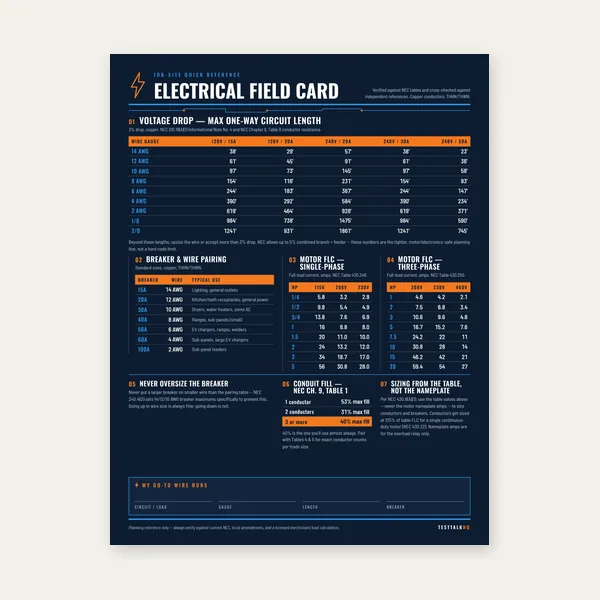
Electrical Reference Card
One page. Voltage drop lengths, breaker and wire pairing, motor FLC.
$3.99
BuyUndersizing trips, inrush oversights, tap-setting errors, and ambient derating — when the kVA estimate doesn't match field behavior
Size service and distribution transformers with the Transformer Sizing Calculator. Learn load diversity, inrush, and derating in the Transformer Sizing Guide. Browse related tools on the Electrical Hub.

Use this when the selected kVA runs hot, trips protection, sags voltage under load, or the nameplate tap doesn't deliver expected secondary voltage.
| Symptom | What it usually means | First fix | Next tool |
|---|---|---|---|
| Transformer hot, breaker trips | Undersized for continuous load | Sum connected load with diversity | Transformer Sizing Calculator |
| Trip only at motor start | Inrush not in sizing model | Check inrush duration vs breaker curve | Transformer Sizing Guide |
| Secondary voltage low/high | Wrong tap position | Measure primary; select correct tap | Transformer Sizing Calculator |
| Capacity lower in summer | Ambient derating ignored | Apply temperature correction factor | Transformer Sizing Guide |
What it looks like: Transformer runs above nameplate temperature, insulation smell, breaker or fuse trips under normal production load, or voltage sags when multiple loads energize.
Likely causes: Connected load summed without diversity, future expansion ignored, or harmonic loads heating conductors without increasing apparent kVA on the bill. Dry-type units have strict continuous rating — no overload margin like some oil-filled designs.
Fixes: Re-sum loads with realistic diversity in the Transformer Sizing Calculator, add 15–25% growth margin where code allows, and verify with measured demand. Upgrade kVA or split loads across a second transformer.
What it looks like: Transformer and primary breaker tolerate steady-state load but trip when large motors or transformers downstream energize. Momentary voltage dip visible on scope or dimming lights.
Likely causes: Transformer inrush (first cycles after energizing) and motor inrush stacked in time. Breaker instantaneous trip curve intersects inrush. Sizing on RMS steady current only ignores peak magnetizing inrush — often 6–12× FLA for motors, several × for transformers.
Fixes: Use soft-start or reduced-voltage starting, time-delay fuses, or higher interrupting/overload coordination. The guide covers inrush duration; don't upsize kVA alone if the breaker is the limiter.
What it looks like: Secondary reads 5–10% high or low vs expectation, equipment undervoltage trips, or boost/buck taps set for the wrong primary voltage after utility change.
Likely causes: Tap changer left on factory default while primary sits at upper or lower band of utility tolerance. Confusion between ±2×2.5% tap positions. Measuring secondary under no-load vs loaded conditions without accounting for regulation.
Fixes: Measure primary voltage at peak load, select tap to center secondary within equipment tolerance. Document tap position on the one-line. Re-run voltage drop checks after tap change.
What it looks like: Transformer rated fine on paper but overheats in a hot mechanical room, rooftop pad, or crowded vault. Capacity seems adequate until summer.
Likely causes: Nameplate kVA is at 30 °C ambient (typical ANSI). Higher ambient or poor ventilation reduces allowable continuous load — often 4% per 5 °C above reference for dry-type units per manufacturer tables.
Fixes: Apply ambient derating from the Transformer Sizing Guide, improve ventilation, or specify a higher kVA / lower temperature rise unit. Measure ambient at the worst season, not commissioning day.
Transformer sizing fails when any one of continuous kVA, starting inrush, tap voltage, or derating is treated in isolation.
Transformer Sizing Calculator → Transformer Sizing Guide → Electrical Hub →
One page. Voltage drop lengths, breaker and wire pairing, motor FLC.
$3.99
Buy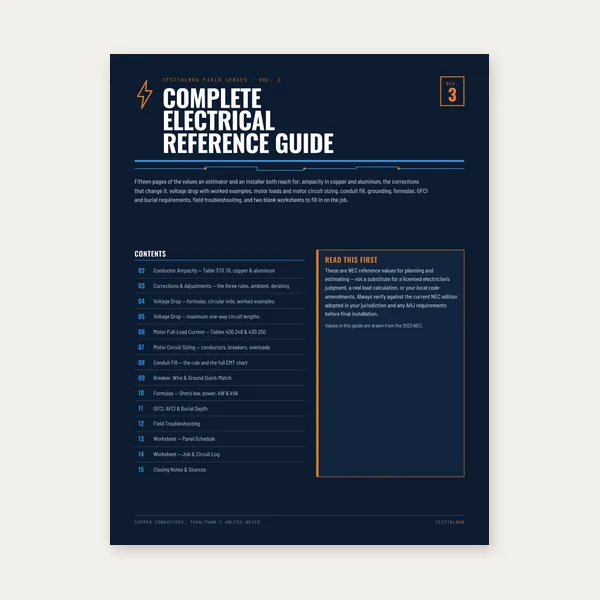
15 pages. Ampacity, corrections, voltage drop, motor circuits, conduit fill.
$12.99
Buy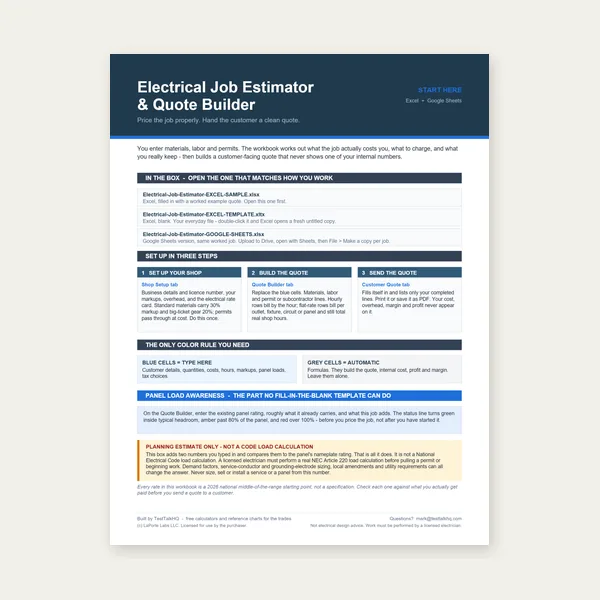
Quote electrical work and flag panel headroom before you price it.
Excel or Google Sheets. Best on a computer.
$29.00
Buy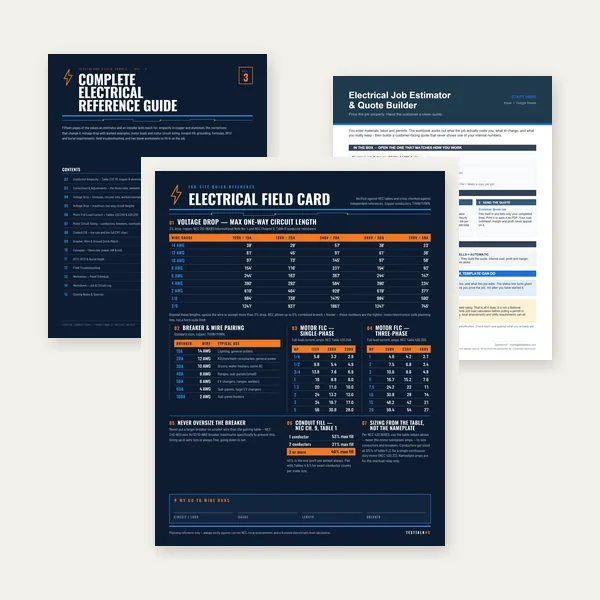
Card, 15-page guide and the estimator workbook. All six files.
Excel or Google Sheets. Best on a computer.
$34.99
$45.98 if bought separately — save $10.99
BuyCheckout opens in a new tab.
Five CSV catalog picks with verified images — multimeters, clamp meters, and voltage testers for field verification

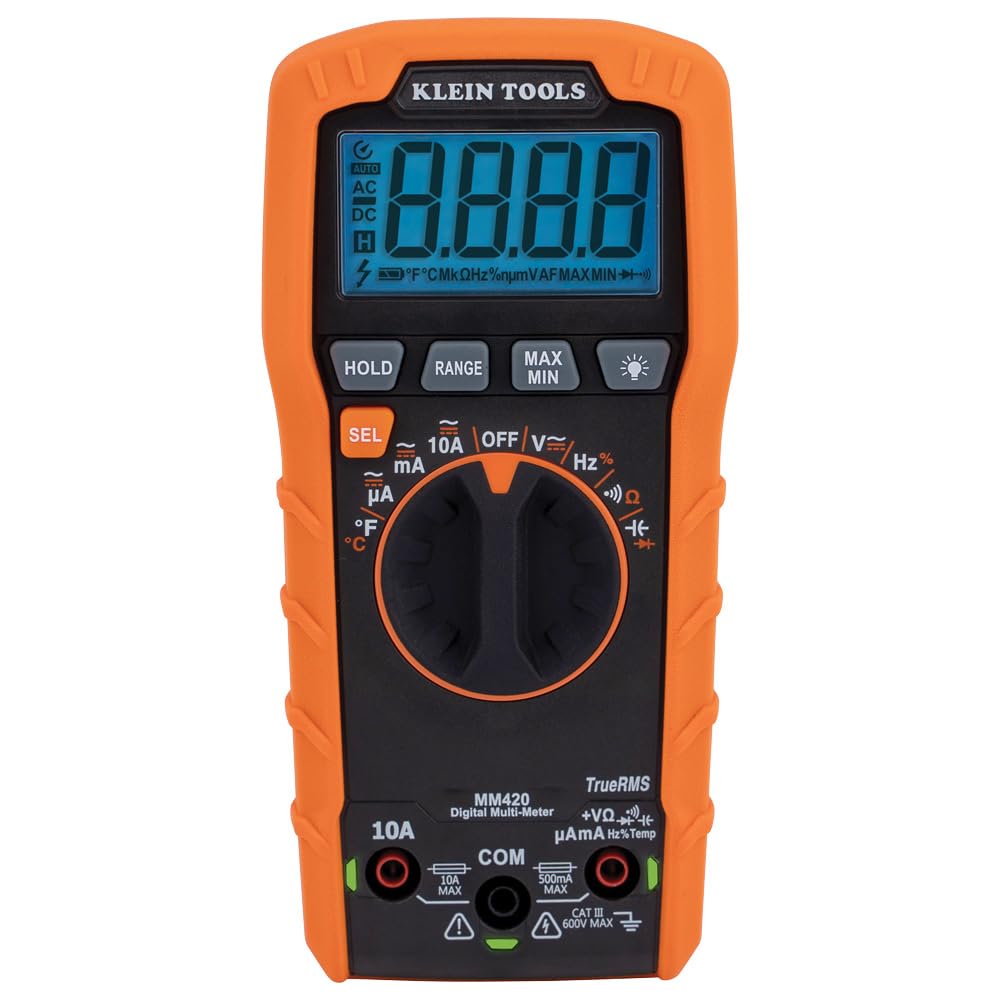


As an Amazon Associate, TestTalkHQ earns from qualifying purchases. All five cards are sourced only from the affiliate CSV with verified product images.
Common practice: 15–25% for growth and diversity uncertainty; verify against code and manufacturer.
Not always bigger kVA — sometimes better starting method or breaker coordination. Inrush affects both transformer and upstream protection.
Measure primary under load; adjust tap so secondary sits mid-band of equipment rating at expected load.
Hot rooms, rooftops, enclosed vaults, and any site above 30 °C nameplate reference.
Yes — non-linear loads increase heating; consider K-rated transformers or upsizing for harmonic content.