kW / kVA / Amps Troubleshooting
Diagnose breaker trips, generator bog, hot wire, and meter disagreements when the converter already “passed”
Not another formula walkthrough. Pair this with the kW / kVA / Amps Calculator when the math looks green but the circuit still fails in the field. For choosing kW vs kVA vs amps as your starting point, use the kW / kVA / Amps Guide. This page stays on field diagnosis.

kW / kVA / Amps Problems Quick Answer
Use this when the calculator output matched your spreadsheet but breakers trip, generators bog down, conductors run hot, or two meters tell different stories.
| Problem | What it usually means | First fix | Next tool |
|---|---|---|---|
| Calculated amps “fit,” breaker still trips | PF assumed 1.0 on inductive load; real kVA higher than kW math | Measure PF or use nameplate PF; size to kVA / FLA | kW / kVA / Amps Calculator |
| Amps off by ~1.73× (or ÷1.73) | Single-phase formula on three-phase service (or reverse) | Confirm 1φ vs 3φ and line-to-line vs line-to-neutral | Three-Phase Power Calculator |
| Generator rated “big enough,” still bogs / trips | kVA sticker treated as kW; motor inrush ignored | Size on kVA + starting surge; see generator troubleshooting | Generator Sizing Troubleshooting |
| Calculated amps ≠ motor nameplate FLA | Efficiency, service factor, or HP→kW path skipped | Use nameplate FLA for breaker/wire; reconcile with calc | kW / kVA / Amps Chart |
| Kill-A-Watt vs clamp meter disagree | PF, crest factor, or wrong conductor clamped | Clamp each leg; compare watts vs V×I×PF | kW / kVA / Amps Calculator |
1. Assumed PF = 1.0 on an Inductive Load — Undersized Breaker and Wire
What it looks like: You converted 10 kW at 240 V single-phase with PF = 1.0 → ~42 A. Breaker is a 40 A or 50 A. Motor, compressor, or welder runs, then trips or the conductor feels warm. Clamp meter reads 52–58 A steady-state.
Likely causes: Resistive-default PF in the calculator while the load is inductive. kW reflects real power (shaft work, heat); breakers and conductors care about apparent power (kVA) and line current. PF 0.75–0.85 on motors is common — same kW pulls ~15–25% more amps than PF 1.0 predicts. Harmonic-rich loads (VFD input, some welders) can read even higher on a true-RMS clamp.
Fixes: Enter nameplate PF or a realistic 0.8 default for motor loads in the kW / kVA / Amps Calculator. Size overcurrent and conductors to measured or nameplate FLA, not idealized kW÷V. If PF is unknown, clamp amps under load and work backward — do not assume unity.
2. Single-Phase Formula on Three-Phase (or the Reverse) — ~1.73× Error
What it looks like: Calculated amps are consistently high or low by about 73%. Three-pole breaker trips while your 1φ math said you had headroom — or you oversized wire and still see low voltage under load because true current was higher all along.
Likely causes: Using I = kVA×1000 / V (single-phase) on a 3φ line-to-line system instead of I = kVA×1000 / (√3 × V). Entering line-to-neutral voltage on a 480 V 3φ wye system without noticing. Treating split-phase 240 V as “two single phases” and double-counting. Reading a 3φ nameplate FLA but plugging it into a 1φ converter mode.
Fixes: Confirm phase count at the disconnect. Use line-to-line voltage for 3φ calculations. For dedicated 3φ work, cross-check with the Three-Phase Power Calculator. Re-run the converter with the correct phase toggle — a 1.73× miss is almost always this mix-up, not bad arithmetic.
480 V three-phase job? One wrong checkbox changes every amp on the page.
Three-Phase Calc3. Generator kVA Rating Treated as kW — Trips and Bog Under Motor Load
What it looks like: “12 kW generator” on the rental tag. You converted 12 kW → ~50 A at 240 V and loaded it to 45 A. Motor starts, voltage sags, genny bogs, breaker trips — even though steady-state amps looked fine on paper.
Likely causes: Generator nameplates often emphasize kVA (apparent power). At PF 0.8, 12 kVA ≈ 9.6 kW real — your 12 kW load assumption was already optimistic. Motor inrush can pull 5–7× FLA for seconds; the converter shows steady-state only. Harmonics and AVR droop under reactive load reduce usable kW further.
Fixes: Read both kW and kVA on the gen set; size on kVA for mixed loads and on kW for purely resistive. Treat motor loads with starting surge margin — the converter will not model inrush. When trips persist after correcting PF and phase, walk through Generator Sizing Troubleshooting for surge, altitude, and temperature derating.
4. Calculated Amps vs Nameplate FLA — Efficiency and Service Factor Ignored
What it looks like: HP→kW→amps path in the calculator gives 28 A. Motor nameplate says FLA 34 A (or SF 1.15 amps higher). Inspector or supply house says your 30 A breaker is wrong — or the breaker never trips when your calc said it should.
Likely causes: Generic HP/kW conversion without motor efficiency (η). Ignoring service factor — nameplate FLA may already reflect SF, or SF amps may be a separate column. Voltage mismatch: nameplate FLA at 460 V, calc at 480 V (usually minor) or worse, 208 vs 240. Soft starters and VFDs change line-side vs motor-side current — you compared the wrong side.
Fixes: For breaker and conductor sizing, start from nameplate FLA unless a code calc explicitly allows conversion. Use the calculator to sanity-check, not override, the sticker. When HP is all you have, include realistic η (0.85–0.92) and document PF. Cross-reference typical values on the kW / kVA / Amps Chart — then reconcile differences instead of forcing the calc to win.
5. Kill-A-Watt vs Clamp Meter Disagreement — PF, Crest Factor, and Which Conductor
What it looks like: Plug-in monitor shows 1,800 W on a shop circuit. You clamp the feeder and see 11 A at 120 V — math says 1,320 W, not 1,800. Or clamp reads high while the watt meter reads low. Two “good” meters, opposite conclusions.
Likely causes: Kill-A-Watt reports true watts (real power) on plug loads; clamp × volts only equals kVA if you include PF (W ≈ V×I×PF). Clamping the wrong conductor — neutral shared with multi-wire branch, or clamping two conductors whose fields cancel. Non-linear loads (computers, VFD input, LED drivers) have crest factor > √2; average-responding clamps lie; need true RMS. Split-phase 240 V loads measured at 120 V tap without accounting for both legs.
Fixes: On a single cord-and-plug load, trust watts from a plug monitor and use clamp for amps — then compute PF = W / (V×I). On hardwired circuits, use a true-RMS clamp on each current-carrying conductor separately. Compare against the converter with measured V, I, and PF — not assumed PF. Log which leg was clamped when values disagree.
Decision: Where to Start — kW, kVA, or Amps?
No separate decision page for this cluster — use the guide when you are choosing the starting quantity (nameplate says kVA but you think in kW, or you only have amps from a clamp). For three-phase line currents and power triangles, use the dedicated 3φ tool. Generator field failures link out to generator troubleshooting.
kW / kVA / Amps Guide → Three-Phase Power Calculator → Generator Sizing Troubleshooting →
Recommended Tools for Power Diagnosis
Five CSV catalog picks — measure real volts, amps, and watts, then reconcile with the converter

Ideal Industries 61-757 Clamp Meter
- 600A AC/DC TRMS — line current under load
- Catch PF and crest-factor surprises
- TightSight display for panel work
- Electrical catalog

Fluke 117 Electricians True RMS Multimeter
- Loaded voltage for converter inputs
- CAT III for panel and gen checks
- True RMS on distorted waveforms
- Electrical catalog

Klein Tools CL800 Digital Clamp Meter
- 1000V class TRMS clamp
- Confirm branch amps vs calc
- 1φ and 3φ feeder checks
- Electrical / HVAC catalog
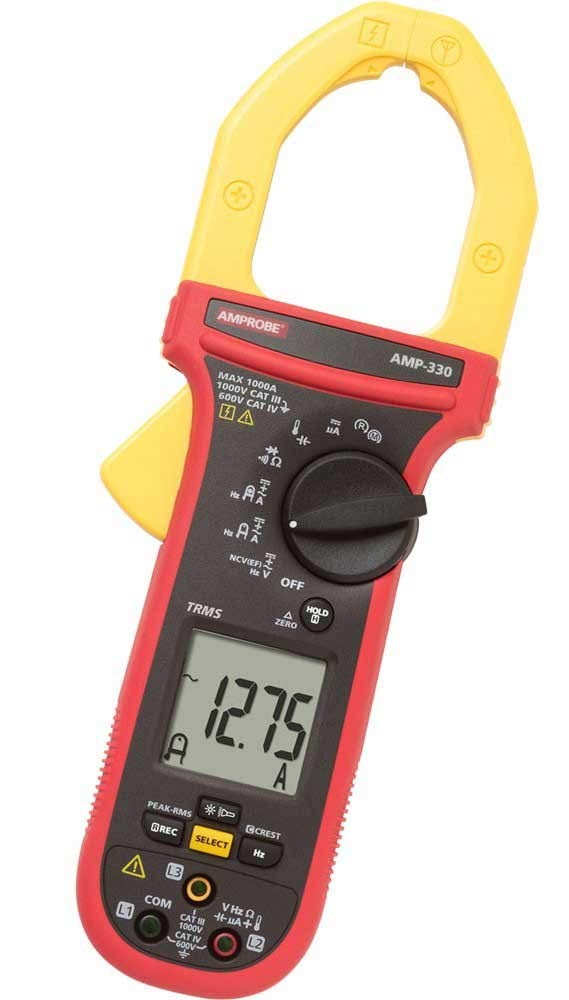
Amprobe AMP-330 Clamp Meter
- True RMS for motor and VFD feeders
- Inrush capture for gen sizing disputes
- Dual display V + A
- Electrical catalog
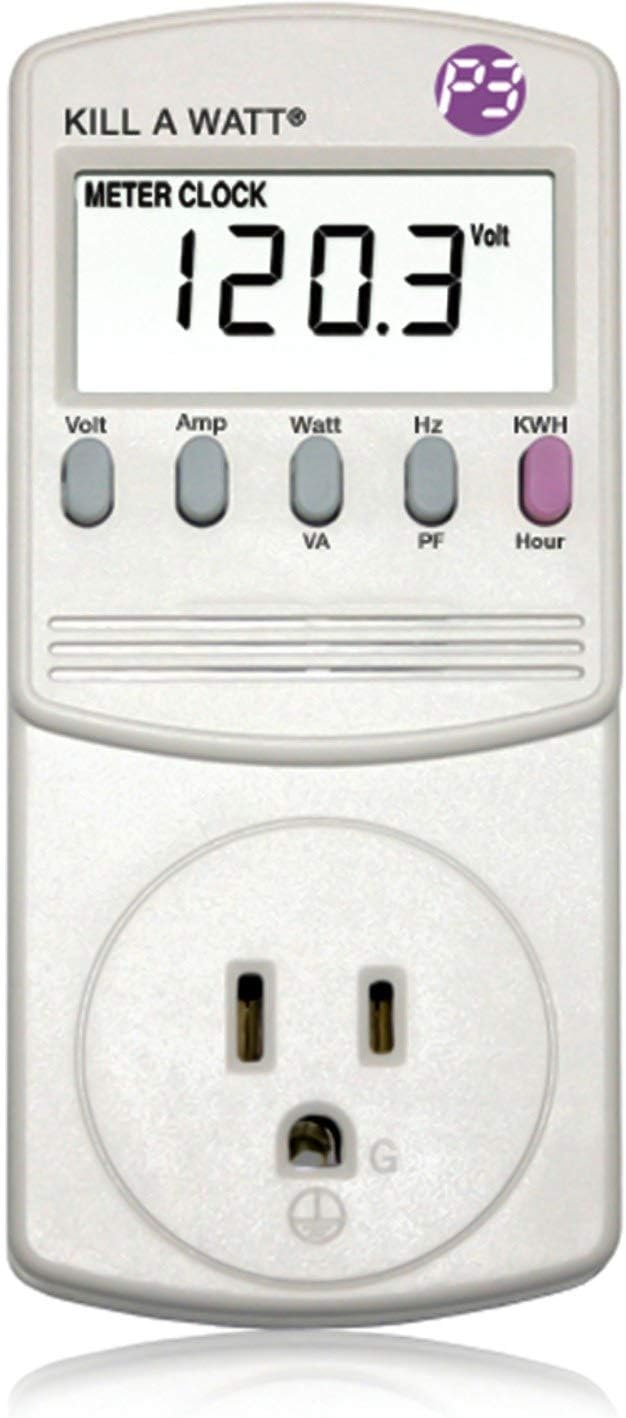
P3 Kill A Watt Electricity Usage Monitor
- Live V, A, and W on plug-in loads
- Resolve clamp vs watt-meter gaps
- Quick PF sanity on cord-connected gear
- Electrical catalog
As an Amazon Associate, TestTalkHQ earns from qualifying purchases. All five cards are sourced only from the affiliate CSV. Catalog gap flagged by name: no dedicated power quality analyzer or bench-grade true-PF meter SKU in the CSV — field PF often inferred from W ÷ (V×I) instead.
Frequently Asked Questions
The calculator matched my spreadsheet — why does the breaker still trip?
Wrong PF, wrong phase formula, or steady-state math ignoring inrush. Breakers respond to actual current; the converter trusts the numbers you typed.
Should I size to kW or kVA?
Conductors and overcurrent devices: line amps from kVA (apparent power). Generator and utility headroom: often kVA-limited. Real work done: kW. When in doubt, use the kW / kVA / Amps Guide.
My clamp reads higher than the calc — is the meter broken?
Not necessarily. Check true RMS vs average-responding, PF < 1, harmonic loads, and whether you clamped the correct single conductor.
Is a 1.73× error always a phase mix-up?
Almost always √3 (single-phase vs three-phase) or entering line-to-neutral instead of line-to-line on 3φ. Re-check phase and voltage before blaming the load.
Is this the same as the kW / kVA / Amps Guide?
No. The guide teaches conversions and when to use each unit. This page diagnoses failures when the calculated number already looked correct.