Contractor Job Estimator
Price remodels and GC work, then send a quote with no internal numbers.
Excel or Google Sheets. Best on a computer.
$29.00
BuyA real shop fork: when a torque chart or calculator is enough — and when only a torque-plus-angle (TTY) procedure is valid
Standard torque specs and torque-to-yield (torque-angle) methods both produce clamp load, but they are not interchangeable. Use this page when you must choose which method a fastener actually requires. Pair with the Bolt Torque Calculator for elastic-range lookups and the Bolt Torque Guide for friction and sequence basics.
Ask one question: Does the governing procedure end at a torque value, or does it require an angle-of-turn after an initial torque?
Standard torque (elastic): You apply a known moment and assume friction (thread + under-head) so that a fraction of that moment becomes preload. Charts and the calculator estimate that preload for a grade and size under a stated dry or lubricated condition. Accuracy lives or dies on friction matching the assumption.
Torque-to-yield (plastic + angle): An initial torque seats the joint and takes up slack. The angle step then stretches the bolt a controlled amount into (or near) yield so clamp load is more consistent bolt-to-bolt on critical gaskets — even when friction varies. The angle is the preload control; the initial torque is mostly preparation.
That is why a TTY head-bolt procedure and a generic M10 Class 10.9 dry chart are answering different questions. One is application-engineered stretch; the other is a friction-based estimate for elastic fasteners.
Price remodels and GC work, then send a quote with no internal numbers.
Excel or Google Sheets. Best on a computer.
$29.00
BuyCheckout opens in a new tab.
Five fastener picks from the TestTalkHQ affiliate catalog — calibrated wrenches, sockets, and anti-seize for elastic joints

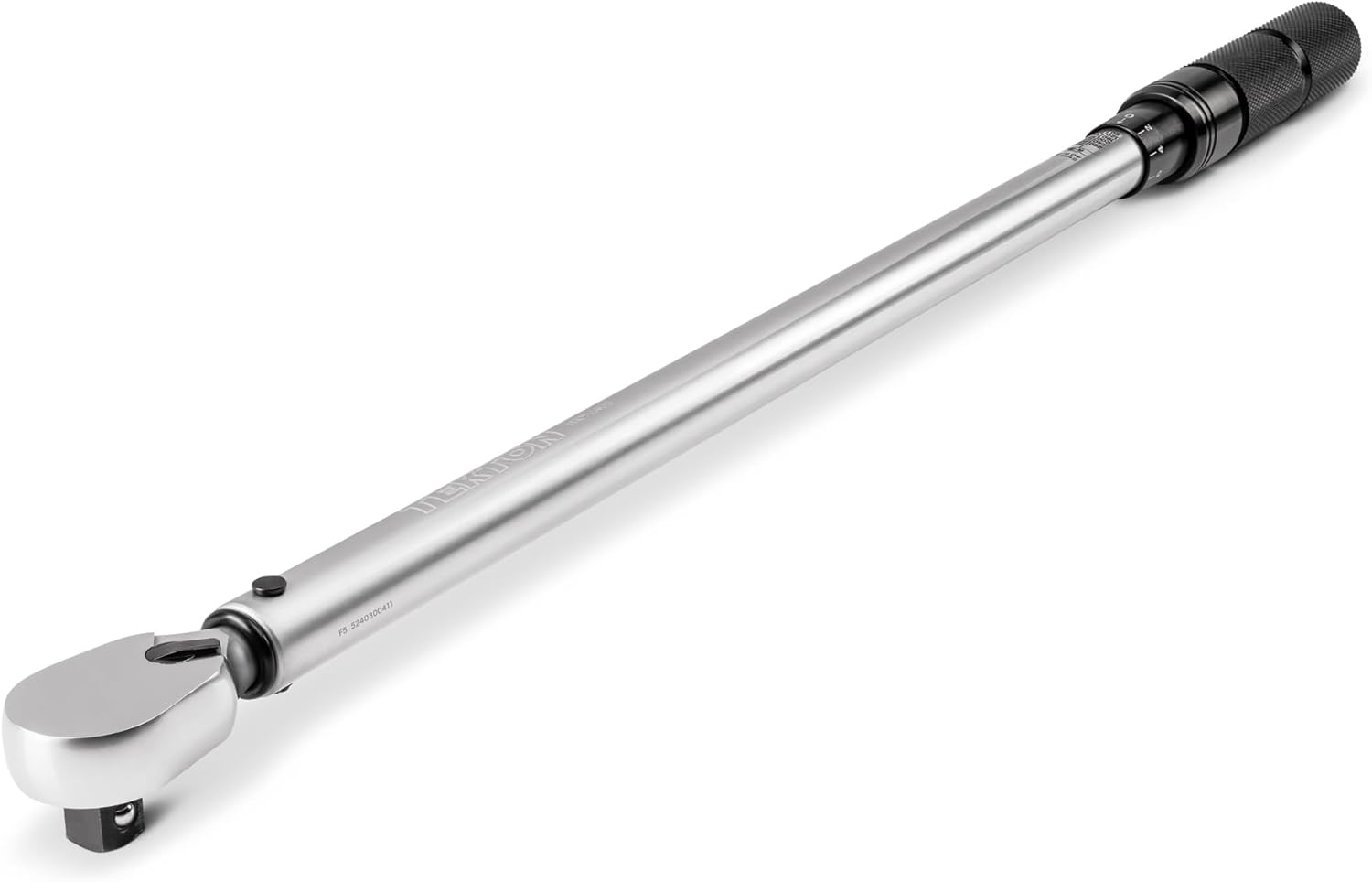
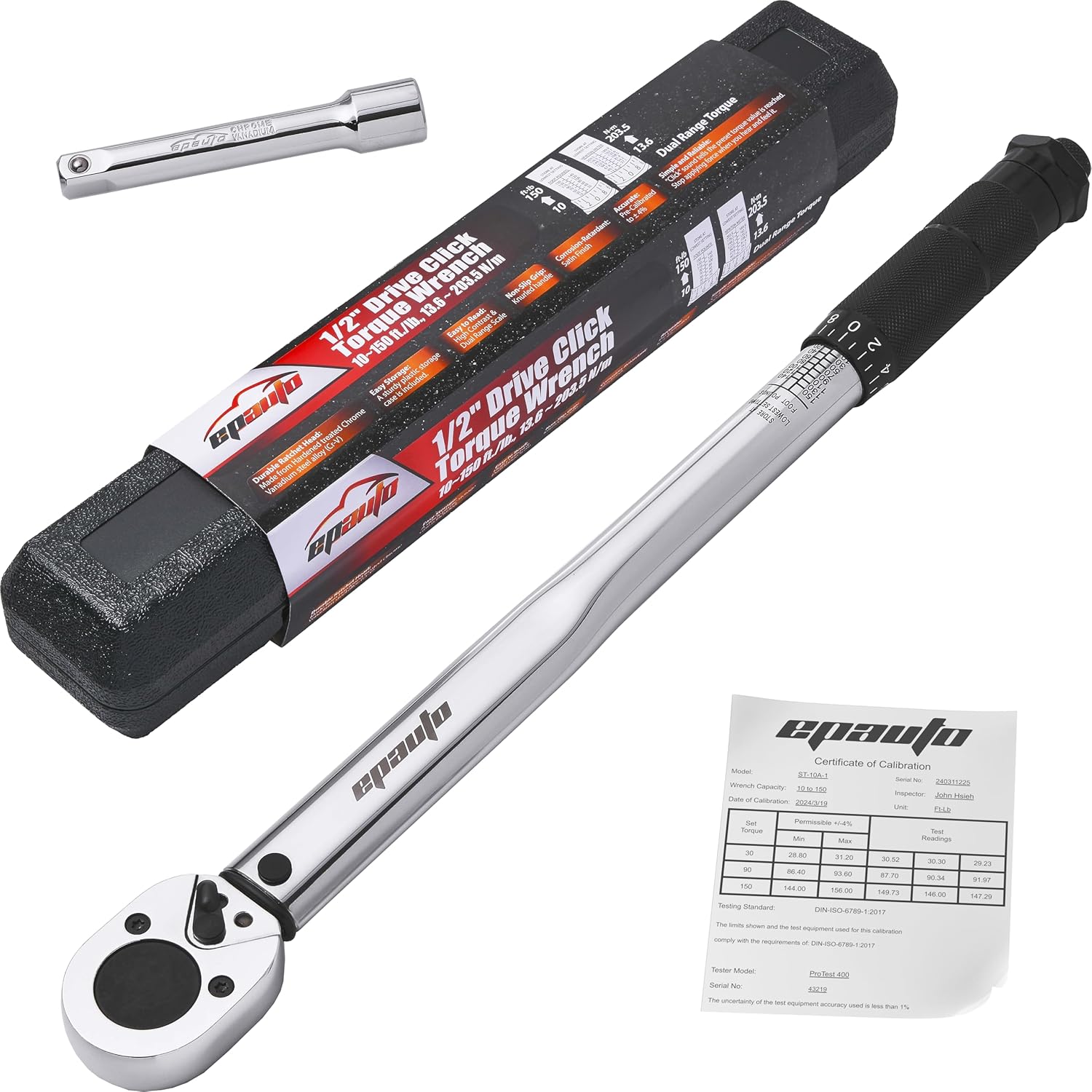
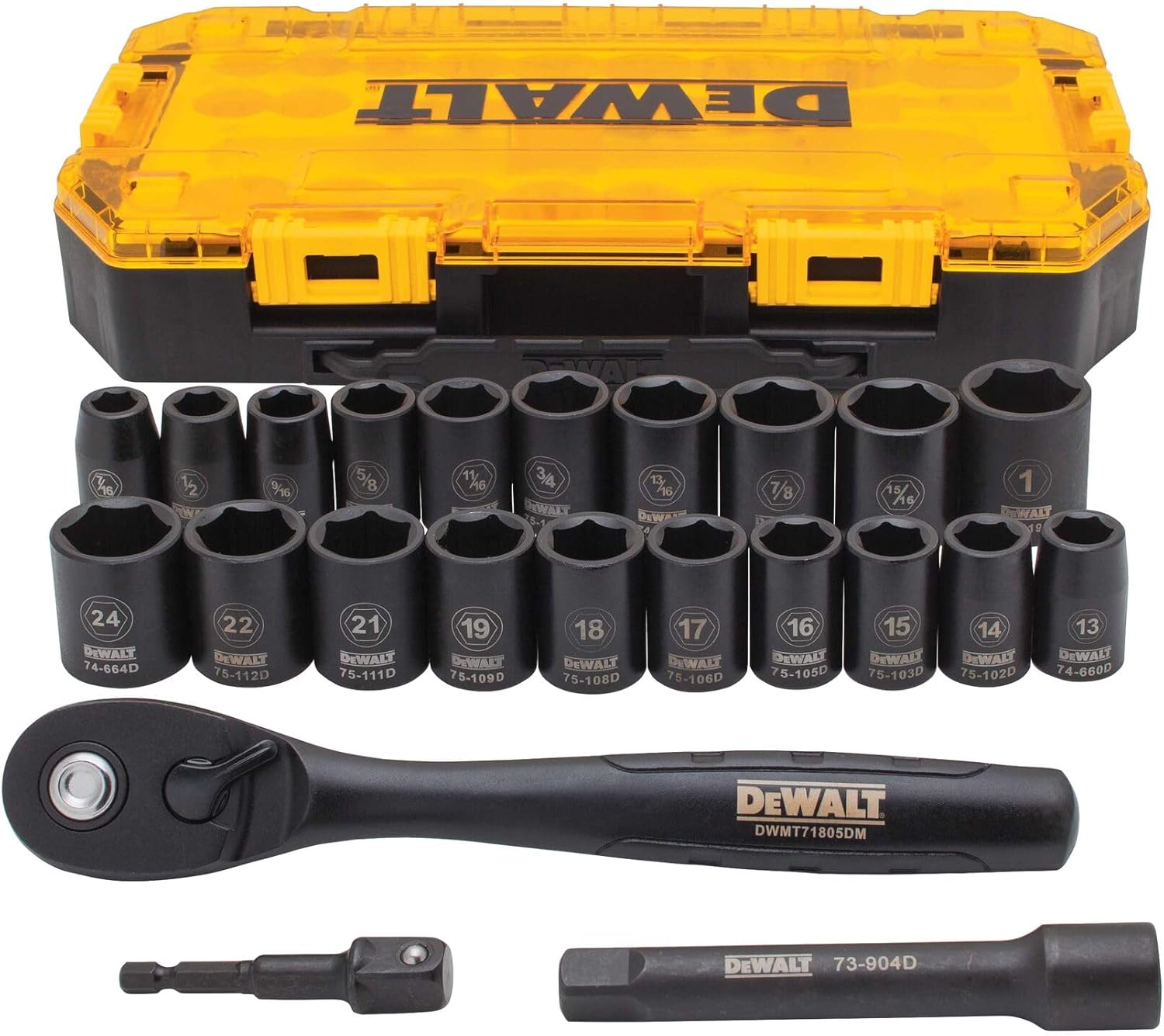

As an Amazon Associate, TestTalkHQ earns from qualifying purchases. Always follow OEM torque and lubrication guidance.
| Signal | Lean toward | Why |
|---|---|---|
| Single final torque (maybe staged %) | Torque spec / chart | Elastic preload estimate |
| Initial torque + degrees | TTY / angle method | Stretch-controlled clamp |
| OEM says “do not reuse” | TTY (usually) | Plastic stretch already used |
| Only a generic grade chart available | Torque spec path | No angle data to follow |
| Conflicting chart vs OEM angle procedure | OEM angle procedure | Application owns the joint |
The specifications chart and calculator are excellent for elastic fasteners when you control grade, size, and lubrication. They fail as TTY substitutes because:
If you are mid-procedure and the wrench clicks at the “chart equivalent” before the angle step is done, you are not finished — and you may already have the wrong fastener if you reused a TTY bolt.
Elastic torque fasteners: Often reusable if threads are clean, shank is not necked, and friction coatings are still representative. Inspect; when in doubt on critical joints, replace.
TTY fasteners: Treat as single-use unless the manufacturer explicitly allows a measured reuse program (rare in automotive). Cost of new bolts is trivial next to a failed head gasket or rod.
Symptoms of using the wrong method — snapped bolts, loose joints after “correct” torque — are covered in Bolt Torque Troubleshooting.
No. Angle controls stretch; a higher click value does not reliably reproduce the same preload and can yield or break the bolt unpredictably.
Most automotive angle procedures after a low initial torque are TTY or stretch-controlled. Always follow the named procedure and replace rules for that part.
Only if the OEM procedure is a torque-only elastic spec. If the manual shows degrees, the calculator is for related non-TTY fasteners — not a substitute for the angle step.
Yes. TTY procedures specify a lubricant condition for the initial torque and friction during stretch. Do not freestyle anti-seize onto a TTY joint unless the OEM allows it.
Bolt Torque Troubleshooting — snaps, loose joints, wrench mismatch, galling, and chart conflicts.