NFPA 70E PPE category overview for education: typical incident-energy ranges and clothing layers. Always follow the current standard, equipment labels, and your employer’s hazard risk assessment — this is not a substitute for either.
How Categories Relate to Incident Energy
When a detailed incident-energy analysis is not used, NFPA 70E provides a PPE category method tied to task tables and equipment parameters. Categories roughly align with minimum arc ratings (cal/cm²). Many employers prefer calculated incident energy and matching ATPV/EBT clothing instead of categories — both approaches require a documented risk assessment.
For boundary distance and how calculator estimates fit, see the arc flash boundary guide and arc flash boundary calculator. Shop PPE context: PPE selection guide by process.
Category definitions, task tables, and clothing lists change by edition. Verify against the edition adopted by your employer and the labels on the equipment. Educational summary only — not a code reprint.
PPE Category Overview (Typical)
| PPE Cat | Min. arc rating (typical) | Typical clothing / PPE (overview) |
|---|---|---|
| 1 | 4 cal/cm² | Arc-rated long sleeve shirt & pants or AR coverall; AR face shield; hard hat; safety glasses; hearing protection; leather gloves; leather footwear as required |
| 2 | 8 cal/cm² | AR shirt & pants or coverall meeting 8 cal; AR flash suit hood or face shield + balaclava as required by task/tables; leather gloves; same basics as Cat 1 |
| 3 | 25 cal/cm² | AR flash suit (jacket & pants or coverall) with hood meeting rating; AR gloves; hearing protection; voltage-rated gloves/sleeves when shock hazard present |
| 4 | 40 cal/cm² | AR flash suit system meeting 40 cal with hood; multilayer systems common; shock PPE as required; restricted approach controls still apply |
“Typical” clothing lists are abbreviated. Layering, underlayers, and whether balaclava vs hood is required depend on the task table and employer program.
Incident Energy vs Category — Quick Compare
| Approach | What you match | Best when |
|---|---|---|
| Incident energy analysis | ATPV/EBT ≥ calculated cal/cm² at working distance | Study/labels available; preferred for accuracy |
| PPE category method | Category from task/equipment tables | Allowed by program when analysis not used |
If a label states incident energy (e.g., 12 cal/cm²), select clothing rated at least that value — do not “round down” to a lower category for comfort.
Shock PPE Is Separate
Arc-rated clothing addresses thermal energy. Shock protection (voltage-rated gloves, sleeves, insulated tools) is driven by system voltage and approach boundaries. Both can be required on the same job. Opening a 480V panel in Cat 2 AR clothing without Class 00/0 gloves when required is still a shock violation.
How to Use This Chart
- Read the equipment arc flash label (IE or PPE category).
- Select AR clothing meeting or exceeding the stated requirement.
- Add shock PPE per voltage and approach limits.
- If unlabeled, stop — do not guess category from this overview alone; obtain assessment.
Working Distance Matters
Incident energy is quoted at a working distance (often 18 inches for low-voltage panels, sometimes different for other equipment). Standing closer raises energy; standing farther lowers it. Category tables embed assumed working distances and tasks — do not invent a lower category because you “plan to stand back” unless the written procedure and study say so.
Common Mistakes
- Cotton underlayers that melt — synthetic non-AR layers under AR clothing can worsen burn injury.
- Untested face protection — sunglasses are not an arc-rated faceshield.
- Ignoring shock PPE — AR clothing does not insulate against contact voltage.
- Using an old label — system changes (transformer upsizing, fuse changes) can obsolete a study.
For shop welding/grinding PPE that is not arc-flash specific, cross-link the process PPE guide. Electrical tasks near hot work still need fire-watch discipline via the hot-work checklist when sparks and open flames are present.
When Categories Do Not Apply
Above the highest category energy, or outside table parameters (high fault current, long clearing times), the category method may not be usable — you need incident-energy analysis. Extremely high IE may mean the only acceptable control is to not work energized. Calculators on this site are for orientation and “what-if” clearing-time discussions, not stamped engineering studies.
Estimate arc flash boundary & energy Planning estimates from fault current, clearing time, and working distance.
VoltKit — Electrical Calculators Offline
Short-circuit, voltage drop, and electrical field tools on Android.
Related: Troubleshooting & Method Choice
When calculator results disagree with labels or studies: Arc Flash Boundary Troubleshooting.
Choosing NFPA 70E tables versus incident energy analysis: Table Method vs Incident Energy Analysis.
Related Calculators & Guides
Electrical
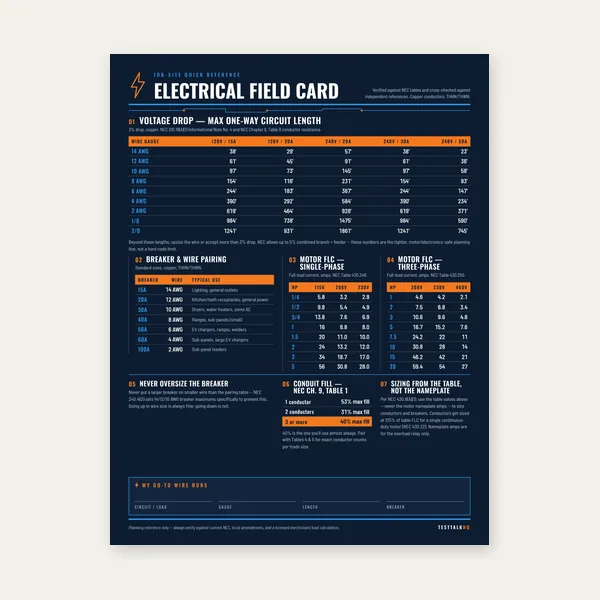
Electrical Reference Card
One page. Voltage drop lengths, breaker and wire pairing, motor FLC.
$3.99
Buy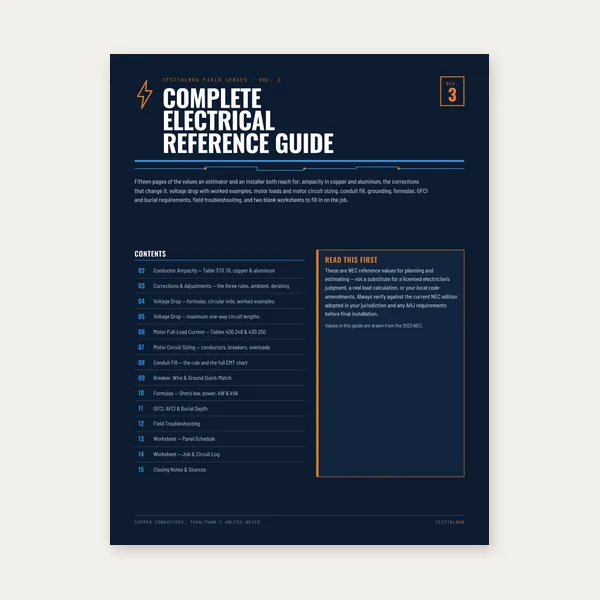
Complete Electrical Reference Guide
15 pages. Ampacity, corrections, voltage drop, motor circuits, conduit fill.
$12.99
Buy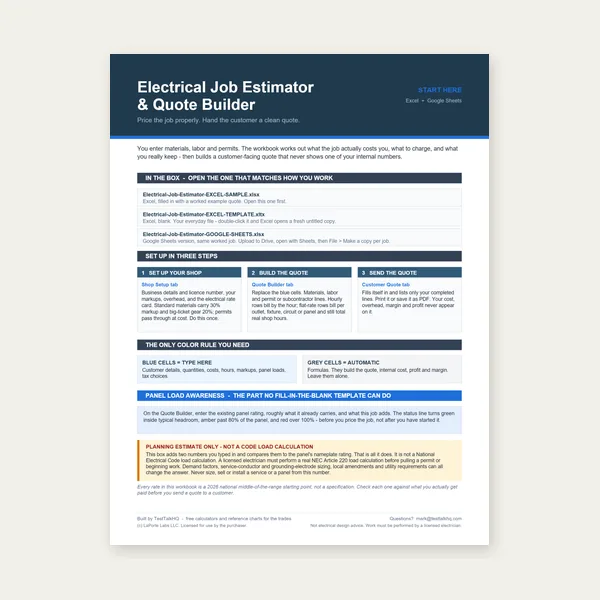
Electrical Job Estimator
Quote electrical work and flag panel headroom before you price it.
Excel or Google Sheets. Best on a computer.
$29.00
Buy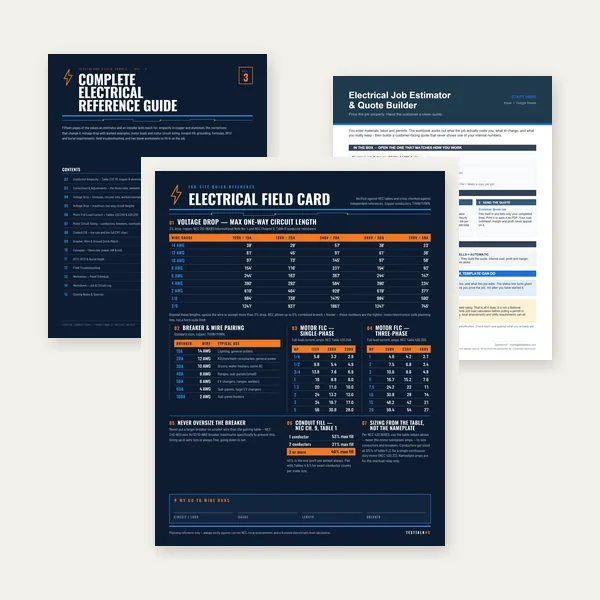
Electrical Complete Bundle
Card, 15-page guide and the estimator workbook. All six files.
Excel or Google Sheets. Best on a computer.
$34.99
$45.98 if bought separately — save $10.99
BuyCheckout opens in a new tab.