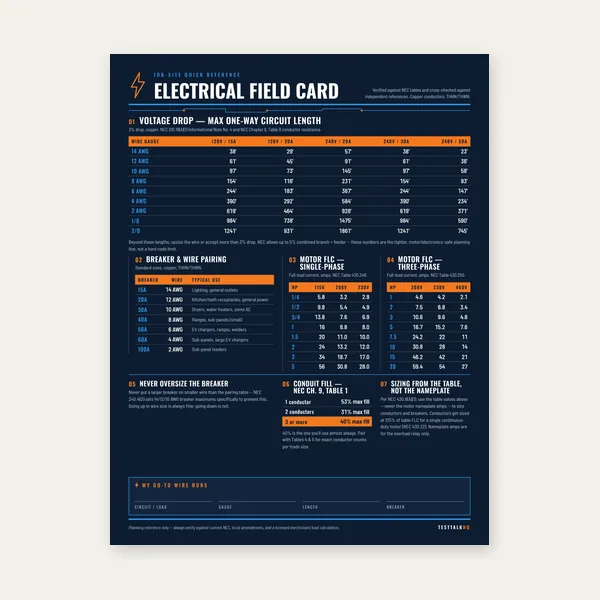
Electrical Reference Card
One page. Voltage drop lengths, breaker and wire pairing, motor FLC.
$3.99
BuyNEC Table 250.66, electrode caps, and bonding connections — what the GEC does and how to size it correctly.
The grounding electrode conductor (GEC) connects the grounded service conductor to the grounding electrode system. It is not the green equipment grounding wire in your branch circuits. Use the Grounding Electrode Conductor Sizing Calculator for instant Table 250.66 results with electrode caps, or read the full guide below.

Every grounded electrical system needs a connection between the grounded conductor (usually the service neutral) and earth. The grounding electrode conductor is the wire (or bus) that makes that connection from the grounding electrode system — rods, plates, concrete-encased conductors, metal water pipe, building steel, or a ground ring — back to the grounded conductor at the service equipment or separately derived system source.
That is fundamentally different from the equipment grounding conductor (EGC). The EGC runs with circuit conductors in raceways and cables. It bonds metal enclosures, devices, and frames together and provides a path for fault current to return to the source so breakers and fuses can operate. Under normal operation, neither the GEC nor the EGC carries load current. Under a ground fault, the EGC carries fault current; the GEC is not sized for that role.
Inspectors frequently cite installations where the branch circuit ground was upsized but the service GEC was left at an old 6 AWG while the service entrance conductors were upgraded to 2/0 or larger. Table 250.66 ties GEC size directly to the largest ungrounded service conductor — when the service grows, the GEC must be revisited.
Table 250.66 has separate input columns for copper and aluminum (or copper-clad aluminum) ungrounded conductors, plus output columns for copper and aluminum GEC. First identify both the size and material of the largest ungrounded conductor or equivalent parallel set, then read the desired GEC material column.
The table is not based on service amperage directly. A 200A service with 4/0 AWG copper entrance conductors requires a larger GEC than a 200A service with 3/0 AWG conductors, because the table keys off conductor size, not breaker rating. When service conductors are installed in parallel, NEC 250.66 uses the equivalent total circular mil area of one conductor in the set as if it were a single conductor.
| Largest ungrounded copper | Largest ungrounded aluminum / Cu-clad Al | Copper GEC | Aluminum GEC |
|---|---|---|---|
| 2 AWG or smaller | 1/0 AWG or smaller | 8 AWG | 6 AWG |
| 1 or 1/0 AWG | 2/0 or 3/0 AWG | 6 AWG | 4 AWG |
| 2/0 or 3/0 AWG | 4/0 AWG or 250 kcmil | 4 AWG | 2 AWG |
| Over 3/0 through 350 kcmil | Over 250 through 500 kcmil | 2 AWG | 1/0 AWG |
| Over 350 through 600 kcmil | Over 500 through 900 kcmil | 1/0 AWG | 3/0 AWG |
| Over 600 through 1100 kcmil | Over 900 through 1750 kcmil | 2/0 AWG | 4/0 AWG |
| Over 1100 kcmil | Over 1750 kcmil | 3/0 AWG | 250 kcmil |
Largest ungrounded conductors: 4/0 AWG copper. Table row: over 3/0 through 350 kcmil copper → 2 AWG copper GEC (or 1/0 aluminum GEC). If the conductor is connected solely to rod, pipe, or plate electrodes, 250.66(A) means it is not required to be larger than 6 AWG copper or 4 AWG aluminum.
For rod, pipe, and plate electrodes, the GEC shall not be required to be larger than 6 AWG copper or 4 AWG aluminum. Physical reality drives this rule: a ground rod or driven pipe electrode has limited contact area with soil. Running 2/0 copper to a single rod does not meaningfully lower grounding resistance compared to 6 AWG. When Table 250.66 yields 4 AWG or 2 AWG, the cap still allows those sizes if smaller than the cap — the cap is a maximum, not a minimum. When the table demands 1/0 or larger, the cap pulls the size back down to 6 AWG copper or 4 AWG aluminum for the rod connection.
Concrete-encased electrodes use a minimum 20 feet of bare copper in the foundation footing or foundation. The GEC to a concrete-encased electrode shall not be required to be larger than 4 AWG copper. Ufer grounds are common in new construction in many jurisdictions because they are cast into the foundation — the cap reflects the effective contact area of the encased conductor. The section text addresses copper specifically; aluminum GEC terminations to Ufer electrodes require careful attention to listing and local practice.
A conductor connected solely to a ground ring is not required to be larger than the conductor used for the ring. A ground ring electrode itself uses at least 20 feet of bare copper not smaller than 2 AWG and is installed in accordance with 250.53(F). Do not turn this rule into a generic 1/0 aluminum cap; verify the ring conductor and connection materials.
Undersized GEC after service upgrade. The most frequent violation: new 200A or 320A service conductors with an original 6 AWG GEC left in place. Always recalculate Table 250.66 when ungrounded conductors change.
Wrong material for the run. Aluminum GEC is permitted when sized per the aluminum column, but aluminum may not be installed within 18 inches of earth unless the termination is listed for direct burial in contact with the earth. Many rod clamps are copper-only. Using aluminum GEC in a buried run to a rod without listed fittings is a common fail.
Confusing GEC with EGC. Running a 6 AWG green wire from a subpanel as the only connection to a ground rod is not a substitute for a properly sized service GEC. Subpanel grounds return to the main bonding point; electrode connections originate at the service.
Unlisted connections at the electrode. NEC 250.70 requires listed connectors for GEC terminations to rods, pipes, and plates. Field-fabricated wraps, solder-only joints, or non-listed clamps fail inspection even when wire size is correct.
Grounding electrode conductor connections must be made with listed pressure connectors, listed clamps, exothermic welding, or other listed means. Connections to rods, pipes, and plates must be accessible unless buried or encased in concrete. Where anti-oxidant compound is required for aluminum, omitting it produces a high-resistance joint that may pass a visual inspection but fail under fault conditions.
Torque matters. Manufacturer specs for panel lugs and ground rod clamps specify ft-lb values. Under-torqued lugs heat and loosen; over-torqued lugs crack conductors. After sizing the GEC, verify the termination is listed for that conductor size and material, torque to spec, and leave the connection accessible for future inspection where the code requires it.
Pair GEC work with wire ampacity and derating for ungrounded conductors, panel schedule documentation for service equipment layout, and residential load calculations to confirm service conductor sizing before you look up Table 250.66.
No. Breaker rating does not determine GEC size — ungrounded conductor size and material do. A service using 4/0 AWG copper ungrounded conductors requires a 2 AWG copper GEC per the table before electrode-specific limits. A service using 2/0 AWG copper ungrounded conductors requires a 4 AWG copper GEC. Always use the actual conductor material and size.
At the service, the main bonding jumper connects neutral to the enclosure and grounding electrode system — it is not the same as branch EGCs. Branch equipment grounding conductors are sized per 250.122 based on overcurrent device rating. The GEC is sized per 250.66 based on service conductor size. Different rules, different purposes.
NEC 250.53(A)(2) may require a supplemental electrode if a single rod measures more than 25 ohms to earth — but many jurisdictions treat the second rod as standard practice regardless. GEC size to rod electrodes is still capped at 6 AWG copper under 250.66(A) even when two rods are installed.
Bonding jumpers to interior metal piping systems are governed by NEC 250.104 — separate from GEC sizing in 250.66. The GEC connects the electrode system to the grounded conductor; bonding jumpers connect other metal systems to the grounding electrode system. Both must be correct, but they are not sized from the same table row.
One page. Voltage drop lengths, breaker and wire pairing, motor FLC.
$3.99
Buy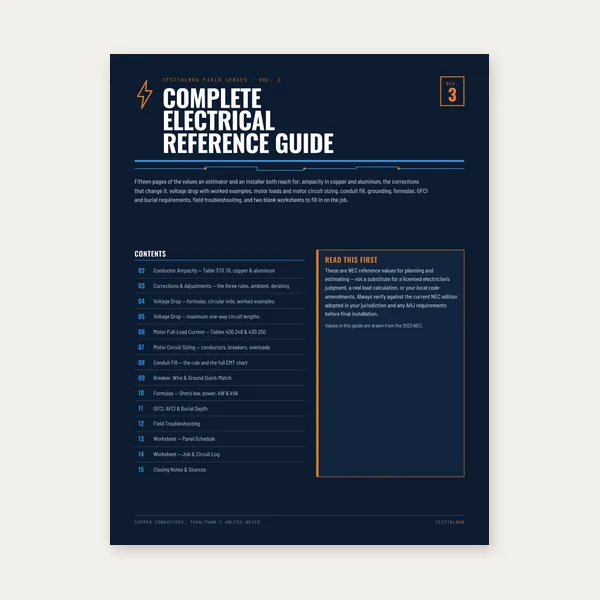
15 pages. Ampacity, corrections, voltage drop, motor circuits, conduit fill.
$12.99
Buy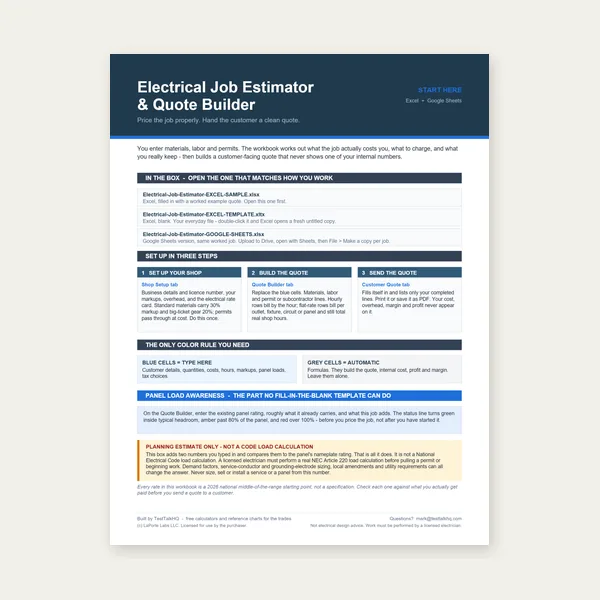
Quote electrical work and flag panel headroom before you price it.
Excel or Google Sheets. Best on a computer.
$29.00
Buy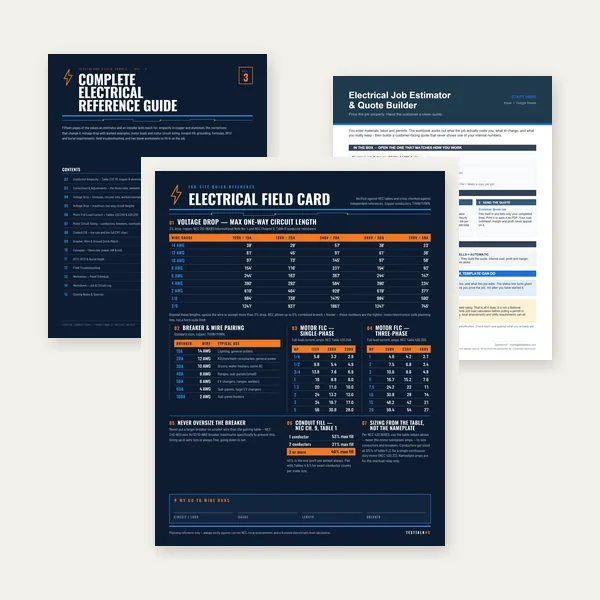
Card, 15-page guide and the estimator workbook. All six files.
Excel or Google Sheets. Best on a computer.
$34.99
$45.98 if bought separately — save $10.99
BuyCheckout opens in a new tab.
Compound, strippers, and meters for bonding and electrode work

Aluminum grounding connections oxidize quickly in air and soil. Noalox compound is standard at service lugs and listed aluminum clamps — skipping it on aluminum GEC terminations creates resistance that defeats the purpose of the bond. Keep a jar in every service truck.
Check Price
Clean stripping on 10 through 18 AWG solid or stranded wire — the range most GEC work falls into at residential services. Precise strip length matters at listed lugs; too much bare copper outside the lug risks flashover, too little reduces contact area.
Check Price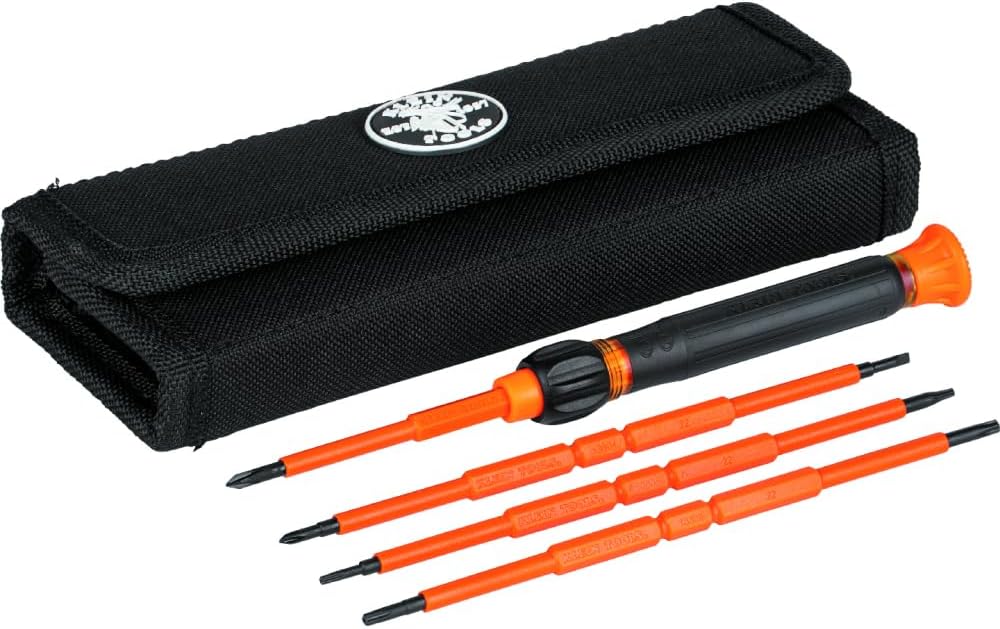
Panel and ground clamp lugs specify torque values for a reason — under-torqued GEC connections loosen from thermal cycling; over-torqued connections damage conductors. A click-style wrench in the 40–300 ft-lb range covers most service entrance and ground bar lugs.
Check PriceAs an Amazon Associate, TestTalkHQ earns from qualifying purchases.
Service ampacity and conductor ampacity are related but not identical. A 400A service might use parallel 600 kcmil conductors or a single 1000 kcmil — different GEC requirements. Basing GEC size on the largest ungrounded conductor ensures the grounding path scales with the fault energy available at the service, regardless of how the service amperage is labeled on the disconnect. It also keeps the rule objective: read the wire size on the drawing or in the panel, look up the table, apply electrode caps. No interpolation by amperage.
When phase conductors are run in parallel (multiple sets per phase), NEC 250.66 requires using the equivalent total circular mil area of one conductor of the set. Two 500 kcmil conductors per phase in a parallel service equate to 1000 kcmil for table lookup — yielding 3/0 AWG copper GEC before electrode caps. Missing the parallel multiplier undersizes the GEC on large commercial services. Document the equivalent size on the panel schedule and match the installed GEC to that calculation.
Aluminum grounding electrode conductors are permitted when sized from the aluminum column of Table 250.66, but installation restrictions are stricter than copper. The 18-inch rule at earth contact, listing requirements for burial, and prohibition on certain terminal types mean many installers default to copper GEC even when aluminum service conductors are used. If you run aluminum GEC, every fitting from the ground bar to the electrode must be listed for aluminum at that size — and anti-oxidant compound is mandatory at every joint.
GEC sizing is one line item in a service design checklist. Size the load per Article 220, select service conductors per 310.15 and 230.42, size the main overcurrent device, document circuits on a panel schedule, then look up Table 250.66 from the largest ungrounded conductor. Verify electrode type and apply 250.66(A)–(C) caps. Confirm bonding jumpers per 250.104. Only then pull wire — changing service conductor size without revisiting the GEC is how upgrades fail inspection after the trench is backfilled and the foundation is poured.