Tapping Speeds and Feeds Guide
RPM, SFM, and cutting fluid for every common material and tap type
A broken tap in a blind hole in a critical workpiece is one of the worst outcomes in machining. It's almost always caused by running too fast, wrong tap geometry for the hole type, or no cutting fluid. This guide covers recommended tapping speeds for every common material and tap type, when to use each tap geometry, cutting fluid requirements, and what to do when a tap breaks. Use the Tapping Speed and Feed Calculator for exact RPM on your specific thread size and material.

Tapping SFM — Why It's So Much Lower Than Drilling
Drilling SFM for mild steel with a cobalt bit runs 100–120 SFM. Tapping SFM for the same material runs 20–40 SFM — one quarter the speed. The reason is geometry. A drill bit has two cutting edges and large chip clearance flutes. A tap has multiple cutting edges packed into a small diameter with minimal chip clearance — the thread form itself limits how fast chips can evacuate. Running a tap too fast packs the flutes with chips, the torque spikes, and the tap snaps.
The second reason is that taps are self-feeding — the pitch of the thread determines the feed rate automatically. On a CNC machine, the feed must be synchronized exactly to the RPM (feed = RPM × pitch). On a manual drill press or hand tapping, the tap pulls itself in at the correct rate — your job is just to control the speed and back off regularly to clear chips.
Tapping SFM Quick Reference Table
| Material | Hand Tap HSS | Spiral Flute HSS | Gun Tap HSS | Cobalt | Roll Tap |
|---|---|---|---|---|---|
| Mild Steel | 10–20 | 20–40 | 25–45 | 35–60 | 25–50 |
| Tool Steel | 5–10 | 10–20 | 12–22 | 15–30 | Not recommended |
| Stainless Steel | 5–10 | 10–18 | 12–20 | 15–25 | 10–20 |
| Cast Iron | 15–25 | 25–40 | 25–40 | 35–55 | Not recommended |
| Aluminum | 30–60 | 50–100 | 60–100 | 70–120 | 50–100 |
| Brass | 25–50 | 40–80 | 40–80 | 60–100 | 40–80 |
| Copper | 15–30 | 25–50 | 25–50 | 35–65 | 20–40 |
| Plastic | 30–60 | 50–80 | 50–80 | similar | 40–70 |
Start at the lower end of the SFM range for your material and tap type, then increase only if chips evacuate cleanly and torque stays manageable. For blind holes, reduce speed 10–20% compared to through holes — chips must travel back up the flutes rather than exit the bottom. Hand tapping always runs slower than machine tapping because chip clearing depends on your back-off rhythm.
Spiral flute taps can run at the upper end of the range in through holes because chips exit freely. Gun taps are fastest in through holes on CNC but are wrong for blind holes. Roll taps run at similar SFM to cutting taps but require fluid and a larger tap drill — never use them on cast iron or tool steel.
RPM Reference by Thread Size and Material
Use these tables for quick RPM lookup. Values calculated at midpoint SFM for HSS spiral flute taps.
Mild Steel (25 SFM HSS spiral flute)
| Thread Size | Major Dia (in) | RPM |
|---|---|---|
| #4-40 | 0.112 | 854 |
| #6-32 | 0.138 | 694 |
| #8-32 | 0.164 | 584 |
| #10-24 | 0.190 | 504 |
| 1/4-20 | 0.250 | 382 |
| 5/16-18 | 0.3125 | 306 |
| 3/8-16 | 0.375 | 255 |
| 1/2-13 | 0.500 | 191 |
| 3/4-10 | 0.750 | 127 |
| 1-8 | 1.000 | 96 |
Stainless Steel (12 SFM HSS spiral flute)
| Thread Size | Major Dia (in) | RPM |
|---|---|---|
| #4-40 | 0.112 | 410 |
| #6-32 | 0.138 | 332 |
| #8-32 | 0.164 | 280 |
| #10-24 | 0.190 | 242 |
| 1/4-20 | 0.250 | 183 |
| 5/16-18 | 0.3125 | 147 |
| 3/8-16 | 0.375 | 122 |
| 1/2-13 | 0.500 | 92 |
| 3/4-10 | 0.750 | 61 |
| 1-8 | 1.000 | 46 |
Aluminum (65 SFM HSS spiral flute)
| Thread Size | Major Dia (in) | RPM |
|---|---|---|
| #4-40 | 0.112 | 2,219 |
| #6-32 | 0.138 | 1,800 |
| #8-32 | 0.164 | 1,515 |
| #10-24 | 0.190 | 1,308 |
| 1/4-20 | 0.250 | 994 |
| 5/16-18 | 0.3125 | 795 |
| 3/8-16 | 0.375 | 663 |
| 1/2-13 | 0.500 | 497 |
| 3/4-10 | 0.750 | 331 |
| 1-8 | 1.000 | 248 |
Tap Geometry — Matching the Tap to the Job
Using the wrong tap geometry for the hole type is the second most common cause of broken taps after running too fast.
Hand Tap (Straight Flute)
Best for: Through holes and blind holes in manual hand tapping. General purpose.
How it works: Chips are split and pushed to the sides. Requires backing out every 1–2 turns to break and clear chips.
When to avoid: Deep blind holes in soft materials where chips pack easily. Production tapping where speed matters.
Spiral Point (Gun Tap)
Best for: Through holes only. Production tapping on CNC and drill press.
How it works: Angled cutting face pushes chips forward ahead of the tap and out the bottom of the hole.
When to avoid: Blind holes — chips have nowhere to go and will pack, increasing torque until the tap breaks.
Spiral Flute Tap
Best for: Blind holes. The correct tap for most CNC blind hole tapping.
How it works: Helical flutes pull chips back up and out of the hole — same principle as a twist drill but in reverse.
When to avoid: Very deep through holes where chip evacuation isn't a problem — gun taps are faster there.
Thread Forming (Roll Tap)
Best for: Ductile materials — aluminum, mild steel, copper, brass. Blind or through holes.
How it works: Displaces material rather than cutting — cold-forms the thread profile. No chips produced.
When to avoid: Cast iron, hardened steel, brittle materials. Requires larger tap drill than cutting taps.
Note: Absolutely requires cutting fluid — dry roll tapping destroys taps instantly.
Cutting Fluid for Tapping — Requirements by Material
| Material | Cutting Fluid Required | Recommended Fluid |
|---|---|---|
| Mild Steel | Yes | Cutting oil or tapping fluid |
| Tool Steel | Yes | Heavy sulfurized cutting oil |
| Stainless Steel | Yes — critical | Heavy tapping fluid or sulfurized oil |
| Cast Iron | No | Dry |
| Aluminum | Yes | WD-40, aluminum tapping fluid, or kerosene |
| Brass | Optional | Dry or light oil |
| Copper | Yes | Cutting oil |
| Plastic | No | Dry |
For stainless steel tapping, cutting fluid isn't optional — it's what stands between a successful thread and a broken tap embedded in the part. Use a dedicated tapping fluid or heavy sulfurized cutting oil. Apply it to the tap before entry and re-apply after every few turns on hand tapping. On CNC, use flood coolant directed at the tap entry point.
For aluminum, WD-40 works well for occasional shop tapping. For production work, use a dedicated aluminum cutting fluid — it provides better lubrication and chip evacuation. Roll tapping aluminum without fluid is the fastest way to seize and snap a tap. The tap expands slightly from heat, locks in the hole, and snaps on the next turn.
Tap Drill Sizes — Quick Reference
The tap drill creates the correct minor diameter for the thread. Using the wrong drill size is the third most common tapping mistake — too small and the tap binds, too large and thread engagement is insufficient.
| Thread | Tap Drill (75% thread) | Decimal | Thread | Tap Drill (75% thread) | Decimal |
|---|---|---|---|---|---|
| #4-40 | #43 | 0.089 | 1/4-20 | #7 | 0.201 |
| #6-32 | #36 | 0.106 | 5/16-18 | F | 0.257 |
| #8-32 | #29 | 0.136 | 3/8-16 | 5/16 | 0.313 |
| #10-24 | #25 | 0.150 | 1/2-13 | 27/64 | 0.422 |
| #10-32 | #21 | 0.159 | 3/4-10 | 21/32 | 0.656 |
Metric tap drills:
| Thread | Tap Drill | Thread | Tap Drill |
|---|---|---|---|
| M3×0.5 | 2.5 mm | M8×1.25 | 6.8 mm |
| M4×0.7 | 3.3 mm | M10×1.5 | 8.5 mm |
| M5×0.8 | 4.2 mm | M12×1.75 | 10.2 mm |
| M6×1.0 | 5.0 mm | M16×2.0 | 14.0 mm |
Roll tap drill sizes are larger — always check manufacturer specs for forming taps.
For exact RPM on your thread and material, use the Tapping Speed and Feed Calculator. Related tools: Tap Drill Size Calculator, Why Is My Tap Breaking?, Thread Pitch Calculator, and Drill Speed Calculator.
⚡ Recommended Tapping & Threading Tools
Drill sets, tapping fluid, and tap/die sets for clean holes and reliable threads
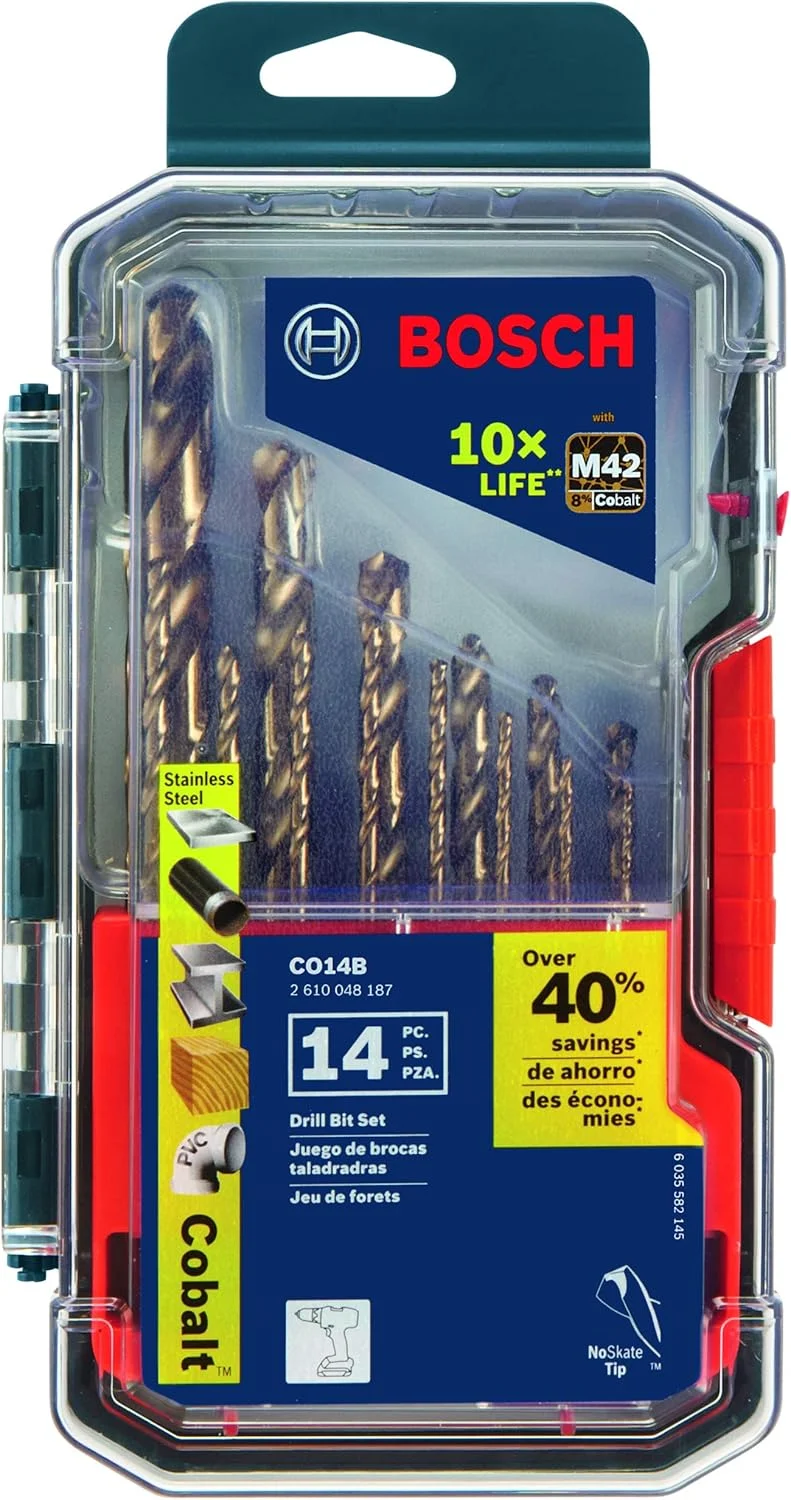
BOSCH CO14B 14-Piece Cobalt M42 Drill Bit Set
- Cobalt bits for tap hole prep
- Fractional, number, and letter sizes
- Three-flat shanks reduce slip
- Essential before every tap job
- Heat tolerant on stainless

Tap Magic Cutting Fluid
- Reduces tap breakage in steel
- Mandatory for stainless tapping
- Required for roll taps on aluminum
- Flushes chips in blind holes
- Shop standard for threading
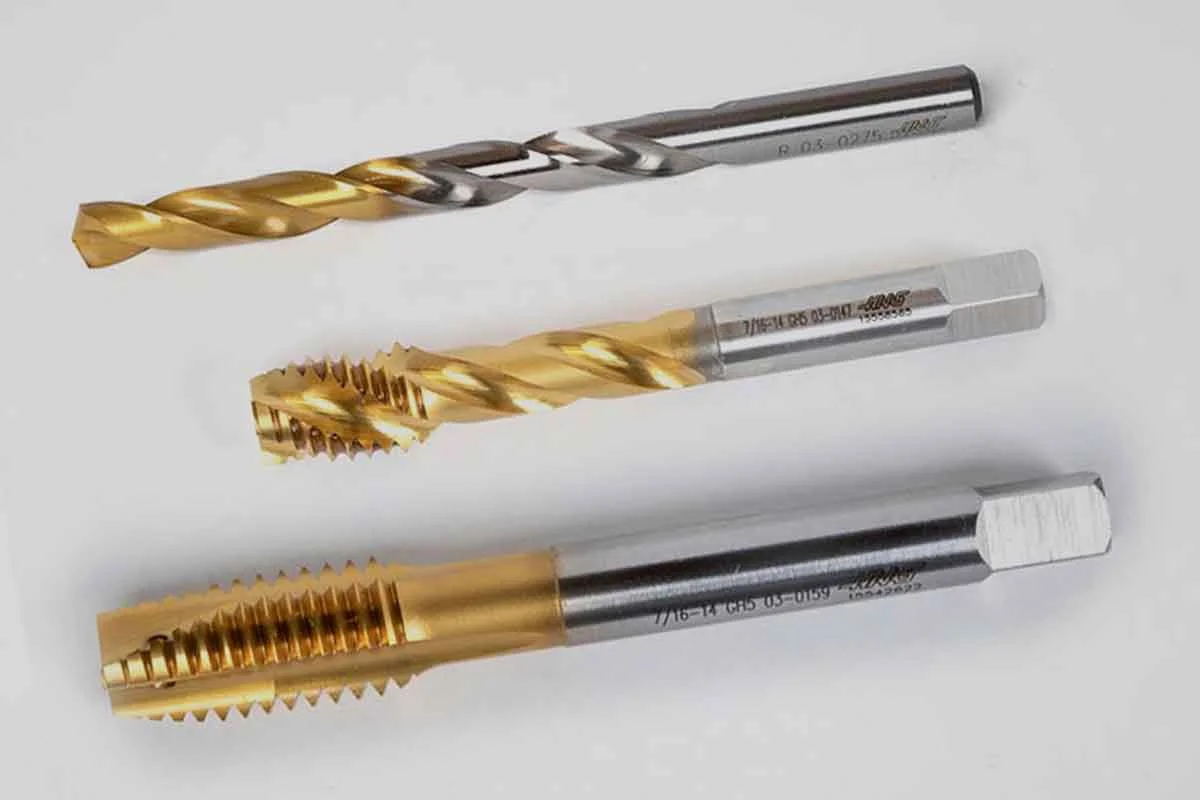
Orion Tap and Die Set
- Imperial and metric tap coverage
- Hand taps for general work
- Die stock for rod threading
- Complete shop threading kit
- Pairs with speed calculator
As an Amazon Associate, TestTalkHQ earns from qualifying purchases.
How Deep to Tap a Blind Hole
Blind hole tapping requires drilling deeper than the required thread depth to allow chip clearance at the bottom. A good rule: drill the hole at least 3–5 threads deeper than the required engaged thread length.
The tap itself has a chamfered lead (typically 3–5 threads) that cannot cut full depth threads — so the effective thread depth starts several turns in. For a 1/2 inch engagement depth, drill at least 3/4 to 7/8 inch deep. Mark the required thread depth on the tap with a marker or tape so you don't overshoot into the bottom.
Thread Percentage — Why 75% Is the Standard
100% thread engagement would require a tap drill equal to the minor diameter — extremely tight tolerance and very high tap breakage. 75% thread engagement is the industry standard — it provides over 90% of the theoretical maximum thread strength while dramatically reducing tapping torque and tap breakage risk.
Going below 60% thread engagement noticeably reduces pull-out strength. The tap drill charts in this guide and the companion calculator use 75% thread engagement as the default.
Hand Tapping Technique — Step by Step
Drill the correct tap drill size and deburr the entry chamfer. Apply cutting fluid. Start the tap perfectly perpendicular to the surface (use a tap guide or check with a square). Apply downward pressure for the first 1–2 turns until the tap bites, then let the tap feed itself — do not push.
Back off 1/2 turn every 1–2 turns to break chips. Re-apply cutting fluid regularly. Back out completely and clear chips on deep holes. Never force a tap that's getting tight — back out, clear chips, re-apply fluid.
CNC Tapping — Rigid vs Floating
CNC tapping uses either rigid tapping (the spindle speed and Z-axis feed are synchronized exactly to the thread pitch — most accurate, requires a machine capable of synchronization) or floating tap holders (a spring-loaded holder that compensates for minor feed-speed mismatch — used on older machines without rigid tapping capability).
Modern CNC machining centers should always use rigid tapping with the correct G84 cycle. Floating holders are a workaround — they work but produce slightly less accurate threads and wear out the holder over time.