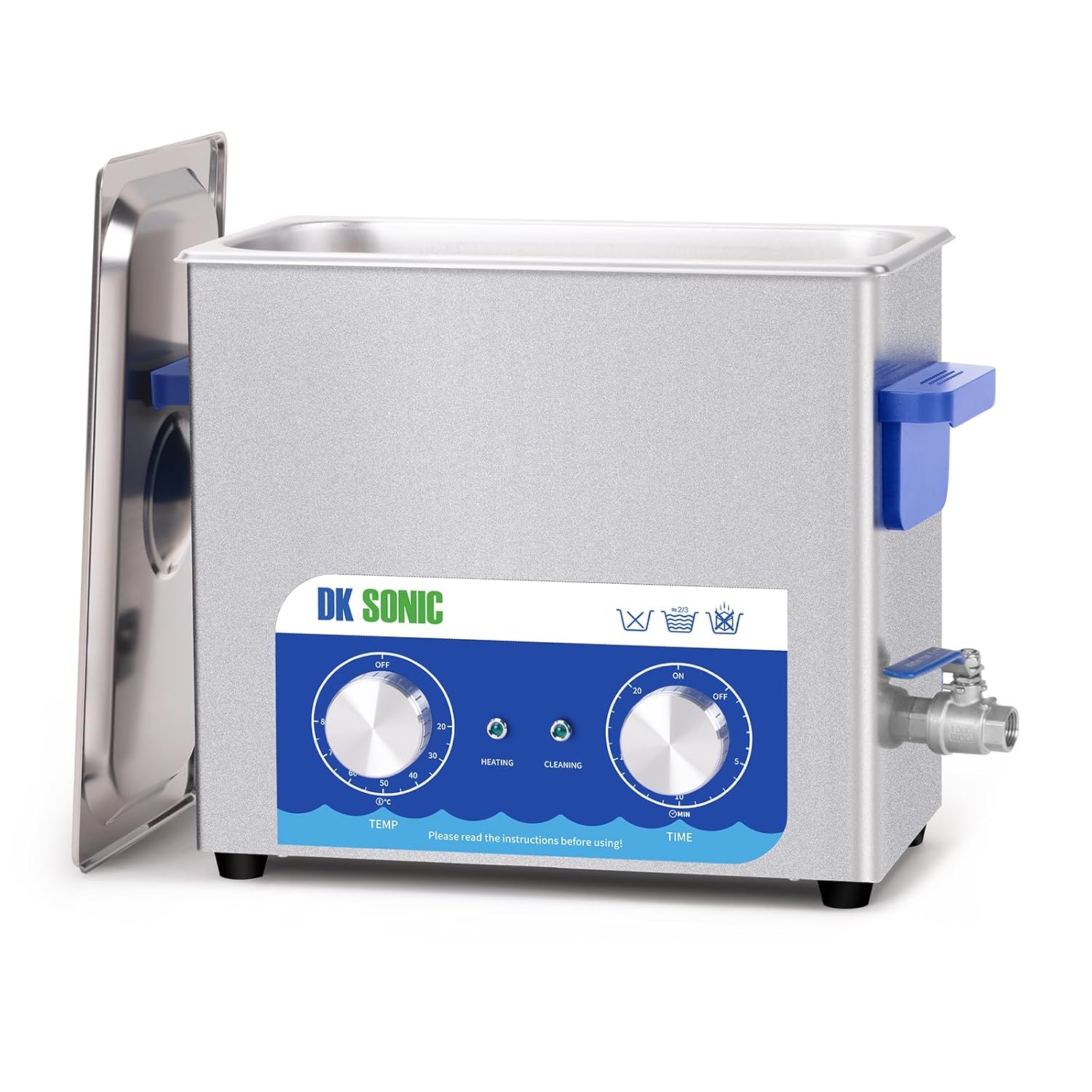
DK Sonic 6L Professional Ultrasonic Cleaner Review: The Quiet Workhorse That Actually Works
Rating: 4.5/5 Stars
After extensively testing the DK Sonic 6L ultrasonic cleaner on everything from seized brake parts to grimy sockets and even jewelry, I can confidently say this is the ultrasonic cleaner you should buy if you’re serious about parts cleaning. It’s not the cheapest option, but the combination of commercial-grade build quality, quieter operation, and consistent cleaning performance makes it worth every penny.
Why I Chose the DK Sonic Over Cheaper Options
When I was shopping for an ultrasonic cleaner, I did what any sensible person does – I spent way too much time reading Amazon reviews at 2 AM. The DK Sonic 6L consistently showed up as one of the only units with genuinely five-star reviews from people who actually use these things professionally.
I also wanted a commercial-grade unit rather than a plastic consumer model. My philosophy with tools is simple: buy once, buy right. I’d rather spend more upfront than kick myself six months later when I’m shopping for a replacement.
Build Quality: Built Like Equipment That Costs Twice as Much
Stainless Steel Construction Throughout
The entire tank is heavy-gauge stainless steel – not the thin, flexing sheet metal you see on budget models. This matters for two reasons:
- You can use any cleaning chemistry without worrying about corrosion
- It’s actually sturdy – not something you’ll accidentally knock off your workbench
The unit weighs enough to feel substantial but includes two well-designed plastic handles on the sides that make it easy to move around your shop.
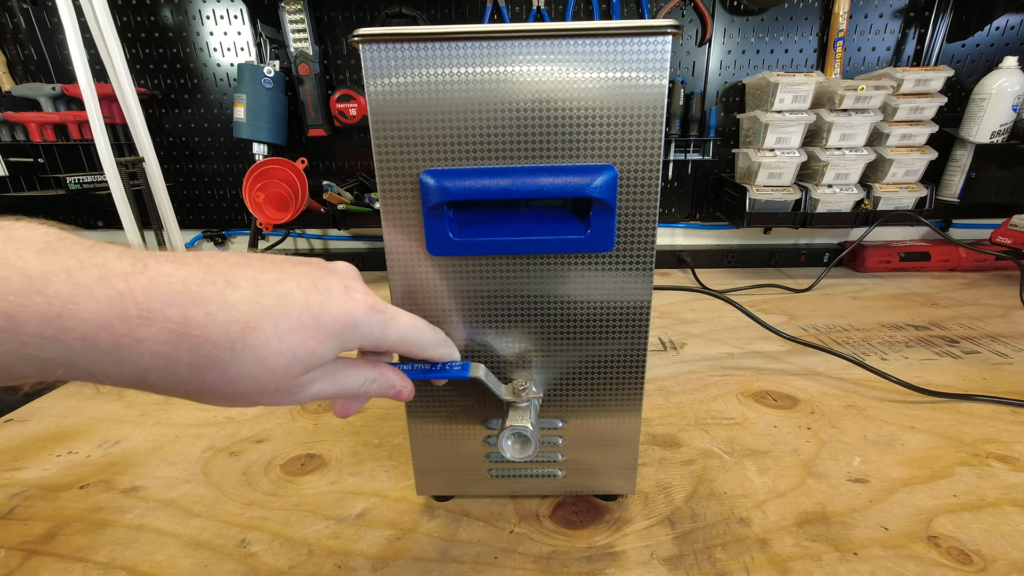
The Drain System Is Legitimately Good
This might seem like a minor detail until you’ve owned an ultrasonic cleaner without proper drainage. The DK Sonic features a half-inch ball valve on the side – a proper brass ball valve, not some cheap plastic thing that’ll crack after three uses.
The threaded connection comes with a protective plastic cap, but you can attach a hose if you want to drain directly into a bucket or even plumb it permanently into your shop drainage system. No more trying to pour hot, dirty water from a heavy tank while not spilling it everywhere.
What Makes It Quieter Than Competitors
One of the standout features is the noticeably quieter operation compared to other ultrasonic cleaners I’ve tested. In a workshop environment with other tools running, you barely notice it. Even in a quiet garage, it’s more of a background hum than an annoying buzz.
The secret is the rubber feet and better insulation. The DK Sonic has substantial rubber feet that dampen vibration, plus better overall construction that doesn’t amplify the ultrasonic frequency into annoying resonance.
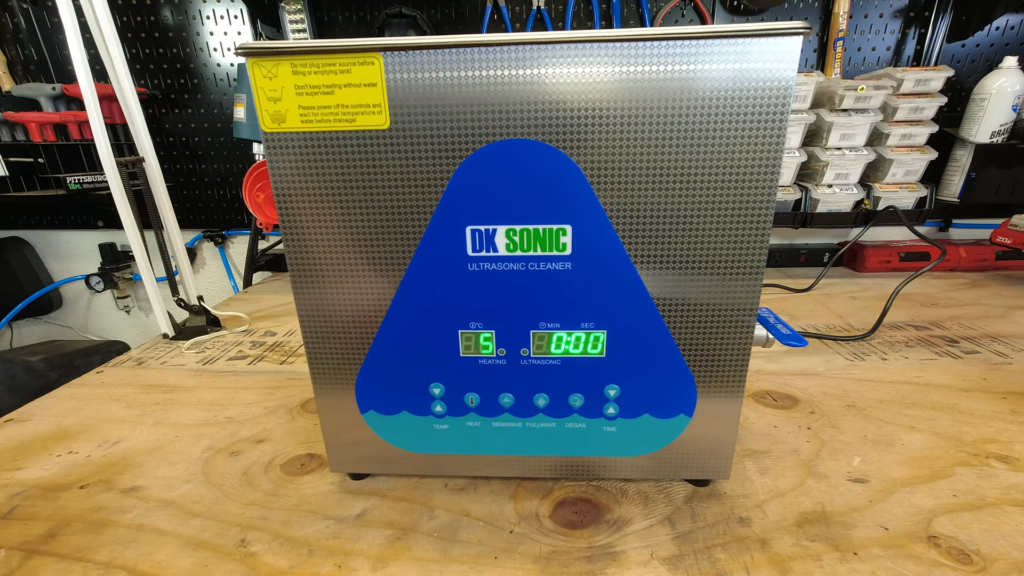
Control Panel and Digital Display
The front panel is clean and intuitive:
- Temperature control: Adjustable from 1°C to 80°C in 1-degree increments
- Timer: Set anywhere from 1 to 99 minutes
- Three cleaning modes: Full Wave (40 kHz), Semi-Wave (28 kHz), and Degas
- LED display: Bright enough to read even in well-lit workshops
Press and hold the adjustment buttons and they jump by tens, making it quick to dial in your desired temperature or time. The display shows real-time temperature, which is genuinely useful when you’re waiting for the water to heat up.
Heating Performance: The Reality
Let’s talk about heating time because this is where expectations need to be realistic.
From cold tap water to 50°C (122°F): 57 minutes
That’s slow. If you’re in a hurry, here’s what I do: fill it with hot water from your tap or kettle. Most taps deliver water at 50-60°C already, which cuts heating time to practically nothing. The heating element is really just for maintaining temperature and adding that extra boost if needed.
The 300-watt heating element can reach 80°C (176°F), which is hot enough for serious degreasing work. At that temperature, oils and greases break down significantly faster.
Cleaning Modes Explained
Full Wave (40 kHz)
This is your standard ultrasonic cleaning mode – what you’ll use 90% of the time. The 40 kHz frequency produces smaller cavitation bubbles that get into tight spaces and clean thoroughly without being overly aggressive.
Semi-Wave (28 kHz)
Lower frequency means larger, more powerful bubbles. Use this for heavier contamination or when you need more aggressive cleaning action. I use this mode for extremely dirty parts on the first pass.
Degas Mode
This pulses between frequencies to eliminate air pockets in the water. Run this for 5-10 minutes when you first fill the tank to improve cleaning efficiency. It’s a feature you see on professional units but rarely on consumer models.
Real-World Cleaning Tests
Test 1: Seized Wire Cutters (Moderate Difficulty)
I tested a pair of side cutters that wouldn’t open due to rust and gunk in the pivot mechanism. Settings used:
- Temperature: 50°C
- Time: 15 minutes
- Solution: Distilled water + eco dish soap
Results: The cutters opened smoothly after cleaning. The cavitation bubbles penetrated the pivot mechanism where I couldn’t reach manually. The spring that was brown with corrosion turned green again. Full functionality restored.
Test 2: Grimy Shop Tools (Heavy Contamination)
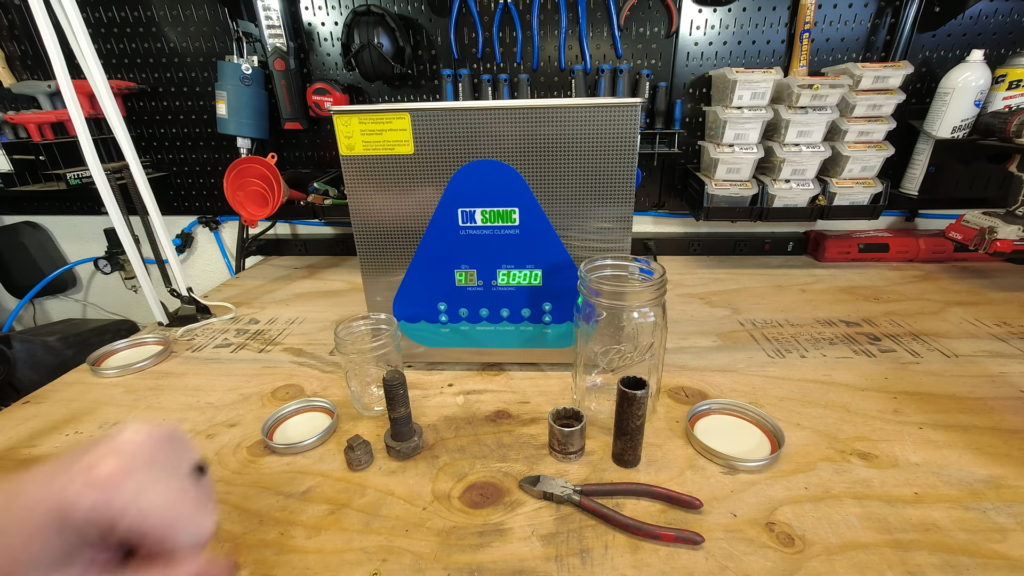
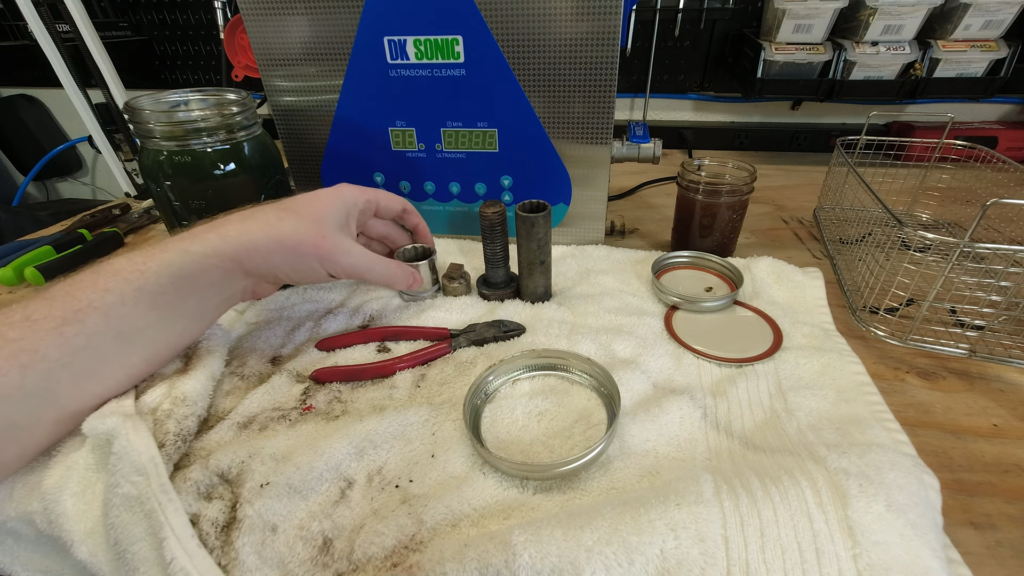
I loaded up the basket with truly disgusting parts:
- Two filthy sockets
- A large bolt caked in grease
- A ratchet adapter covered in grime
- A pair of dikes with greasy handles
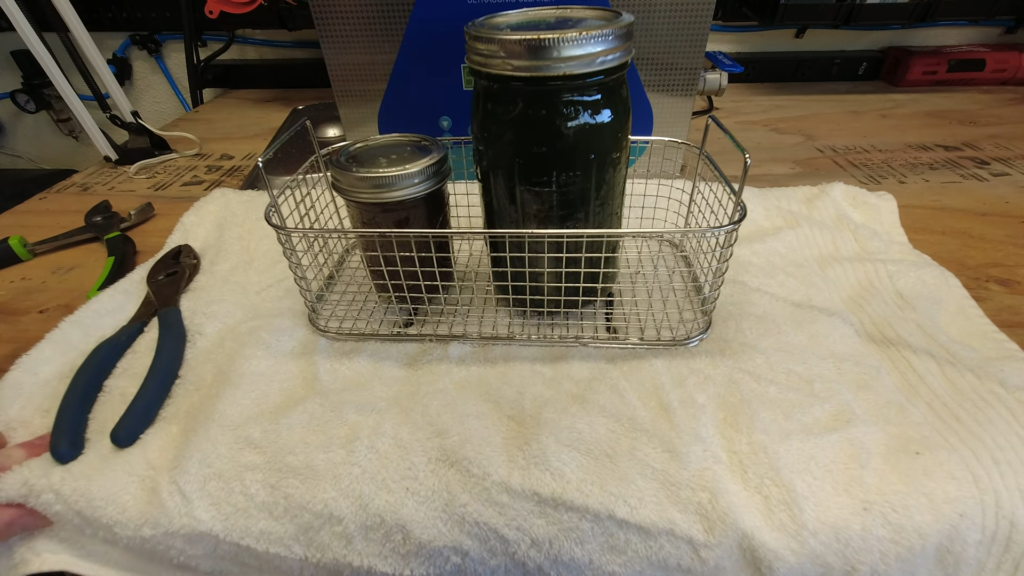
To avoid dirtying the tank, I used the mason jar method – place parts in jars with cleaning solution, then put the jars in the ultrasonic cleaner filled with plain water. The ultrasonic waves pass right through the glass.
Settings:
- Temperature: 60°C
- Time: 60 minutes
- Solution: 50/50 Simple Green HD and hot water
Results:
- Metal surfaces: Extremely clean, nearly like new
- Threaded areas: Most grime removed, though a quick brush finished the job
- Rubber handles: Improved but not perfect
- Overall: 85-90% cleaning effectiveness with zero effort on my part
After rinsing under warm water and a quick brush, everything looked fantastic. The amount of gunk that settled at the bottom of the mason jars was impressive – that’s contamination that would still be on my parts without ultrasonic cleaning.
Test 3: Jewelry and Delicate Items
I tested my partner’s rings (with permission, obviously) at lower temperature:
- Temperature: 50°C
- Time: 20 minutes
- Solution: Water + small amount of dish soap
Results: Diamonds and gold came out absolutely sparkling. This is the same quality cleaning you’d get at a jewelry store. If your significant other ever questions your tool purchases, just clean their jewelry and suddenly you’re a genius.
The Basket Design (Minor Complaint)
The included stainless steel basket is well-made with rubber feet to prevent scratching, but the mesh is quite large. I actually lost a small screw through the mesh during a carburetor cleaning session and had to go fishing in the dirty water to find it.
Solutions:
- Count your small parts before and after
- Use a fine mesh bag inside the basket for tiny components
- Place small parts in a mason jar (which also keeps the tank cleaner)
This is a minor annoyance but something to be aware of if you’re cleaning lots of small fasteners.
Tank Capacity and Dimensions
Tank interior: 11.75″ L × 6″ W × 6″ D
Capacity: 6 liters (1.6 gallons)
Overall unit size: 12.25″ L × 6.3″ W × 12.4″ H
This size is perfect for:
- Motorcycle carburetors (one at a time, or split larger ones)
- Hand tools (wrenches, sockets, pliers)
- Brake components
- Small engine parts
- Chains, bearings, springs
- Jewelry and watches
- Eyeglasses
What won’t fit:
- Large V8 carburetors (need the 10L model)
- Cylinder heads
- Complete brake calipers (depending on size)
If you’re primarily working on automotive restoration or large equipment, consider stepping up to the DK Sonic 10L. But for 90% of home shop and garage work, the 6L is the sweet spot.
Why This Size Makes Sense
DK Sonic makes both a smaller budget model and this 6L commercial unit. The 6L has the same footprint as the smaller unit – it’s just taller. Since they take up the same shelf space, you might as well get the larger capacity.
I didn’t go for the massive 10L model because I’m rarely cleaning huge components, and the 6L heats up faster and uses less cleaning solution.
The Environmental and Safety Angle
This is something I genuinely appreciate: ultrasonic cleaning is environmentally friendly.
Traditional parts cleaning methods involve:
- Harsh chemical degreasers (acetone, diesel, brake cleaner)
- Toxic fume exposure
- Hazardous waste disposal
- Risk of chemical burns
With ultrasonic cleaning:
- Use eco-friendly dish soap or Simple Green
- No toxic fumes
- Drain water can often go down the sink (check local regulations)
- Much safer around family and pets
The water temperature tops out at 80°C (176°F), which is hot but not dangerously so. I’ve reached into 50°C water to retrieve a dropped part – you can’t do that with solvent baths.
Reusing Cleaning Solution
You don’t need to dump and refill after every use. I typically run 5-10 cleaning cycles before changing the water, depending on how dirty the parts are. The solution gradually loses effectiveness as it picks up contaminants, but it’s still usable for multiple sessions.
When the water turns dark brown and cleaning effectiveness drops noticeably, that’s when you drain and refill. The easy drain valve makes this a 30-second job.
Power Consumption
- Ultrasonic power: 180 watts
- Heating element: 300 watts
- Total when both running: 480 watts
This is reasonable power consumption. I’ve even powered mine with my off-grid solar workshop setup, which feels appropriately futuristic – cleaning with the power of sound using energy from the sun.
What Sets DK Sonic Apart From Cheaper Options
I compared specs and reviews across dozens of ultrasonic cleaners before buying. Here’s why the DK Sonic justified the higher price:
vs. Budget plastic models ($40-80):
- Stainless steel vs plastic construction
- Proper drain valve vs. carrying it to sink
- Commercial-grade transducers vs. weak consumer units
- Three cleaning modes vs. single mode
- Quieter operation
- 180W ultrasonic power vs. 50-100W on cheap units
vs. Other commercial models ($200-400):
- Comparable performance at lower price
- Better warranty and customer support
- Consistently high user reviews
- More features for the money
The DK Sonic sits in the perfect middle ground: commercial quality without professional pricing.
Minor Issues and Nitpicks
The lid handle is small. If you have large hands or work with gloves, the lid can be awkward to lift. It’s functional but could be more ergonomic.
No automatic temperature shutoff. The timer stops the ultrasonic cleaning, but the heating element keeps running until you manually turn it off. Not a big deal, just something to remember.
The basket mesh is too large for very small parts, as mentioned earlier.
These are genuinely minor complaints on an otherwise excellent product.
Comparison to Other Brands
I’ve also tested the Vevor 6L extensively. Here’s how they compare:
DK Sonic advantages:
- Noticeably quieter operation
- Slightly better digital controls
- More cleaning modes (semi-wave, degas)
- Generally smoother operation
Vevor advantages:
- Usually slightly cheaper
- Heats up marginally faster
- Equally sturdy construction
Both are excellent. The DK Sonic edges ahead on refinement and quieter operation, making it worth the small price premium if noise matters in your workspace.
Who Should Buy the DK Sonic 6L
Perfect for:
- Home mechanics and garage DIYers
- Motorcycle and small engine enthusiasts
- RC hobbyists
- Bicycle maintenance
- Jewelry cleaning and small collectibles
- Anyone doing restoration work
- Small professional shops
Skip it if:
- You only clean jewelry (get a smaller dedicated unit)
- You need to clean very large parts (get the 10L)
- You’re looking for the absolute cheapest option
Tips for Best Results
- Use hot tap water to start – cuts heating time dramatically
- Add eco dish soap or Simple Green – plain water works but solution is better
- Run degas mode when first filling – eliminates air pockets
- Don’t stack parts – ultrasonic waves need access to all surfaces
- Use the mason jar method for extremely dirty parts – keeps your tank clean
- Temperature matters – hotter is generally better for grease and oil
- Multiple shorter cycles beat one long cycle – refresh the water between if needed
Maintenance and Longevity
After months of regular use, the DK Sonic shows zero degradation. The stainless steel tank looks new, the controls work perfectly, and cleaning performance hasn’t dropped off.
Regular maintenance:
- Wipe down exterior after use
- Drain completely when not in use for extended periods
- Clean the drain valve occasionally to prevent buildup
- Store with lid slightly open to prevent moisture buildup
The unit comes with a standard removable power cable, so if someone damages it (runs over it with a cart, etc.), you can replace the cable without replacing the entire unit.
Final Verdict: Worth Every Penny
Rating: 4.5/5 Stars
The DK Sonic 6L Professional Ultrasonic Cleaner delivers commercial-grade performance at a price point that makes sense for serious hobbyists and small shops. It’s quieter than competitors, built to last, and consistently produces excellent cleaning results with minimal effort.
After using it daily for months, it’s become one of my most-reached-for tools. The ability to clean parts thoroughly while I work on something else is a legitimate time-saver. No more scrubbing with brushes, no more toxic solvents, no more getting my hands filthy before I even start the actual work.
The price ($180-220 depending on sales) is higher than budget models but justified by the build quality, features, and performance. This is a tool that’ll still be working perfectly years from now.
Where to Buy: Check Current Price on Amazon →
Bottom Line: If you regularly work on mechanical equipment, restore vintage items, or just accumulate grimy tools that need serious cleaning, the DK Sonic 6L is an investment that pays for itself in time saved and frustration eliminated. It’s the ultrasonic cleaner I wish I’d bought years ago.
Frequently Asked Questions
Q: Is it really quieter than other ultrasonic cleaners?
A: Yes, noticeably so. The rubber feet and better construction make a significant difference.
Q: Can I clean aluminum parts safely?
A: Yes, but use aluminum-safe cleaning solution. Simple Green is generally aluminum-safe, but avoid harsh alkaline cleaners.
Q: How long does it take to heat from cold water?
A: About 57 minutes from cold tap to 50°C. Pro tip: start with hot tap water and it’s nearly instant.
Q: What’s the degas function actually do?
A: It pulses between frequencies to eliminate air bubbles in the water, improving cleaning efficiency. Run it for 5-10 minutes when first filling.
Q: Can I clean carburetors in this?
A: Absolutely. Small motorcycle and single-cylinder carbs fit easily. Larger multi-carb setups might need the 10L model.
Q: Is the 6L big enough for most projects?
A: For 90% of home shop use, yes. If you frequently work on large automotive parts, consider the 10L.
Check out our complete reviews directory, browse free welding calculators, or read about essential metal fabrication tools.