
Chain against synthetic webbing is usually argued as a preference and it is not one. Both are tabulated tiedowns under 49 CFR 393.108 with very different numbers, very different failure modes, and one situation where the regulation flatly prohibits webbing. Here is the comparison with the figures in it, and a decision order that holds up on a real trailer.
The question underneath the question
Chain or strap is usually argued as a preference, and it is not one. Under 49 CFR 393 both are legitimate tiedowns with tabulated working load limits, and the regulation is almost entirely indifferent to which you pick. What differs is the numbers, what each one fails at, and what the load does to it.
The useful version of the question is: what is going to be touching this load, and what happens to that material when it does? That decides it in most cases, and the strength comparison — which is where the argument usually starts — turns out to matter less often than people expect.
What the regulation actually credits each one
Side by side, from the tables to 393.108, in pounds of working load limit:
| Synthetic webbing | WLL | Grade 70 transport chain | WLL |
|---|---|---|---|
| 1-3/4 in | 1,750 | 1/4 in | 3,150 |
| 2 in | 2,000 | 5/16 in | 4,700 |
| 3 in | 3,000 | 3/8 in | 6,600 |
| 4 in | 4,000 | 1/2 in | 11,300 |
The widest webbing the table lists, at 4 in, is 4,000 lb. A 5/16 in Grade 70 chain — hardware you can hold in one hand — beats it at 4,700 lb, and a 3/8 in Grade 70 chain is over 50 percent more again at 6,600 lb. If the load is heavy enough that you are counting tiedowns rather than choosing them, chain ends the conversation quickly.
But look at what happens when the chain is not marked. 393.108(d) treats unmarked welded steel chain as Grade 30 proof coil, which puts 3/8 in chain at 2,650 lb — below a 3 in strap. Grade is invisible on a dirty chain unless you can read the embossed links: 3, 30 or 300 for Grade 30, 4 or 43 for Grade 43, 7, 70 or 700 for Grade 70, 8 or 80 for Grade 80, 10 or 100 for Grade 100. Unreadable means Grade 30 as far as the regulation is concerned, whatever the chain really is.
What each one fails at
Webbing fails at edges. This is the failure mode, and it accounts for most strap failures in service. Polyester webbing over a square steel corner, a sawn timber edge or a sheet metal lip loses fibres under vibration until the remaining section lets go. It does not need to be abused; a couple of hundred miles will do it. 393.104(f)(4) requires edge protection wherever a tiedown would be subject to abrasion or cutting where it touches the cargo — and that clause exists mostly because of webbing.
Webbing also fails at things that are not edges. UV over seasons, chemical contact, cuts from a load being dragged on, and heat. None of those are visible as a number, which is why 393.104(b) prohibits using damaged or weakened components at all rather than trying to derate them.
Chain fails the load, not itself. Chain is essentially immune to abrasion, weather, UV and dragging. What it does instead is mark, dent and crush whatever it is tensioned against. On a machined surface, painted panel, polished stainless or softwood, chain does damage that the customer sees. On softwood it embeds, the wood crushes, and the chain goes slack — which is a securement failure, not just a cosmetic one, because 393.102(b) requires the system to hold a downward force of at least 20 percent of the article weight where the article is not fully contained.
Chain fails at links you cannot see. A stretched, gouged or cracked link is a real failure mode and 393.104(b) rules it out of service. The difference is that a damaged chain usually looks damaged, where damaged webbing can look fine from two feet away.
Any trade
Contractor Job Estimator
$29.00
BuyCheckout opens here — you stay on this page.
The gear this argument actually needs
Everything on this page rests on three numbers and one piece of hardware: what the article weighs, how long it is, what the weakest component in the assembly is rated at, and whether anything is stopping the load rolling before the tiedowns are even considered. The first two are measurements people guess at, and both of them move the answer in steps rather than smoothly.

MaxxHaul 70472 Solid Rubber Wheel Chocks 2-Pack
- 393.106(c)(1) requires articles likely to roll to be restrained by chocks, wedges or a cradle
- The rule also says the restraint must not be able to work loose in transit
- Rubber grips a wood or steel deck rather than skating on it
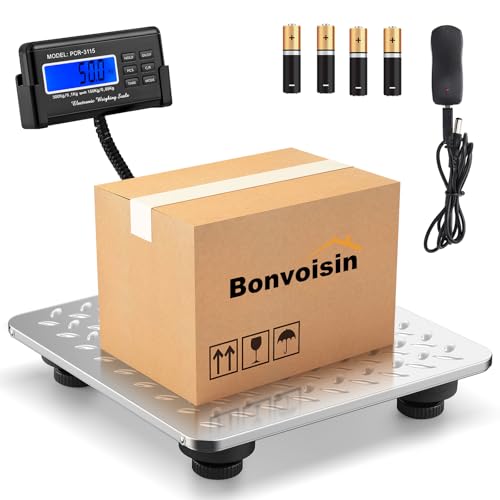
TIPRE Digital Shipping Postal Scale 660 lb
- Weight decides one tiedown or two under 393.110(b) for anything 5 ft or shorter
- Aggregate working load limit is a straight half of the weight — guess one, guess the other
- 660 lb capacity covers the crates, pallets and small machines that sit near the line

Sherline LM 2000 Trailer Tongue Weight Scale
- A load can be perfectly secured and still make the trailer unstable
- Securement stops the article moving; tongue weight is what stops the trailer swaying
- Pairs with the TestTalkHQ trailer tongue weight calculator
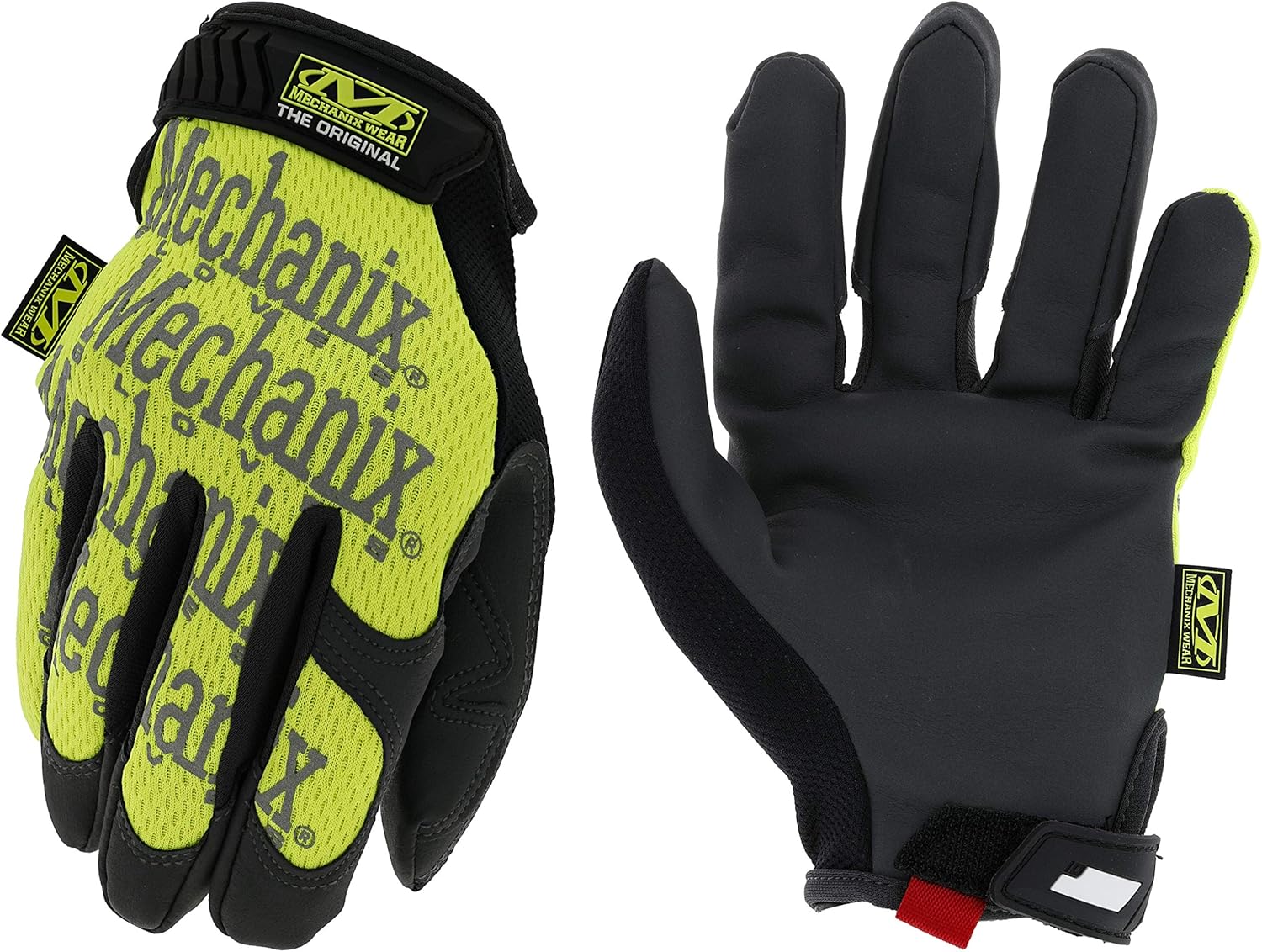
Mechanix Wear The Original Hi-Viz Work Gloves
- Transport chain, lever binders and wire rope all punish bare hands
- Hi-viz matters when 392.9(b) sends you out to re-check a load on a shoulder
- Enough feel left to run a ratchet and read a working load limit tag
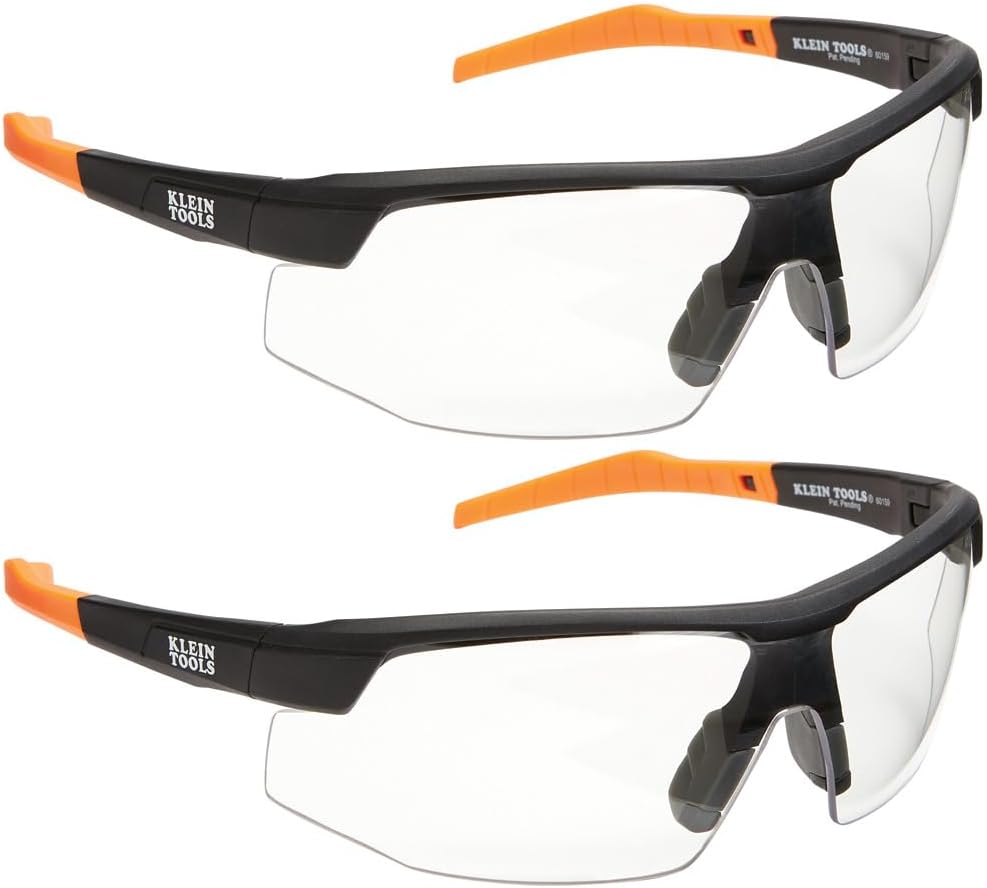
Klein Tools 60171 Anti-Fog Safety Glasses 2-Pack
- A lever binder coming off a tensioned chain is the classic way people get hurt
- Webbing under load stores energy and does not fail politely
- Anti-fog matters because securement checks happen in the weather
As an Amazon Associate, TestTalkHQ earns from qualifying purchases. Prices and availability can change.
Where the regulation genuinely prefers one
Subpart I is mostly material-neutral, but not entirely.
Flattened or crushed vehicles: chain or wire rope, not webbing. 393.132(b) prohibits synthetic webbing for securing flattened or crushed vehicles, except to connect wire rope or chain to anchor points on the vehicle — and even then the webbing must not come into contact with the cars, regardless of whether edge protection is used. That is the one flat prohibition in the general area.
Cars and light trucks: webbing is explicitly accommodated. 393.128(b)(4) says edge protectors are not required for synthetic webbing where it contacts the tires, which is the ordinary wheel-strap arrangement. Webbing over tires is the intended method.
Steel strapping: the one thing you cannot retension. 393.112 requires every tiedown, its connectors or its attachment mechanisms to be designed, constructed and maintained so the driver can tighten them in transit — and then names steel strapping as the sole exception. That is worth understanding as a warning rather than a permission: a load secured with steel strapping cannot be brought back up to tension at the 50-mile check that 392.9(b)(2) requires, so any settling in that load is permanent.
Heavy equipment: four points, either material. 393.130(c)(1) requires machinery of 10,000 lb or more to be restrained against lateral, forward, rearward and vertical movement with a minimum of four tiedowns, each affixed as close as practicable to the front and rear or to designed mounting points. It does not specify the material — but at those weights the aggregate working load limit requirement usually settles it, because four straps at 4,000 lb is 16,000 lb of aggregate and a 32,000 lb machine needs 16,000 lb exactly, with nothing spare.
The practical differences the tables do not show
Tensioning. A ratchet on a strap gives fine control and a lot of mechanical advantage. A lever binder on chain is coarse, stores a lot of energy, and is the classic way people get hurt on a loading dock — a binder handle coming off a tensioned chain does not give warning. Ratchet binders are slower and far better behaved.
Weight and handling. A 27 ft 4 in strap assembly is something you throw over a load one-handed. A 20 ft length of 3/8 in Grade 70 chain is not. On a job with a lot of small loads and one person, that difference decides more real securement outcomes than working load limit does.
Storage and inventory. Straps fail invisibly and get cut; chain does not, and it does not care about being stored wet. A chain inventory lasts.
Cost per pound of aggregate. Chain is more expensive up front and considerably cheaper per pound of working load limit over its service life, because it does not get retired for cuts and UV.
What it does to the article. The one that decides most jobs. Chain marks; webbing does not. If the load is finished product, painted, machined or sold to somebody who will inspect it, that is usually the end of the discussion regardless of what the numbers say.
A decision order that survives contact with a real trailer
1. Is it a flattened or crushed vehicle? Then not webbing — 393.132(b).
2. Is the load surface something that must not be marked? Painted, machined, polished, finished timber, or anything the customer will inspect. Then webbing, with edge protection, and accept the lower per-tiedown number.
3. Will the tiedown cross a hard or sharp edge? Chain does not care; webbing needs protection there under 393.104(f)(4), and if protection is not practical at that point, that is an argument for chain.
4. Run the arithmetic. Required aggregate is half the article weight; the count comes from 393.110. If the number of straps that gets you there is unreasonable, chain is the answer — a 3/8 in Grade 70 chain is worth more than three 2 in straps.
5. Check what is on the ends. Binder, ratchet, hooks, D-rings, stake pockets. Under 393.108(a) the lowest one is your working load limit, and it is frequently not the chain or the strap. Sizing the tiedown above the anchor point is money spent on nothing.
6. Consider who is doing it and how often. Single-handed, many small loads, in a hurry: straps get used correctly more often, and a tiedown that is actually tensioned beats one that is theoretically stronger.
7. Do not mix them on one article without doing the arithmetic. There is nothing in the regulation against mixing chain and webbing on the same article — the aggregate is simply the sum of the contributions. But each tiedown is counted at its own working load limit and its own geometry, so a mixed set has to be added up individually rather than multiplied out.
Frequently asked questions
Is chain stronger than a ratchet strap?
Per size, by a lot. From the tables to 393.108, a 4 in synthetic webbing strap has a working load limit of 4,000 lb while a 3/8 in Grade 70 transport chain has 6,600 lb and a 1/2 in Grade 70 chain has 11,300 lb. But an unmarked chain is treated as Grade 30 proof coil under 393.108(d), which puts 3/8 in at 2,650 lb — below a 3 in strap. And under 393.108(a) the binder or ratchet can be the governing rating for either.
When do I have to use chain instead of straps?
The one flat prohibition in this area is 393.132(b): synthetic webbing must not be used to secure flattened or crushed vehicles, except to connect wire rope or chain to anchor points, and then it must not touch the cars. Beyond that the regulation is material-neutral and the choice is driven by the working load limit you need, whether the tiedown crosses edges, and whether marking the load is acceptable.
Do I need edge protection with chain?
393.104(f)(4) is written in terms of the tiedown being subject to abrasion or cutting, which is a webbing problem far more than a chain problem. But protecting the load from chain is often necessary for a different reason: chain that embeds into softwood or packaging lets the material crush and the chain go slack, and a slack tiedown fails the 20 percent downward force requirement in 393.102(b).
What working load limit does an unmarked chain get?
Grade 30 proof coil, under 393.108(d). That is 1,300 lb at 1/4 in, 1,900 lb at 5/16 in, 2,650 lb at 3/8 in, 4,500 lb at 1/2 in and 6,900 lb at 5/8 in. Grade markings are embossed on the links; if they cannot be read, the chain is Grade 30 for regulatory purposes whatever it actually is.
Can I mix chain and straps on the same load?
Yes. 393.106(d) simply sums the contributions of the tiedowns, each counted at its own working load limit and its own routing geometry. What you cannot do is take an average or assume a mixed set behaves like a set of the stronger item — add each one up individually.
Why is 5/16 inch Grade 80 chain rated below Grade 70?
Because that is what the table in 393.108 tabulates: 4,500 lb for Grade 80 alloy against 4,700 lb for Grade 70 transport at that one size. It is an oddity of the published figures. A manufacturer’s marking governs over the table under 393.108(b), so a marked Grade 80 chain uses its own number.
What about steel strapping?
It has its own table in 393.108, ranging from 1,190 lb for 1-1/4 × 0.029 in to 2,650 lb for 2 × 0.050 in, and unmarked strapping is rated at one quarter of the breaking strength in ASTM D3953-97. The catch is 393.112: every other tiedown has to be designed so the driver can tighten it in transit, and steel strapping is the named exception. Anything that settles under strapping stays settled.
Is wire rope worth considering?
It sits between the two on most counts and is tabulated up to 20,900 lb at 1 in for 6 × 37 fiber core. Unmarked wire rope is rated at one quarter of the nominal strength in the Wire Rope Users Manual under 393.108(e)(1), and unmarked wire of unidentifiable construction is treated as 6 × 37 fiber core. It is more common on specific commodities than as a general-purpose tiedown.
Does the number of tiedowns change if I use chain?
The count rule does not. 393.110 sets a minimum number from the length of the article regardless of what the tiedowns are made of or rated at. Stronger hardware only reduces the count required by the separate aggregate working load limit rule in 393.106(d) — and the load still has to satisfy both.