
A load that moved is telling you which rule you missed, and the evidence disappears the moment you re-strap it. How to read the direction, the slack and the chafe marks, the six causes ranked by how often they are the answer, and the fixes in order of cost, starting with the ones that are free.
Before you re-strap it, read it
A load that moved is telling you something, and the information is perishable. Once the straps come off and the article is dragged back into position, the only evidence left is a memory. Five minutes spent looking at it first will usually tell you which of the six causes below actually did it, which is the difference between fixing the problem and buying a bigger strap for a problem that was never about strength.
Look, in this order, before touching anything:
Which way did it go? Forward, rearward, laterally, or did it rotate on the spot? Forward movement under braking is the common one and points at the count rule or at blocking. Lateral walking on a crowned road points at transverse tiedowns and at whether the articles were in contact. Rotation points at a single tiedown near the middle of a long article.
Are the tiedowns slack, and are they all equally slack? Uniform slack across every strap usually means the load settled or compressed. One slack strap among tight ones usually means that one lost its grip on the tensioner or slipped over something.
Is there chafe, and where? Webbing polished, furred or cut at one point tells you where it crossed an edge without protection. Chain with bright wear marks tells you where it moved against the article — and chain that moved means the load moved.
Is there any mark on the deck? A gouge, a scrape, crushed wood, or a scoured line in the dirt on a steel deck all tell you how far and in which direction. That distance is worth knowing.
What state are the anchors in? A stake pocket that has opened up, a rub rail that has bent, a D-ring that has pulled its weld, a winch that has rotated on the track. Any of those and the strap was never the weak point.
Cause 1: the count was short, not the strength
The single most common finding, and the one that surprises people, because the tiedowns that were on the load were more than strong enough.
393.110 sets a minimum number of tiedowns from the length of the article, and above five feet that rule does not look at weight at all. An 18 ft length of pipe rack that is not blocked forward needs two tiedowns for the first 10 ft and one more for the remaining 8 ft — three — whether it weighs 400 lb or 4,000 lb. One 3/8 in Grade 70 chain across the middle of it is 6,600 lb of aggregate working load limit against a requirement of perhaps 200 lb, and it is still two tiedowns short.
The signature is rotation. A long article with a single tiedown near its centre is free to swing around that point, and that is exactly what it does on the first hard turn or hard stop.
Cause 2: the geometry was counted as double when it was worth half
The second most common, and the hardest to catch after the fact because the paperwork looks right.
393.106(d)(3) gives a tiedown its full working load limit only when it runs from an anchor on the vehicle, over or around the cargo, and anchors on the other side of the vehicle. A strap that goes over the load and ratchets back down to a rail on the side it started from is 393.106(d)(2) and counts half.
That is a factor of two on the entire aggregate. A load calculated at 8,000 lb of aggregate working load limit on four 4 in straps was actually delivering 4,000 lb if every one of them came back to the same side. If the requirement was 6,000 lb, the load was never compliant and the first hard stop found out.
This is also the cheapest fix in the whole subject. Rerouting existing hardware across the deck doubles its contribution and costs nothing but the walk.
Cause 3: the weakest component was not the strap
393.108(a) makes the working load limit of a tiedown the lowest rating of any component in it — including the tensioner — or of the anchor points it attaches to, whichever is less. On a real trailer the governing number is very often not the webbing or the chain.
Common offenders, roughly in order of how often they are the answer:
The ratchet. Plenty of 4 in straps ship with a ratchet rated well below the webbing. The assembly rating is the ratchet’s.
The stake pocket or rub rail. Frequently the lowest number on the whole vehicle, and frequently unrecorded anywhere. If it has opened up or bent, that was your working load limit and it has just been measured for you.
A welded-on D-ring. Rated by whoever welded it, which may be nobody. 393.104(c) requires anchor points to be strong enough to meet the 393.102 performance criteria with no damaged or weakened components.
The hook. Flat hooks, grab hooks and R-hooks all have their own ratings and they are not always matched to the chain.
Cause 4: no edge protection, and the strap cut itself
393.104(f)(4) requires edge protection wherever a tiedown would be subject to abrasion or cutting at the point where it touches the cargo, and requires the protection itself to resist abrasion, cutting and crushing.
Synthetic webbing over a square steel edge does not need to be sawn through to fail. It needs to lose enough fibres at one point that the remaining section lets go under a normal load, and that can happen over a couple of hundred miles of ordinary road vibration. The signature is unmistakable once you know it: a clean transverse cut or a furred, thinned band, always at exactly the point where the strap crossed the edge, with the rest of the strap in perfect condition.
Chain does not cut, but it does the damage in the other direction — into the article. Chain over a machined surface, a painted panel or a timber edge marks it, and on softwood it embeds and then goes slack when the wood crushes, which is cause 5.
Any trade
Contractor Job Estimator
$29.00
BuyCheckout opens here — you stay on this page.
The gear this argument actually needs
Everything on this page rests on three numbers and one piece of hardware: what the article weighs, how long it is, what the weakest component in the assembly is rated at, and whether anything is stopping the load rolling before the tiedowns are even considered. The first two are measurements people guess at, and both of them move the answer in steps rather than smoothly.

MaxxHaul 70472 Solid Rubber Wheel Chocks 2-Pack
- 393.106(c)(1) requires articles likely to roll to be restrained by chocks, wedges or a cradle
- The rule also says the restraint must not be able to work loose in transit
- Rubber grips a wood or steel deck rather than skating on it
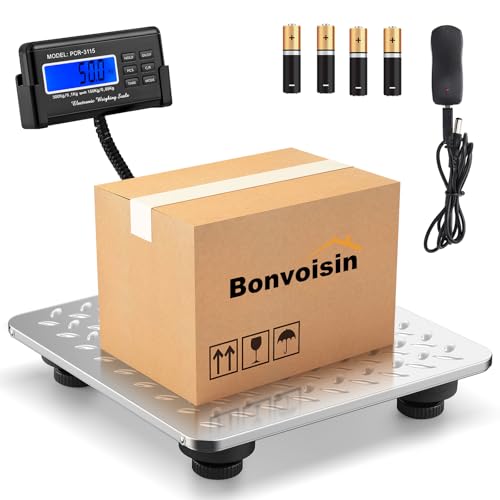
TIPRE Digital Shipping Postal Scale 660 lb
- Weight decides one tiedown or two under 393.110(b) for anything 5 ft or shorter
- Aggregate working load limit is a straight half of the weight — guess one, guess the other
- 660 lb capacity covers the crates, pallets and small machines that sit near the line

Sherline LM 2000 Trailer Tongue Weight Scale
- A load can be perfectly secured and still make the trailer unstable
- Securement stops the article moving; tongue weight is what stops the trailer swaying
- Pairs with the TestTalkHQ trailer tongue weight calculator

Mechanix Wear The Original Hi-Viz Work Gloves
- Transport chain, lever binders and wire rope all punish bare hands
- Hi-viz matters when 392.9(b) sends you out to re-check a load on a shoulder
- Enough feel left to run a ratchet and read a working load limit tag

Klein Tools 60171 Anti-Fog Safety Glasses 2-Pack
- A lever binder coming off a tensioned chain is the classic way people get hurt
- Webbing under load stores energy and does not fail politely
- Anti-fog matters because securement checks happen in the weather
As an Amazon Associate, TestTalkHQ earns from qualifying purchases. Prices and availability can change.
Cause 5: the load settled and everything went slack
Tension is not a one-time setting. Anything that compresses, shifts internally, or has softwood, packaging or a pallet in the load path will settle under road vibration, and when it does, every tiedown over it loses tension at once. The signature is uniform slack across all of them with no damage anywhere.
This matters more than it sounds, because of 393.102(b): the securement system must provide a downward force of at least 20 percent of the article weight where the article is not fully contained within the structure of the vehicle. A slack strap provides none of it. The tiedown is still present, still correctly routed and still rated — and the system is failing the rule, because the article is now free to bounce and walk.
This is precisely what 392.9(b) is written for. The driver has to inspect the cargo and the securement devices within the first 50 miles of a trip and adjust as necessary, including adding more devices, and then re-examine whenever they change duty status, or after 3 hours, or after 150 miles — whichever comes first. The first 50 miles is where settling shows up.
Cause 6: it rolled, and nothing was ever stopping it
393.106(c)(1) is a separate requirement from everything about working load limits: articles of cargo that are likely to roll must be restrained by chocks, wedges, a cradle or other equivalent means to prevent rolling, and the means of preventing rolling must not be capable of becoming unintentionally unfastened or loose while the vehicle is in transit.
Pipe, coils, drums, cable reels, round stock and anything on wheels are all in scope. A strap over a round article applies a downward force, and a downward force on something round is a force that helps it roll as soon as it starts to move. The tiedown is not the roll restraint and was never meant to be.
The second half of that clause catches a real-world failure: a chock that is only held by friction works loose, and then the load is unrestrained with the chock still nominally in place. It has to be attached so it cannot work loose.
393.106(c)(2) is the companion problem for articles side by side and secured by transverse tiedowns: they must either be in direct contact with each other or be prevented from shifting toward each other in transit. A gap between two crates under one transverse strap is a gap they will close.
Fixes, in order of cost
Free: reroute. Move same-side tiedowns across the deck to anchors on the opposite side. Doubles what each one contributes under 393.106(d)(3). Do this before buying anything.
Free: re-tension at 50 miles and keep re-checking. 392.9(b)(2) and (b)(3) are already required, and they catch settling before it becomes movement.
Nearly free: block it. Getting the article hard against a headerboard, a bulkhead or other adequately secured cargo moves you from 393.110(b) to 393.110(c), which on a 20 ft article is four tiedowns down to two. If the blocking is a front end structure, 393.114 sets the height, width, strength and penetration requirements it has to satisfy.
Cheap: edge protection. Corner protectors and sleeves cost a fraction of the strap they save and are required by 393.104(f)(4) where a tiedown would abrade or cut.
Cheap: chocks and wedges. Required by 393.106(c)(1) for anything likely to roll, and they have to be fixed so they cannot work loose.
Moderate: more of the same tiedowns. The straightforward answer when the count rule is what you failed.
Moderate: better-rated tiedowns. Worth it when the aggregate rule is what you failed and you are already at a sensible count. Marked hardware is the point — unmarked chain is read as Grade 30 whatever it really is.
Real money: fix the anchor points. If the stake pockets, rub rail or D-rings are the governing number, no strap upgrade helps. 393.104(c) makes the vehicle structure part of the securement system, and a deformed pocket is a defect now, not later.
Frequently asked questions
Why did my load shift when the straps were strong enough?
Almost always because you failed the count rule rather than the strength rule. 393.110 sets a minimum number of tiedowns from the length of the article and, above 5 ft, ignores weight entirely. A single very strong chain on a long article satisfies 393.106(d) easily and still leaves the article free to rotate about that one point.
Why did the strap break at one spot with the rest undamaged?
That is an edge failure. Webbing that crosses a sharp or hard edge without edge protection loses fibres at that point until the remaining section cannot carry the load. 393.104(f)(4) requires edge protection wherever a tiedown would be subject to abrasion or cutting where it touches the cargo, and requires the protection itself to resist abrasion, cutting and crushing.
All my straps went slack on the same trip. What happened?
The load settled or compressed. Uniform slack with no damage anywhere is the signature. It matters because 393.102(b) requires the securement system to deliver a downward force of at least 20 percent of the article weight where the article is not fully contained by the vehicle structure, and a slack strap delivers none. 392.9(b)(2) requires an inspection within the first 50 miles precisely to catch it.
How far can a load move before it counts as a violation?
The requirement is not a distance. 393.100(c) requires cargo to be contained, immobilised or secured so it cannot shift on or within the vehicle to an extent that adversely affects the vehicle’s stability or manoeuvrability, and 393.100(b) requires it to be loaded and secured to prevent it leaking, spilling, blowing or falling off. Movement that you can see the evidence of is movement the securement system was supposed to prevent.
Can I just add another strap and carry on?
If what you failed was the count or the aggregate, yes — 392.9(b)(2) explicitly contemplates adding more securement devices during the first-50-mile inspection. If what failed was an edge, an anchor point or a rolling article, another strap in the same place fails the same way. Find which of the six causes it was first.
Do I have to replace a strap that was cut but held?
Yes. 393.104(b) prohibits the use of tiedowns and components with damaged or weakened parts, including cuts that adversely affect performance or reduce the working load limit. A strap that survived one trip with a cut in it has an unknown working load limit, which means the aggregate calculation for the next load is not a calculation.
My chain marked the load. Is that a problem?
It is a sign the load moved against the chain, which is information. It can also cause the next failure: chain embedded into softwood or packaging crushes the material, the chain goes slack, and you are into the settling failure. Edge protection under chain is not only about protecting the tiedown.
The stake pocket bent. Do I need new straps?
No — you need to deal with the pocket. Under 393.108(a) the working load limit of a tiedown is the lowest rating of any component including the anchor point, so the pocket was your working load limit all along and the strap was never the limiting part. 393.104(c) requires vehicle structures and mounting pockets to be strong enough to meet the 393.102 performance criteria with no damaged or weakened components.
How often am I actually required to re-check?
392.9(b): before driving, within the first 50 miles, and then whenever the driver changes duty status, or the vehicle has been driven for 3 hours, or 150 miles — whichever occurs first. Sealed vehicles the driver has been ordered not to open, and vehicles loaded so that inspection is impracticable, are excepted under 392.9(b)(4).