
There is no single answer to how many straps a load needs, because 49 CFR 393 sets two independent requirements that both have to pass. Here is what each one asks for, how the three routing geometries are counted, where the working load limit number comes from, and how to work a real load from weight and length to a count you can defend.
Two rules, both live, both checkable at the roadside
Ask five people how many straps a load needs and you will get five confident answers, because there is no single rule to be right about. 49 CFR Part 393 Subpart I sets two separate requirements that apply at the same time, and they have different inputs.
The first is a strength test. Add up what the tiedowns are rated to hold, counted the way the regulation counts them, and that number has to reach half the weight of what you are holding down. The second is a count test, and it is completely indifferent to how strong anything is. A 24 ft beam wants four tiedowns whether it weighs 600 lb or 6,000 lb.
Whichever rule asks for more is the one that governs your load. Both have to pass. Neither one buys you out of the other.
Rule one: the aggregate working load limit
393.106(d) is one sentence and three sub-clauses, and getting it wrong is the most common technical error in the whole subject. The requirement itself is simple:
A 6,000 lb machine needs 3,000 lb of aggregate working load limit. That part nobody argues about. The argument is about how you add the tiedowns up, and the regulation is specific:
| Clause | How the tiedown runs | Contributes |
|---|---|---|
| 393.106(d)(1) | Vehicle anchor point → an anchor point on the article of cargo | One-half the WLL |
| 393.106(d)(2) | Vehicle anchor → through / over / around the cargo → anchor on the same side | One-half the WLL |
| 393.106(d)(3) | Vehicle anchor → through / over / around the cargo → anchor on the other side | The full WLL |
The shop version of this is “a strap over the load counts double.” That is half right and it is the half that gets people. Only the third case counts in full, and it requires the tiedown to reach right across the load and anchor on the opposite side of the vehicle. Throw the same strap over a crate and ratchet it back down to a rail on the side it came from and you are in the second case, counting half — the same as hooking straight into a lifting eye on the cargo.
A 2 in synthetic webbing strap has a working load limit of 2,000 lb from the table in 393.108.
Four straps routed over the load and back to the same side: 4 × 2,000 × 0.5 = 4,000 lb. Passes, but with only one strap of margin.
The same four straps routed across the deck and anchored on the opposite side: 4 × 2,000 × 1.0 = 8,000 lb. Nothing was bought. The straps were routed the way the regulation counts in full.
Two straps across the deck: 2 × 2,000 = 4,000 lb, which also passes the strength test — but see rule two before you stop at two.
Rule two: the minimum number of tiedowns
393.110 does not care what anything is rated at. It branches first on whether the article is blocked against forward movement, then on length, and only below five feet does weight come into it at all.
| Situation | Clause | Minimum tiedowns |
|---|---|---|
| Not blocked forward, 5 ft or less and 1,100 lb or less | 393.110(b)(1) | 1 |
| Not blocked forward, 5 ft or less but over 1,100 lb | 393.110(b)(2)(i) | 2 |
| Not blocked forward, over 5 ft up to 10 ft, any weight | 393.110(b)(2)(ii) | 2 |
| Not blocked forward, over 10 ft | 393.110(b)(3) | 2, plus 1 for every 10 ft or fraction beyond the first 10 |
| Blocked or braced against forward movement | 393.110(c) | 1 for every 10 ft or fraction |
Two features of this table cause more trouble than the rest of the subpart put together.
“Or fraction thereof” always rounds up. An article 10 ft 1 in long, not blocked forward, needs three tiedowns: two for the first ten feet, and one more for the one inch. There is no rounding to the nearest anything and no tolerance. This is exactly why the length of the article is worth measuring rather than eyeballing — the answer changes in steps at 10 ft, 20 ft, 30 ft and so on, and being an inch over a step costs a whole tiedown.
The 1,100 lb threshold only exists below five feet. Above five feet, weight drops out of the count rule entirely. A 200 lb ladder that is 12 ft long needs three tiedowns under 393.110(b)(3) — more than a 900 lb pallet that is 4 ft long. That looks wrong until you remember what the count rule is for: it is about the article not pivoting, rolling or walking, not about whether the hardware will hold.
Minimum: 4 tiedowns, whatever the beam weighs.
Set the same beam hard against a headerboard so it cannot move forward and 393.110(c) applies instead: one per 10 ft or fraction, so 20 ft 6 in gives 3.
What counts as blocked, and what does not
The concession in 393.110(c) is worth real money on a long load, and it is also the input people are loosest with. The regulation names what qualifies: a headerboard, a bulkhead, other articles which are adequately secured, or an appropriate blocking or immobilisation method.
What that has in common is that it is something physical the article would have to pass through in order to move forward. A tight strap is not blocking — it is a tiedown, and it is already being counted as one. A chock behind the load is not forward blocking. A pallet sitting loose in front of the article is not blocking, because it is not adequately secured itself.
If you claim the blocked case, 393.114 then has something to say about the thing doing the blocking. A front end structure used as part of a securement system has to extend to 4 ft above the floor or high enough to block the cargo, whichever is lower; it has to be at least as wide as the vehicle or wide enough to block the cargo, whichever is narrower; and it has to withstand a horizontal forward static load of half the cargo weight if it is under 6 ft high, or four tenths of the cargo weight if it is 6 ft or higher. It also has to resist penetration by the cargo at a deceleration of 20 ft/s², with no gap large enough for an article to pass through.
Any trade
Contractor Job Estimator
$29.00
BuyCheckout opens here — you stay on this page.
The gear this argument actually needs
Everything on this page rests on three numbers and one piece of hardware: what the article weighs, how long it is, what the weakest component in the assembly is rated at, and whether anything is stopping the load rolling before the tiedowns are even considered. The first two are measurements people guess at, and both of them move the answer in steps rather than smoothly.

MaxxHaul 70472 Solid Rubber Wheel Chocks 2-Pack
- 393.106(c)(1) requires articles likely to roll to be restrained by chocks, wedges or a cradle
- The rule also says the restraint must not be able to work loose in transit
- Rubber grips a wood or steel deck rather than skating on it
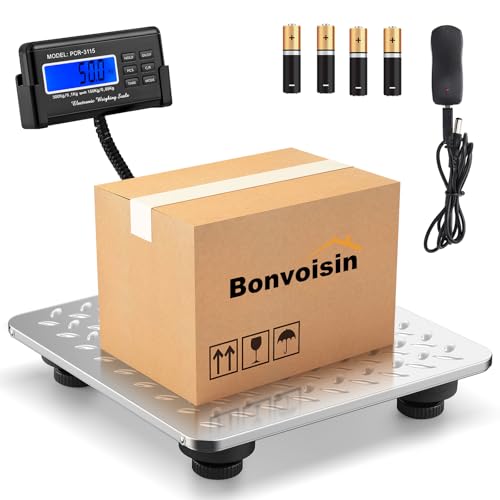
TIPRE Digital Shipping Postal Scale 660 lb
- Weight decides one tiedown or two under 393.110(b) for anything 5 ft or shorter
- Aggregate working load limit is a straight half of the weight — guess one, guess the other
- 660 lb capacity covers the crates, pallets and small machines that sit near the line

Sherline LM 2000 Trailer Tongue Weight Scale
- A load can be perfectly secured and still make the trailer unstable
- Securement stops the article moving; tongue weight is what stops the trailer swaying
- Pairs with the TestTalkHQ trailer tongue weight calculator

Mechanix Wear The Original Hi-Viz Work Gloves
- Transport chain, lever binders and wire rope all punish bare hands
- Hi-viz matters when 392.9(b) sends you out to re-check a load on a shoulder
- Enough feel left to run a ratchet and read a working load limit tag
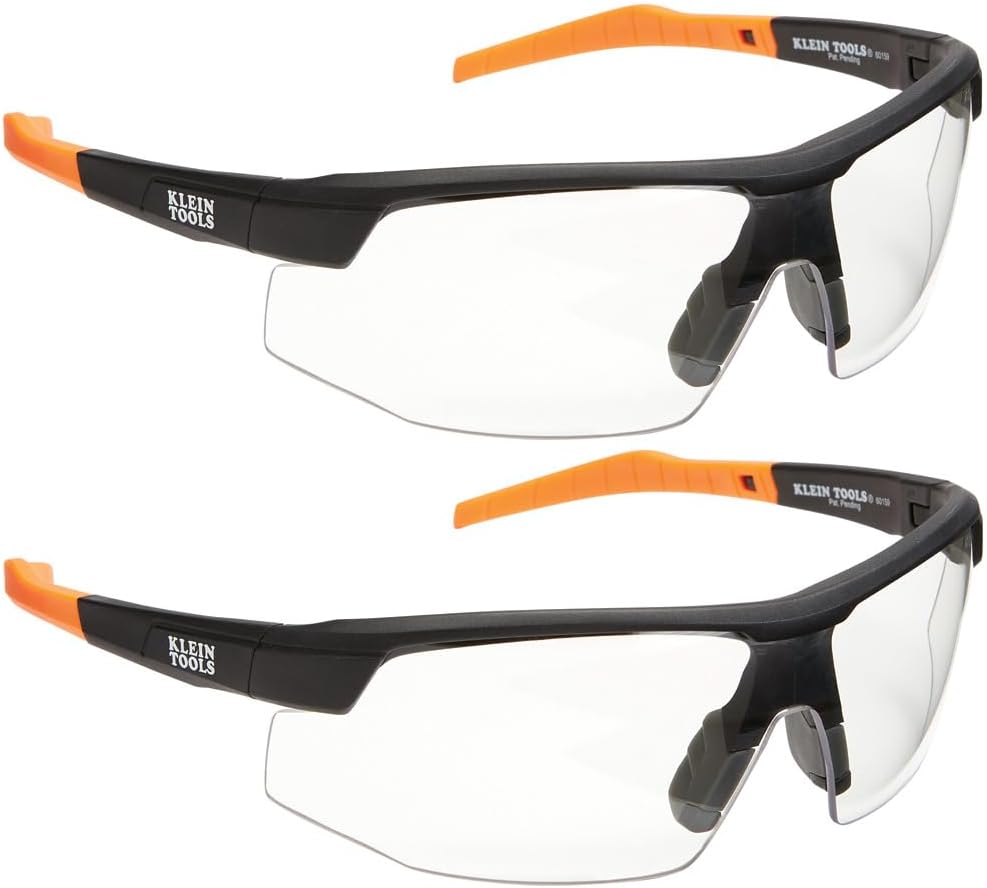
Klein Tools 60171 Anti-Fog Safety Glasses 2-Pack
- A lever binder coming off a tensioned chain is the classic way people get hurt
- Webbing under load stores energy and does not fail politely
- Anti-fog matters because securement checks happen in the weather
As an Amazon Associate, TestTalkHQ earns from qualifying purchases. Prices and availability can change.
Where the working load limit number comes from
393.108 sets a clear order of precedence, and it starts with the hardware.
A manufacturer’s marking governs. 393.108(b) says the tables in the regulation are to be used when the tiedown is not marked, and that material marked with a working load limit different from the table is considered to have the marked value. That cuts both ways: a marked strap that is stronger than the table gets the credit, and one that is weaker gets the debit.
Unmarked hardware falls back to the table, and the defaults are harsh. Unmarked welded steel chain is treated as Grade 30 proof coil under 393.108(d). At 3/8 in that is 2,650 lb instead of the 6,600 lb a marked Grade 70 chain of the same size carries — less than half. Unmarked synthetic cordage is treated as polypropylene, the weakest rope in the tables, under 393.108(c). Unmarked wire rope is treated as 6 × 37 fiber core under 393.108(e)(2).
| Chain size | Grade 30 proof coil |
Grade 43 high test |
Grade 70 transport |
Grade 80 alloy |
Grade 100 alloy |
|---|---|---|---|---|---|
| 1/4 in | 1,300 | 2,600 | 3,150 | 3,500 | 4,300 |
| 5/16 in | 1,900 | 3,900 | 4,700 | 4,500 | 5,700 |
| 3/8 in | 2,650 | 5,400 | 6,600 | 7,100 | 8,800 |
| 7/16 in | 3,700 | 7,200 | 8,750 | — | — |
| 1/2 in | 4,500 | 9,200 | 11,300 | 12,000 | 15,000 |
| 5/8 in | 6,900 | 13,000 | 15,800 | 18,100 | 22,600 |
Working load limits in pounds, from the tables to 393.108. The 5/16 in row lists Grade 80 alloy below Grade 70 transport, which is what the regulation says and is reproduced here rather than tidied. The 7/16 in row has no Grade 80 or Grade 100 entry at all.
| Synthetic webbing | WLL (lb) | Wire rope 6 × 37 FC | WLL (lb) | Polyester rope | WLL (lb) |
|---|---|---|---|---|---|
| 1-3/4 in | 1,750 | 1/4 in | 1,400 | 3/8 in | 555 |
| 2 in | 2,000 | 3/8 in | 3,000 | 1/2 in | 960 |
| 3 in | 3,000 | 1/2 in | 5,300 | 3/4 in | 1,880 |
| 4 in | 4,000 | 5/8 in | 8,300 | 1 in | 3,300 |
Reading these tables next to each other is worth doing once. A 4 in strap and a 5/16 in Grade 43 chain are within a hundred pounds of each other. A 1/2 in polyester rope at 960 lb is not a serious tiedown for anything of consequence, and a 1/2 in manila rope at 315 lb is not one at all.
The weakest link is usually not the strap
393.108(a) quietly reframes everything above. The working load limit of a tiedown is the lowest working load limit of any of its components, including the tensioner, or of the anchor points it attaches to, whichever is less.
A 4 in strap rated 4,000 lb through a stake pocket rated 2,000 lb is a 2,000 lb tiedown. So is the same strap with a 3,335 lb ratchet on it, or a flat hook rated below the webbing, or a D-ring somebody welded to a deck without looking up a number. Every one of those is a component and the lowest figure sets the working load limit for the whole assembly.
393.104(c) closes the same loop from the vehicle side: the structure, floor, walls, deck, anchor points, headerboards, bulkheads, stakes, posts and mounting pockets all have to be strong enough to meet the 393.102 performance criteria, with no cracks, cuts or damage that reduce the working load limit. A split deck board under a D-ring is a securement defect, not next month’s maintenance.
393.104(b) says the same about the tiedowns themselves: no damaged or weakened components, including cuts and cracks that reduce the working load limit. And 393.104(f) adds four rules that get skipped — no knots in a tiedown, repairs only to the applicable standard or the manufacturer’s instructions, every tiedown attached so it cannot work loose or release in transit, and edge protection wherever a tiedown would be subject to abrasion or cutting where it touches the cargo, with the edge protection itself having to resist abrasion, cutting and crushing.
Where the one-half figure actually comes from
Half the weight looks like a round number somebody picked. It is not. 393.102 states the design cases the subpart is built on, applied separately in each direction:
| Direction | Working load limit case, 393.102(a)(2) | Breaking strength case, 393.102(a)(1) |
|---|---|---|
| Forward (deceleration) | 0.435 g | 0.8 g |
| Rearward | 0.5 g | 0.5 g |
| Lateral | 0.25 g | 0.5 g |
0.8 g forward is roughly what a hard emergency stop on dry pavement puts into a load — the same deceleration our braking and stopping distance calculator works with from the other end. The securement requirement is then stated as a single, checkable number — half the article weight in aggregate working load limit — that a driver can verify at the roadside without doing any of the dynamics.
393.102(b) adds a separate requirement that is easy to forget precisely because it is not part of the aggregate sum: the securement system must provide a downward force of at least 20 percent of the article weight where the article is not fully contained within the structure of the vehicle. That clause is why a slack over-the-top strap is a failure even when it is present and routed correctly. It is also why 393.112 requires every tiedown to be designed and maintained so the driver can tighten it while the vehicle is in transit — with steel strapping named as the one exception, because you cannot retension it.
Working a real load, start to finish
A worked sequence, in the order that avoids doubling back:
1. Weigh and measure the article. Not the pallet it came on, not the crate plus the dunnage unless those are part of what is being secured as a group. Weight sets the aggregate requirement; length sets the count.
2. Deal with rolling first. 393.106(c)(1) requires anything likely to roll to be restrained by chocks, wedges, a cradle or equivalent, and says the restraint must not be able to work loose in transit. That happens before tiedowns, not instead of them.
3. Decide honestly whether it is blocked forward. That single answer changes the count rule from 393.110(b) to 393.110(c).
4. Get the count from 393.110. Length first, weight only if it is 5 ft or under, and round every fraction up.
5. Establish the real working load limit of one tiedown. Marking if there is one, table if there is not, then reduce it to whatever the weakest component in the assembly is rated at — ratchet, hook, D-ring, stake pocket, or the anchor itself.
6. Work out what each tiedown contributes by the geometry you are actually going to use, not the one you would like to be using.
7. Divide the required aggregate by that contribution and round up. Take the larger of that and the count from step 4.
8. Add edge protection anywhere a tiedown touches an edge that could abrade or cut it. This is 393.104(f)(4) and it is not optional on a strap over a steel corner.
9. Check the commodity-specific sections. If it is logs, dressed lumber, metal coils, paper rolls, concrete pipe, an intermodal container, a vehicle, heavy equipment, a flattened car, a roll-on container or a boulder, its own section takes precedence where it adds requirements.
10. Re-check it in transit. 392.9(b) requires the driver to inspect the cargo and the securement devices within the first 50 miles, and to re-examine and adjust whenever the driver changes duty status, or after 3 hours, or after 150 miles — whichever comes first.
The commodity-specific rules that override all of this
393.106(a) is explicit that where a commodity-specific section adds requirements, those take precedence over the general rules. The sections are 393.116 logs, 393.118 dressed lumber, 393.120 metal coils, 393.122 paper rolls, 393.124 concrete pipe, 393.126 intermodal containers, 393.128 automobiles and light trucks, 393.130 heavy vehicles and equipment, 393.132 flattened or crushed vehicles, 393.134 roll-on roll-off containers, and 393.136 large boulders.
Three of those catch ordinary hauling constantly:
Heavy equipment over 10,000 lb (393.130). Wheeled or tracked machinery weighing 4,536 kg (10,000 lb) or more must be restrained against lateral, forward, rearward and vertical movement using a minimum of four tiedowns, each affixed as close as practicable to the front and rear of the machine or to mounting points designed for the purpose. Accessory equipment such as a hydraulic shovel must be completely lowered and secured, and articulated machines must be restrained against articulating. Hitting the aggregate working load limit with three big chains does not satisfy this section.
Cars, light trucks and vans of 10,000 lb or less (393.128). Restrained at both the front and the rear against lateral, forward, rearward and vertical movement, with a minimum of two tiedowns. Tiedowns designed to attach to the vehicle structure must use the mounting points designed for it, and tiedowns that go over or around the wheels must restrain in all three directions. Edge protectors are not required where webbing contacts the tires.
Flattened or crushed vehicles (393.132). Synthetic webbing is prohibited for securing them, except to connect wire rope or chain to anchor points on the vehicle — and even then the webbing must not touch the cars, with or without edge protection.
Frequently asked questions
How many straps do I need for a 10 foot load?
Two, if it is not blocked forward: 393.110(b)(2)(ii) requires two tiedowns for an article longer than 5 ft and not more than 10 ft, whatever it weighs. At 10 ft 1 in it becomes three, because 393.110(b)(3) then applies and adds one for the fraction. Separately, the aggregate working load limit of whatever you use has to reach half the weight of the article, and if that needs more than two you use more than two.
Does a ratchet strap over the top count as two tiedowns?
No — it is one tiedown, and the question is what it contributes to the aggregate working load limit. If it runs over the load and anchors on the opposite side of the vehicle, it contributes its full working load limit under 393.106(d)(3). If it comes back down to the same side, it contributes half under 393.106(d)(2). Either way it is one tiedown for the purposes of the minimum count in 393.110.
What is the 50 percent rule in cargo securement?
393.106(d): the aggregate working load limit of the tiedowns must be at least one-half the weight of the article or group of articles being secured. It comes from the design cases in 393.102, which state the working-load-limit conditions as 0.435 g forward, 0.5 g rearward and 0.25 g laterally, applied separately.
Do I need edge protection?
393.104(f)(4) requires it wherever a tiedown would be subject to abrasion or cutting at the point where it touches the article of cargo, and the edge protection itself has to resist abrasion, cutting and crushing. In practice that means any strap over a square steel edge, a sawn timber corner, a sheet metal lip or an angle iron. The one named exception is 393.128(b)(4), where edge protectors are not required for webbing in contact with vehicle tires.
Can I count a friction mat toward the requirement?
Not toward the aggregate working load limit. 393.108(g) rates an unmarked friction mat as providing resistance to horizontal movement equal to 50 percent of the weight placed on it, but that is not a working load limit and 393.106(d) sums only the three tiedown cases. Mats are genuinely useful for stopping a load walking on the deck; they do not reduce the number of tiedowns.
What if my chain is not marked?
393.108(d) treats unmarked welded steel chain as Grade 30 proof coil, which is the bottom row of the table. On 3/8 in chain that is 2,650 lb instead of 6,600 lb for marked Grade 70. Grade markings are embossed on the links — 3, 30 or 300 for Grade 30, 7, 70 or 700 for Grade 70, and so on. If you cannot read them, the regulation reads them as Grade 30.
Are these rules the same for a pickup and a trailer?
393.100(a) scopes Subpart I to trucks, truck tractors, semitrailers, full trailers and pole trailers, which are commercial motor vehicles. The physics is identical behind a personal vehicle and the arithmetic is worth using there, but the federal rule is not by itself what makes it a legal requirement in that case. State law may impose its own requirements either way.
How often do I have to check the load?
392.9(b) requires the driver to satisfy themselves the load is secure before driving, to inspect the cargo and securement devices within the first 50 miles of a trip and adjust as necessary — including adding more securement devices — and then to re-examine and adjust whenever the driver changes duty status, or the vehicle has been driven for 3 hours, or 150 miles, whichever occurs first. Sealed vehicles the driver has been ordered not to open, and loads where inspection is impracticable, are excepted.
Does blocking really let me use fewer tiedowns?
Yes, and it is a real saving on long articles: 393.110(c) drops the requirement to one tiedown per 10 ft or fraction, instead of two plus one per 10 ft. But the blocking has to be real — a headerboard, a bulkhead, other adequately secured articles, or proper blocking — and if it is a front end structure, 393.114 sets out the height, width, strength and penetration resistance it has to have.
What about a group of small items strapped together?
393.106(d) lets you treat an article or group of articles secured by the same tiedowns as one unit, so the aggregate working load limit is measured against the combined weight. 393.106(c)(2) adds that articles placed beside each other and secured by transverse tiedowns must either be in direct contact with each other or be prevented from shifting toward each other in transit.