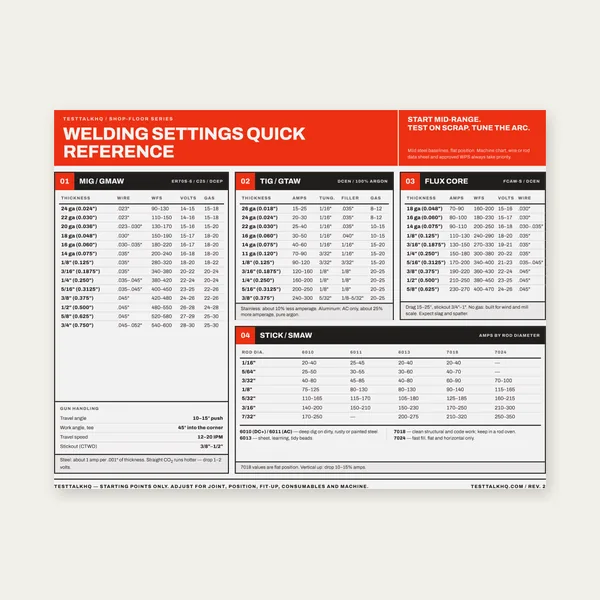
Welding Reference Card
One page. MIG, TIG, stick and flux core settings by thickness.
$3.99
BuyUndersized leads, voltage drop on long runs, and gauge-to-amperage mismatches
Select welder lead wire gauge with the Wire Gauge Calculator for Welders. Reference charts: Welding Wire Gauge Chart and Wire Gauge Chart Guide. Long-run voltage sag: Voltage Drop Troubleshooting.
| Symptom | What it usually means | First fix | Next tool |
|---|---|---|---|
| Weak arc at high amps | Undersized lead — voltage drop | Upsize gauge or shorten run | Wire Gauge Calculator |
| Leads hot under load | Wire too small for duty current | Match gauge to max output | Welding Wire Gauge Chart |
| Inconsistent arc, long extension | Drop on extension cord + leads | Include full path in calc | Voltage Drop Troubleshooting |
| Breaker trips, weld OK at low amp | Gauge OK but circuit undersized | Separate service vs lead gauge | Wire Gauge Chart Guide |
What it looks like: Arc wanders at high output; welder shows correct setting but puddle won't wet; MIG wire feed OK but voltage at arc is low — often with long undersized leads.
Likely causes: Lead wire gauge chosen for average amps but welding at max; coiled leads acting as choke; multiple connectors in series adding resistance.
Fixes: Size leads for maximum welding current and duty from the Wire Gauge Calculator for Welders; use parallel runs or shorter path if upsize isn't possible.
What it looks like: Works fine on 10 ft leads, weak on 100 ft; input voltage OK at panel but sags at machine under load. Stick/MIG both affected on long extensions.
Likely causes: I²R loss in undersized copper over distance. Extension cord + welder leads + return path all count. 50 A on #10 over 150 ft can drop several volts.
Fixes: Upsize gauge, shorten run, or feed closer outlet. Model full path in Voltage Drop Troubleshooting and welder gauge calc.
What it looks like: #12 leads on a 250 A machine; chart says #2 for 200 A at 50 ft but shop used #4; different results winter vs summer (copper temperature).
Likely causes: Confusing welder electrode wire diameter with lead gauge; using household wire ampacity tables for welding duty; ignoring 100% vs 60% duty cycle rating.
Fixes: Use the Welding Wire Gauge Chart and Wire Gauge Chart Guide for lead sizing; enter max amps and one-way length in calculator.
What it looks like: Leads warm during production welding but seemed fine on test beads; insulation softens on undersized cable.
Likely causes: Gauge sized for 20% duty peak but shop runs 80% production; thermal limit of jacket below copper melt but above safe touch.
Fixes: Size for sustained current if production duty is high; use welding cable (stranded, flexible) not building wire for leads.
Wire Gauge Calculator for Welders → Welding Wire Gauge Chart → Voltage Drop Troubleshooting →
One page. MIG, TIG, stick and flux core settings by thickness.
$3.99
Buy
19 pages. Four processes, stainless and aluminum, symbols and inspection.
$12.99
Buy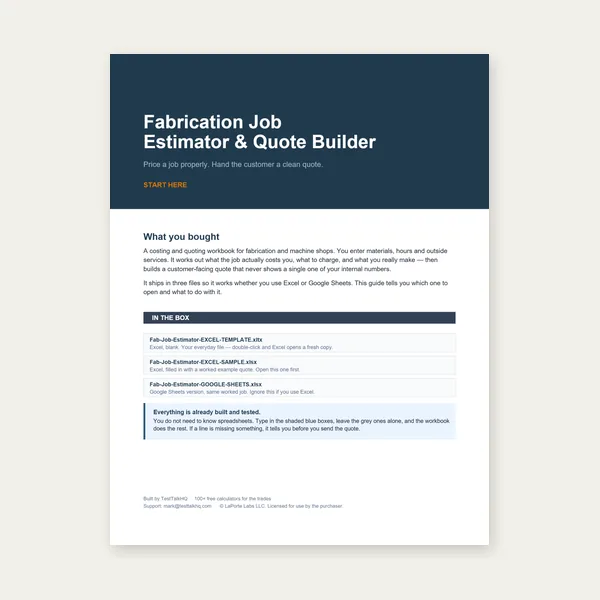
Price the job, then hand over a quote with no internal numbers.
Excel or Google Sheets. Best on a computer.
$29.00
Buy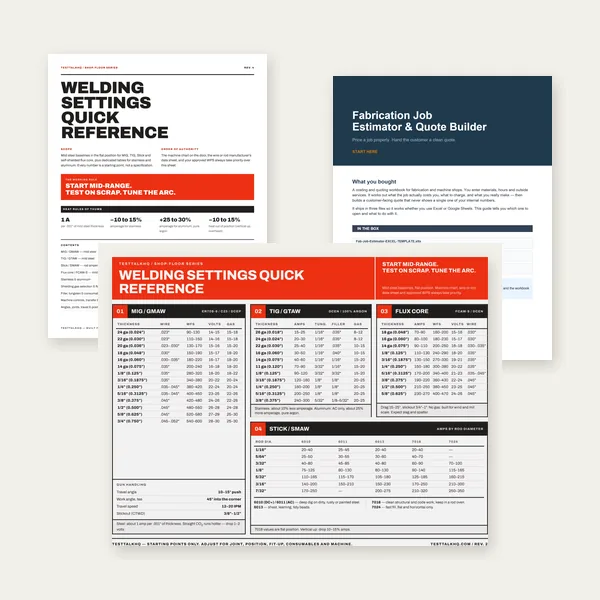
Card, 19-page guide and the estimator workbook. All six files.
Excel or Google Sheets. Best on a computer.
$34.99
$45.98 if bought separately — save $10.99
BuyCheckout opens in a new tab.
Five CSV catalog picks with verified images — flowmeters, regulators, torch accessories, and PPE
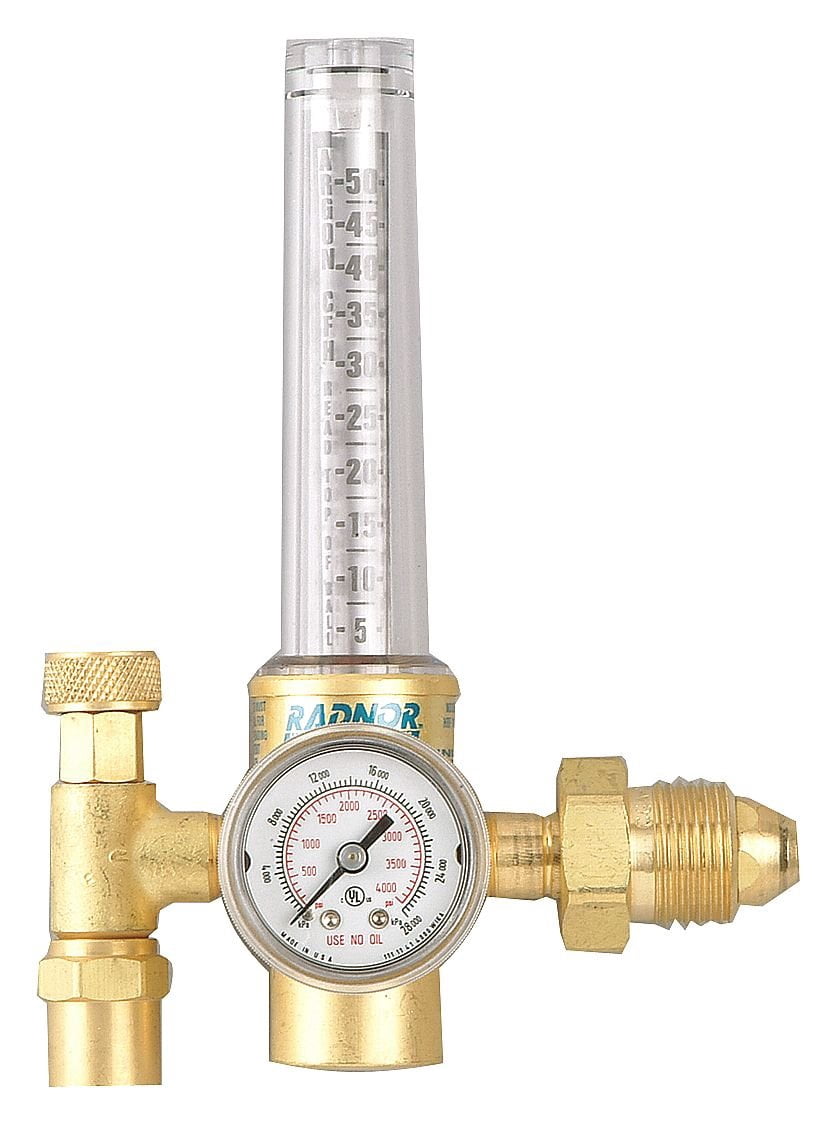
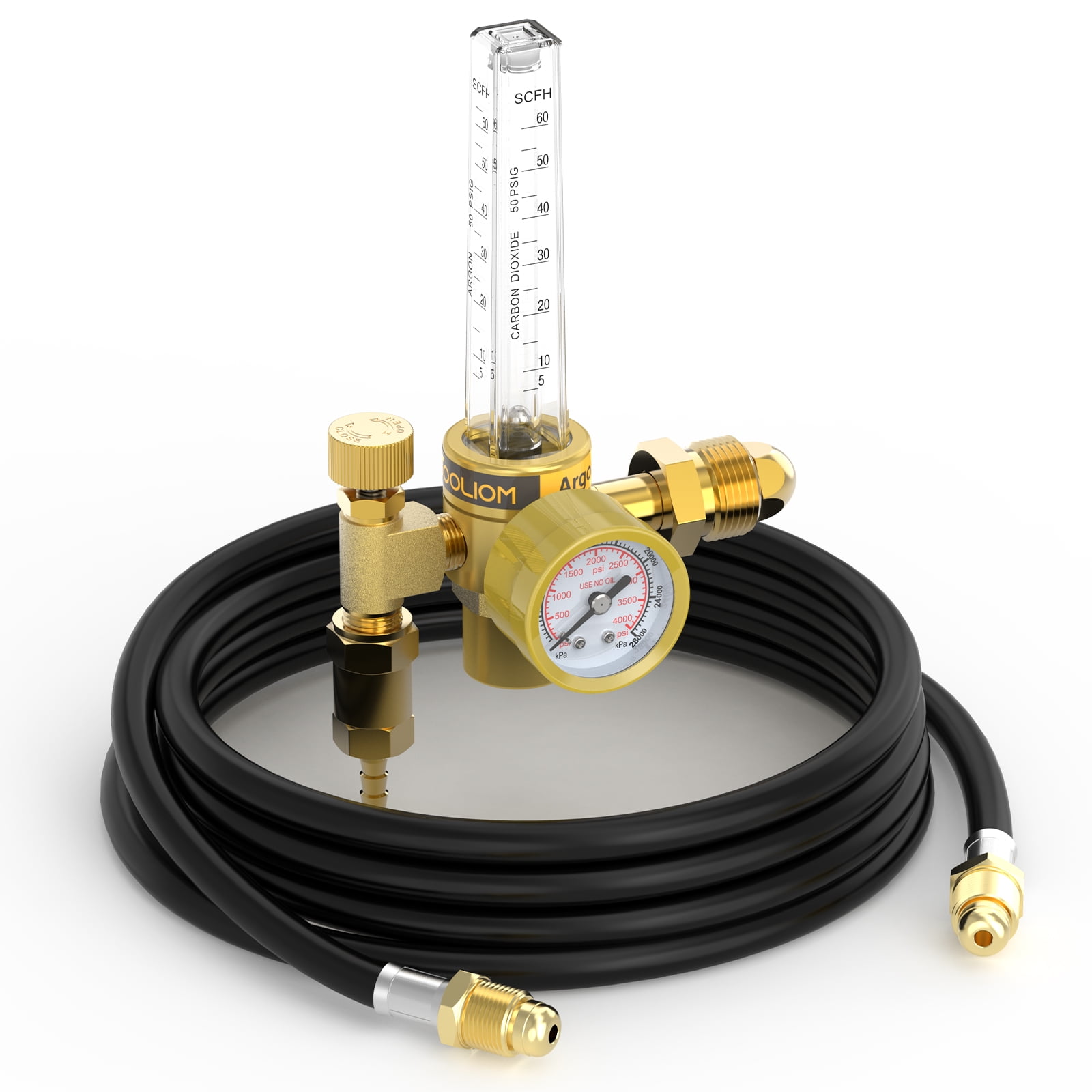
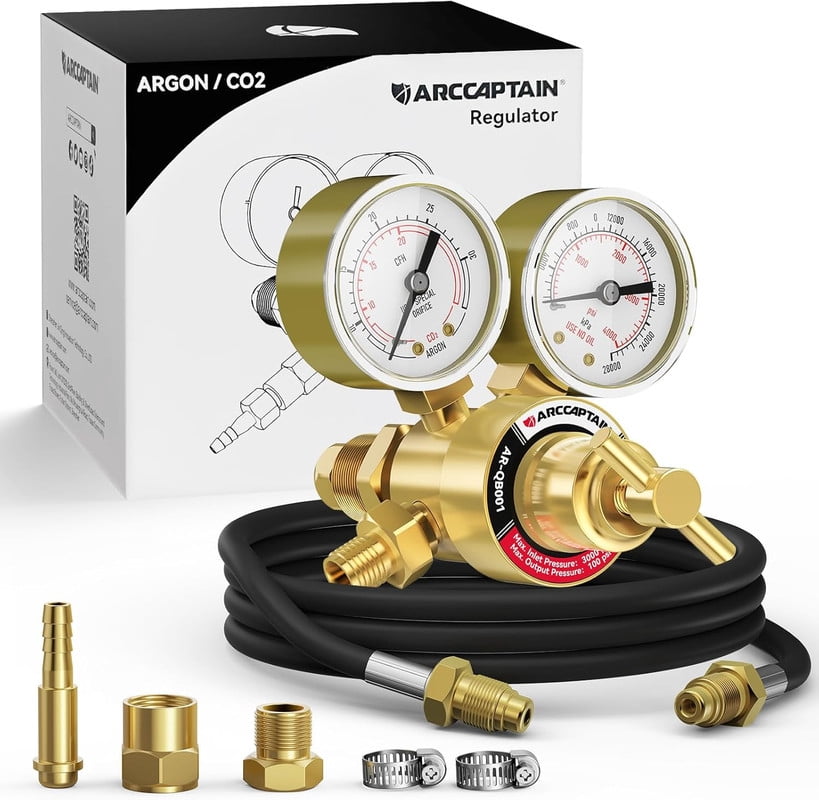
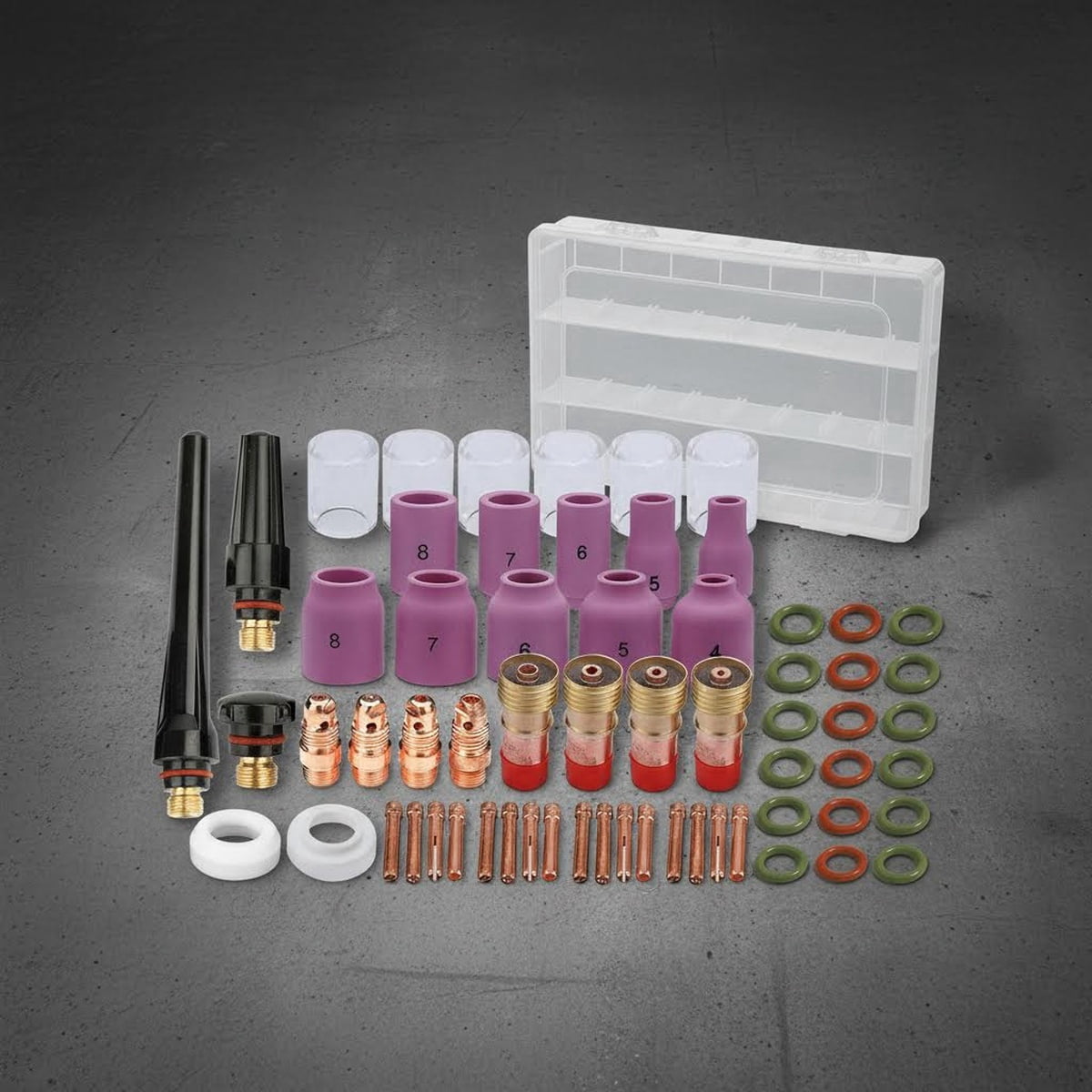
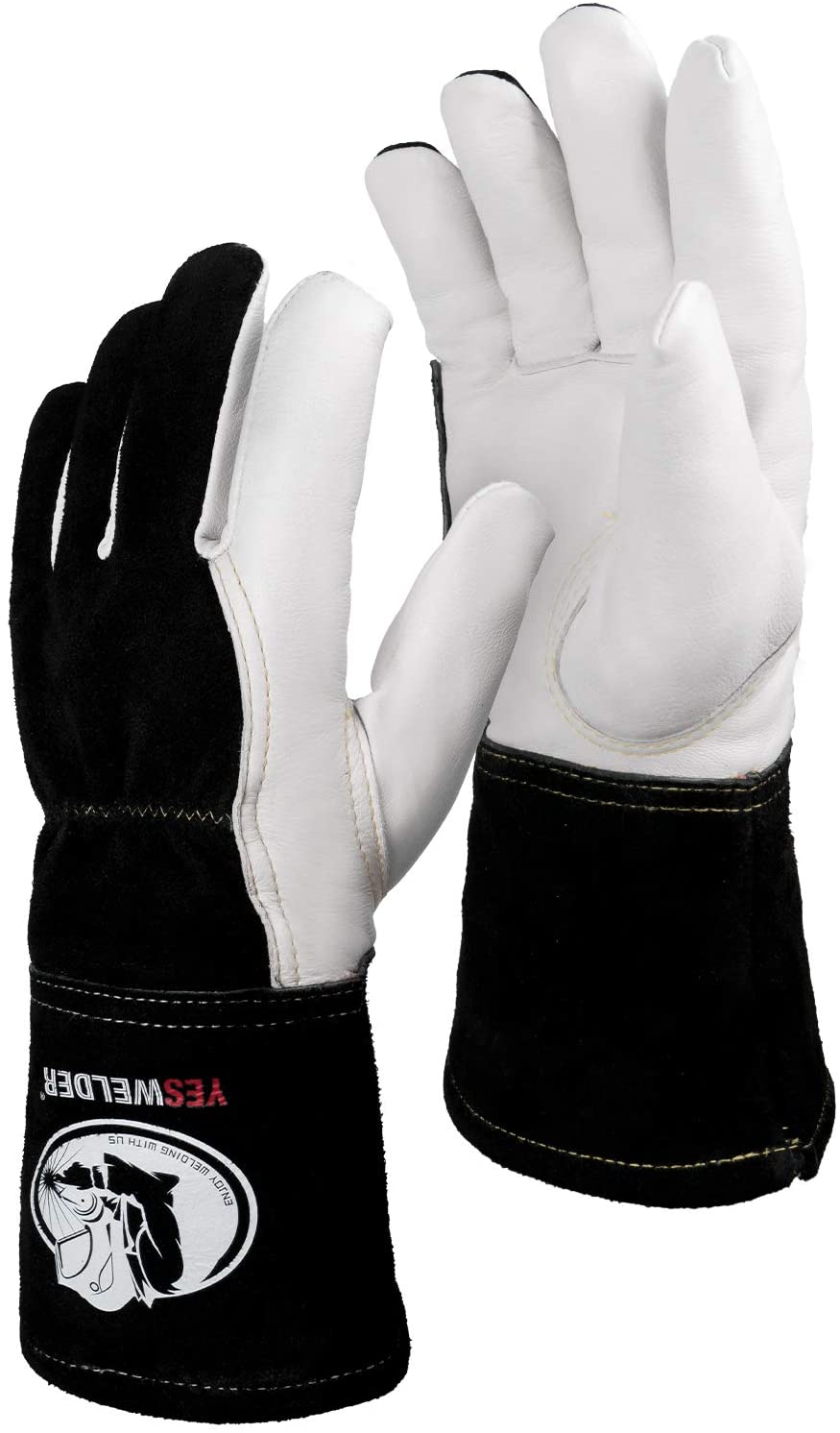
As an Amazon Associate, TestTalkHQ earns from qualifying purchases. All five cards are sourced only from the affiliate CSV with verified product images.
Depends on one-way lead length — use the calculator, not a single chart row without length.
Voltage drop in undersized copper — upsize or move power closer.
Electrode wire (0.030–0.045) is not lead cable (#2–#4/0) — different calculators.
Yes — full path from panel to arc including cord and leads.