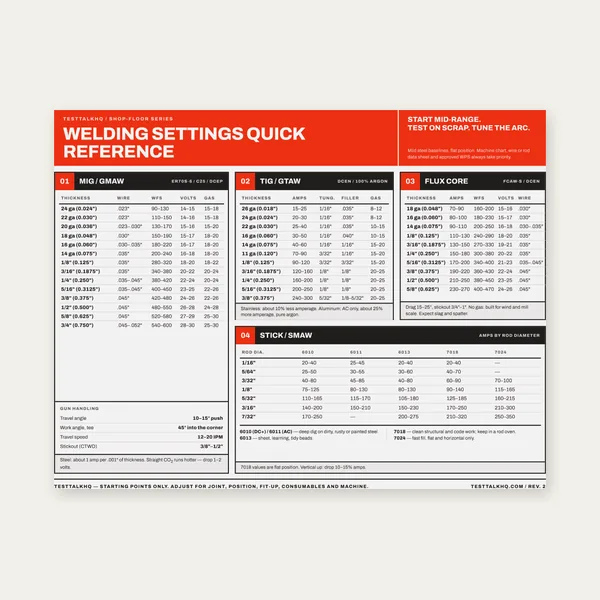
Welding Reference Card
One page. MIG, TIG, stick and flux core settings by thickness.
$3.99
BuyA real decision fork: NFPA 70E PPE category / task-table method is faster and more conservative when allowed; IEEE 1584-style incident energy analysis is more precise but needs a qualified study — when each path fits
The PPE chart shows a two-row compare. This page is the full fork: cost, conservatism, engineer involvement, and when tables stop applying. Pair with the AFB calculator for what-ifs and troubleshooting when numbers disagree with labels.
| Situation | Lean toward | Why |
|---|---|---|
| Employer ESP allows tables; equipment fits table parameters; no site IE labels | Table / PPE category method | Faster, no full model required — usually more conservative clothing |
| Labels already show cal/cm² from a study; complex gear; high fault / long clearing | Incident energy analysis | Precise clothing match; tables may not apply |
| You need “what if we change the breaker?” answers | IE analysis (engineer) + optional educational calc | Tables don’t model your TCC change |
| Above Cat 4 / outside table limits | IE analysis — or do not work energized | Category method ends; controls must change |
| Budget is tight but risk is high on unlabeled gear | Do not freestyle — get assessment | Guessing is not a method |
What it is: Task and equipment tables that point to a PPE category (with minimum arc ratings) when a detailed incident-energy analysis is not used — subject to the edition your employer adopts and the table’s parameter limits.
Strengths: Faster to implement for qualifying tasks; no full short-circuit/coordination model required up front; often drives more conservative clothing than a precise IE number.
Limits: Conservative can mean heavier PPE and heat stress. Tables have boundaries (fault current, clearing time, equipment type). Outside those limits, you cannot “pick Cat 2 because it feels right.”
Best when: The electrical safety program explicitly allows the table method for the task, equipment is within parameters, and no conflicting IE label exists.
What it is: A modeled calculation of incident energy and arc flash boundary at defined working distances, typically producing equipment labels with cal/cm² and AFB. Done by qualified persons with system data.
Strengths: More precise clothing selection (ATPV/EBT ≥ IE). Supports engineering what-ifs (faster clearing, lower fault). Required feel when tables don’t apply or energies are high.
Limits: Costs money and time. Goes stale when the system changes. Educational website calculators are not a stamped IEEE 1584 study.
Best when: Complex distribution, high available fault, long clearing times, or the employer requires IE labels facility-wide.
If tables fail, move to incident energy analysis or eliminate the energized exposure. See troubleshooting when a planning calculator fights a label.
One page. MIG, TIG, stick and flux core settings by thickness.
$3.99
Buy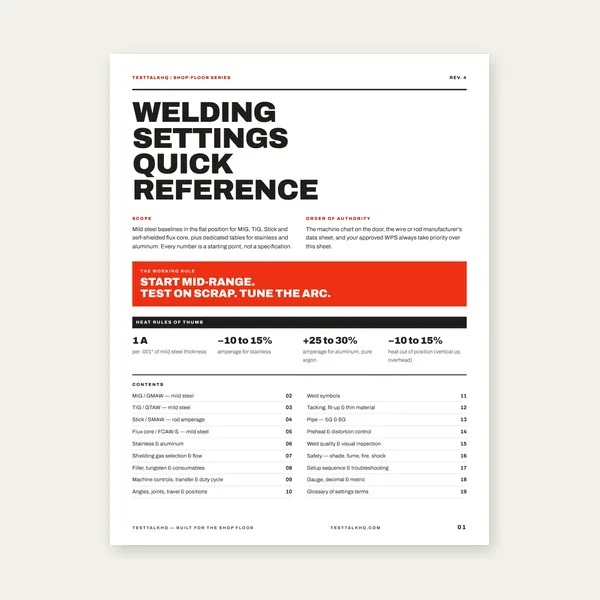
19 pages. Four processes, stainless and aluminum, symbols and inspection.
$12.99
Buy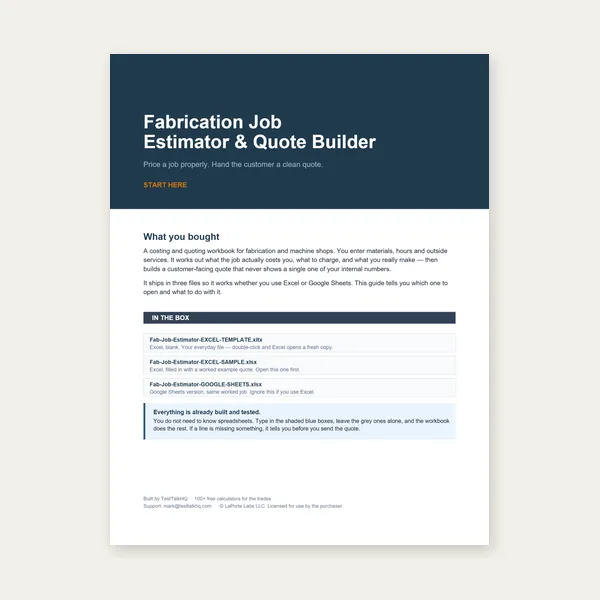
Price the job, then hand over a quote with no internal numbers.
Excel or Google Sheets. Best on a computer.
$29.00
Buy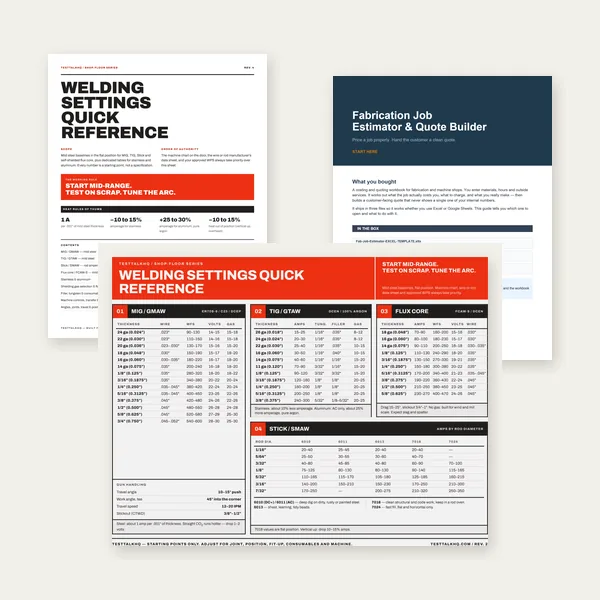
Card, 19-page guide and the estimator workbook. All six files.
Excel or Google Sheets. Best on a computer.
$34.99
$45.98 if bought separately — save $10.99
BuyCheckout opens in a new tab.
Six Electrical / Safety picks from the TestTalkHQ affiliate CSV — meters, insulated tools, NCVT, and PPE for energized-work verification


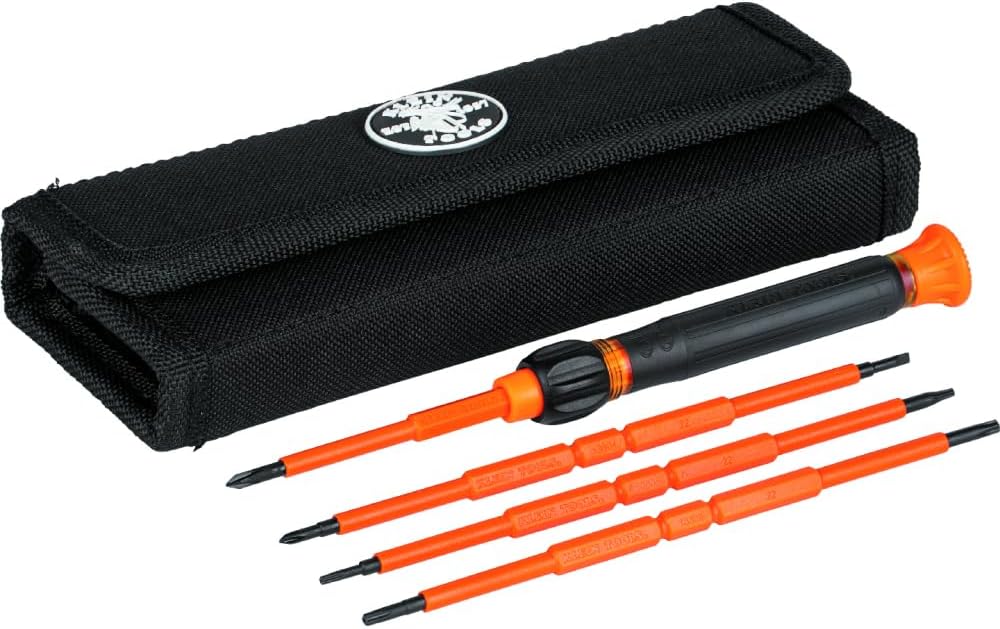

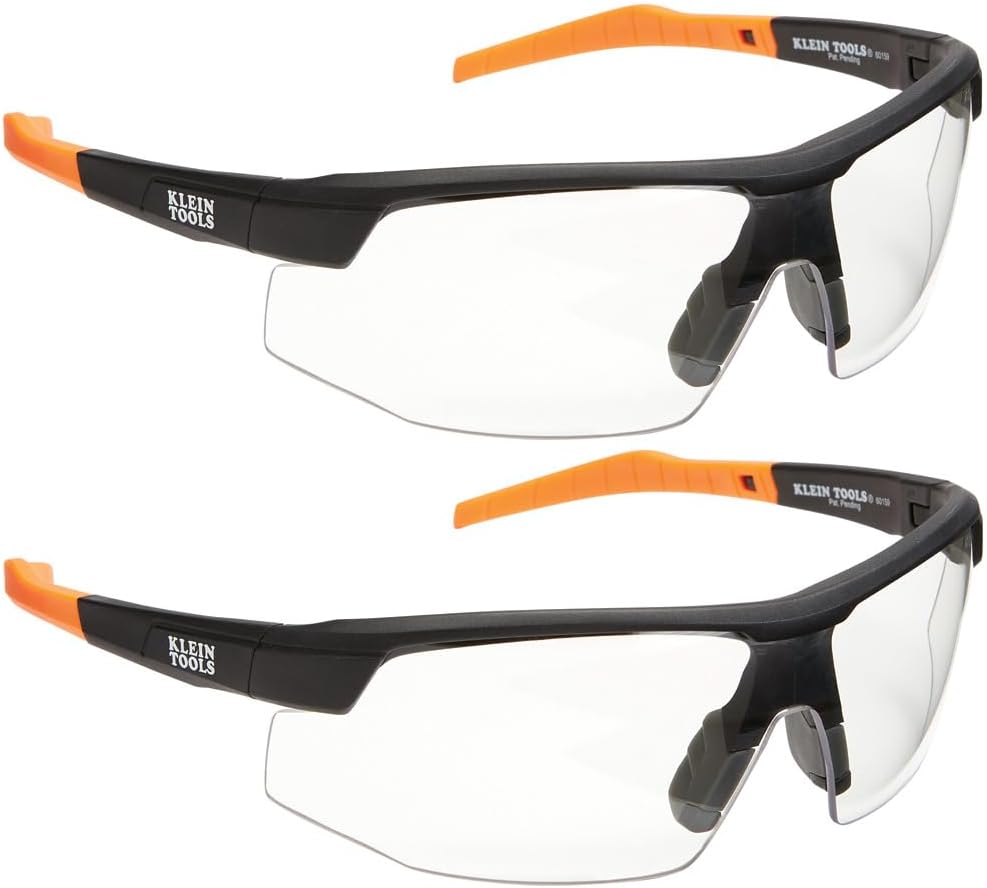
As an Amazon Associate, TestTalkHQ earns from qualifying purchases. Catalog products only — educational PPE planning, not a substitute for employer-specified AR clothing systems.
Not inherently — it is often more conservative on clothing. The risk is using tables outside their limits or ignoring IE labels.
Follow the assessment documented for that equipment/task. Don’t shop for the lighter PPE by switching methods casually.
No. It is an educational estimate. IEEE 1584 studies need qualified modeling.
See the Arc Flash PPE Category Chart.