Air Compressor Buying Guide for Welders & Fabricators
Stop guessing. Here's exactly what to look for before you buy.
Whether you're running angle grinders, plasma cutters, or paint equipment alongside your welder, the right compressor keeps every air tool performing at full power. This guide breaks down CFM, tank size, pump type, and the specs that actually matter — so you buy once and buy right.
Need to size your shop first? Use our Air Compressor CFM Calculator Also use the Per-Tool CFM Requirement Calculator for single-tool SCFM and duty-cycle guidance. or browse more free calculators and tools.
Recommended Air Compressors
Top picks for welders and fabricators at every budget level
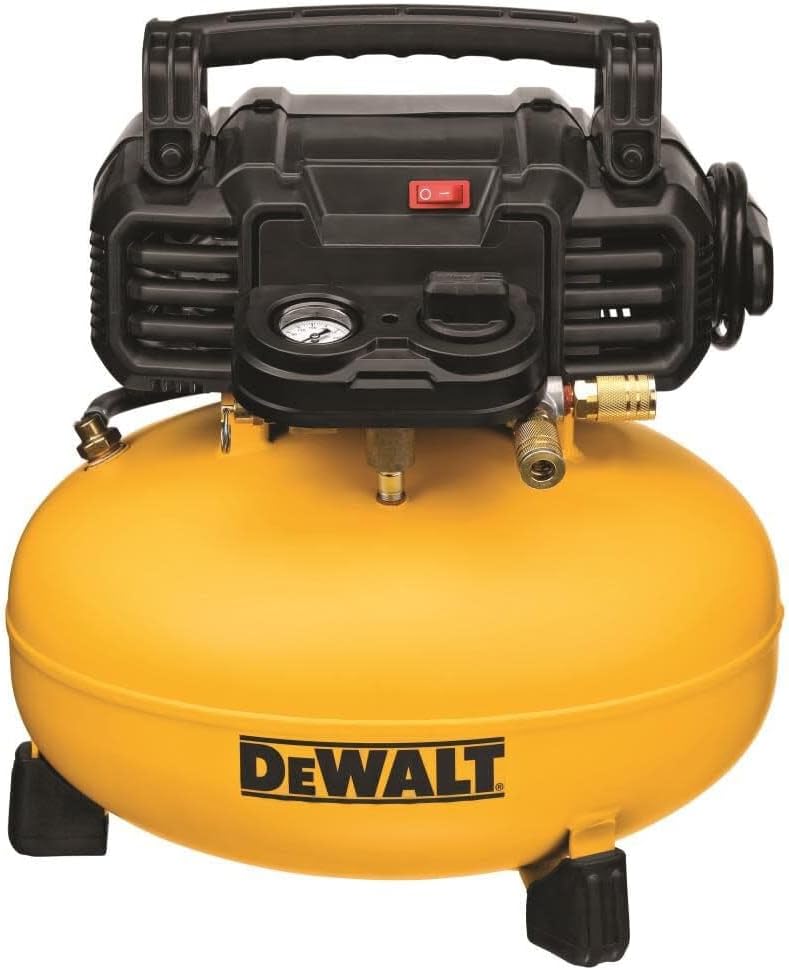
DEWALT 6-Gallon Pancake Compressor
- 2.6 SCFM at 90 PSI — compact portable package
- Great for nail guns, blow guns, and light grinding
- Oil-free, maintenance-free pump
- Reliable cold-weather starting for job sites
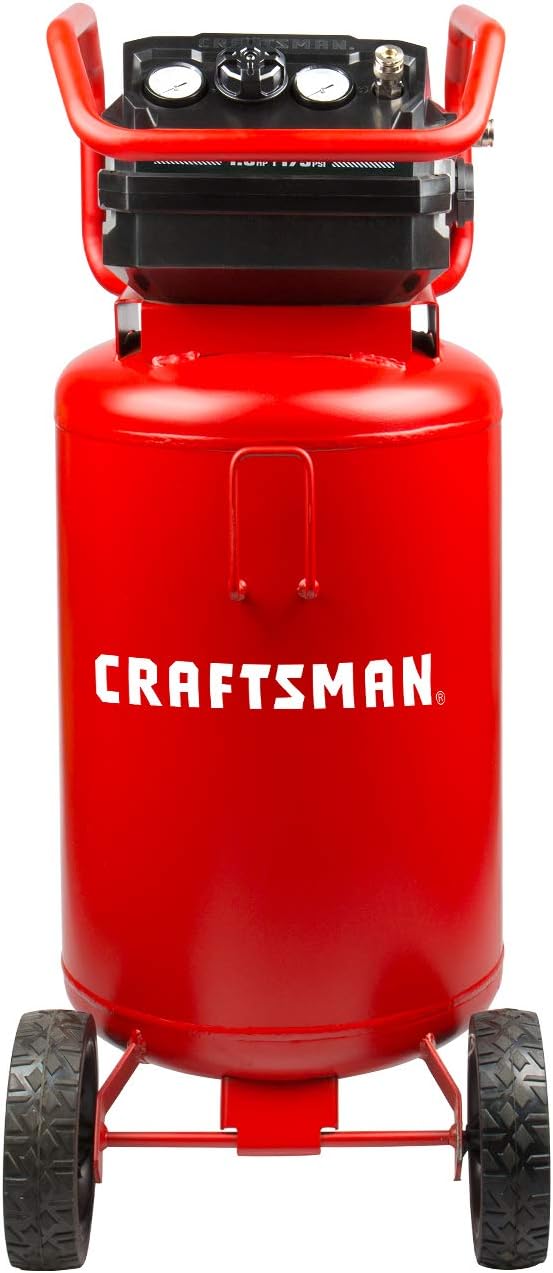
Craftsman 20-Gallon Oil-Free Compressor
- 4.0 SCFM at 90 PSI with 20-gallon tank
- Handles impact wrenches, grinders, occasional spray
- Moderate shop duty without constant cycling
- Oil-free pump — minimal maintenance
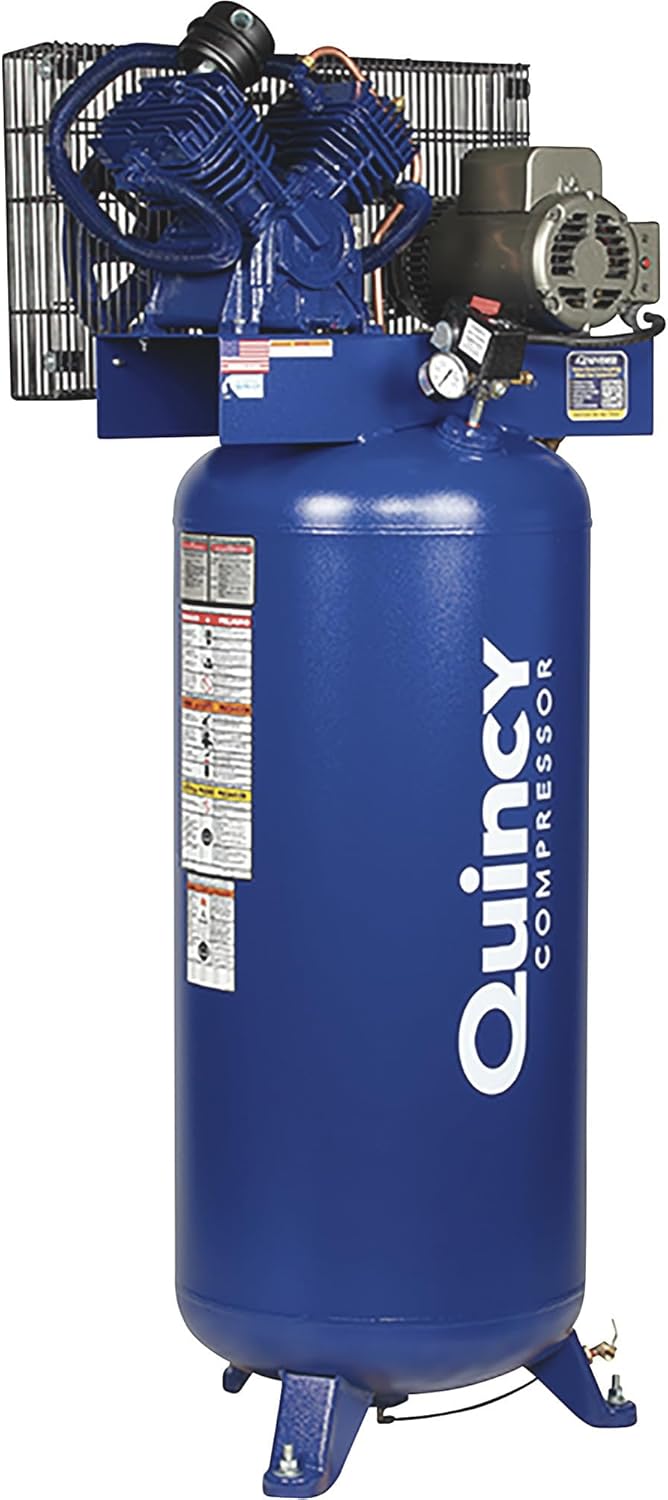
Quincy QT-54 5HP 60-Gallon Compressor
- 5 HP belt-drive, oil-lubricated two-stage pump
- 60-gallon tank for continuous shop operations
- Powers plasma, sandblasters, and DA sanders
- Built for multi-tool production setups
As an Amazon Associate, TestTalkHQ earns from qualifying purchases.
What Air Tools Welders and Fabricators Actually Use (and Their CFM Needs)
Most welding shops don't run a single air tool — they accumulate them over time. An angle grinder is usually the first purchase: a 4.5-inch or 7-inch pneumatic grinder typically draws 4.5 to 7 CFM at 90 PSI under continuous use. Impact wrenches for fixture work and teardown run 4 to 5 CFM for a 1/2-inch drive, while 3/4-inch impacts can pull 7 CFM or more. Die grinders for tight cleanup spots sit in the 4 to 6 CFM range, and air ratchets are lighter at 3 to 4 CFM.
Finish and fabrication work adds higher-demand tools. DA sanders are among the hungriest common shop tools at 11 to 13 CFM continuous. HVLP paint sprayers need 7 to 12 CFM depending on tip size and fan width. Sandblasters vary wildly — small cabinet units might run 10 CFM, while open-blast setups can demand 25 CFM or more. Plasma cutters themselves use electricity for the arc, but most units require a separate compressed air supply of 4 to 8 CFM at 60 to 80 PSI to blow the molten metal through the kerf.
At the low end, blow guns and air nozzles use 1 to 3 CFM, and nail guns or brad nailers sip 0.3 to 1 CFM in short bursts. The key distinction is burst versus continuous: a nail gun firing once every few seconds barely loads a compressor, but a DA sander running for ten minutes straight will expose every weakness in your air supply. List every tool you own or plan to buy, note whether each runs continuously or intermittently, and size for the worst realistic combination — not just the lightest tool on the rack.
How to Calculate the CFM You Actually Need
Duty cycle is where most buyers get tripped up. A tool's rated CFM assumes continuous operation — the compressor must deliver that flow nonstop while the tool runs. In practice, many tools cycle on and off: an impact wrench fires in short bursts, a blow gun gets used intermittently, and even grinders get set down between passes. But if you run a DA sander across a full panel or keep a plasma cutter cutting for extended periods, you need the compressor to sustain full rated CFM for the entire session, not just peak bursts.
Multi-tool shops add demands together. If you're grinding on one bench while someone else runs a blow gun, add both CFM values. If two people might sand simultaneously during a busy production day, plan for that scenario even if it's not daily. The mistake is sizing for one tool at a time when your shop routinely runs two or three. Add every tool that could realistically run together, then apply a 25% safety buffer on top. That buffer accounts for hose pressure drop, filter restriction, altitude, heat, and the reality that compressors rarely deliver their brochure rating under real shop conditions.
Don't want to do the math by hand? Use our Air Compressor CFM Calculator — add each tool and quantity, and it totals your demand, applies the 25% buffer, and recommends tank size and horsepower. The output number you care about is SCFM at 90 PSI with buffer applied. That's your minimum compressor rating before you start comparing models.
Tank Size: How Big Do You Actually Need?
Tank size measures stored air, not airflow. A 60-gallon tank does not deliver more CFM than a 6-gallon tank if both have the same pump — it simply holds more compressed air, which means the pump cycles less frequently between refills. For burst tools like nail guns and blow guns, a small tank works fine because the tool uses air faster than the pump delivers it, but only for a fraction of a second before you release the trigger. The tank acts as a buffer for those micro-demands.
Continuous tools tell a different story. A DA sander, angle grinder, or paint sprayer draws air faster than most single-stage portable pumps can replenish it. A larger tank extends run time before pressure drops, but it cannot fix insufficient pump CFM — eventually the tank empties and pressure falls regardless of capacity. For continuous work, you need adequate pump output first; tank size is secondary insurance against cycling frequency and pressure sag.
Practical guidelines by shop type: hobby welders running nail guns and blow guns occasionally can work with a 6 to 10 gallon portable. Home fab shops using grinders and impacts one at a time should look at 20 to 30 gallons. Active shops running sanders, sprayers, or plasma work need 30 to 60 gallons with a pump rated for the actual CFM demand. Production environments with multiple simultaneous users typically need 60 to 80 gallons or larger, paired with a two-stage pump that can sustain output under load.
Oil-Free vs. Oil-Lubricated: Which Is Right for Your Shop?
Oil-free compressors use permanently lubricated piston seals or coated cylinders instead of an oil sump. They're lighter, cheaper upfront, and require almost no maintenance beyond draining the tank and changing intake filters. For intermittent use — nail guns, blow guns, occasional grinding, fixture work with an impact — oil-free units perform well and are the practical default for portable and mid-size home shop compressors.
Oil-lubricated compressors run cooler and quieter under continuous load. The oil bath dissipates heat from the pump, reduces wear on cylinder walls, and typically delivers more consistent SCFM over a long duty cycle. Belt-drive oil-lubricated units like the Quincy QT-54 are built for shops that run DA sanders, plasma cutters, sandblasters, or paint equipment for extended sessions. The tradeoff is maintenance: you check oil level before use, change oil on schedule, and manage slightly more weight and footprint.
Choose oil-free if your air tools run in short bursts and you want minimum upkeep. Choose oil-lubricated if you run continuous-demand tools daily, need a compressor that lasts 15+ years under production load, or want quieter operation during long sessions. Don't buy oil-lubricated for occasional nailing — it's overkill. Don't buy oil-free for daily sandblasting — you'll burn through pumps.
Single-Stage vs. Two-Stage Compressors
A single-stage compressor compresses air from atmospheric pressure to tank pressure in one piston stroke. Most portable and light-duty shop compressors are single-stage. They're simpler, cheaper, and perfectly adequate for CFM demands under roughly 15 SCFM at 90 PSI. Above that range, single-stage pumps work harder, run hotter, and struggle to maintain pressure during sustained high-demand tool use.
Two-stage compressors compress air in two steps: the first stage brings air to an intermediate pressure, the second stage compresses it further into the tank. This design runs cooler, delivers higher CFM more efficiently, and maintains pressure better under continuous load. Two-stage units typically start making financial sense around 15 to 20 SCFM demand — sandblasting setups, multi-user shops, and production fabrication lines where the compressor runs hours per day.
For most welder-fabricator home shops running one or two tools at a time, a quality single-stage 20 to 30 gallon unit handles the workload. Move to two-stage when you're running 15+ SCFM continuously, need 175+ PSI for specific equipment (rare in general fab work), or want a compressor that won't be the bottleneck in a growing production shop. The upfront cost difference is significant, but so is the lifespan difference under heavy duty.
PSI Ratings: Don't Get Fooled
Compressor marketing loves big PSI numbers. You'll see 150 PSI, 175 PSI, even 200 PSI plastered on the box. For most air tools in a welding or fabrication shop, max PSI is largely irrelevant. Angle grinders, impact wrenches, die grinders, sanders, and blow guns all run at 90 PSI. Plasma cutter air supplies typically need 60 to 80 PSI. HVLP paint guns often run 20 to 30 PSI at the cap. None of these require a 175 PSI compressor — they require adequate CFM at the pressure the tool actually uses.
SCFM at 90 PSI is the number that matters. SCFM (standard cubic feet per minute) is a standardized measurement that lets you compare compressors apples-to-apples. When you read a spec sheet, find the SCFM rating at 90 PSI — not peak PSI, not displacement CFM at 0 PSI (which inflates numbers), and not HP alone. Displacement CFM measures how much air the pump moves theoretically with no tank resistance; SCFM at 90 PSI reflects what you actually get in the shop.
Read spec sheets skeptically. If a compressor lists 5 HP and 6 SCFM at 90 PSI, that's a realistic pairing. If it lists 2 HP and claims 8 SCFM, check whether that's displacement or actual delivered flow. Compare SCFM at 90 PSI against your tool requirements plus 25% buffer. PSI capacity only matters if you have a specific tool that demands higher pressure — and most fab shops don't. Buy airflow, not pressure bragging rights.
After You Size — Diagnose & Choose the Upgrade Path
Specs alone do not fix a leaky system or tell you whether the next dollar should buy tank volume or pump CFM. Use Air Compressor Troubleshooting for field diagnosis, and Bigger Tank vs More CFM for the upgrade fork (intermittent nailers vs continuous sanders/HVLP).
Shop Air Essentials
The Most Common Air Compressor Buying Mistake
Most people buy based on tank size or horsepower — both of which can be misleading. A large tank won't save you if the pump can't deliver enough CFM to keep up with your tools. And horsepower ratings on compressor boxes are often inflated peak figures, not running output. The spec that matters is SCFM at 90 PSI. That's the real-world number. Compare it against your highest-demand tool, add 25%, and that's your minimum. Everything else is secondary.
Air Compressor Maintenance That Actually Matters
Drain the tank after every use. Moisture accumulates in the tank regardless of whether you have a moisture separator, and standing water accelerates rust from the inside. Check oil levels on lubricated compressors before each use — low oil is the fastest way to destroy a pump. Replace air filters annually or more often in dusty shop environments. Belt-drive compressors need belt tension checks periodically. These aren't complex tasks, but skipping them turns a compressor that should last 15 years into one that fails in three.
Portable vs. Stationary: What's Right for You?
Portable compressors (pancake and hot dog style) are built for job sites and light shop use. They're light, easy to move, and fine for tools with modest air demand. Stationary compressors with large tanks are built to live in one place and power a full shop. The decision comes down to how you work: if your tools move around or you need to take the compressor off-site, go portable. If you have a dedicated shop space and run continuous operations, a stationary 20–60 gallon unit will serve you better and run quieter cycles.
When to Add a Secondary Air Dryer or Filter
Moisture in your air lines causes rust inside tools, fish-eyes in paint jobs, and degraded plasma cut quality. A basic inline filter on your compressor outlet catches most moisture for general shop use. If you're painting, powder coating, or running a plasma cutter, invest in a dedicated refrigerated air dryer or at minimum a coalescing filter downstream of your regulator. For sandblasting, moisture-free air is non-negotiable — wet media clogs the nozzle and ruins the abrasive. Don't skip moisture management if your shop air is being used for anything finish-sensitive.