Shop reference for Unified (UNC / UNF / UNEF), ISO metric coarse/fine, and NPT pipe threads — pitch (TPI or mm) by nominal size for identification, tap selection, and engagement planning.
How to Use This Chart
Pitch (in) = 1 / TPI. Metric pitch is already mm/thread. Engagement and shear checks need major diameter and length of engagement — use the thread pitch calculator. Theory and stripping fixes: thread pitch & engagement guide.
Unified Inch — TPI (UNC / UNF / UNEF)
UNC = coarse (general fastening). UNF = fine (thin wall, vibration). UNEF = extra-fine (adjustment, thin tubing, aerospace-style fits).
| Size | Major Ø (in) | UNC | UNF | UNEF |
|---|---|---|---|---|
| #0 | 0.060 | — | 80 | — |
| #1 | 0.073 | 64 | 72 | — |
| #2 | 0.086 | 56 | 64 | — |
| #3 | 0.099 | 48 | 56 | — |
| #4 | 0.112 | 40 | 48 | — |
| #5 | 0.125 | 40 | 44 | — |
| #6 | 0.138 | 32 | 40 | — |
| #8 | 0.164 | 32 | 36 | — |
| #10 | 0.190 | 24 | 32 | — |
| #12 | 0.216 | 24 | 28 | 32 |
| 1/4 | 0.250 | 20 | 28 | 32 |
| 5/16 | 0.3125 | 18 | 24 | 32 |
| 3/8 | 0.375 | 16 | 24 | 32 |
| 7/16 | 0.4375 | 14 | 20 | 28 |
| 1/2 | 0.500 | 13 | 20 | 28 |
| 9/16 | 0.5625 | 12 | 18 | 24 |
| 5/8 | 0.625 | 11 | 18 | 24 |
| 3/4 | 0.750 | 10 | 16 | 20 |
| 7/8 | 0.875 | 9 | 14 | 20 |
| 1 | 1.000 | 8 | 12 | 20 |
| 1-1/8 | 1.125 | 7 | 12 | 18 |
| 1-1/4 | 1.250 | 7 | 12 | 18 |
| 1-1/2 | 1.500 | 6 | 12 | 18 |
Metric — Pitch (mm) Coarse & Fine
| Size | Coarse | Fine | Extra fine (common) |
|---|---|---|---|
| M2 | 0.40 | — | — |
| M2.5 | 0.45 | — | — |
| M3 | 0.50 | 0.35 | — |
| M4 | 0.70 | 0.50 | — |
| M5 | 0.80 | 0.50 | — |
| M6 | 1.00 | 0.75 | — |
| M8 | 1.25 | 1.00 | 0.75 |
| M10 | 1.50 | 1.25 | 1.00 |
| M12 | 1.75 | 1.50 | 1.25 |
| M14 | 2.00 | 1.50 | 1.25 |
| M16 | 2.00 | 1.50 | 1.00 |
| M18 | 2.50 | 1.50 | 1.00 |
| M20 | 2.50 | 1.50 | 1.00 |
| M22 | 2.50 | 1.50 | 1.00 |
| M24 | 3.00 | 2.00 | 1.50 |
| M30 | 3.50 | 2.00 | 1.50 |
| M36 | 4.00 | 3.00 | 2.00 |
Call out fine pitches explicitly (e.g. M10×1.25). Unmarked metric fasteners are almost always coarse.
NPT — American National Pipe Taper
NPT is a tapered sealing thread (≈1°47′ taper). Pitch is TPI; the “size” is nominal pipe, not OD. Do not mate NPT to metric or Unified machine threads.
| NPT size | TPI | Approx. OD (in) | Threads / inch note |
|---|---|---|---|
| 1/16 | 27 | 0.3125 | Fine pipe |
| 1/8 | 27 | 0.405 | Common instrumentation |
| 1/4 | 18 | 0.540 | Shop air / hydraulics |
| 3/8 | 18 | 0.675 | |
| 1/2 | 14 | 0.840 | |
| 3/4 | 14 | 1.050 | |
| 1 | 11.5 | 1.315 | |
| 1-1/4 | 11.5 | 1.660 | |
| 1-1/2 | 11.5 | 1.900 | |
| 2 | 11.5 | 2.375 |
NPTF (Dryseal) uses the same TPI but different crest/root truncation — verify the fitting standard before substituting.
What This Chart Is (and Isn’t)
This page is a shop lookup table for pitch by nominal size — Unified coarse/fine/extra-fine, ISO metric coarse/fine, and NPT pipe TPI. It does not replace engagement shear math or tap-drill percent-of-thread sizing. Use it to identify a fastener or confirm a callout before you cut, chase, or force anything.
Interactive pitch diameter and TPI conversion live on the Thread Pitch Calculator. Minimum engagement length by material lives on the Thread Engagement Length Calculator. Theory, stripping repairs, and UNC vs UNF tradeoffs live in the Pitch & Engagement Guide. Field failures (cross-threads, bottom-out, calc mismatch) live in Thread Pitch & Engagement Troubleshooting.
Reading Unified Callouts Quickly
A callout like 3/8-16 UNC means 0.375 in major diameter and 16 threads per inch on the coarse series. 3/8-24 UNF is the same diameter with a finer pitch. If a print omits UNC/UNF, North American shops usually default to coarse — but never assume that on imported equipment or automotive fine-thread patterns. UNEF appears less often; treat it as intentional when specified (thin wall, fine adjustment, specialty fittings).
Pitch in inches equals 1 ÷ TPI. That conversion is useful when a gauge is marked in pitch rather than TPI, or when you measured crest-to-crest with a caliper over several threads and need to compare to the table.
Reading Metric Callouts Quickly
Metric fasteners print as M[diameter]×[pitch] in millimeters. M10×1.5 is coarse; M10×1.25 or M10×1.0 are fine variants and must be written explicitly. An unmarked metric bolt on a hardware board is almost always coarse — but a tapped hole in a European gearbox is often fine. When diameter matches and the fastener still binds, check this fine column before you cut a new path.
Common Near-Miss Pairs (Do Not Interchange)
- M6×1.0 vs 1/4-28 — similar feel on a dirty start; wrong series wrecks both parts.
- M10×1.5 vs 3/8-16 — diameters look close on a caliper glance; pitches differ.
- 1/2-13 vs 1/2-20 — same diameter, coarse vs fine; classic cross-thread pair.
- NPT vs machine thread — tapered sealing thread vs parallel fastener thread; never mate them.
If identification is uncertain, stop and follow the troubleshooting workflow rather than “trying the next size up.”
Pitch Chart vs Tap Drill Chart
Pitch tells you the thread spacing. Tap drill size tells you what hole to drill before tapping so percent of thread and tap torque stay in a sane range. They are related manufacturing steps, not interchangeable tables. After you pick a pitch from this chart, size the hole with the Tap Drill Size Calculator or its chart companion — then verify engagement length for the load.
Quick Identification Tips
- Count crests in 1 inch → TPI (inch threads). Measure crest-to-crest in mm → metric pitch.
- If a gauge fits 1/4-20 but the bolt is soft-started only, check for M6×1.0 — close but not compatible.
- Pipe threads feel tapered: diameter grows along the engagement. Machine threads are parallel.
- Minimum engagement for steel in steel is often ~1× major diameter; soft materials need more — see the guide.
Pitch, engagement, and related thread math
WeldKit — Welding Calculators Offline
MIG, TIG, Stick, speeds/feeds, and more on Android.
Related Calculators & Guides
Machining
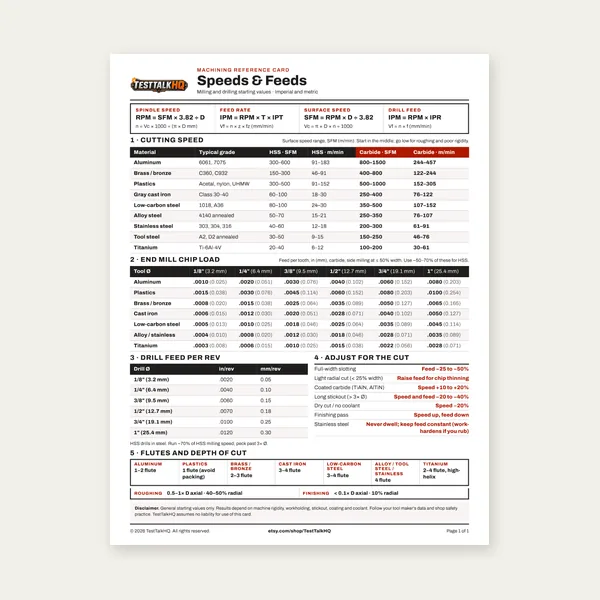
Machining Speeds & Feeds Card
One page. Speeds, chip load and drill feed, imperial and metric.
$3.99
Buy
Complete Machining Speeds & Feeds Guide
27 pages. Milling, drilling, tapping, turning and CNC routing.
$12.99
Buy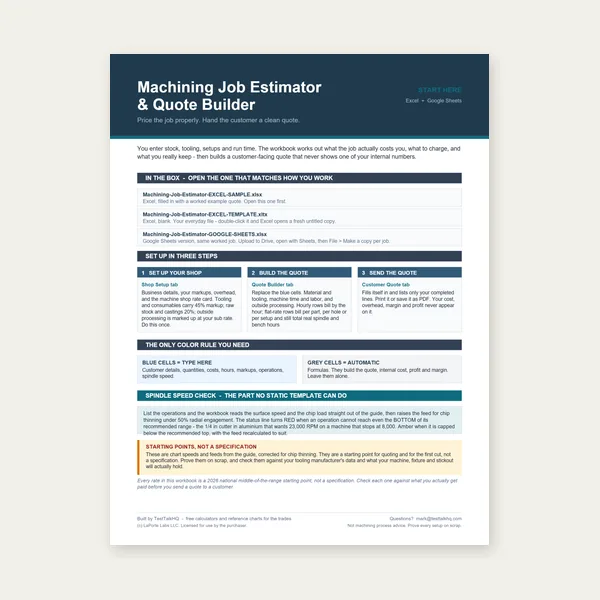
Machining Job Estimator
Quote shop work and check operations against your spindle's top speed.
Excel or Google Sheets. Best on a computer.
$29.00
Buy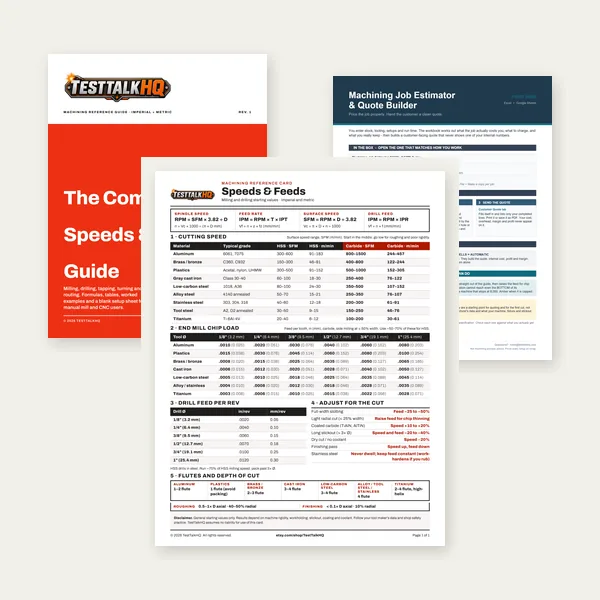
Machining Complete Bundle
Card, 27-page guide and the estimator workbook. All six files.
Excel or Google Sheets. Best on a computer.
$34.99
$45.98 if bought separately — save $10.99
BuyCheckout opens in a new tab.