
These are not competing products so much as competing physics. A soap solution detects a leak by being pushed around by escaping air, which means you have to be touching the leak. An ultrasonic detector listens for the noise turbulent air makes on its way out, which means you can be across the room. Everything about the decision follows from that difference — and the question that settles it is not about budget, it is about whether the leaks in your building are places you can reach.
The short version
| Soap solution | Ultrasonic detector | |
|---|---|---|
| How it detects | Escaping air blows bubbles in a film on the surface | Turbulence generates sound near 40 kHz; the instrument shifts it into audio |
| Range | Contact only | Feet to tens of feet, further with a parabolic cone |
| Works with the shop running? | Yes, but you still have to reach the joint | Yes — this is the whole point of the technique |
| Overhead and inaccessible pipe | No | Yes, from the floor |
| Smallest leak found | Very small, if you are on the right joint | Very small, and you do not need to know which joint |
| False positives | Essentially none — you are looking at the leak | Common: any turbulence or arcing in band reads as a leak |
| Cost | A spray bottle | Low hundreds to several thousand dollars |
| Skill needed | None | Real, and mostly about interpreting what you hear |
Read down the two columns and the pattern is clear: soap is certain but cannot search, ultrasound can search but is not certain. That is why the answer for most shops is not one or the other — it is ultrasound to find, soap to confirm.
What each one physically does
Soap solution
Water, a squirt of detergent, a spray bottle. Applied to a joint that is passing air, the film is inflated into bubbles or a foam and you can see exactly where. It is the oldest leak test there is and it is still the one that settles arguments, because there is no inference involved — the bubbles are the leak.
Its constraint is that you have to get the film onto the leak, which means the leak has to be somewhere your hand can go. That rules out a great deal: anything overhead, anything inside a machine enclosure, anything buried, anything behind a fixed guard, anything on a live line you cannot safely reach past. It also means you have to suspect the joint first — soap is a confirmation tool, not a search tool, and a shop with four hundred joints is not going to be surveyed with a spray bottle.
Ultrasonic detection
Air escaping through a small hole at high pressure ratio goes turbulent, and turbulence radiates sound across a very wide band — including well above the roughly 20 kHz limit of human hearing. An ultrasonic detector listens in a narrow band centred near 40 kHz and heterodynes it down into the audible range so you hear it as a hiss in a headset.
Two properties of that band make the technique work in a real shop. First, ultrasound is highly directional, so a probe or a cone lets you sweep and locate by peak signal. Second, almost all shop noise — motors, fans, hammering, compressors, conversation — is concentrated at low frequencies, so the 40 kHz band stays relatively quiet even in a loud building. That is why you can find a leak next to a running machine that you could not possibly hear with your ears.
The limitation is the flip side of the same thing: the instrument detects ultrasound, not leaks. Anything else generating in-band noise reads as a signal — a bearing beginning to fail, an electrical discharge, a steam trap, a different leak reflecting off a surface. Ultrasound also reflects off hard surfaces, so a strong signal can point at a wall rather than at a pipe. Interpretation is a real skill, and it is the part that takes practice.
The parts of the job we have verified links for
Couplers, fittings, regulation and hose management — between them these account for the large majority of the leaks in a typical shop. Ultrasonic leak detectors are discussed at length throughout this article but are not linked, because TestTalkHQ does not carry sourced affiliate links for them yet.
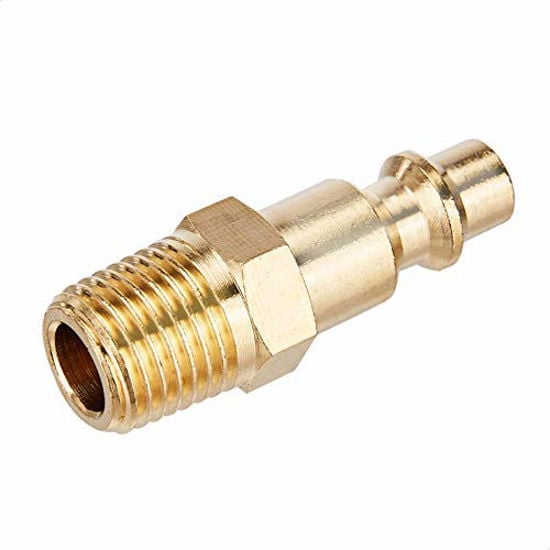
Quick Connect Brass Coupler Kit (14 pc)
- Worn couplers are the most common leak in any shop
- Brass seats keep sealing after the o-ring does not
- Cheap enough to replace on suspicion, not on proof
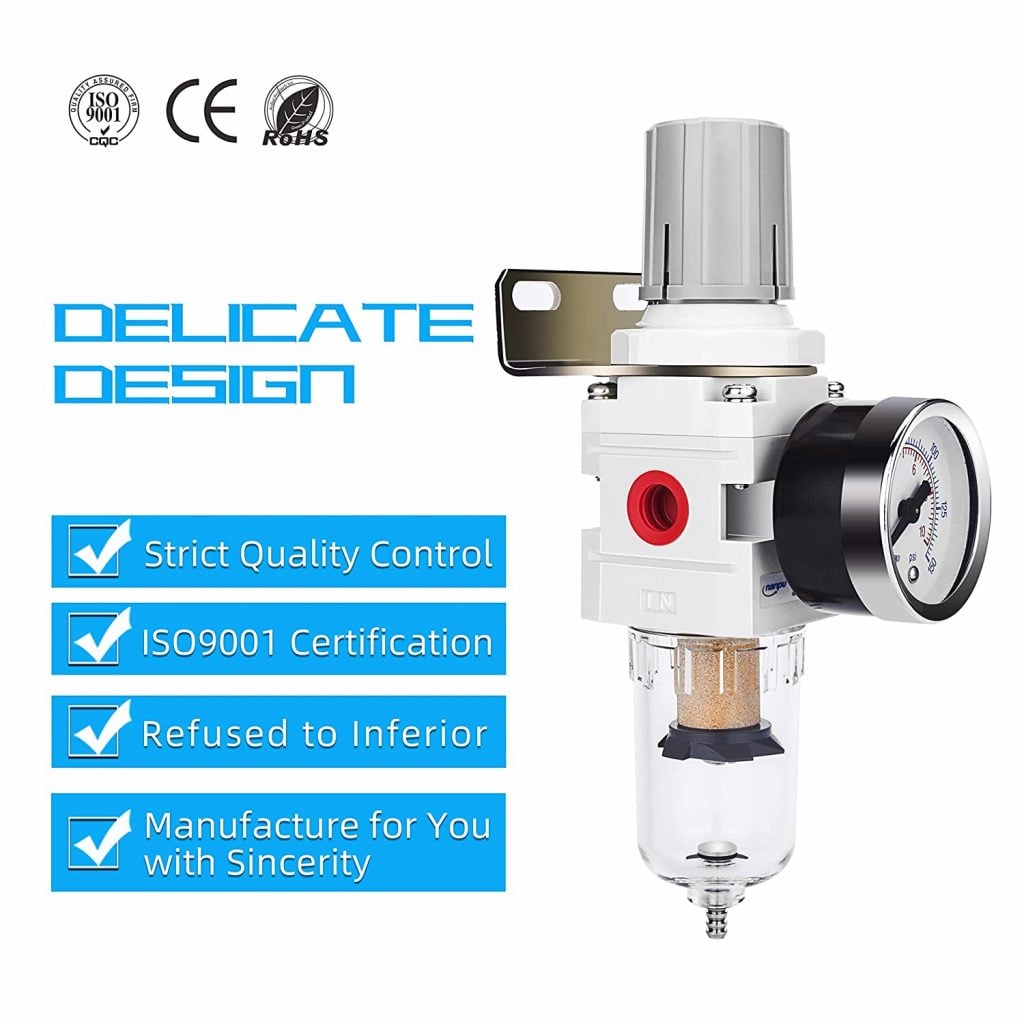
Hromee AW2000-02 Filter / Regulator
- Regulating at the drop cuts artificial demand
- Lower local pressure shrinks every leak downstream
- Lets you isolate one bench and test the rest

LE LEMATEC Regulator 0–150 PSI
- Leak flow is proportional to absolute pressure
- Drop the setpoint and every leak shrinks at once
- The gauge is what you read during a decay test
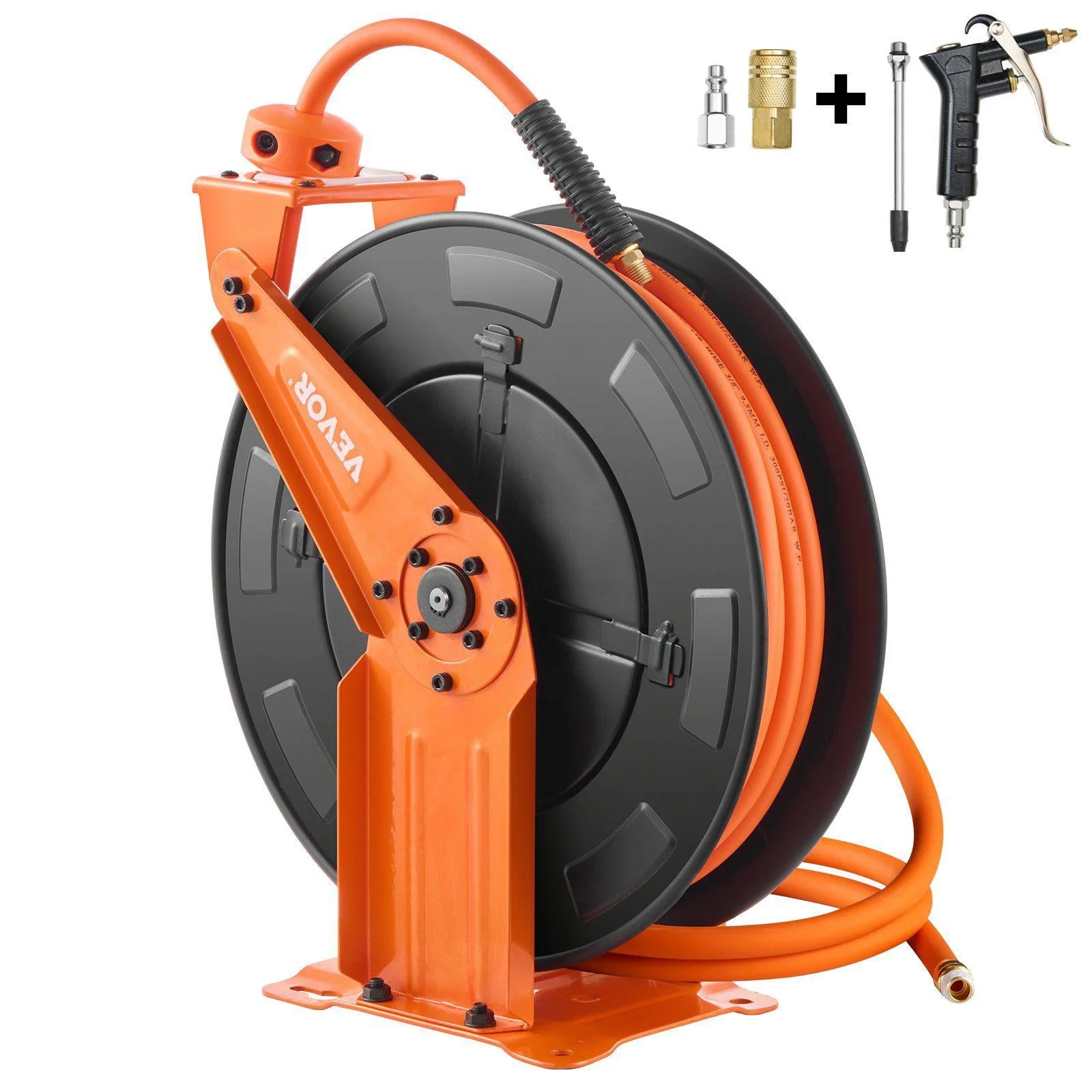
Relhost Retractable Hose Reel 65 ft
- Hose dragged over concrete splits, then leaks
- Reeled hose is the cheapest leak prevention there is
- Keeps the coupler off the floor
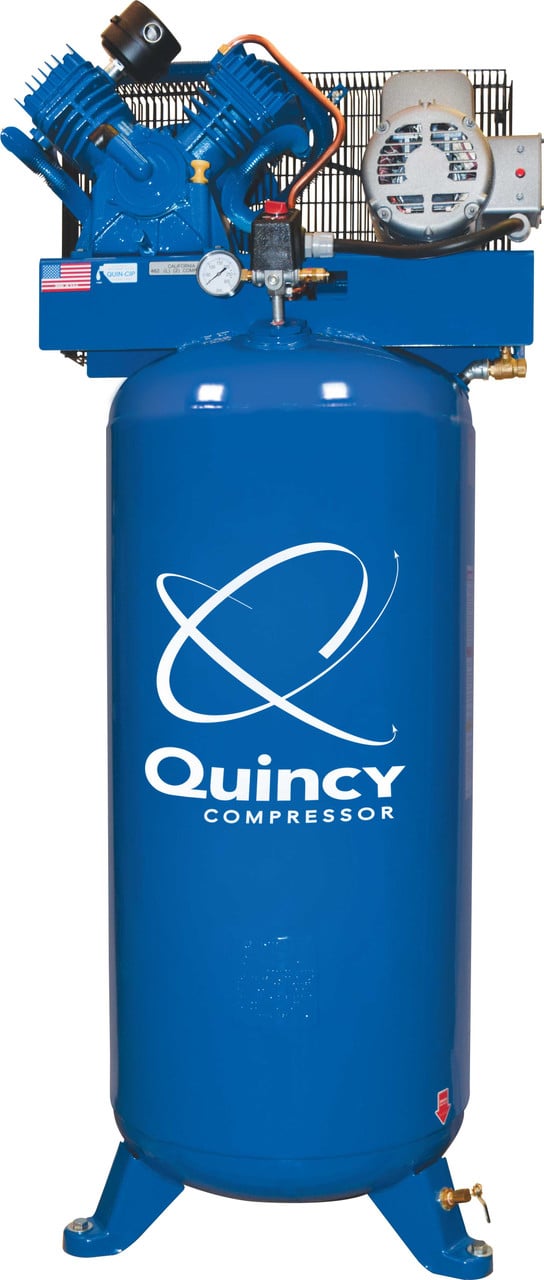
Quincy QT-54 5 HP 60-Gallon
- A known receiver volume makes a decay test possible
- More storage gives cleaner load/unload timing
- Nameplate CFM and hp feed the cost calculation
As an Amazon Associate, TestTalkHQ earns from qualifying purchases. Prices and availability can change.
The question that decides it
Not budget. Ask instead: can you physically touch the joints where your leaks are?
In a small shop with a compressor in the corner, a short run of pipe at head height, four or five drops and a handful of hoses, the answer is yes. Every fitting in the building is within arm’s reach, there are perhaps thirty joints, and you can shut the place down on a Saturday morning so it is quiet enough to hear the big ones. Soap and your ears will find essentially everything, and a detector will find the same leaks a bit faster for a few hundred dollars.
In a plant with overhead mains, machines with air inside their enclosures, a mezzanine, roof-mounted equipment and a shop floor that cannot be shut down, the answer is no — and no amount of soap solution changes it. The leaks you cannot reach are not smaller than the ones you can, they are just invisible. A detector is not a convenience there; it is the only method that covers the system.
Making the cost case
The arithmetic is straightforward once you have a measured leak load. Run your own numbers, but as a worked example: a 100 CFM machine drawing 22.5 kW, at $0.14/kWh over 6,000 pressurised hours a year, costs about $750 a year for every single 1/16 in sharp-edged leak. Find three of those with an instrument you would not otherwise have owned and it has paid for itself in the first survey.
Against that, be honest about two things. A detector bought and used once is an expensive spray bottle; the value is in surveying annually and measuring quarterly. And a contracted survey — someone else’s instrument and, more importantly, someone else’s practice at interpreting it — is often the better first move, because it gives you a professionally found tag list and tells you whether your building has the kind of leaks that justify owning one.
How they work together in practice
The methods are complementary and the workflow that uses both is faster than either alone:
- Measure the total first with a decay or load/unload test, so you know what you are looking for and will know when you have found it.
- Search with ultrasound. Walk the system methodically, probe swinging, and tag every peak. Do not stop to diagnose — tag and move on.
- Confirm with soap on every tag you can reach. This is what clears the false positives, and it is quick because you already know where to spray.
- Treat unreachable tags as leaks unless you have a reason not to. You cannot confirm them; the measured total will tell you afterwards whether you were right.
- Repair in cost order, then re-measure with the same test at the same setpoint. The difference between the two measurements is the answer, and it is the only number worth reporting.
The full survey-and-repair method, including the tagging discipline and the repair-order arithmetic, is set out in the leak detection guide.
When neither one is the answer
Both methods need the sound or the bubbles to reach you. If the leak is in a buried main or inside a wall, neither will. That is the case for tracer gas — charge the system with a hydrogen/nitrogen mix and follow the route with a sniffer at the surface. It is a specialist job, priced accordingly, and it is the right call only when you have already isolated the problem to a run you cannot see. Getting to that point is a matter of shutting branches off one at a time and re-running the decay test on each, which costs an afternoon and no money at all.
Equally, if the measured leak load is above roughly 40% of capacity, stop and look for a single failed component before buying any instrument. A stuck condensate drain, a blowdown valve that never seats, or a dead leg to equipment that was removed will each produce a number that no survey of fittings will explain. That diagnosis is covered in leak troubleshooting.
Frequently asked questions
Are ultrasonic leak detectors worth it?
It depends on whether your leaks are reachable. In a small shop where every joint is at arm’s reach and you can shut the place down for an hour, soap and your ears find nearly everything and a detector mainly saves time. In a plant with overhead mains, enclosed machines and a floor that cannot stop, a detector is the only method that covers the system, and finding three 1/16 in leaks you could not otherwise reach typically pays for a mid-range instrument in the first survey. Measure your total leak load first, then compare it against what you can find by hand — that gap is the honest answer.
Can I use soapy water to find compressed air leaks?
Yes, and it is the most certain test there is, because you are looking at the leak rather than inferring it. Its limit is reach: you have to get the film onto the joint, so it cannot search a system, only confirm a suspect. Use a labelled leak-detection solution rather than household detergent on anything permanent, since some detergents carry chlorides and ammonia that are unkind to brass and stainless over time.
What frequency do ultrasonic leak detectors use?
They listen in a narrow band around 40 kHz, well above the roughly 20 kHz limit of human hearing, and heterodyne it down into the audible range. The choice of band is deliberate: shop noise is overwhelmingly low-frequency, so the ultrasonic band stays comparatively quiet even beside a running machine, and ultrasound is directional enough that sweeping a probe locates the source by peak signal.
Why does my ultrasonic detector find leaks that are not there?
Because it detects ultrasound, not leaks. Failing bearings, electrical discharge, steam traps and reflections off hard surfaces all read as in-band signal. Reflection is the most common cause of a phantom — a strong reading pointing at a flat wall is usually a real leak somewhere else bouncing off it. Confirm every reachable tag with soap before you book the repair.
Should I hire a leak survey or buy a detector?
Hire the first one. You get a professionally interpreted tag list, you find out whether your building has the kind of leaks that justify owning an instrument, and you avoid the common outcome of an expensive detector used once. If the survey shows a large recoverable leak load and you intend to measure quarterly and survey annually — which is what keeps the number down — buying makes sense from the second year.