
Contractor Job Estimator
Price remodels and GC work, then send a quote with no internal numbers.
Excel or Google Sheets. Best on a computer.
$29.00
BuyDry mils, wet mils, gallons per square and pails on the truck — worked from the one constant the whole trade runs on and almost nobody can name
A restoration coating is specified in dry mils, applied in wet mils, bought in gallons per square and delivered in pails, and the only thing that ties those four numbers together is the volume solids figure buried in the middle of the product data sheet. Get it wrong by ten per cent on a 124‑square roof and you are either four pails short on a Friday afternoon or sitting on $600 of silicone you cannot return. The arithmetic is not hard, but it hangs on a number most crews have never been told: one gallon spread one mil thick covers 1,604 sq ft. That is not a rule of thumb — a US gallon is 231 cubic inches by definition, and 231 divided by 0.001 in is 231,000 sq in, which is 1,604.17 sq ft. Every coverage figure on every data sheet in the trade is that constant times the volume solids, divided by the mils. Put your area, your product and your spec in below and this page returns the wet film to set the gauge to, the practical coverage after waste, the gallons, the pails, the drums, and the primer and cleaner to order with them.
Price remodels and GC work, then send a quote with no internal numbers.
Excel or Google Sheets. Best on a computer.
$29.00
BuyCheckout opens in a new tab.
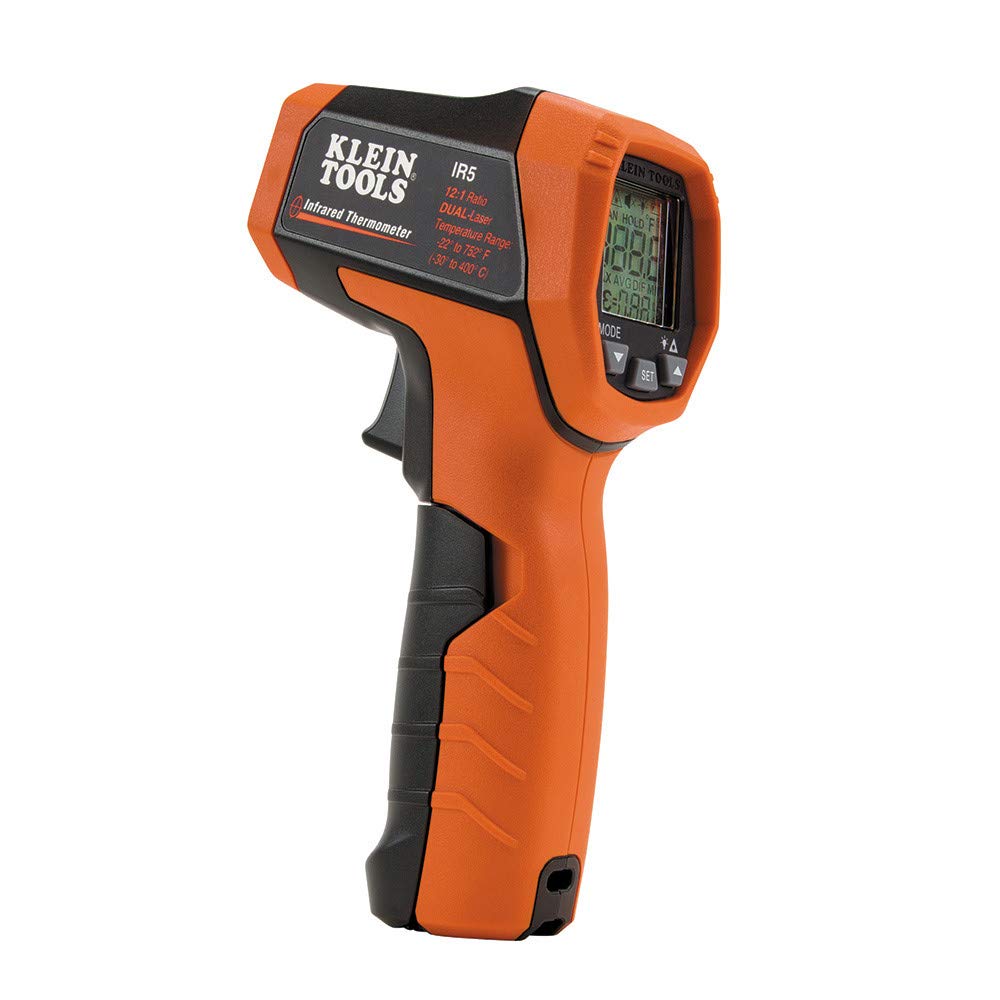
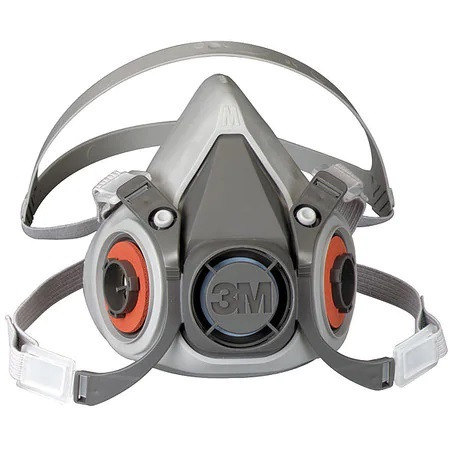
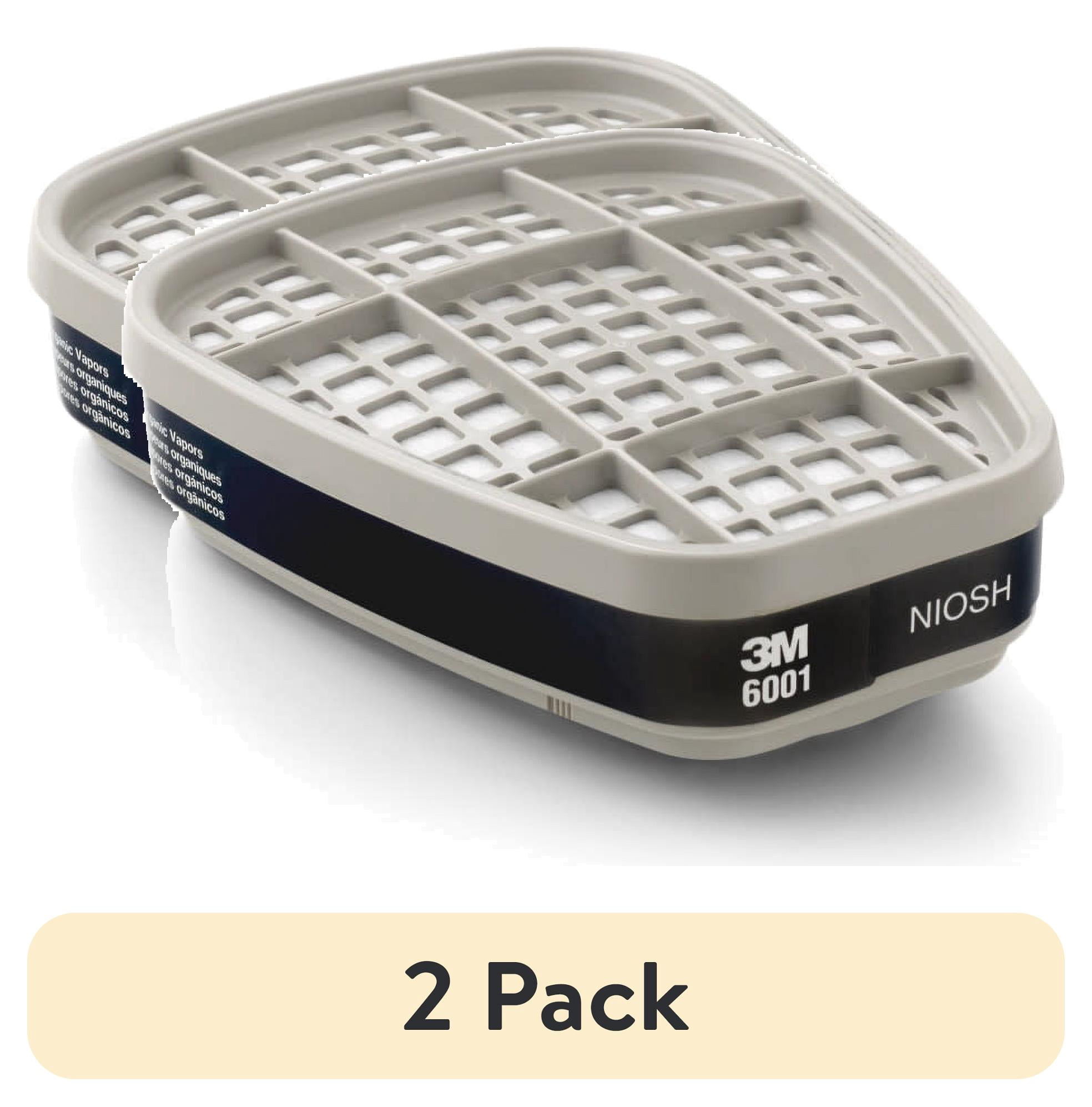
Nothing here changes a number above, and the honest headline is this: the one tool that would verify this calculator’s main output — a notched wet-film gauge to ASTM D4414 — is not in our affiliate catalogue, so it is not listed below. Buy one anyway; they cost a few dollars and they are the only way to know your rig is laying the mils you priced. What is here are the four things that actually decide whether a coating sticks and cures: a way to read surface temperature, a way to know how close you are to the dew point, something to clean the deck with, and the respirator the data sheets assume you are wearing.


There is exactly one piece of arithmetic behind every coverage figure on every coating data sheet ever printed, and it is not a measured value. A US liquid gallon is 231 cubic inches by definition. Spread that out at one mil — one thousandth of an inch — and it covers 231 divided by 0.001, which is 231,000 square inches, which is 231,000 over 144, or 1,604.17 square feet. That is it. Theoretical coverage at one dry mil is 1,604 times the volume solids. Coverage at any dry film thickness is that divided by the mils. Wet film thickness is dry film over volume solids. Four relationships, one constant, and no judgement anywhere in them.
You can watch the constant surface in the literature without being named. A manufacturer’s acrylic data sheet says to apply a maximum of 24 wet mils (1.5 gallon per 100 square feet) per coat — and 1,604.17 divided by 66.67 is 24.06. The same company’s adhesion-test bulletin says to lay down approximately 16 wet mils (1-gallon per square) — and 1,604.17 divided by 100 is 16.04. Two documents, two products, two decades of accumulated house style, both silently carrying the same number. That is the strongest evidence anyone could ask for that the figure is right, and it is why this calculator can be trusted on its main output without trusting anybody’s rule of thumb.
A data sheet usually gives both, and they are not close. A published 100 % silicone runs 92 % by weight and 90 % by volume. A published acrylic runs 68 % by weight and 53 % by volume. Weight solids is the flattering number, because the solids in a coating are usually denser than the liquid they are carried in, so they weigh more than their share of the volume. For coverage you need the volume figure, because coverage is a question about volume: how much film is left standing after the carrier leaves.
Use 68 % where you should have used 53 % on that acrylic and you will order for 16.4 dry mils and get 12.8 — a 22 % shortfall that nobody will notice until a warranty inspection pulls a core. The line you want on the sheet reads solids content, percent by volume or solids volume, and it is tested to ASTM D2697. If the sheet gives only weight solids, ask for the volume figure rather than converting; the conversion needs the densities of the resin and the pigment, not the density of the can.
The spread also decides the whole shape of the job. At the same 24 wet mils, a 95 % solids silicone leaves 22.9 dry mils and a 53 % solids acrylic leaves 12.8. That is why silicone restoration is normally one heavy coat and acrylic is normally two, and why comparing the two on price per gallon is meaningless. Price them per dry mil delivered.
This is where orders go short, and the number is bigger than most people expect. One manufacturer publishes two rates for the same product and the same finished film: 1.5 gal per square on smooth, 2 gal per square on granulated and other rough surfaces, both to reach about 22 dry mils. Work backwards and that is a 25 % deduction — one minus 1.5 over 2.0, exactly a quarter. The coating is not being wasted in any ordinary sense. It is filling the valleys between granules, where it contributes nothing to the measured film thickness over the peaks but costs you full price.
The general waste figure for a smooth substrate is smaller and also published: deduct 10 % for can losses, windage, overspray and other waste. At the other end, for a heavily pitted or masonry surface, up to 50 % comes off the first coat — and specifically the first coat, because once the profile is filled the later coats behave normally. That detail is worth money: on a badly alligatored roof, splitting the job into two coats instead of one actually reduces total material, because only the first one pays the profile penalty.
Coverage problems come in two flavours and people mix them up constantly.
Both are correct and they are not interchangeable. It is also why a published rate already has the substrate baked into it: when a manufacturer prints 1.5 for smooth and 2 for granulated, they have done the second calculation for you. If you take their granulated rate and add a 25 % waste factor on top, you have charged the same loss twice and your order is a third too big. The calculator above asks which direction you are working in for exactly this reason, and tells you in the results which one it used.
Every data sheet behind this page says do not thin, and there is a clean piece of arithmetic behind why that matters more than it looks. Adding a pint of thinner to a gallon gives you 1.125 gallons in the pot at 1/1.125 of the original solids — so the published coverage rate per gallon drops by about 11 %. If the crew keeps spraying to the same wet-mil gauge reading, the dry film drops by the same 11 %. The gauge still reads 24; the roof gets 21.4 dry mils instead of 24.
What thinning does not change is how much coating you have to buy. The solids that must end up on the roof are fixed by the area and the dry film, so the gallons of actual coating are fixed too — you just carry them in more liquid. The calculator reports both figures side by side to make that concrete, and reports the solids volume landing on the roof as an independent check: that number depends only on area and total dry mils, never on the solids content and never on the thinning. If a change to an input moves it, something is wrong.
A coating job almost never fails because somebody ordered the wrong number of pails. It fails at the interface, and the two gates the manufacturers put in front of a system warranty are both about that rather than about thickness.
The first is an adhesion test: a minimum of one per different roof condition, or one every 4,000 sq ft, whichever is more. A 1 in by 12 in fabric strip is sandwiched between two passes of about 16 wet mils, cured at least 48 hours, then pulled at 90 degrees with a fish scale. Two pounds per inch of fabric is the minimum and two to five is the ideal, attributed to the NRCA. The pass criterion is the part worth memorising: if the fabric tears off the coating, that is a pass; if the coating comes off the roof, that is a fail.
The second is a moisture survey, required for all coating projects where a system warranty is wanted. Infrared, nuclear, capacitance or core sampling, with published minimums for the number of cores by roof size. The reason is blunt and is printed in the same literature: moisture trapped below a coating will try to get out through the coating. A coating is a vapour-retarding membrane laid over whatever is already wet. Coating over saturated insulation does not dry it out; it seals it in and then blisters. The same literature is equally direct that prior to installing any coating, the existing roofing system must be repaired with like materials and brought up to a watertight condition — a coating is a restoration, not a repair.
Wet film thickness is measurable in the moment with a notched gauge pressed into the coating and pulled straight out: the practice is ASTM D4414. It costs a few dollars, takes five seconds, and it is the only quality control on this entire process that happens while the material is still correctable. Dry film thickness is measurable afterwards — ASTM D6132 covers doing it non-destructively with an ultrasonic gauge — but by then the only remedy is another coat.
So the single most useful output of the calculator above is not the gallons. It is the wet mils per coat. Set a gauge to it, hand it to whoever is on the wand, and the job either hits its specified film or it does not, on the day, in front of you. Note that the target changes the moment anything is added to the pot, which is one more reason the data sheets say not to thin.
At one mil dry, a gallon of a 100 %-solids coating covers 1,604 sq ft, and that is a definition rather than a measurement: a US gallon is 231 cubic inches, and 231 divided by one thousandth of an inch is 231,000 sq in, which is 1,604.17 sq ft. A real product covers that times its volume solids, divided by the dry mils you want. A 95 % solids silicone at 22 dry mils therefore covers about 69 sq ft per gallon theoretically, and about 52 after a 25 % deduction for a granulated surface.
Two different manufacturers both publish a minimum of 1.5 gallons per square for their 100 % silicone, and one of them publishes 2 gallons per square instead when the surface is granulated or otherwise rough — for the same finished film. At their published volume solids of 95 % and 90 %, 1.5 gallons per square works out to about 22.9 and 21.7 dry mils respectively. Those are minimums, not targets, and a specification or a warranty may ask for more.
Wet mils is the thickness of the coating as it leaves the wand, carrier and all. Dry mils is what is left once the water or solvent has gone. The ratio between them is the volume solids: a 50 % volume solids product laid at 20 wet mils dries to 10 dry mils. Wet mils is the only one you can check while you can still fix it, with a notched gauge to ASTM D4414; dry mils is what the specification is written in.
Because coverage is a volume question and weight solids answers a different one. Solids are generally denser than the liquid carrying them, so the weight percentage is always the higher number — a published acrylic is 68 % by weight and 53 % by volume, and a published silicone is 92 % by weight and 90 % by volume. Using the weight figure on that acrylic would have you ordering for 16.4 dry mils and getting 12.8. The line you need says percent by volume and is tested to ASTM D2697.
About 25 % more, and that figure is not an estimate: one manufacturer publishes 1.5 gallons per square on smooth surfaces and 2 gallons per square on granulated and other rough surfaces to reach the same 22 dry mils, and one minus 1.5 over 2.0 is exactly a quarter. The coating is filling the space between granules, where it does nothing for the measured film thickness. Spray foam and other textured substrates fall in the same bracket; heavily pitted or masonry surfaces can take up to 50 % more on the first coat alone.
The data sheets for all three products behind this calculator say not to, and the arithmetic explains the consequence rather than the rule. A pint of thinner per gallon leaves you with 1.125 gallons at 89 % of the original solids content, so a crew spraying to the same wet-mil target puts down about 11 % less dry film. It does not reduce how much coating you must buy, because the solids that have to end up on the roof are fixed by the area and the dry mils. It reduces the film you get for them.
That is set by the product and the specification, not by a rule. A 100 % silicone at 90 to 95 % volume solids reaches the low twenties of dry mils in one pass, so one heavy coat is normal. An acrylic at 53 % volume solids needs two, and its own data sheet says so: typical conditions require two coats at 24 wet mils each, with the second applied perpendicular to the first to reduce pinholes and voids. Two coats also find holidays that one coat hides, and on a heavily pitted substrate they cost less material overall, because only the first coat pays the profile loss.
It depends on the substrate and the answer comes from an adhesion test rather than a catalogue. Where a primer is specified, the published rates are specific: half a gallon per square for a zinc-rich metal roof primer, a gallon per square for a solvent-based multi-surface primer, and a pint per square for a TPO primer, which the same document also expresses as a gallon per eight to ten squares. No waste deduction is applied to primer in the calculator above, because those published figures are already application rates over real substrates.
It blisters, and the manufacturer literature says why in one sentence: moisture trapped below a coating will try to get out through the coating. That is the reason a moisture survey is a precondition for a system warranty on coating work — infrared, nuclear, capacitance or core sampling, with published core-count minimums by roof size. A coating does not dry a wet roof out. It seals the water in under a new vapour-retarding membrane. Wet insulation has to come out first, which is a tear-off question, not a coating question.
Three usual reasons, in order of how often they bite. First, the theoretical coverage figure was used without deducting anything for waste, overspray or substrate profile — that is 10 % on a smooth roof and 25 % on a granulated one. Second, the area was taken off the roof plan without adding the parapet faces, curb sides, equipment stands and gutter interiors, all of which take material at the field rate. Third, weight solids was used where volume solids was needed. Detail work and line purging account for the rest, which is why rounding up to whole pails is not really waste.