Welding Wire Gauge Chart — MIG Wire, Filler Rod & Extension Cord Reference
MIG wire, TIG filler, welding leads, extension cords, and AWG to mm²
Bookmark this page — every wire, lead, and cord size table a welder needs in one place.
Table 1 — MIG Wire Diameter Selection
Starting voltage and wire feed speed (WFS) for C-25 or 75/25 on mild steel. Fine-tune from machine capability and joint fit-up.
| Wire Diameter | Thickness Range | Best For | Typical Voltage | Typical WFS |
|---|---|---|---|---|
| 0.023" solid | 24 ga – 3/16" | Auto body, sheet metal, thin HVAC | 14–18 V | 150–250 IPM |
| 0.030" solid | 18 ga – 1/4" | 120V MIG, light fab, general repair | 17–20 V | 200–350 IPM |
| 0.035" solid | 1/8" – 1/2" | Most common shop diameter, 240V MIG | 19–23 V | 250–400 IPM |
| 0.045" solid | 1/4" and up | Heavy plate, high deposition, structural | 22–27 V | 300–500 IPM |
| 0.030" flux core | 18 ga – 3/16" | Field repair, outdoor, no gas bottle | 18–22 V | 150–280 IPM |
| 0.035" flux core | 1/8" – 3/8" | Most common flux diameter, farm/structural | 20–24 V | 200–350 IPM |
| 0.045" flux core | 1/4" and up | Dual-shield or heavy self-shielded work | 22–26 V | 250–450 IPM |
Shop staples — wire, rod & cable tools
Consumables and tools matched to the wire and cable sizes on this page.
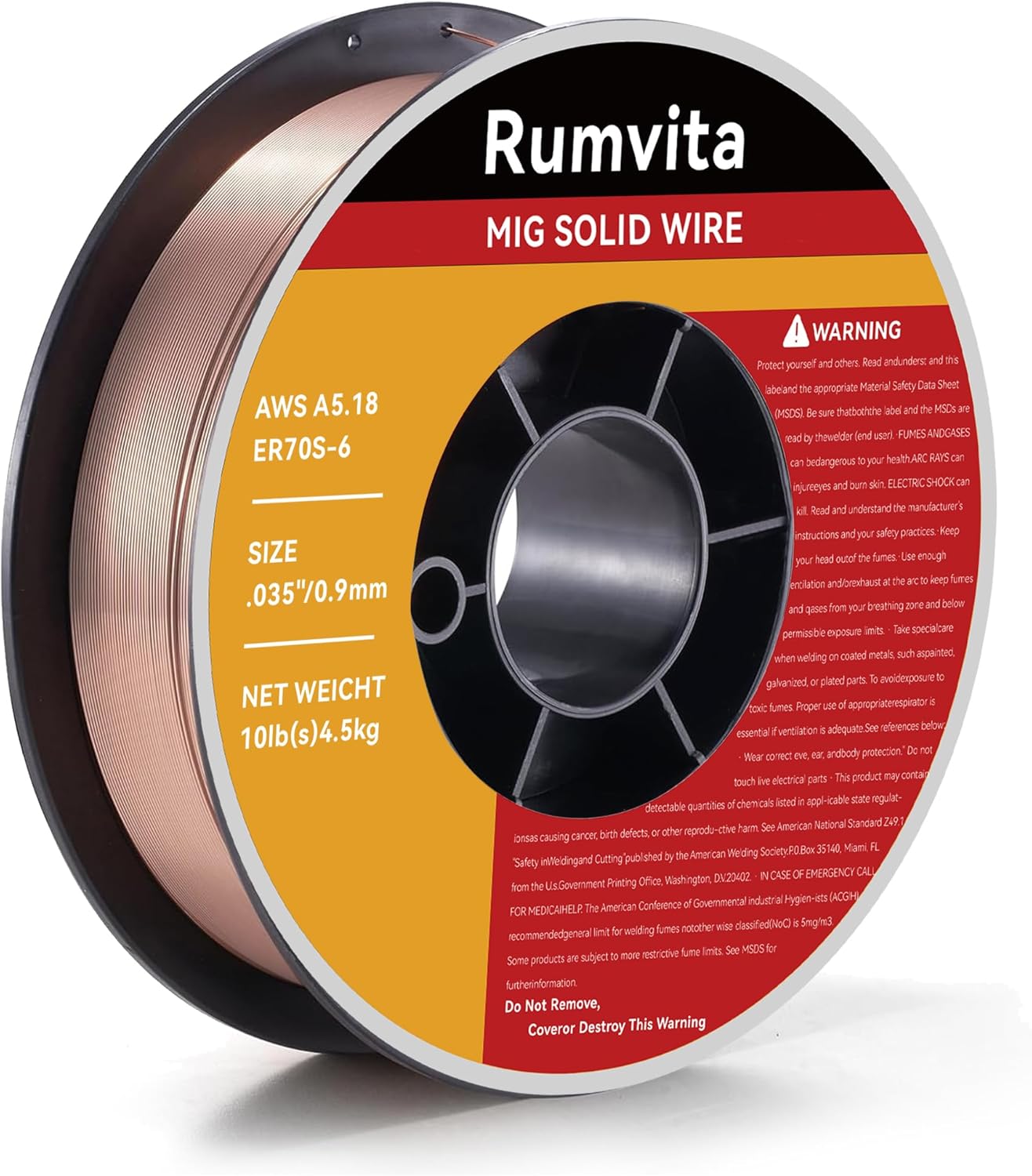
Hobart 0.035 MIG Welding Wire
- ER70S-6 mild steel — most common shop diameter
- Covers 1/8" through 1/2" plate on 200+ amp machines
- Clean copper-coated wire, consistent feed
- 10 lb spool — standard drive roll size
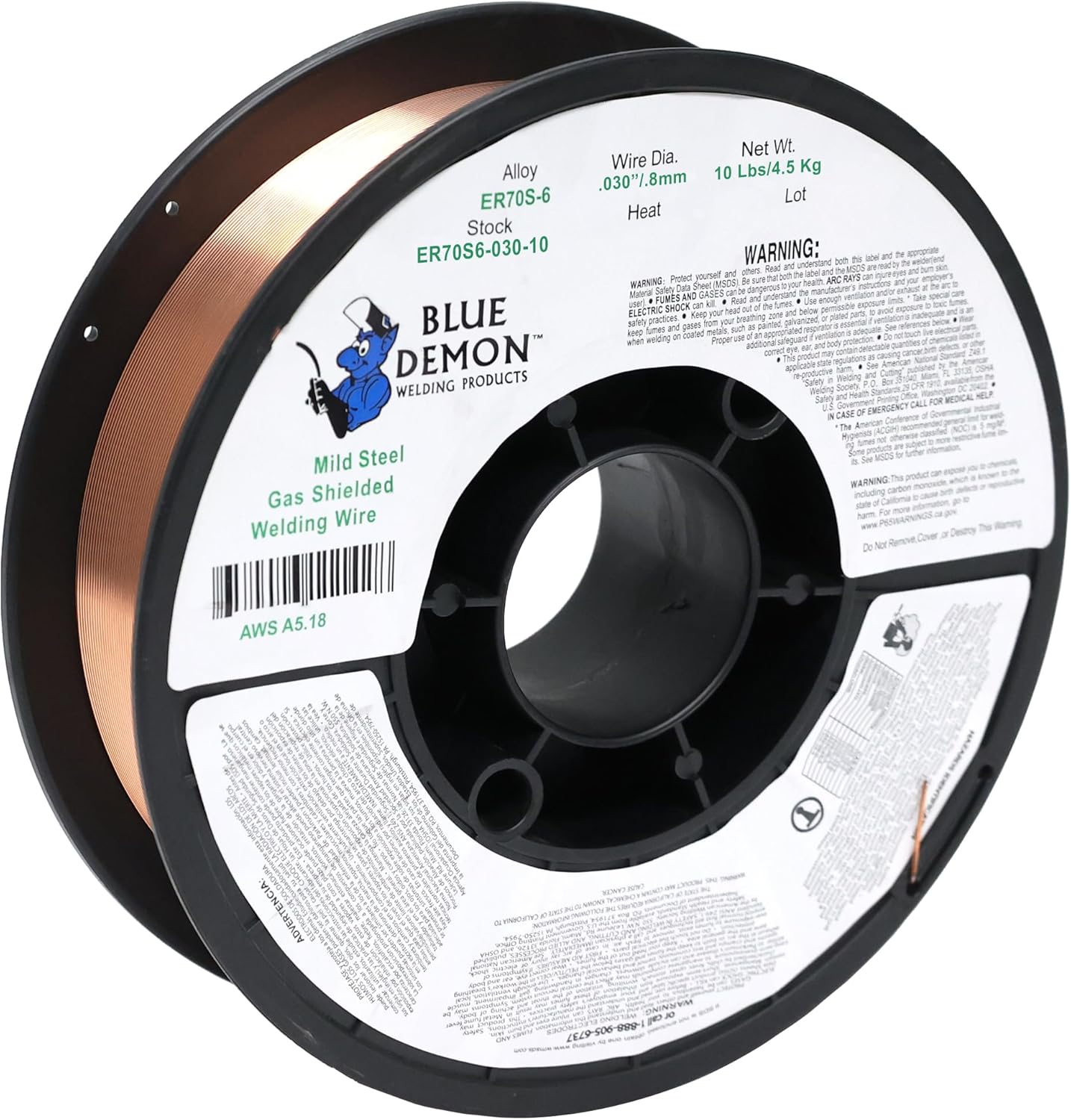
Blue Demon ER70S6 .030in 10LB MIG Wire
- 0.030" for light to medium gauge work
- Ideal on 120V and 140–180 amp machines
- 18 ga through 1/4" mild steel range
- 10 lb spool — good value for hobby shops
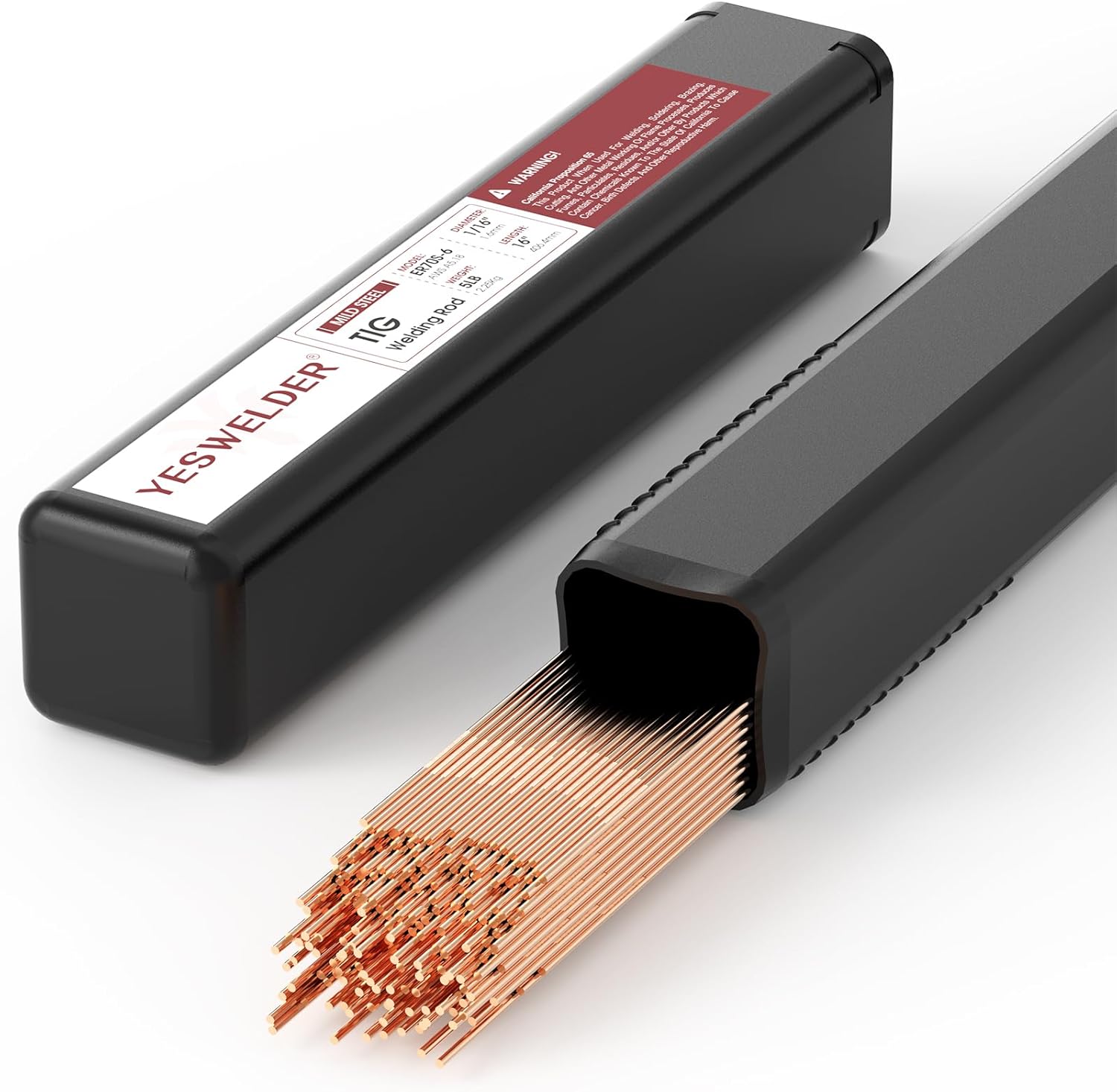
YESWELDER ER70S-6 TIG Rod 1/16in 5LB
- 1/16" diameter for sheet and thin wall
- ER70S-6 — deoxidizers for light mill scale
- Matches TIG schedules under 1/8" steel
- 5 lb pack — standard shop filler size
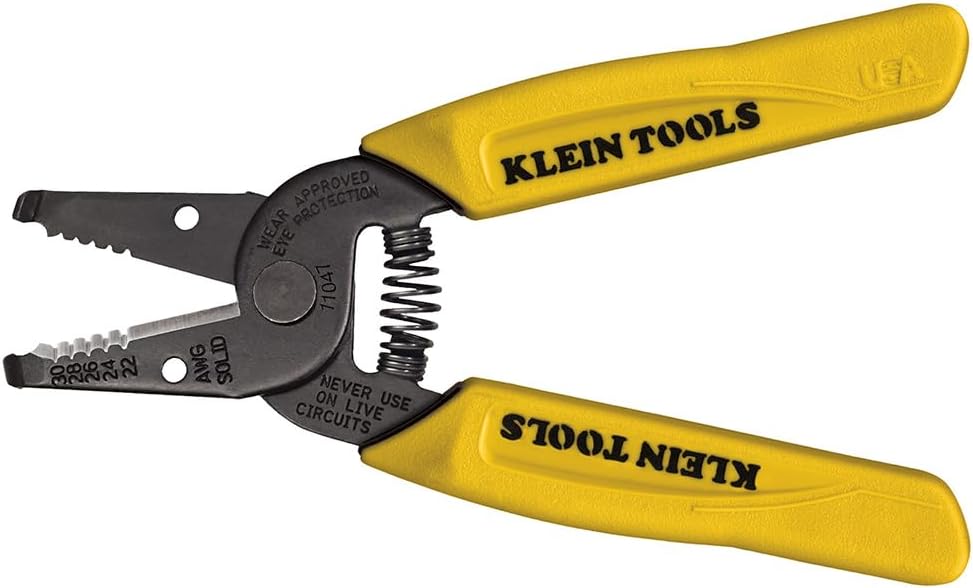
Klein Tools 11047 Wire Stripper/Cutter
- Strips 10–18 AWG solid and stranded
- Essential for welder cord and lead terminations
- Built-in cutter for clean ends
- Klein grip — standard in electrical trade
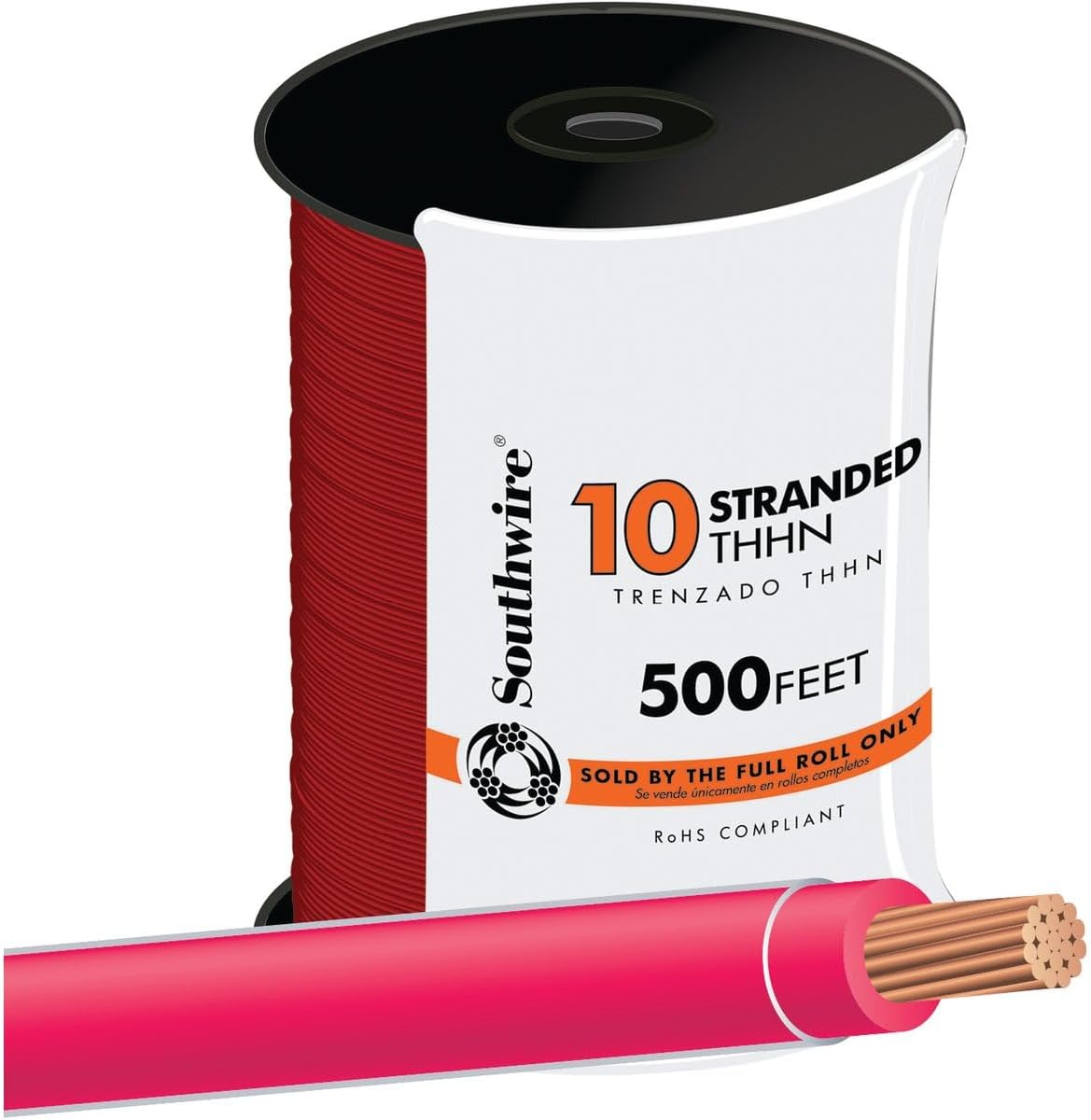
Southwire Stranded Copper 10 Gauge 500ft
- 10 AWG stranded copper — welder circuit standard
- 500 ft roll for shop runs and extension builds
- Matches 240V MIG feeder sizing in Table 4
- THHN-class for conduit or open runs
As an Amazon Associate, TestTalkHQ earns from qualifying purchases.
Table 2 — TIG Filler Rod Diameter by Base Metal Thickness
Match rod diameter to material thickness. Step down one size for root passes and tight joints.
| Filler Diameter | Base Metal Thickness | Common Alloys |
|---|---|---|
| 1/16" (1.6 mm) | Sheet – 1/8" | ER70S-2, ER70S-6, ER308L, ER4043, ER5356 |
| 3/32" (2.4 mm) | 1/8" – 3/16" | ER70S-2, ER70S-6, ER308L, ER4043, ER5356 |
| 1/8" (3.2 mm) | 3/16" – 1/4" | ER70S-2, ER70S-6, ER308L, ER4043, ER5356 |
| 3/16" (4.8 mm) | 1/4" and up | ER70S-2, ER70S-6, ER308L (fill passes) |
Table 3 — Welding Lead Cable Sizing (AWG)
Minimum copper welding cable by output amperage and total lead length (electrode + work). Target under 4 V drop.
| Welder Amperage | Up to 25 ft | Up to 50 ft | Up to 100 ft | Up to 150 ft |
|---|---|---|---|---|
| 100 A | 6 AWG | 4 AWG | 2 AWG | 1/0 AWG |
| 150 A | 4 AWG | 2 AWG | 1/0 AWG | 2/0 AWG |
| 200 A | 2 AWG | 1/0 AWG | 2/0 AWG | 3/0 AWG |
| 250 A | 1/0 AWG | 2/0 AWG | 3/0 AWG | 4/0 AWG |
| 300 A | 2/0 AWG | 3/0 AWG | 4/0 AWG | 250 MCM |
| 400 A | 3/0 AWG | 4/0 AWG | 250 MCM | 350 MCM |
| 500 A | 4/0 AWG | 250 MCM | 350 MCM | 400 MCM |
Table 4 — Extension Cord Sizing for Welders
Based on machine nameplate input amperage. Never use 14 AWG or 16 AWG for welding loads.
| Welder Draw | Voltage | Up to 25 ft | Up to 50 ft | Up to 100 ft |
|---|---|---|---|---|
| 15 A | 120 V | 12 AWG | 12 AWG | 10 AWG |
| 20 A | 120 V | 12 AWG | 10 AWG | 8 AWG |
| 30 A | 120 V | 10 AWG | 8 AWG | 6 AWG |
| 30 A | 240 V | 10 AWG | 8 AWG | 6 AWG |
| 40 A | 240 V | 8 AWG | 6 AWG | 4 AWG |
| 50 A | 240 V | 8 AWG | 6 AWG | 4 AWG |
| 60 A | 240 V | 6 AWG | 4 AWG | 3 AWG |
Table 5 — AWG to mm² Conversion
Cross-reference American gauge to metric area when reading import specs or European machine manuals.
| AWG | mm² | Common Use in Welding |
|---|---|---|
| 4/0 | 107.2 | 500 A leads, 150 ft runs, heavy industrial |
| 3/0 | 85.0 | 300–400 A leads, long high-amperage runs |
| 2/0 | 67.4 | 200–300 A welding cable, 50 ft standard |
| 1/0 | 53.5 | 150–250 A leads, electrode cable |
| 1 AWG | 42.4 | Heavy leads, short 200 A runs |
| 2 AWG | 33.6 | 200 A at 25 ft, welder branch feeders |
| 3 AWG | 26.7 | 60 A extension cord at 100 ft |
| 4 AWG | 21.2 | 50 A cord at 100 ft, 200 A at 50 ft |
| 6 AWG | 13.3 | 30–40 A extension at 100 ft, 100 A leads |
| 8 AWG | 8.36 | 240V MIG cord 25–50 ft, 40 A circuits |
| 10 AWG | 5.26 | Standard welder circuit wire, 30 A cord |
| 12 AWG | 3.31 | Minimum welder extension, 15–20 A at 120V |
| 14 AWG | 2.08 | Not for welders — household loads only |
Why MIG wire diameter matters more than most welders think
Wire diameter sets your amperage window, deposition rate, and heat input before you touch the machine dial. Run 0.045" on 16-gauge sheet and you will blow holes regardless of technique. Run 0.023" on half-inch plate and you will sit in the corner all day feeding wire while penetration never catches up. Diameter also must match drive rolls and liner size — forcing 0.035" through a 0.030" liner causes bird-nesting and erratic arc starts. The spool label is not a suggestion; it is the first setting on every weld schedule. Match diameter to thickness, then tune voltage and wire feed speed from there.
Extension cord myths — what actually damages your welder
Myth one: "The breaker did not trip, so the cord is fine." Breakers protect wire from fire, not your machine from voltage drop. A 14 AWG cord on a 30-amp draw will sag voltage for minutes before the breaker notices. Myth two: "Shorter is always OK on any gauge." A 50-foot 12 AWG run on a 240V 50-amp input can drop enough voltage to make your 035 wire run cold at the same dial setting. Myth three: "Dual voltage means the same cord works everywhere." At 120V your machine pulls nearly double the current for the same weld — you need heavier gauge, not the orange cord from the garage. Replace cord before you blame the board inside the welder.
How to read a welding wire spool label
Start with the AWS classification — ER70S-6 tells you mild steel solid wire with higher silicon and manganese for dirty plate. The diameter is stamped separately: .035 or 0.9 mm, never AWG. Shielding gas requirement follows: solid wire needs C-25 or 75/25; flux core may say E71T-11 (self-shielded) or E71T-1 (gas-shielded). Weight matters for drive tension — 10 lb and 33 lb spools use different hub adapters. Check the heat number and lot for critical work traceability. If the label says "for single-pass only" or lists a maximum plate thickness, that is the manufacturer telling you where deposition limits start. Photograph the label when a weld passes qualification — it is your consumable record.
Lead length and voltage drop — the math behind poor arc performance
Voltage drop equals current times resistance (V = I × R). Welding cable resistance increases with length and decreases with cross-section. Double your lead run from 25 feet to 50 feet and you double the drop. At 200 amps through 50 feet of 4 AWG, you can lose 3–4 volts before the arc — enough to feel "cold" and undercut penetration. The machine compensates only within its open-circuit range; it cannot invent volts lost in copper. That is why Table 3 steps up AWG with length, not just amperage. When the arc gets lazy and you are already at the top of your machine's range, measure voltage at the stinger under load before you buy a bigger welder. Usually the fix is cable, not kilowatts.